James Webb Telescope solves 20-year cosmic mystery, finds evidence of 'monster stars' from early universe
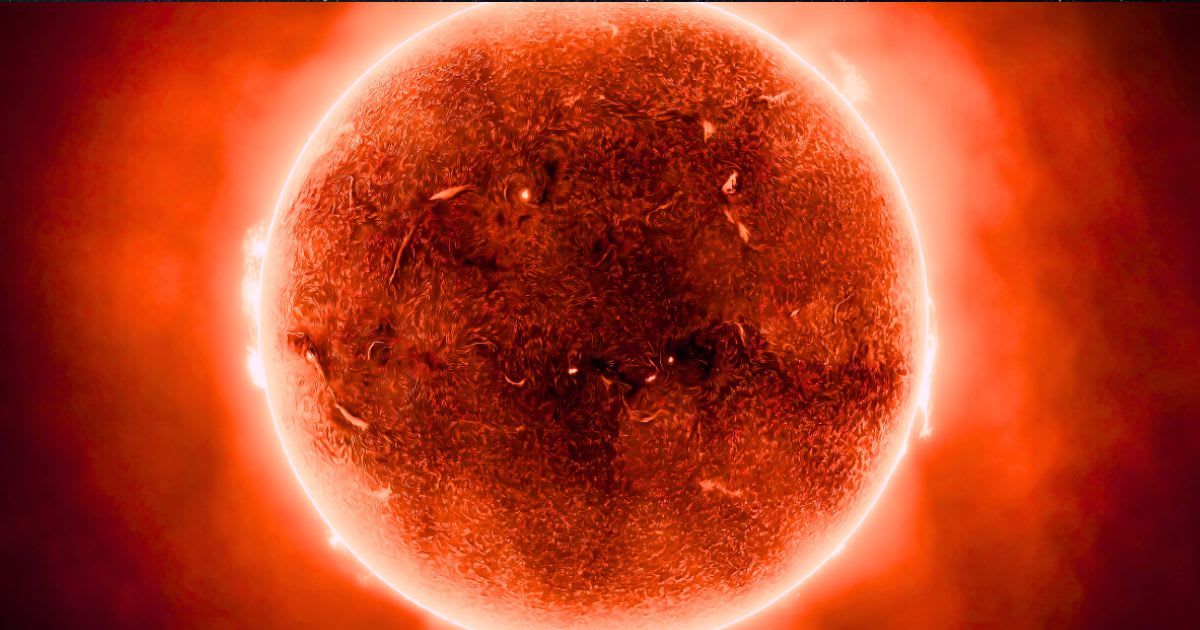
Webb uncovers evidence of giant primordial stars that may explain how early black holes formed less than a billion years after the Big Bang.
A close-up of a giant star emitting solar flares. (Representative Cover Image Source: Getty| Javier Zayas Photography; edited by Starlust staff on Canva)

For twenty years, astronomers have been scratching their heads over a big puzzle about how supermassive black holes, some of the brightest objects out there, showed up less than a billion years after the Big Bang. Normal stars just don’t grow fast enough to make black holes that huge in such a short time. Now, NASA's James Webb Space Telescope has given us a major clue. 
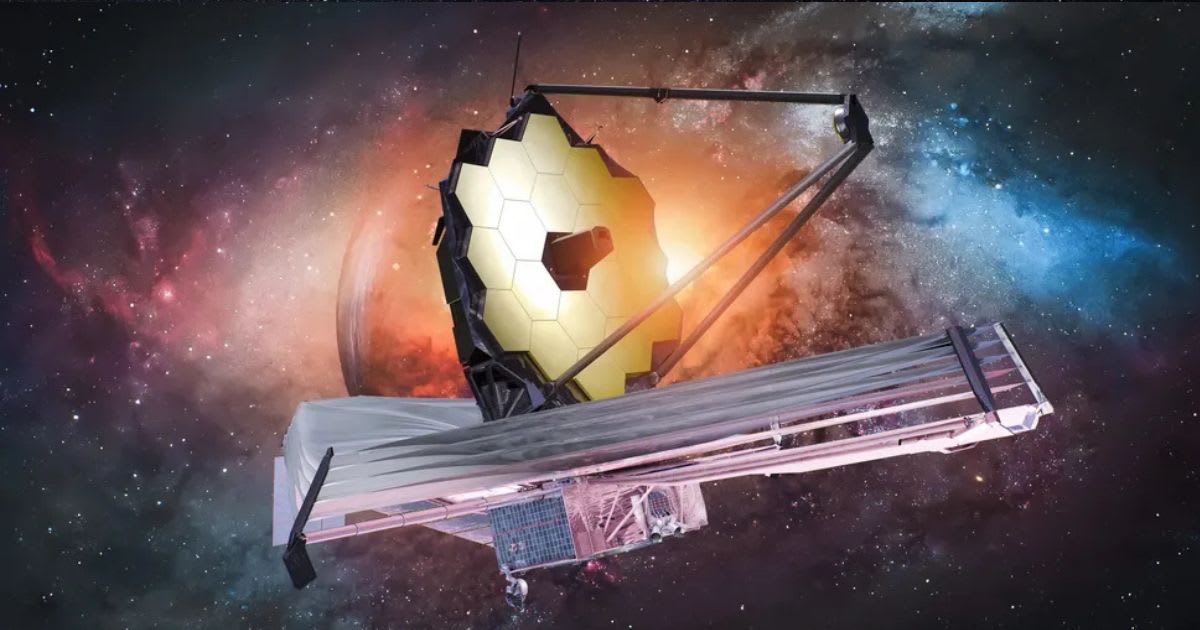
The James Webb Space Telescope is the largest and most powerful space telescope to date. (Image Source: dima_zel via Getty Images)

Using the James Webb Space Telescope, a team comprising researchers from the University of Portsmouth and the Center for Astrophysics, Harvard and Smithsonian, found evidence that “monster stars," of masses up to 10,000 times greater than our Sun, actually existed in the early universe. They spotted it by looking at a distant galaxy called GS 3073. Their attention was caught by a weirdly high nitrogen-to-oxygen ratio of 0.46. No ordinary stars or explosions we know about can make that kind of mix. Dr. Daniel Whalen from Portsmouth put it simply in a statement: “Our latest discovery helps solve a 20-year cosmic mystery. With GS 3073, we have the first observational evidence that these monster stars existed.” These giant stars would have burned incredibly bright but only for a short time, about a quarter-million years, which is nothing in cosmic terms. 
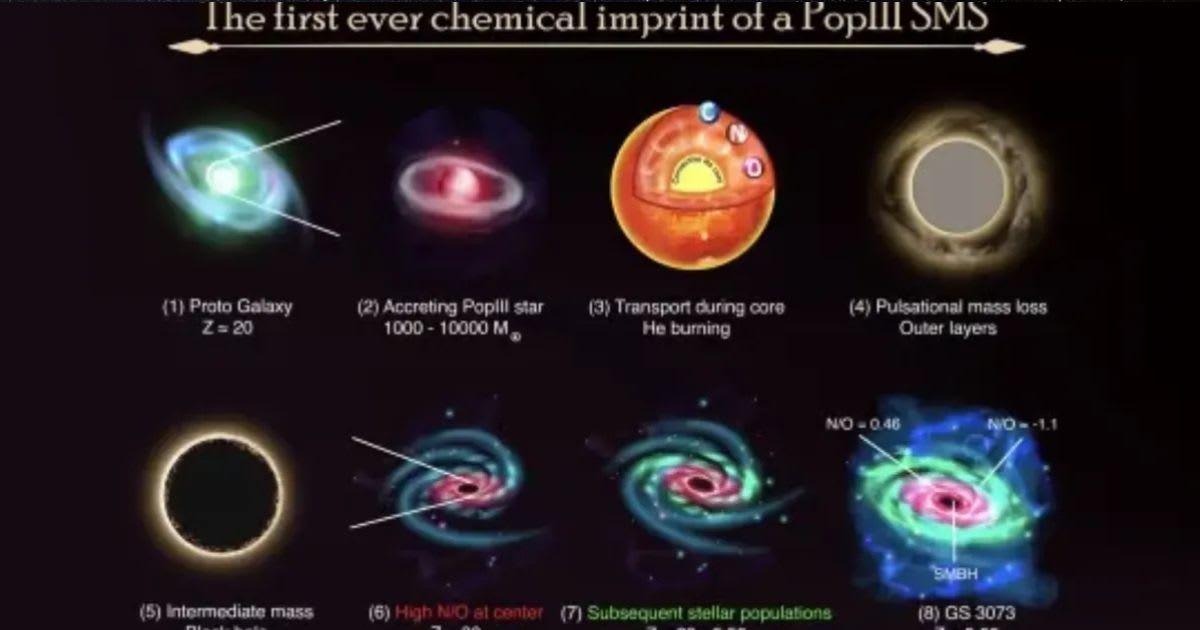
A diagram showing how the first stars enriched the chemistry of their galaxies (Image Source: University of Portsmouth)

But how do they produce such massive amounts of nitrogen? These beasts burn helium in their cores, making carbon. That carbon mixes with hydrogen in a shell around the core and, through a process called the CNO cycle, turns into nitrogen. Convection swirls it all around, and eventually the star sheds this nitrogen-rich material into space. When the team ran computer models of stars between 1,000 and 10,000 times the Sun’s mass, the numbers matched what they saw in GS 3073.

This illustration compares the different masses of stars.  The lightest-weight stars are red dwarfs. They can be as small as one-twelfth the mass of our Sun. The heaviest-weight stars are blue-white supergiants. They may get as large as 150 solar masses. Our Sun is between the lightweight and heavyweight stars
(Illustrated Image Source: NASA)
This illustration compares the different masses of stars. (Image Source: NASA)

Smaller or bigger stars didn’t produce the same pattern. There’s a sweet spot right in that monster range. What’s even more amazing is that GS 3073 has an active black hole at its center right now. It could be the leftover core of one of these supermassive stars that collapsed billions of years ago. Back in 2022, it was predicted that these monster stars could form in special streams of cold gas in the early universe, thereby explaining the existence of extraordinarily bright black holes (quasars) at the time.
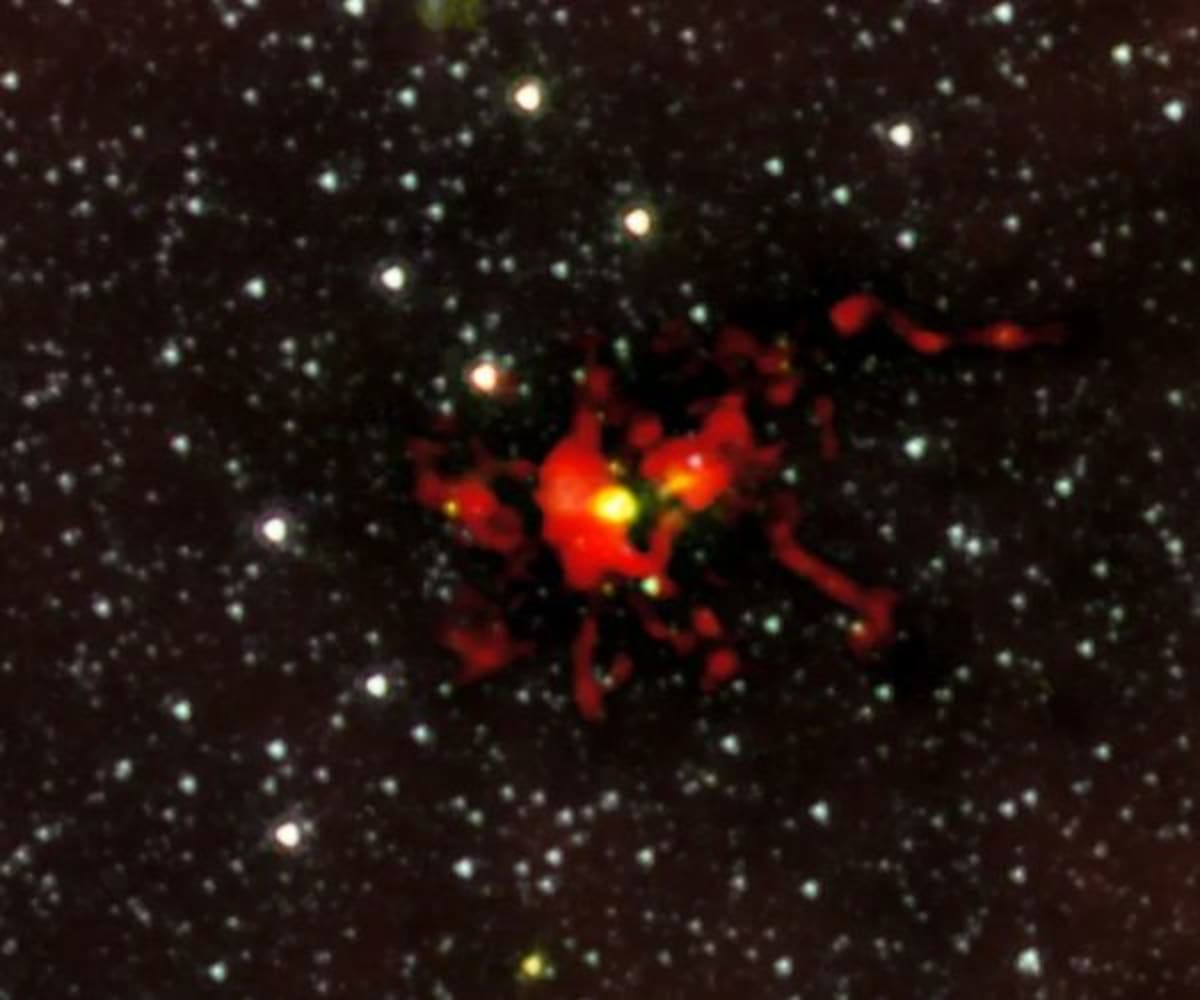
Observations of the dark cloud SDC 335.579-0.292 using the Atacama Large Millimeter/submillimeter array (ALMA) have given astronomers the best view yet of a monster star in the process of forming. (Image Source: ALMA (ESO/NRAJ/NRAO)/NASA/Spitzer/JPL-Caltech/GLIMPSE)
Observations of the dark cloud SDC 335.579-0.292 using the Atacama Large Millimeter/submillimeter array (ALMA) have given astronomers the best view yet of a monster star in the process of forming. (Representative Image Source: ALMA (ESO/NRAJ/NRAO)/NASA/Spitzer/JPL-Caltech/GLIMPSE)

Now they’ve found the chemical fingerprint to prove it. Dr. Devesh Nandal from Harvard said the chemical mix is like a cosmic fingerprint. “The pattern in GS 3073 is unlike anything ordinary stars can produce. It matches only one kind of source, primordial stars thousands of times more massive than our Sun.” An illustration of a supermassive black hole with a mass billions of times that of the sun. Did these cosmic titans grow from massive black hole seeds? 
(Representative Image Source: NASA)

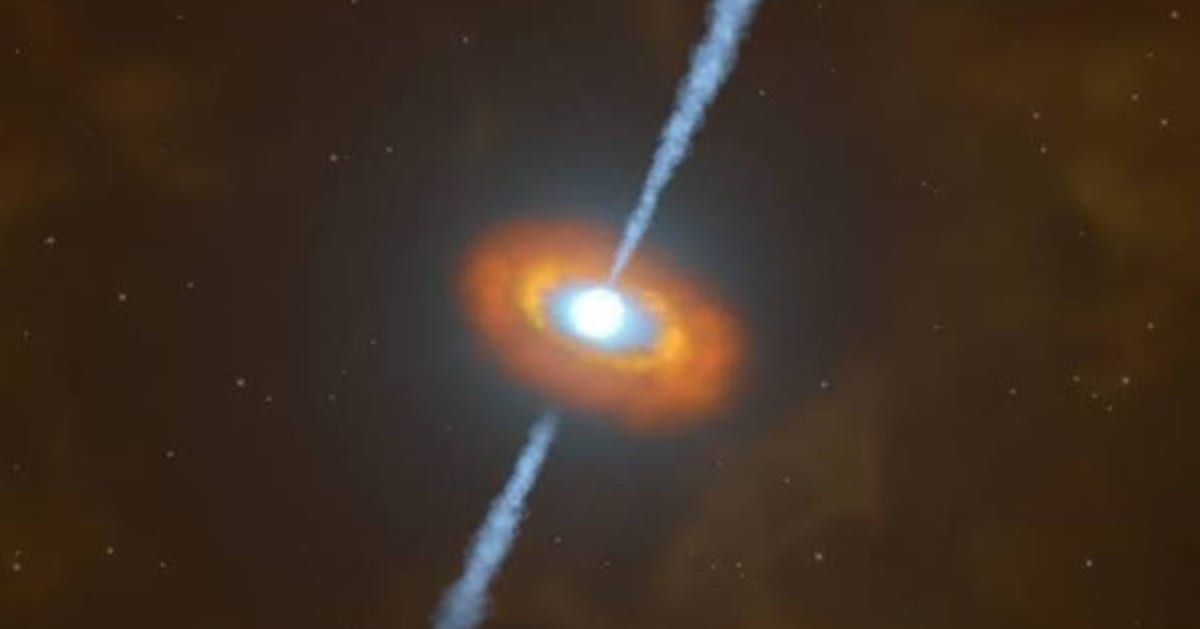
An illustration of a supermassive black hole with a mass billions of times that of the sun. Did these cosmic titans grow from massive black hole seeds? (Representative Image Source: NASA)

The models, published in Astrophysical Journal Letters, also predict what happens when these monster stars die. Instead of exploding, they collapse directly into massive black holes weighing thousands of solar masses. The researchers think JWST will spot more galaxies with this same nitrogen overload as it keeps looking deeper into the early universe. Each one would be another piece of proof that these cosmic giants really existed. 

More on Starlust

Astronomers image rare Tatooine-like world orbiting two suns locked in 300-year cycle
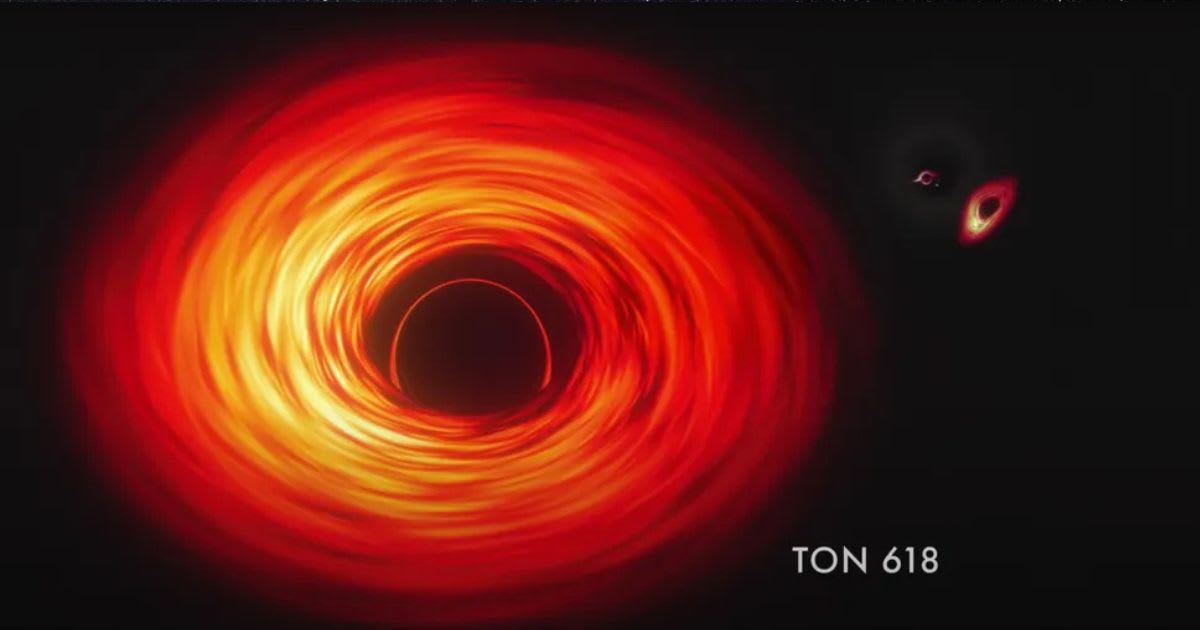
Black Holes: From unbelievable theory to observable reality

MORE STORIES

The study challenges assumptions that galaxies are too vast to be affected by small changes.
19 hours ago
Astronomers tested the TIME spectrometer on our own galaxy before aiming it at the cosmic dawn.
1 day ago
The map traces back to the point when the universe was 1 billion years old.
2 days ago
The James Webb Space Telescope's mid-infrared spectrograph caught the light from the gas giant's star as the planet crossed in front of it.
3 days ago
Quasars stripped early galaxies of their gas, the basic raw material for making stars.
7 days ago
This discovery of ancient stars provides insights into the chaotic evolution of the early Milky Way.
May 8, 2026
The energy of the nearby star and the deflection of the jets were used to measure the jets' power.
May 7, 2026
Fresh insights into star clusters advance our understanding of galaxy and planet formation.
May 7, 2026
The Vela Supercluster was discovered back in 2016, but astronomers just got to know about its true scale.
May 6, 2026
The discovery of over 1,000 winged radio galaxies vastly expands the current catalog.
May 5, 2026