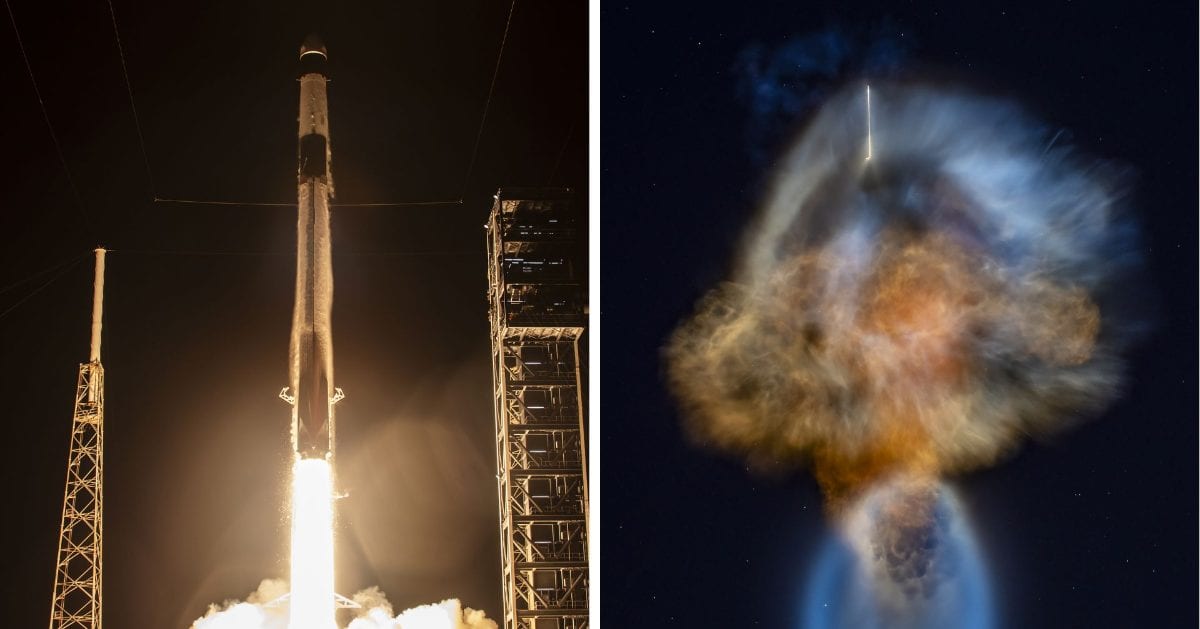
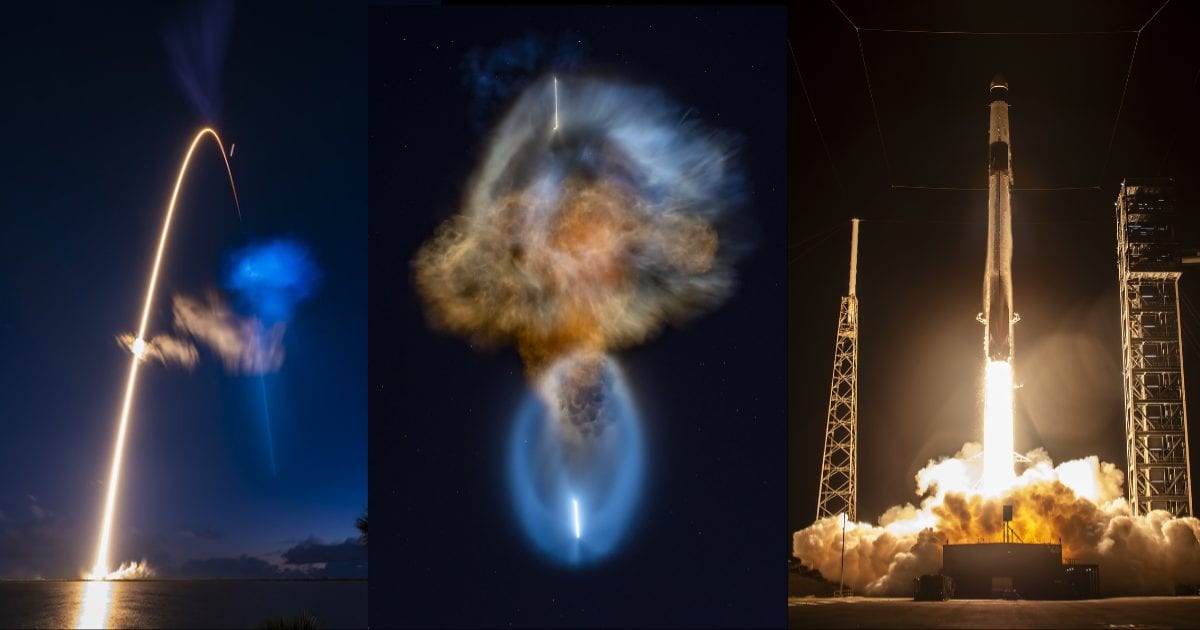
SpaceX launches 28 new Starlink satellites into orbit from Vandenberg Space Force Base

SpaceX successfully boosted 28 additional Starlink broadband satellites into low-Earth orbit late Sunday, launching a Falcon 9 rocket from Space Launch Complex 4 East (SLC-4E) at Vandenberg Space Force Base in California. The liftoff, which occurred at 10:04 p.m. EDT (7:04 p.m. PT), added another cluster of internet relay craft to the company's rapidly expanding constellation, as per SpaceX.
The mission was notable for its use of a highly experienced first-stage booster, which completed its 28th flight. The reusable core stage, which previously supported high-profile missions including the DART planetary defense test and the Sentinel-6 Michael Freilich Earth observation satellite, performed a nominal separation before executing a pinpoint landing. The booster touched down successfully on the autonomous droneship, Of Course I Still Love You, positioned in the Pacific Ocean.
Watch Falcon 9 launch 28 @Starlink satellites to orbit from California https://t.co/J3cQKyrkS3
— SpaceX (@SpaceX) September 29, 2025
This deployment pushes the operational size of SpaceX’s Starlink satellite network past the 8,500-unit threshold, a significant milestone for the colossal megaconstellation, according to Space.com. Across all variants of the Falcon 9 and the Falcon Heavy, per SpaceXNow, the total number of orbital missions has now reached 556, maintaining an overall success rate of 97.89% (556 successes out of 568 total attempts).
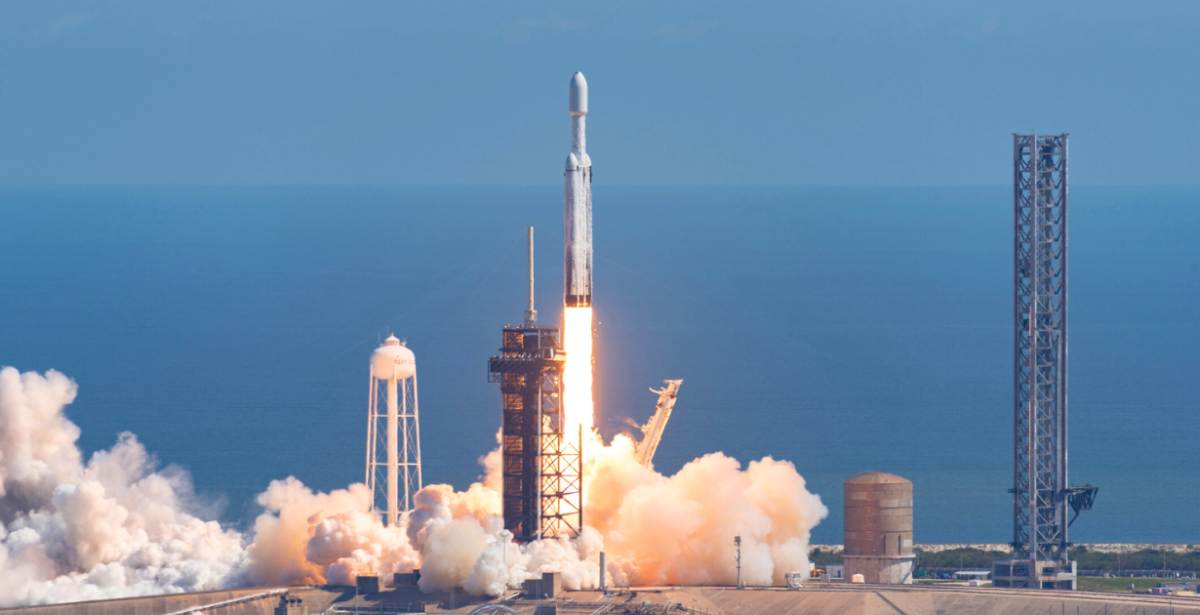
SpaceX's rapid deployment cadence will continue later this week with another Starlink mission, according to SpaceX. A Falcon 9 is scheduled to lift off from Space Launch Complex 40 (SLC-40) at Cape Canaveral Space Force Station in Florida sometime between 1:39 a.m. and 5:39 a.m. EDT on Friday, October 3, 2025, carrying another batch of 28 Starlink satellites to low-Earth orbit.
This upcoming mission will use a different booster, one making its eighth flight. This veteran first stage has previously supported a diverse manifest, including the CRS-33 resupply mission, the Crew-10 human spaceflight, and several commercial satellite launches (O3b mPOWER-E, O3b mPOWER-D, Bandwagon-3), along with two prior Starlink missions. Following staging, the booster is slated for recovery on the droneship Just Read the Instructions, which will be positioned in the Atlantic Ocean.

In a major expansion of its connectivity goals, SpaceX has filed a new request with the Federal Communications Commission (FCC) to deploy a colossal 15,000 next-generation satellites to upgrade its direct-to-cell Starlink service for mobile phones, as reported on PC Mag. The proposed satellite system will leverage radio spectrum SpaceX is set to acquire from EchoStar, parent company of Boost Mobile, in a deal valued at $17 billion. The company stated the new constellation would provide "ubiquitous connectivity to ordinary mobile handsets" and other user devices.
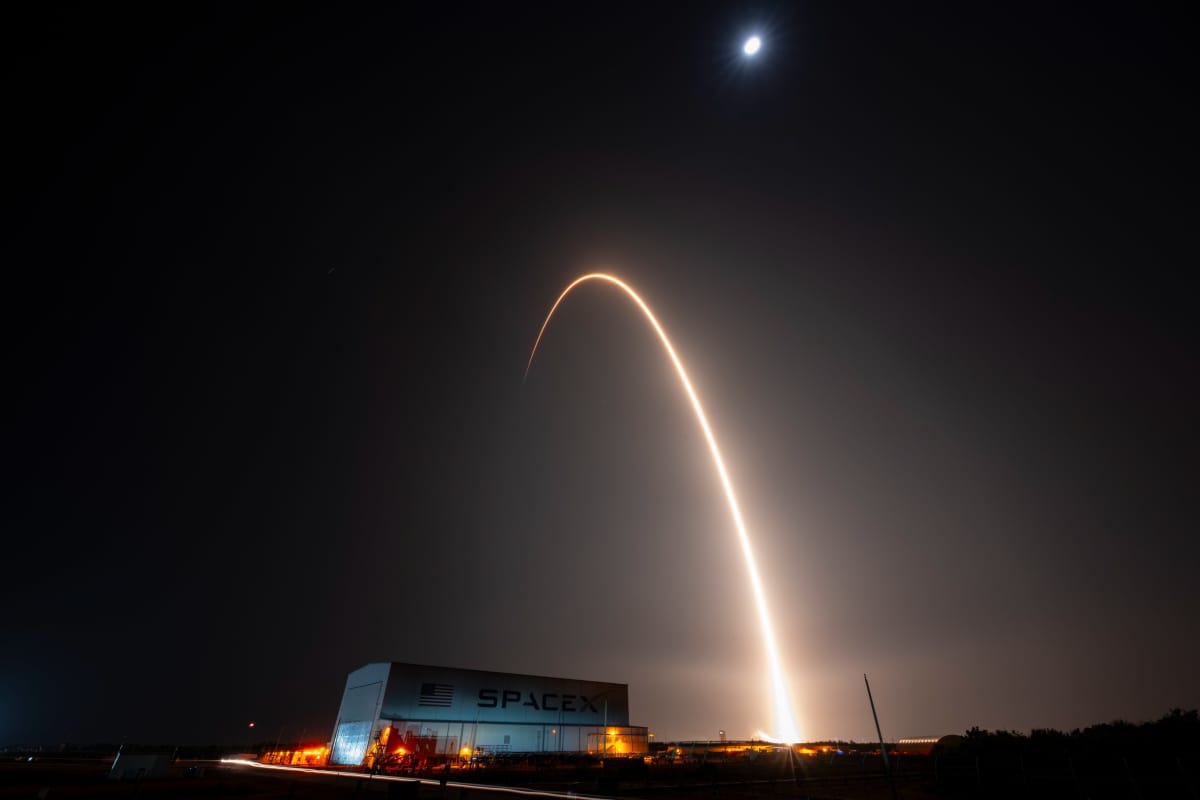
This next-generation constellation is designed to significantly enhance the existing direct-to-cell service, which currently utilizes over 650 satellites to beam connectivity, including satellite-powered texting and video calls, to phones in cellular dead zones. By harnessing the new EchoStar spectrum, SpaceX projects a massive 20-fold increase in user throughput, promising performance comparable to 4G LTE service.
To optimize performance and reduce latency for connecting with ground-based phones, the company is seeking approval to orbit these new cellular satellites even closer to Earth, at altitudes between 202 and 208 miles (326 and 335 kilometers). This is slightly lower than the 211 miles (340-kilometer) floor previously cleared by the FCC last November, which required coordination with NASA. The cellular service will use the newly acquired EchoStar spectrum and partner with T-Mobile's 1.91 to 1.995 GHz bands for US operations, along with various international bands.
More on Starlust
Falcon 9 to deliver 28 new Starlink satellites from Space Launch Complex on September 29