Scientists propose ambitious spacecraft mission to study Halley’s Comet when it returns in 2061
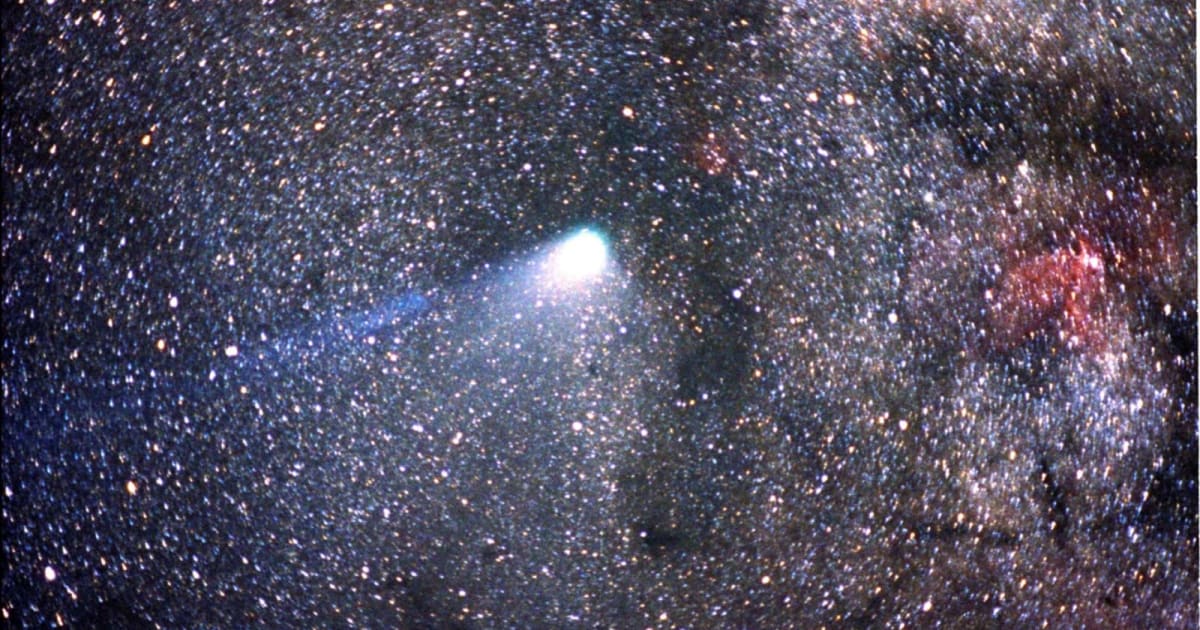
Halley’s Comet has fascinated humanity for at least two millennia, but key questions about its characteristics are still unanswered. Now, a group of scientists has come up with a plan to uncover new secrets of this popular celestial object before it returns in 2061. Named after astronomer Edmond Halley, this comet takes about 76 years to complete one orbit around the Sun, and it was last seen in 1986.
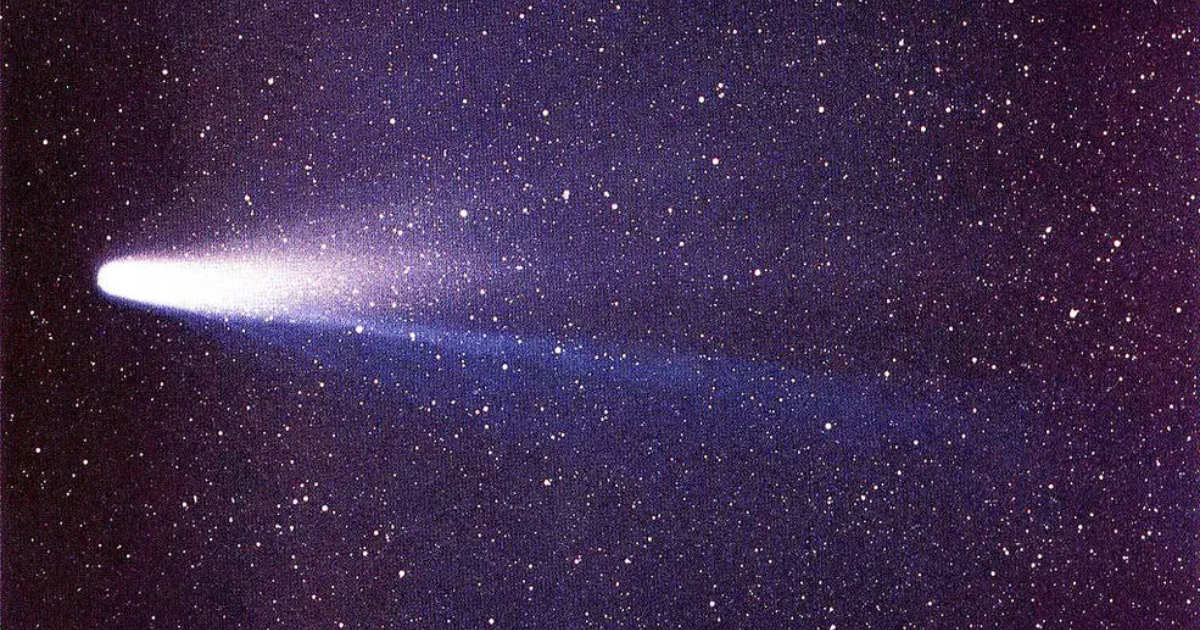
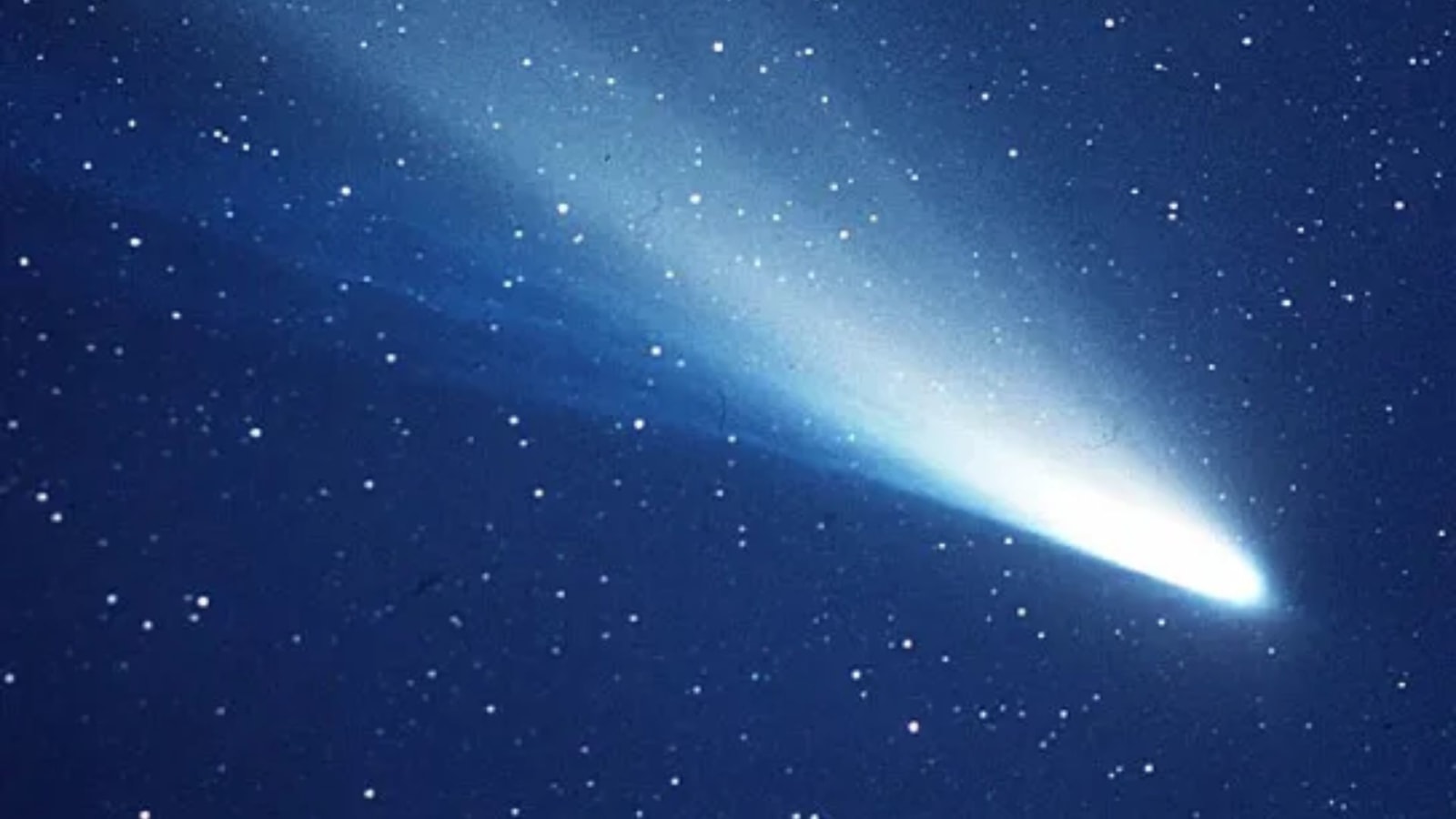
Astronomers predict that it will reach perihelion (its closest point to the Sun) on July 28, 2061. According to NASA, Halley’s Comet measures 9.3 by 5 miles (15 kilometers by 8 kilometers), and it is one of the least reflective objects in the solar system. Interestingly, Halley’s Comet was the first to make astronomers realize that these objects could make repeated occurrences in our skies.
Why scientists want to study Halley’s comet
Comets are most active when they are close to the Sun. As they reach perihelion, the ice on their surface sublimates (turns to gas) due to intense heat from the Sun, and this creates a bright coma and a tail millions of miles long. During perihelion, comets also release gases very intensely and undergo rapid changes in appearance and brightness. While scientists have gathered data on Halley's size and composition over the last few decades, there are still some features that need to be explored. In a paper available on the preprint server arXiv, a team of researchers at Khalifa University wrote that they want answers to unresolved questions regarding Halley’s comet, such as “the geomorphology of the surface, the localization and dimension of the active regions, the amount of mass loss, and the internal structure.”
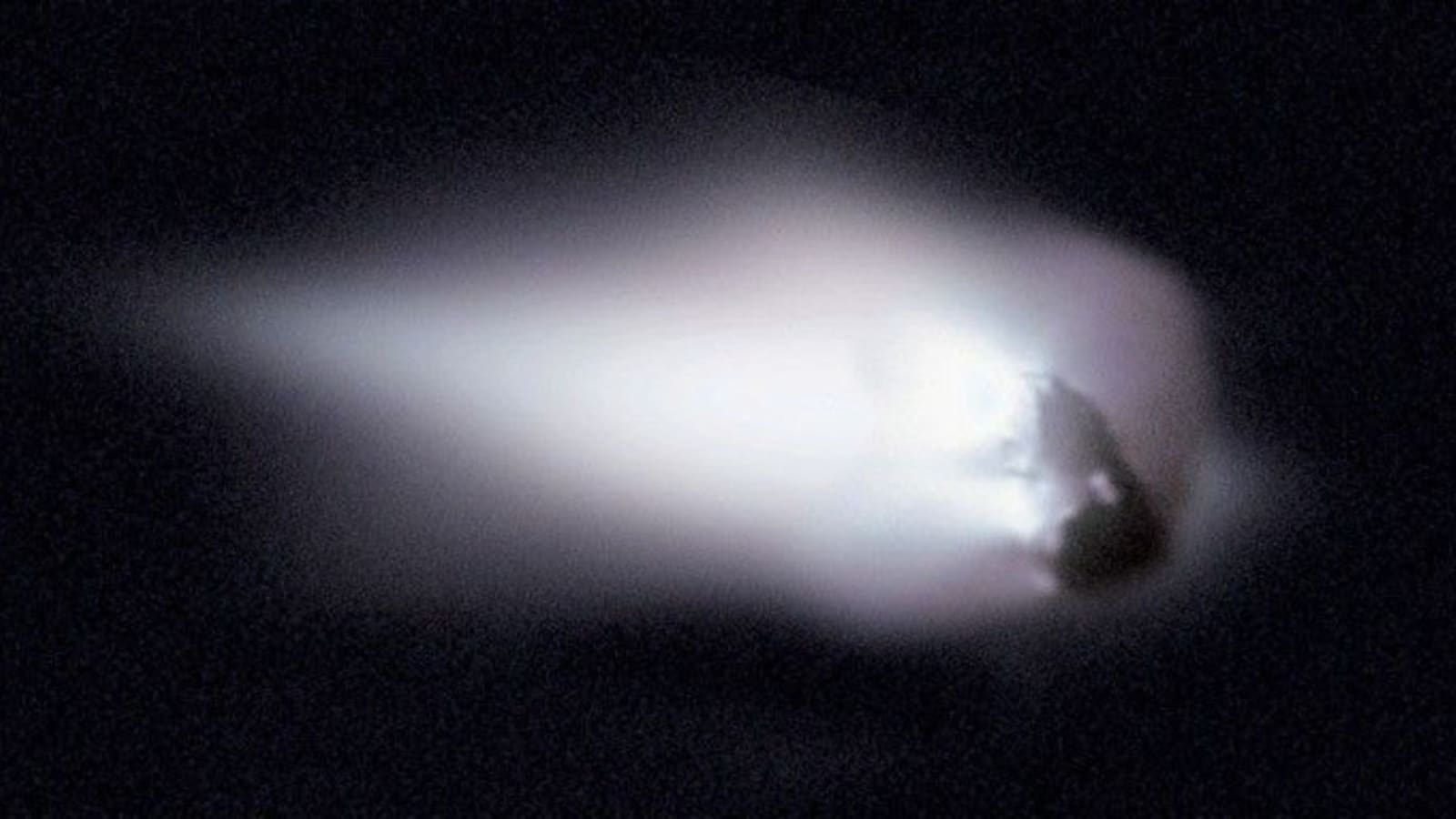
They have proposed launching a spacecraft that will rendezvous with the comet in 2060, a year before it reaches perihelion. In 1986, Europe, Japan, and the Soviet Union coordinated a fleet of five separately launched probes—known as the Halley Armada—which intercepted the comet and allowed scientists to study it up close for a few hours. With their proposed mission, the authors argue that they will be able to investigate the comet for months at a stretch.
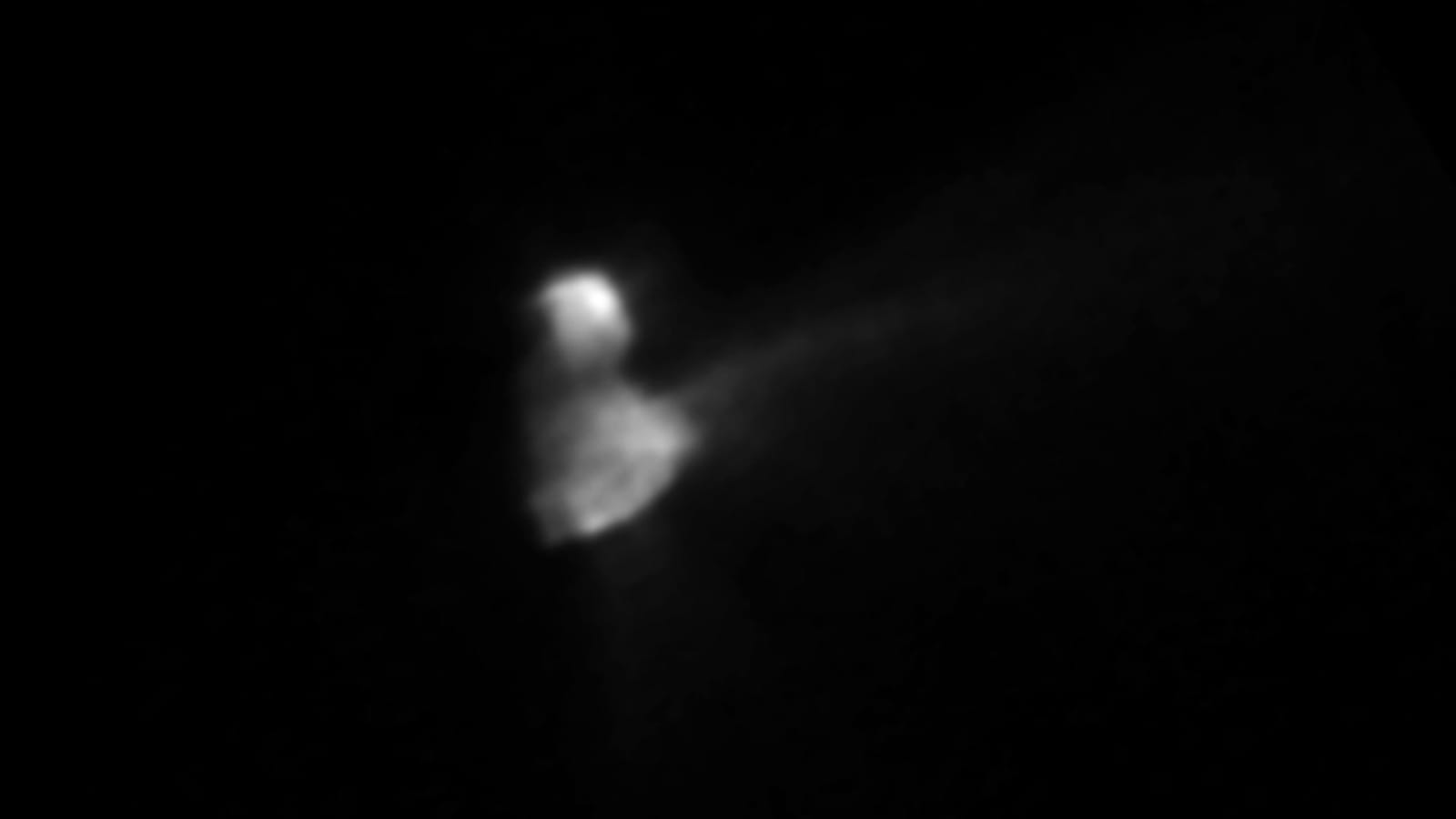
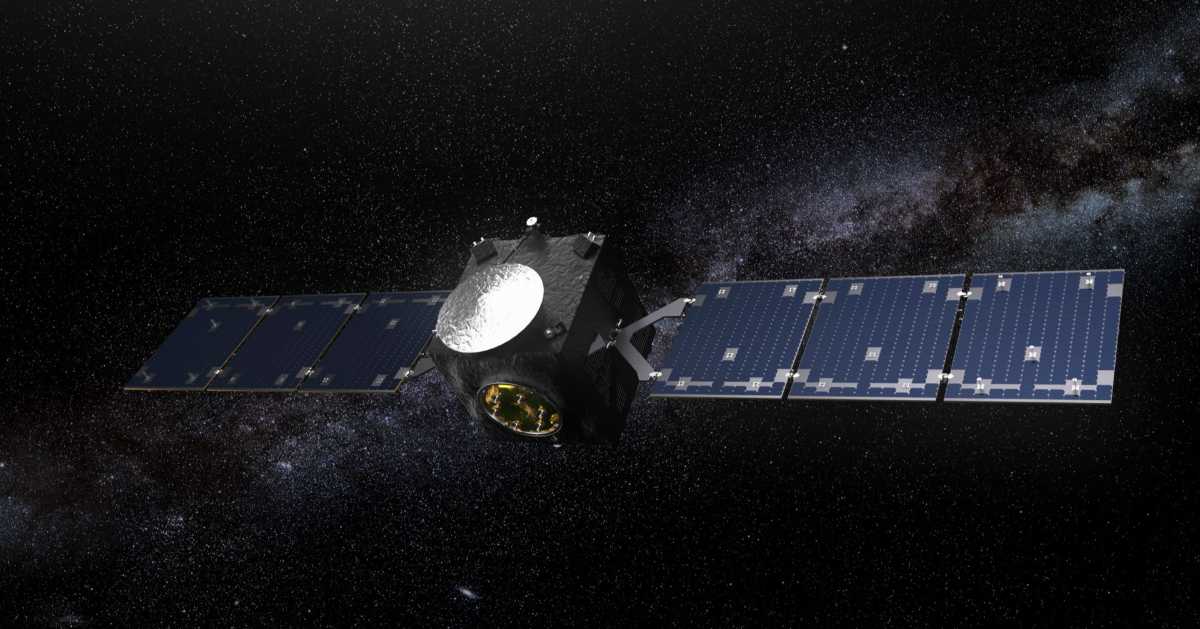
They’ve envisioned that the spacecraft will have a total mass of approximately 1,650 pounds (750 kg), carrying a suite of scientific instruments, and use two gravity assists from Jupiter and Saturn. If it launches in August 2036, Jupiter’s gravity assist will occur in February 2038, followed by Saturn’s in December 2039, with the rendezvous expected in February 2060. If it launches in 2037, the subsequent events will be pushed by several months, and the rendezvous will occur in September 2060. “The encounter is constrained to occur before the comet crosses the orbit of Mars, when the high-activity phase begins. Gravity assist (GA) maneuvers with Jupiter and Saturn reduce propellant consumption,” the authors wrote. It has been stressed that the gravity assist from these two planets will be favorable only in 2036 and 2037.
They have also proposed employing well-proven technology, such as standard radioisotope thermoelectric generators and a Hall-effect thruster for propulsion, a lightweight design that makes the mission compatible with several existing launchers. They say that the trajectory combined with an efficient propulsion system “minimizes launch energy and propellant budget, constraining the arrival to occur before the onset of high activity.” While the blueprint for the mission is ready, it remains to be seen if the project will be approved before the launch window arrives ten years from now.
More on Starlust
80,000-year mission to Alpha Centauri 4.4 light-years away: Nonprofit eyes launch by 2029
New study reveals fresh clues about the mysterious origin of comet 3I/ATLAS