Scientists find evidence of Kuiper Belt's ancient heavy oxygen water reservoir in our own atmosphere
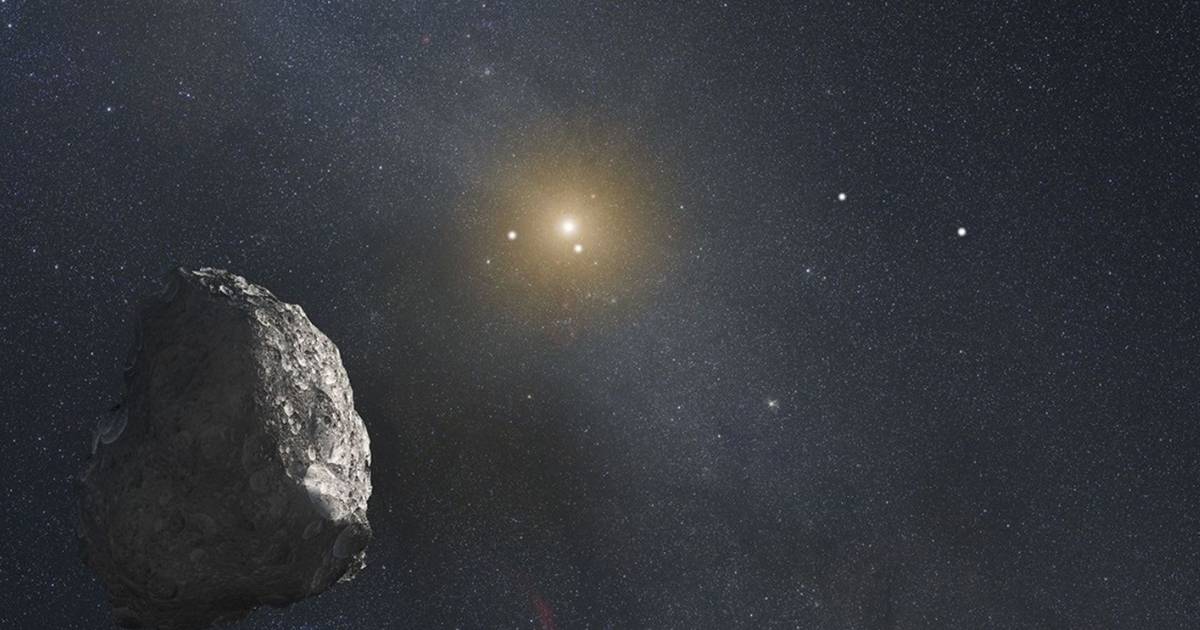
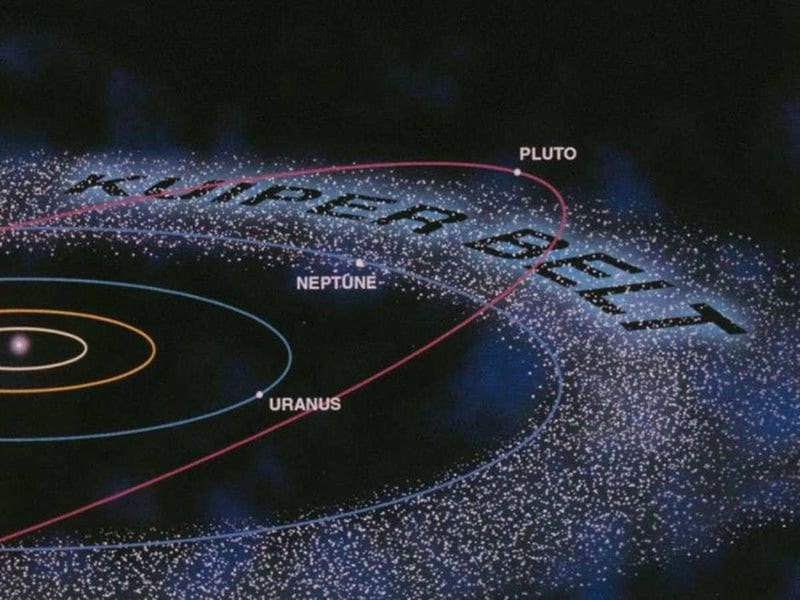
Researchers from NASA and UCLA have unearthed evidence of an ancient heavy oxygen water reservoir in the Kuiper Belt—a vast region of icy bodies in the outer Solar System beyond the orbit of Neptune. The study, published in Science Advances earlier this month, presents insights into the distribution of water during the time when the Solar System was still taking shape.
Tiny grains of space dust are helping NASA scientists uncover clues about how our solar system formed. By analyzing particles collected from Earth’s stratosphere, researchers found evidence of an ancient icy reservoir in the distant Kuiper Belt, showing that water in the outer solar system contained unusually high amounts of heavier oxygen isotopes. Read: https://t.co/Waxc4uC3nd
— NASA Science (@NASAScience_) November 18, 2026
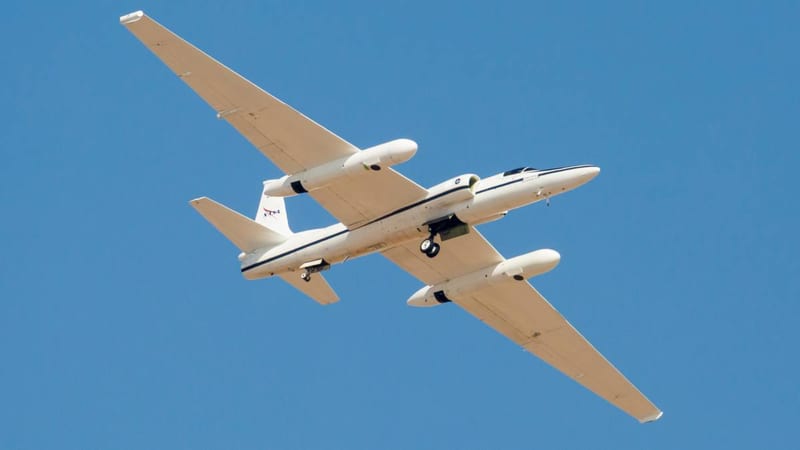
Oxygen has three stable isotopes, namely ¹⁶O, ¹⁷O, and ¹⁸O. For decades, astronomers have hypothesized that an ancient reservoir of water that is rich in ¹⁷O and ¹⁸O—the heavier oxygen isotopes—and depleted in ¹⁶O should exist in the outer Solar System. Evidence for this heavy water was found in one meteorite and the comet 67P, but it wasn't clear as to whether this water was common in the region or if there was any other explanation for it. After all, it has been very difficult to obtain samples from that region. To circumvent this problem, the researchers analyzed 12 dust particles collected from Earth's stratosphere by NASA's ER-2 high-altitude research aircraft. These particles, which were smaller than the width of a human hair, had an unusually high density of microscopic damage tracks left by prolonged exposure to energetic particles from the Sun. This, according to earlier research, indicated that they had traveled all the way from the Kuiper Belt.
NASA scientists Lindsay Keller and Christopher Snead analyzed the mineral structures and chemical configuration of the particles at NASA's Johnson Space Center, revealing that the original materials of these particles had interacted with water. Snead also worked with Ming-Chang Liu, who's a researcher in UCLA's Department of Earth, Planetary, and Space Sciences, and UCLA Research Professor Kevin McKeegan, to measure oxygen isotopes in the particles using a highly sensitive ion microprobe. They found that the particles had an isotopic signature that was different from those found in particles that originate closer to the Sun.
The team performed a comparison of the water-altered minerals in the dust particles with their original minerals and determined the chemical composition of the water that brought about the change. The findings demonstrated that the water was highly deficient in ¹⁶O and rich in the heavier isotopes. "Our results provide strong support for the idea that the Solar System started with two very different oxygen reservoirs," Liu told Starlust in an email. "NASA’s Genesis mission showed that the Sun, which holds more than 99% of the Solar System’s mass, is rich in ¹⁶O, whereas the water we inferred from these Kuiper Belt particles sits at the opposite extreme, strongly depleted in ¹⁶O."
These distinct isotopic signatures that the researchers found in the particles are not found in meteorites. This suggests that the two reservoirs largely remained isolated from one another. The researchers attribute this isolation to Saturn and even Neptune and Uranus. "It is reasonably well established that Jupiter played a large role in separating materials that formed in the inner Solar System from the water- and organic-rich carbonaceous chondrite meteorites," Keller told Starlust in an email. "What we have proposed is that Saturn, and probably with the help of the ice giants, played a similar role that kept the Kuiper Belt objects largely isolated, with only the short-period comets coming into the inner Solar System."
More on Starlust
Scientists just found a bizarre new form of ice that could explain what’s inside Uranus and Neptune
Stardust trapped in Antarctic ice reveal our solar system's journey through a cosmic cloud