Scientist explains the stripe in the new image of 3I/ATLAS from NASA’s Mars Perseverance rover

A puzzling, elongated stripe observed in a new image of the interstellar object 3I/ATLAS captured by NASA's Perseverance rover on Mars is merely an imaging artifact, according to a leading astrophysicist. Dr. Avi Loeb posted this detailed analysis on Medium, immediately dismissing viral speculation that the object, which is passing through the solar system, might be a massive cylindrical structure.
#IndependenceDay Interpretation of the New Perseverance Rover Camera Image of 3I/ATLAS by #AviLoeb. Dr. Loeb explains how the "stripe (or cylindrical)" image is greatly elongated by the integration time used to make the composite Navcam image - https://t.co/CpdOfQkLUr
— @StoicMeditation (@RussellMcNeil) October 6, 2025
The image, taken by the rover's Right Navigation Camera (Navcam) on October 4, 2025, when 3I/ATLAS was approximately 38 million kilometers from Mars, shows a bright streak significantly longer than it is wide. This led to questions about the object's true geometry, including inquiries Dr. Loeb received from public figures like Rep. Anna Paulina Luna.
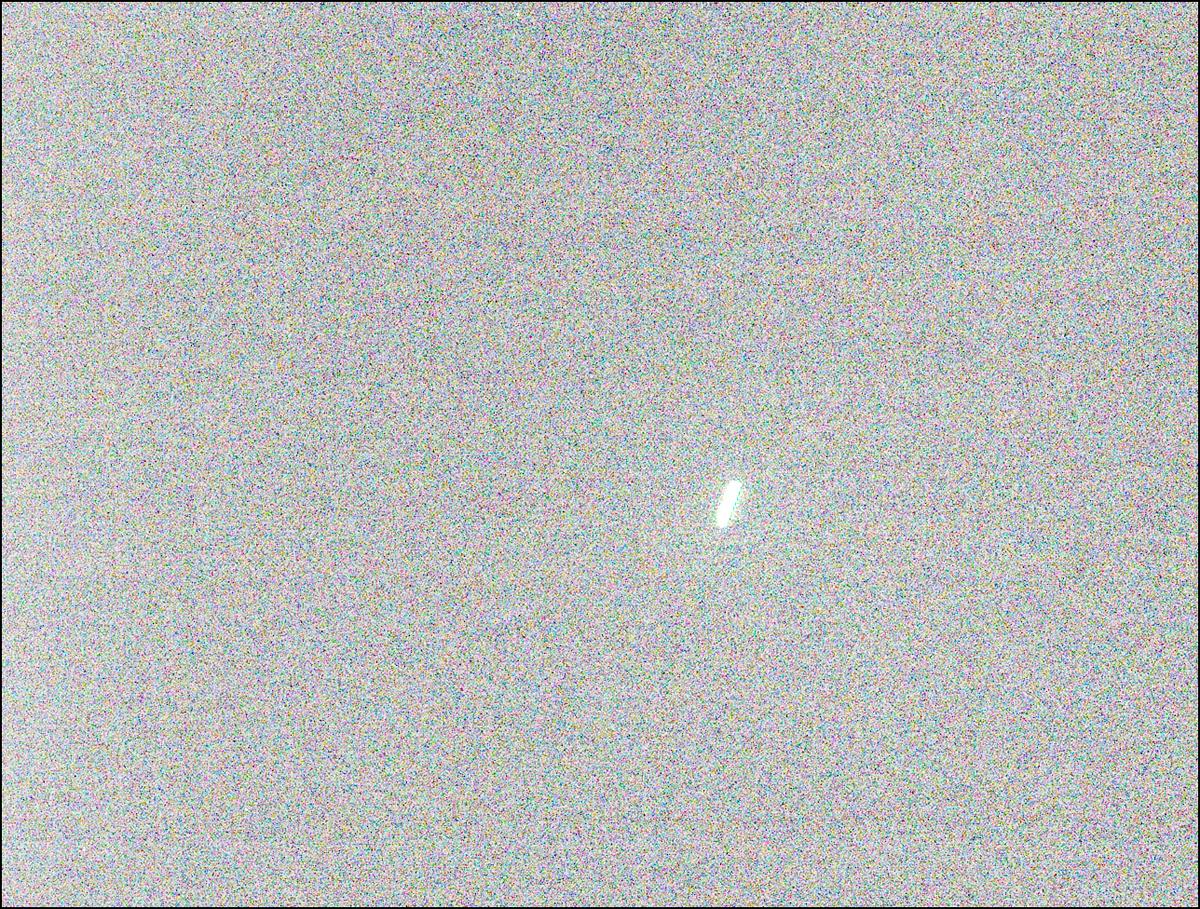
Dr. Loeb's calculations determined that the stripe's projected length is approximately 31,000 miles (50,000 kilometers), a thousand times greater than the largest plausible diameter for the object, which is estimated to be less than 31 miles (50 kilometers). The size disparity immediately suggests the elongation is not intrinsic to 3I/ATLAS, Dr. Loeb wrote, adding that the stripe is a direct consequence of the long total integration time required to capture the faint object.
The Navcam's limited angular resolution creates an initial smearing effect of roughly 7,500 miles (12,500 kilometers) at the object's distance. However, the final 31,000 miles (50,000 kilometers) length is attributed to the object's rapid motion across the Martian sky during the extended exposure. 3I/ATLAS is traveling on a retrograde orbit at approximately 67 kilometers per second relative to the Sun, opposing Mars's own 24 kilometers per second orbital speed. This high relative velocity means the object moved approximately 31,000 miles (50,000 kilometers) over a period of roughly 10 minutes, the estimated total time interval during which hundreds of individual Navcam snapshots were stacked to enhance the object’s brightness.
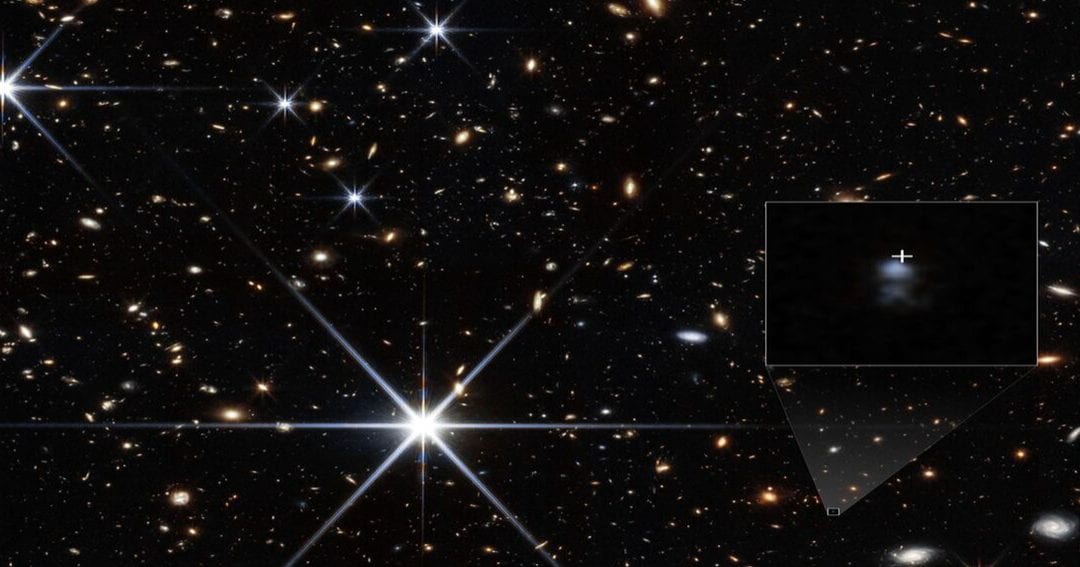
Dr. Loeb also noted that if 3I/ATLAS were a 31,000-mile (50,000-kilometer) long cylinder, it would have appeared much larger in previous observations, such as those taken by the Hubble Space Telescope on July 21, 2025, which show the object is significantly smaller. The only scenario where the stripe would not be an artifact is if the images represent single, short snapshots of a much closer, yet-to-be-identified object. The scientific community is currently awaiting the release of high-resolution images from the HiRISE camera aboard the Mars Reconnaissance Orbiter, which are expected to provide the tightest constraints yet on the true size of 3I/ATLAS.
Even as imaging artifacts are resolved, the interstellar object 3I/ATLAS remains an astronomical enigma, according to a separate analysis co-authored by Dr. Loeb. A new study by Harvard professors Richard Cloete, Avi Loeb, and Peter Vereš suggests that 3I/ATLAS is fundamentally unlike any comet previously observed. The researchers found the object to be "anomalously massive and large," significantly larger than the first two interstellar objects detected, 1I/'Oumuamua and 2I/Borisov. Dr. Loeb noted in his blog that the object’s sheer size, coupled with the absence of a noticeable "rocket effect" from outgassing, presents a major scientific puzzle, leaving open the remote possibility of it being "alien technology."
More on Starlust
Scientists rush to coordinate spacecraft as massive comet 3I/ATLAS approaches Mars
Interstellar comet 3I/ATLAS will make its closest approach to Earth soon—here's how to spot it now