Interstellar comet 3I/ATLAS will make its closest approach to Earth soon—here's how to spot it now

The distant interstellar comet 3I/ATLAS is making its final trajectory toward a close pass by Earth. The object is scheduled to make its closest approach on Friday, December 19, 2025. It will pass at a distance of approximately 167.08671 million miles, which equates to 2.5 Astronomical Units (AU), as per The Sky Live.
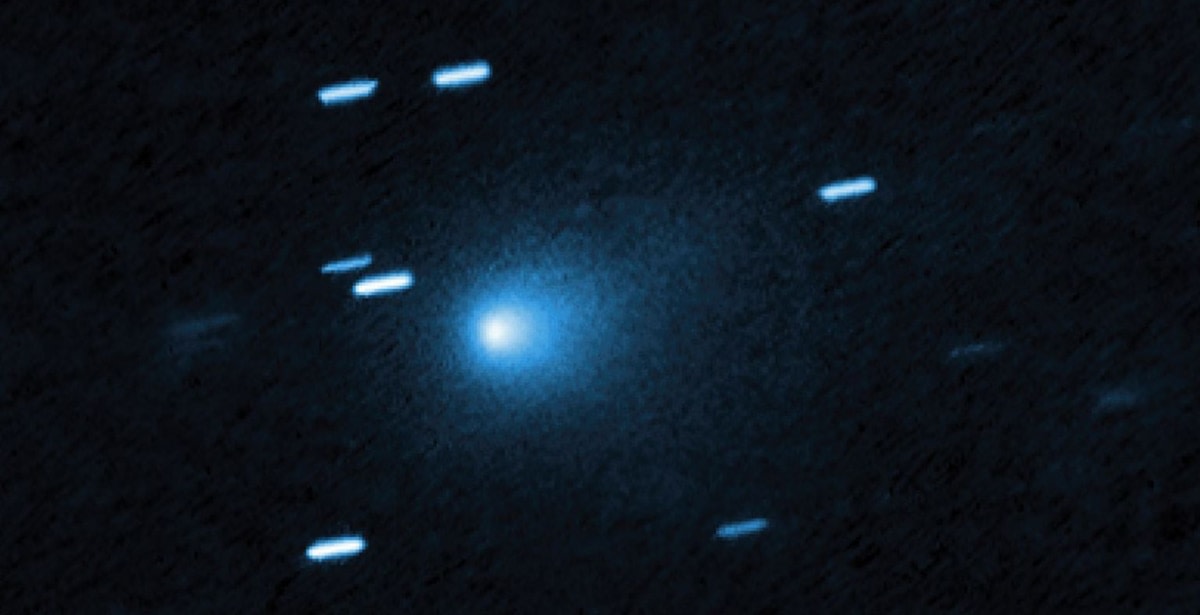
For astronomers tracking its movement, Comet 3I/ATLAS is presently located in the constellation Libra. Its current distance from Earth is measured at roughly 232 million miles. The comet's latest recorded apparent magnitude is 12.2. Its precise apparent coordinates for September 30 are a Right Ascension of 14 hours, 27 minutes, and 25 seconds, and a Declination of -11 degrees, 01 minutes, and 18 seconds.
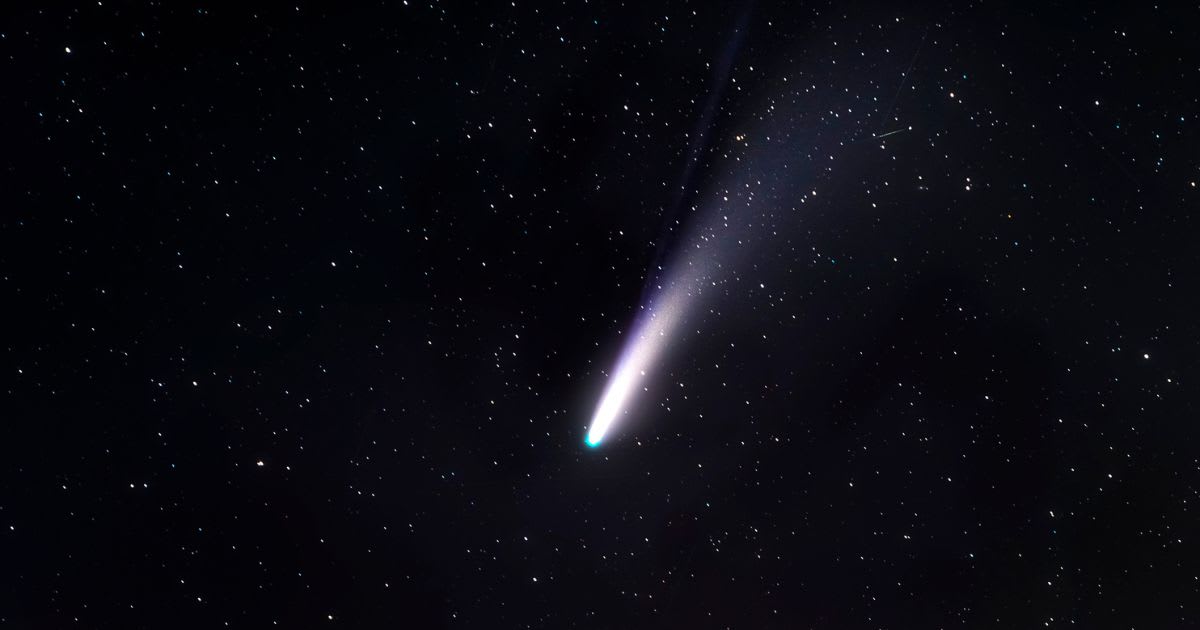
Tracking data confirms the comet's rapid, incremental movement toward Earth over the coming days, as per COBS. On October 1, 2025, the comet will be 2.500 AU away, positioned at a Right Ascension (RA) of 14h25m29.2s and a Declination (Dec) of −10°53′55′′, with an apparent magnitude of 12.5. The following day, October 2, its distance closes slightly to 2.496 AU, and it will be found at 14h23m33.2s RA and −10°46′30′′ Dec, with its brightness increasing to magnitude 12.4.
By October 3, the inbound visitor will be 2.492 AU from Earth, with coordinates 14h21m37.7s RA and −10°39′02′′ Dec, and a magnitude of 12.3. On October 4, the distance will have decreased to 2.488 AU, with the object located at 14h19m42.4s RA and −10°31′33′′ Dec, maintaining the current reported magnitude of 12.2. The magnitude is expected to remain 12.2 on October 5, when the comet's distance will be 2.484 AU, and its location will be 14h17m47.4s RA and −10°24′01′′ Dec.
Finally, on October 6, 2025, the comet is predicted to be 2.480 AU from Earth, at 14h15m52.6s RA and −10°16′27′′ Dec. Its brightness is forecast to marginally increase, reaching a magnitude of 12.1. Before its Earth flyby, the comet will first reach its closest point to the Sun. According to NASA, this will occur on October 30, 2025. At that time, 3I/ATLAS will pass approximately 130 million miles (about 1.4 AU) from our star, a position just inside the orbit of Mars.
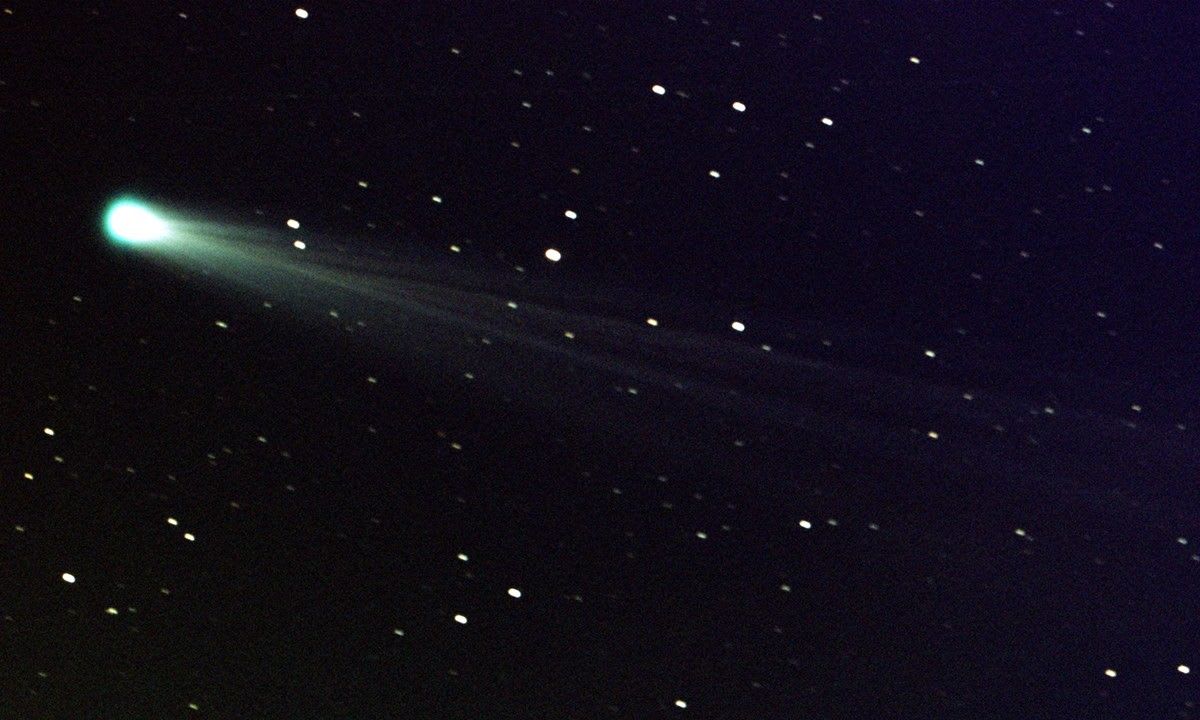
Beyond its position, the interstellar object is generating considerable controversy among researchers due to its extraordinary physical properties. A new paper, co-authored by prominent astronomers including Harvard professors Richard Cloete, Avi Loeb, and Peter Vereš, describes 3I/ATLAS as a major scientific puzzle, suggesting it is "anomalously massive and large." This conclusion stems from the object's lack of a noticeable "rocket effect," the non-gravitational push typically observed from outgassing comets, when paired with its sheer size. According to the data, 3I/ATLAS is estimated to be at least 33 billion tons more massive than the first interstellar visitor, 1I/`Oumuamua.

This scale directly contradicts established astronomical models, which predict that the solar system should have detected a far greater number of smaller interstellar objects, like 1I/`Oumuamua, before spotting an object as large as 3I/ATLAS. The researchers highlight this significant anomaly, with some co-authors publicly floating the possibility that the object could represent "alien technology."
More on Starlust
Our third interstellar visitor, comet 3I/ATLAS, has a largely carbon dioxide-infused 'coma'