NASA’s Curiosity rover pictures Martian 'giant spiderwebs' that hint at ancient groundwater activity
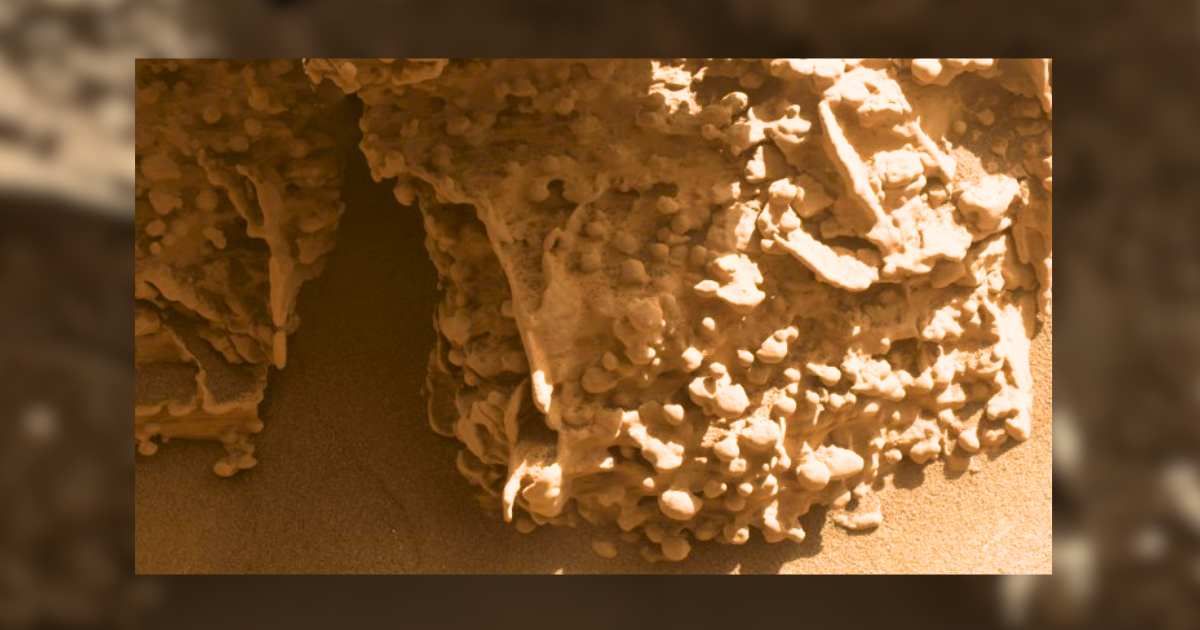
New close-ups reveal mineral ridges and nodules that point to a wet past on the Red Planet.
Bumpy mineral nodules on the Martian surface, pictured by NASA’s Curiosity rover. (Cover Image Source: NASA/JPL-Caltech/MSSS)

NASA’s Curiosity rover has captured close-up images of “boxwork” formations on Mars. From orbit, these formations look like 'giant spiderwebs,' but they are actually low mineral ridges with sandy hollows between them, each ridge about three to six feet tall. Before these newly released images, all assumptions about them were based on orbital imagery, and this is the first time scientists have seen these strange structures up close.
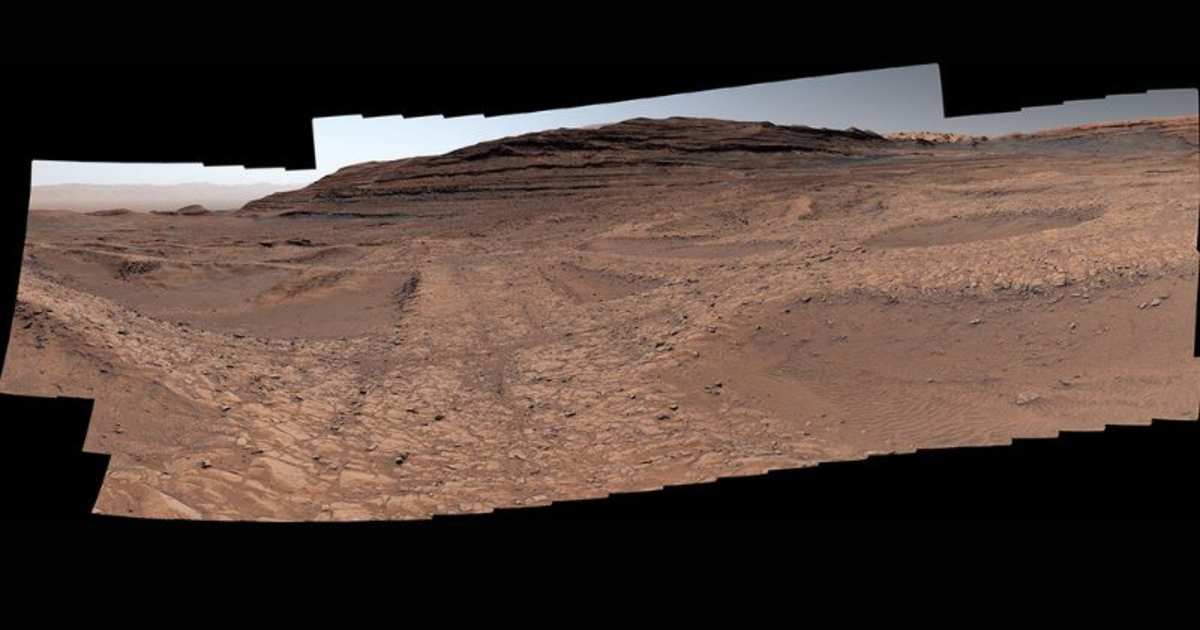
NASA’s Curiosity Mars rover captured this Mastcam panorama of boxwork formations on Sept. 26, 2025, made from 179 stitched images showing low ridges with sandy hollows between them. (Image source: NASA/JPL-Caltech/MSSS)
NASA’s Curiosity Mars rover captured this panorama of boxwork formations — the low ridges seen here with hollows in between them — using its Mastcam on Sept. 26, 2025. (Image source: NASA/JPL-Caltech/MSSS)

The boxwork formations stretch across miles of terrain and sit high up on Mount Sharp. Each layer of this nearly 5-kilometer-tall mountain represents a natural timeline of Mars’ climate history. Curiosity has been exploring it for years to study how much the planet has changed over eons. Now, these ‘spiderwebs’ hint at ancient Martian groundwater activity in this region, which seems to have occurred more recently than scientists previously expected.
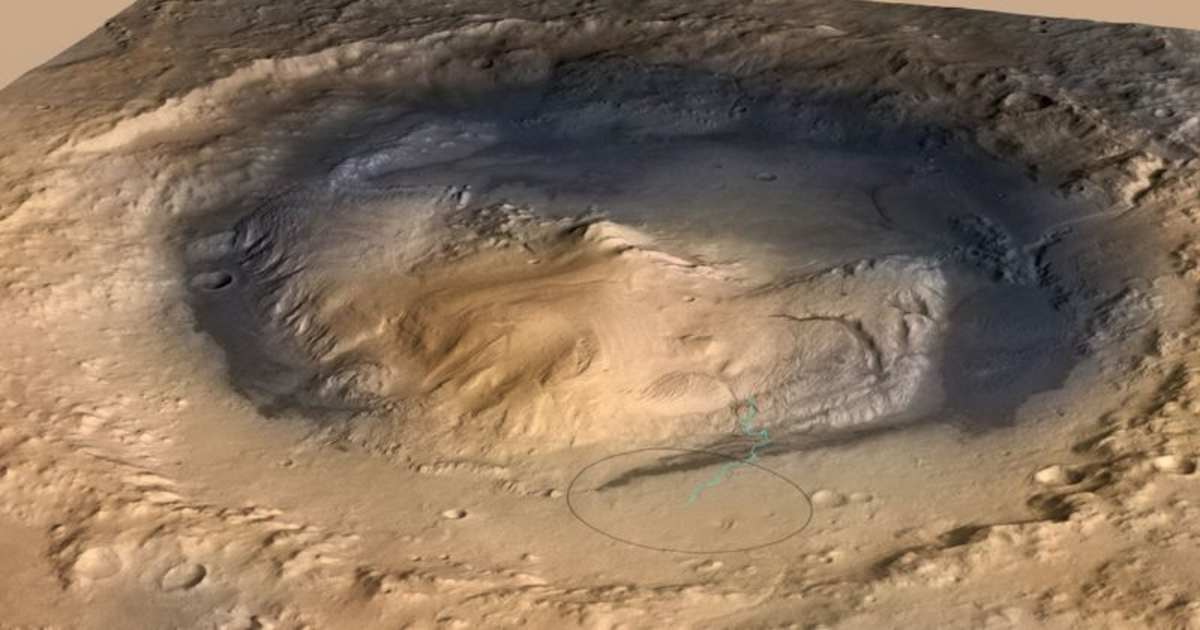
This oblique view of Mount Sharp combines elevation and imaging data from three Mars orbiters, captured on March 28, 2012. (Image source: NASA/JPL-Caltech/ESA/DLR/FU Berlin/MSSS)

According to NASA, this indicates microbial life may have thrived during this period, too. Therefore, if groundwater lasted longer, Mars’ habitable conditions may also have lasted longer. “Seeing boxwork this far up the mountain suggests the groundwater table had to be pretty high,” said Tina Seeger, a mission scientist leading this investigation. “And that means the water needed for sustaining life could have lasted much longer than we thought looking from orbit.” 
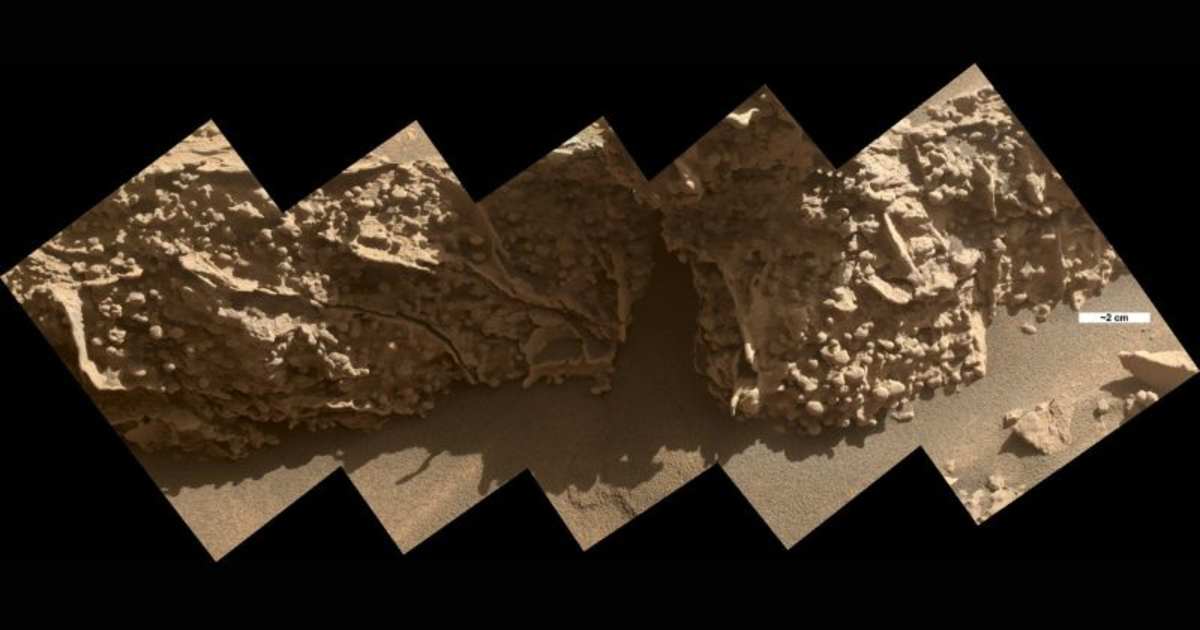
NASA’s Curiosity rover captured this 50-image MAHLI mosaic on Aug. 21, 2025 (Sol 4,636), showing pea-sized mineral nodules formed as groundwater dried within Mars’ boxwork formations billions of years ago. (Image source: NASA/JPL-Caltech/MSSS)
NASA’s Curiosity rover captured this 50-image MAHLI mosaic on Aug. 21, 2025, showing pea-sized mineral nodules formed as groundwater dried within Mars’ boxwork formations billions of years ago. (Image source: NASA/JPL-Caltech/MSSS)

The key evidence for this comes from bumpy, pea-sized mineral nodules spotted by Curiosity in the boxwork region. Such nodules are usually formed as groundwater dries up and leaves minerals behind. They have been observed elsewhere on the planet before as well. But what’s surprising this time was where they appeared—along the sides of the ridges and in the sandy hollows, instead of the main fractures. Researchers still don’t fully understand why the nodules formed in those exact spots.
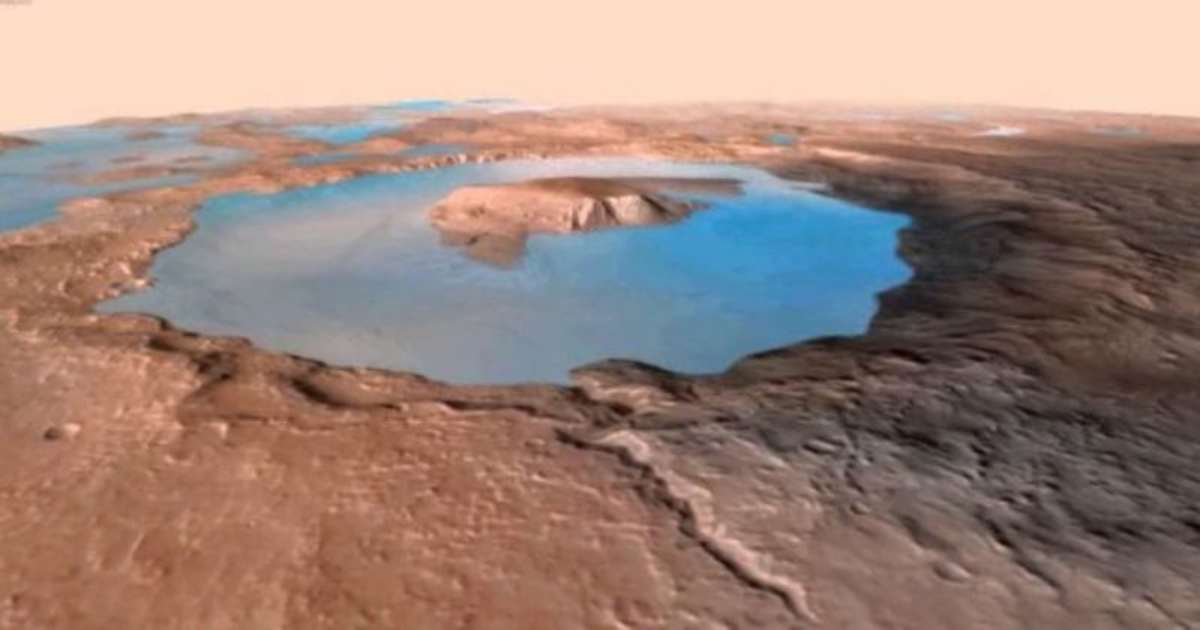
Artist’s rendering of Gale Lake around 3.5 billion years ago, when Mars was warmer and wetter, based on Curiosity findings and Mars Reconnaissance Orbiter HiRISE data. (Image source: NASA Astrobiology/Evan Williams/MRO HiRISE)
Artist’s rendering of Gale Lake around 3.5 billion years ago, when Mars was warmer and wetter, based on Curiosity findings and Mars Reconnaissance Orbiter HiRISE data. (Representative Image source: NASA Astrobiology/Evan Williams/MRO HiRISE)

But how did these ‘spiderweb’ formations come into existence? According to NASA’s findings, groundwater flowed through fractures in bedrock, and minerals crystallized inside those fractures. These mineral deposits hardened, and the surrounding rock that wasn’t reinforced eroded away over time. The remaining sections became ridges, and wind erosion gave way to the sandy hollows between them.
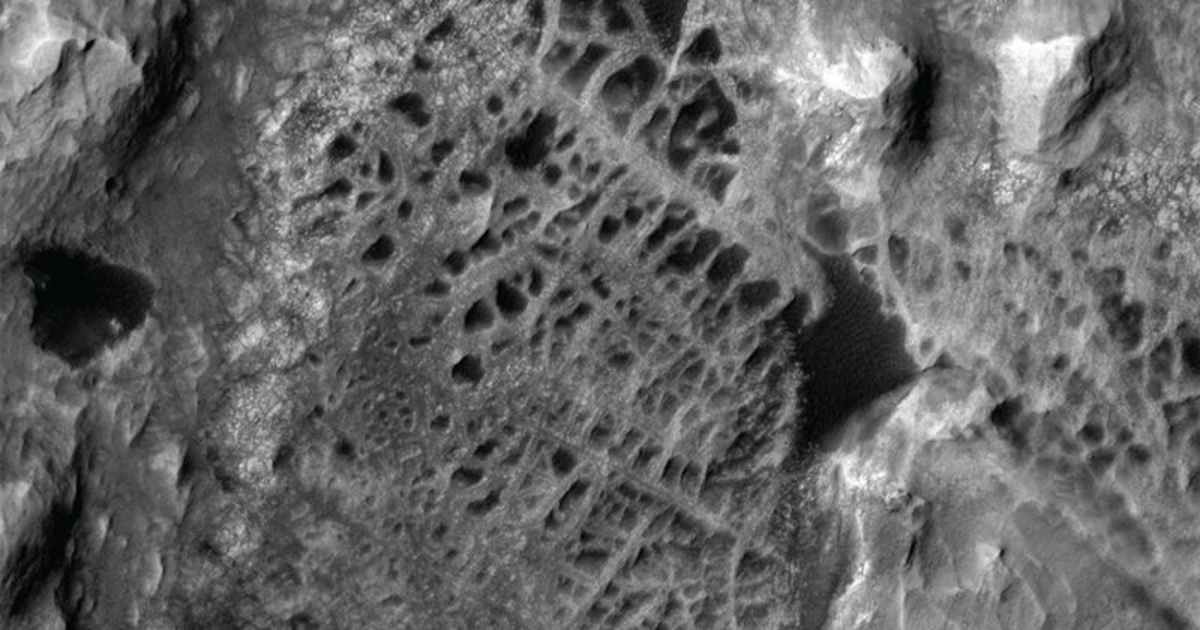
Scientists believe ancient groundwater formed these boxwork ridges, seen here in a Dec. 10, 2006 image from NASA’s Mars Reconnaissance Orbiter, with Curiosity set to study similar formations up close in 2025. (Image source: NASA/JPL-Caltech/University of Arizona)
Scientists believe ancient groundwater formed these boxwork ridges, seen here in a Dec. 10, 2006 image from NASA’s Mars Reconnaissance Orbiter. (Image source: NASA/JPL-Caltech/University of Arizona)

Long before the Curiosity rover got up close and took pictures of these formations, researchers suggested in 2014 that the dark lines across them (seen from orbit) might be central fractures. Now, the images have confirmed that they are indeed fractures, which validates the groundwater formation theory. 


These boxwork formations can also be found on Earth, mostly in caves or sandy places, but they are usually just a few centimeters tall. On Mars, they are way larger and stretch for miles, and the region in Mount Sharp is actually part of a sulfate-rich layer. Sulfates formed as water evaporated from Mars, which means the region was most likely formed during a drying period. Curiosity will soon leave the boxwork region in March to explore the sulfate layer, as the mission aims to understand how Mars went from being a warm, wet planet to a desert.

More on Starlust

'Dinosaur footprints' on Mars? NASA's Curiosity rover investigates strange rock formation on the planet

NASA's Curiosity has learned four new tricks to boost efficiency after 13 years exploring Mars
MORE STORIES

Ice is key for long-term survival on the Moon and this pushes us closer to realizing a lunar base.
5 hours ago
JSWT's direct observation of LHS 3844 b's surface is a massive stepping stone for exoplanet geology.
8 hours ago
It is likely to trigger damage like the Chelyabinsk object that injured 1,500 people in Russia.
1 day ago
While searching for life outside of planet Earth, we might not have to go beyond our solar system, as there is a chance that celestial bodies in our own neighborhood may host life.
5 days ago
570MP DECam image unveils giant halo, star stream, and clues to ancient galactic collision.
6 days ago
The study may help predict dangerous solar storms and protect satellites and power grids.
6 days ago
Back in 2006, the International Astronomical Union (IAU) shocked the world by denying Pluto its planetary status.
7 days ago
It will detect violent phenomena in our galaxy by directly capturing cosmic rays and gamma rays.
7 days ago
The orbital period of an asteroid provides clues to the shortest path to the Red Planet.
Apr 28, 2026
NASA has invited people from all over the world to help support their Artemis program and future human space exploration through several citizen science projects.
Apr 28, 2026