Physicist claims universe is 26.7 billion years old — nearly double current estimates

A study from the University of Ottawa is poised to significantly challenge the prevailing understanding of the universe's age, proposing it could be a staggering 26.7 billion years old, nearly double the current estimate of 13.7 billion years. This groundbreaking work directly addresses the long-standing "impossible early galaxy problem" that has perplexed astrophysicists, per the University of Ottawa.

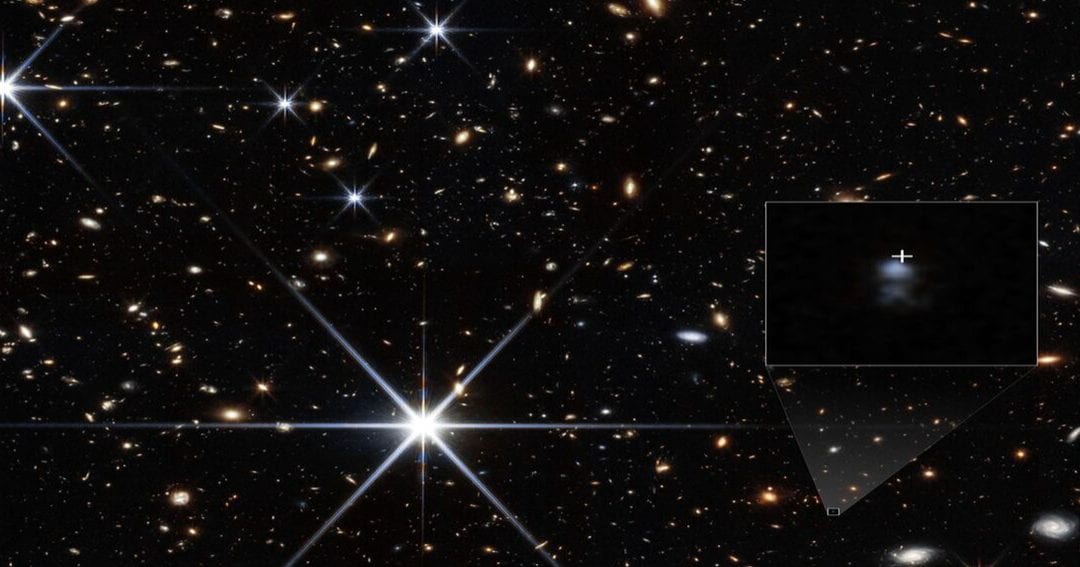
The established cosmological model, Lambda-CDM, has largely dictated the universe's age based on the expansion rate since the Big Bang and observations of ancient stars. However, discrepancies have emerged, notably the existence of stars seemingly older than the universe itself and the discovery of highly evolved, massive, yet surprisingly small galaxies in the early universe by the James Webb Space Telescope, appearing just 300 million years after the Big Bang. These observations defy the expected timeline for such cosmic development.

Dr. Rajendra Gupta, an adjunct professor of physics at the University of Ottawa and the study's author, introduces a revised model that reinterprets cosmic redshift and incorporates evolving fundamental constants. "Our newly-devised model stretches the galaxy formation time by a several billion years, making the universe 26.7 billion years old, and not 13.7 as previously estimated," he said in a statement. Gupta's work integrates a modified version of Fritz Zwicky's "tired light" theory, which posits that light loses energy over vast distances. While previously dismissed as conflicting with observations, Gupta demonstrates that when combined with the concept of an expanding universe, tired light can account for redshift as a hybrid phenomenon, rather than solely due to expansion.
Furthermore, the study incorporates Paul Dirac's hypothesis of evolving "coupling constants," fundamental physical constants governing particle interactions. By allowing these constants to change over cosmic galaxies, stretching them from mere hundreds of millions of years to several billion years. This extended timeline offers a more plausible explanation for the advanced maturity and substantial mass observed in these ancient galaxies.

The study also calls for a re-evaluation of the "cosmological constant," typically associated with dark energy and the universe's accelerating expansion. Gupta proposes a revised constant that accounts for the evolution of the coupling constants. This adjustment within the cosmological model not only helps reconcile the advanced state of early galaxies but also provides a more accurate framework for understanding their unexpectedly small sizes. This new model, if widely accepted, could fundamentally reshape our understanding of cosmic evolution and the timeline of the universe's existence. The findings, titled “JWST early Universe observations and 𝚲CDM cosmology," were published in the Monthly Notices of the Royal Astronomical Society on July 7, 2023.
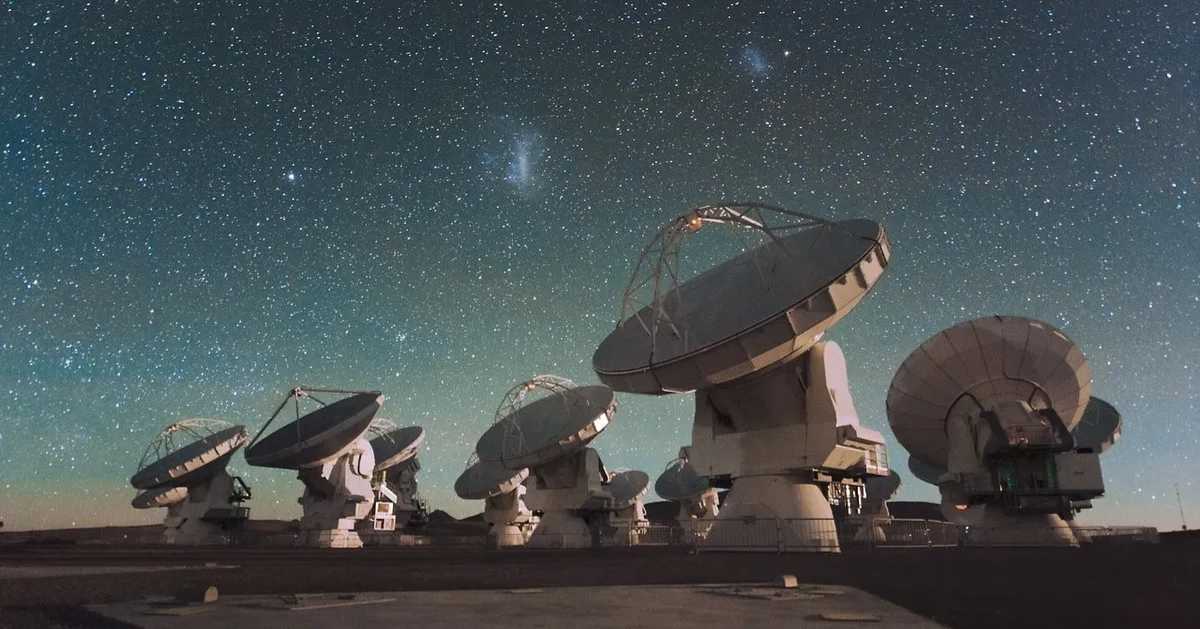
Adding further insight into the dynamic early universe, an international research team has detected the most distant "mini-halo" of energetic particles yet. This remarkable discovery, made using the Low Frequency Array (LOFAR) radio telescope, involves a colossal cloud of high-energy particles enveloping a galaxy cluster so far away that its light has traveled for 10 billion years to reach Earth. This effectively doubles the previous record for such an observation.

These groundbreaking findings suggest that even the universe's grandest structures, galaxy clusters, have been permeated by high-energy particles for a significant portion of their existence. Mini-halos are vast regions of highly energetic charged particles residing in the vacuum between galaxies within a cluster, emitting detectable radio waves. This observation strongly implies that energetic processes were actively shaping galaxy clusters during the universe's nascent stages, offering crucial clues about the evolution of large-scale cosmic structures.