Black holes could be a source of the universe’s mysterious dark energy, new study suggests
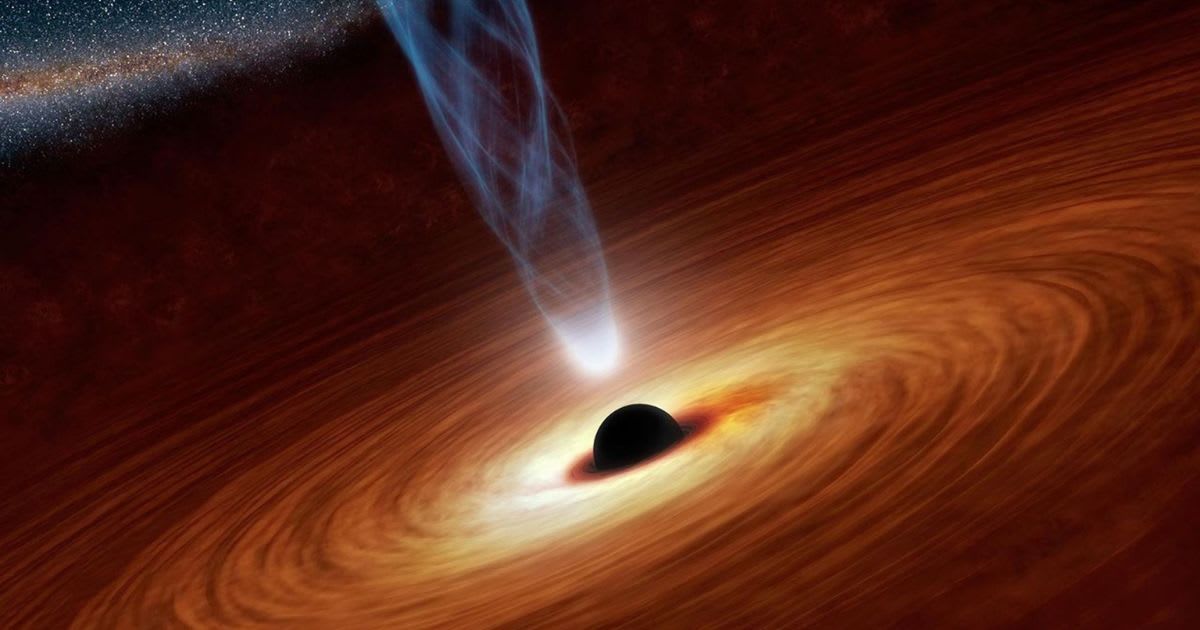
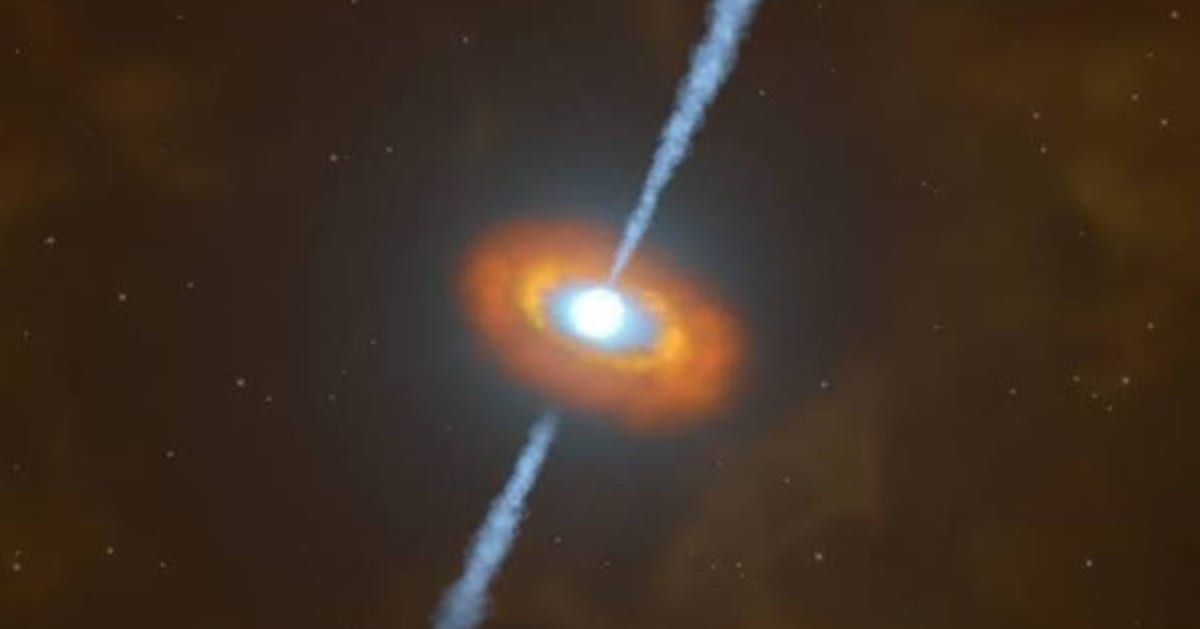
An international team of physicists, leveraging data from the Dark Energy Spectroscopic Instrument (DESI), has proposed a groundbreaking theory: black holes could be a source of the universe’s mysterious dark energy. This novel model suggests that as stars collapse, the matter they contain is slowly converted into dark energy, offering a new perspective on the expansion of the universe, as per Durham University.
The research, led by a team from the University of Michigan with key contributions from Durham University and other institutions, was recently published in Physical Review Letters. For years, scientists believed that dark energy's influence remained constant throughout the universe's history. However, recent DESI findings have challenged this notion, suggesting that dark energy's role may, in fact, be evolving.
This new black hole model provides a solution to a separate, long-standing puzzle: the mass of neutrinos. When researchers attempted to interpret DESI data using the conventional model of constant dark energy, the calculations resulted in an unphysical scenario of negative neutrino mass, a clear contradiction. The new study presents a dynamic model that resolves this discrepancy, aligning with known physics and restoring the positive mass of these elusive particles.

Meanwhile, a complementary study, new research on an expansive dataset of Type Ia supernovae, has also found evidence that dark energy may be changing. This would be a significant break from Albert Einstein's cosmological constant, which proposed that dark energy is a fixed force.
Researchers from the Supernova Cosmology Project created the largest-ever dataset of Type Ia supernovae. Their analysis hints that #DarkEnergy might change over time. Details: https://t.co/53QDWwPacf#cosmology #space @lbnlphysics pic.twitter.com/h5twUijNvp
— Berkeley Lab (@BerkeleyLab) July 22, 2025
The Supernova Cosmology Project (SCP), based at the Lawrence Berkeley National Laboratory, published its groundbreaking analysis in The Astrophysical Journal. The project’s journey began in 1998, when the observation of Type Ia supernovae, the explosive deaths of white dwarf stars, first revealed that the universe's expansion was accelerating. This surprising discovery led to the concept of dark energy and earned the SCP a Nobel Prize.

To reach their current conclusion, scientists had to solve a major problem: while over 2,000 supernovae have been documented since then, inconsistencies in data collection made direct comparisons difficult. The SCP team meticulously unified these observations into a single, comprehensive dataset called Union3, allowing for this groundbreaking new analysis.

The Union3 analysis provides compelling, though not yet conclusive, evidence that dark energy's strength might be diminishing over cosmic time. This intriguing hint is further bolstered by independent analyses from the Dark Energy Spectroscopic Instrument (DESI) and a partially independent supernova analysis, which includes data from the DOE-led Dark Energy Survey. The convergence of these separate lines of inquiry has piqued the interest of the scientific community.
The DESI collaboration, a massive undertaking managed by the U.S. Department of Energy's Lawrence Berkeley National Laboratory (Berkeley Lab), involves over 900 scientists from more than 70 institutions worldwide. Its primary goal is to create a detailed 3D map of the universe, and the insights from this study, which significantly reframe our understanding of cosmic evolution, are a testament to the power of international scientific collaboration, as mentioned by Durham University.
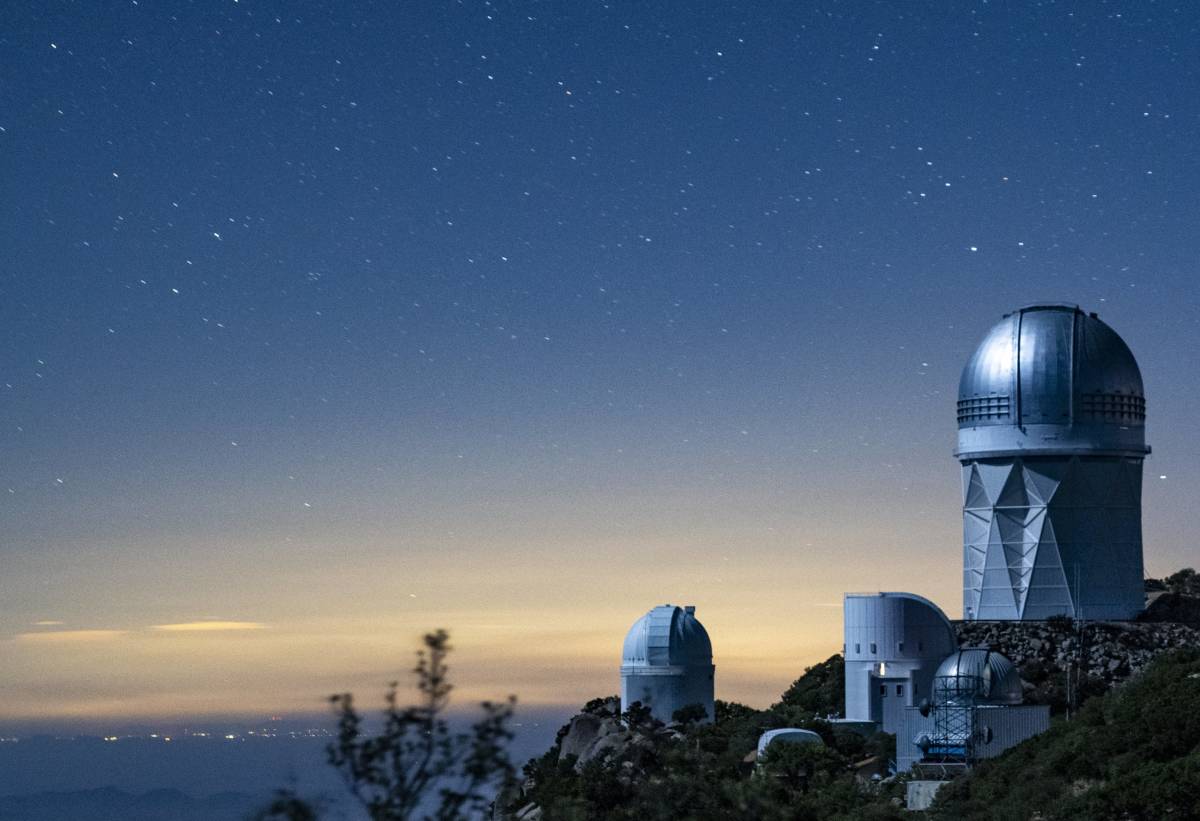
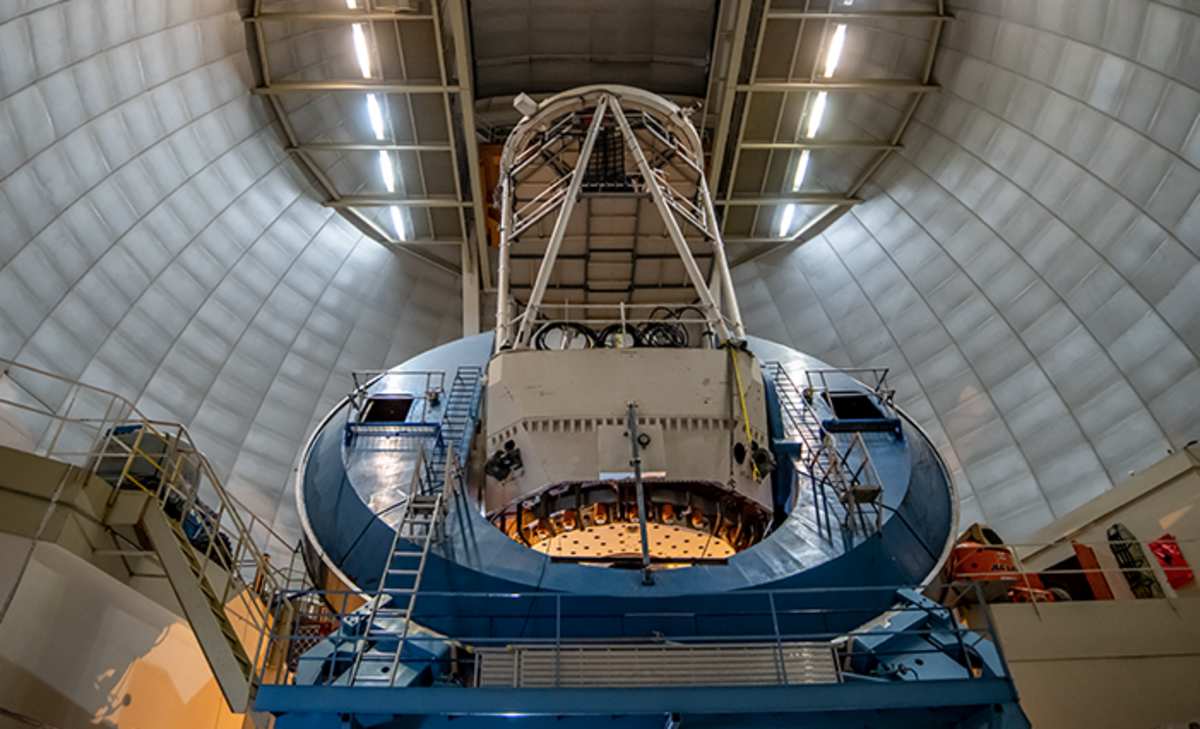
The Dark Energy Spectroscopic Instrument (DESI), a key component of this research, was designed and built with significant contributions from Durham University and is housed on the Nicholas U Mayall 4-meter Telescope at Kitt Peak National Observatory in Arizona. The DESI collaboration acknowledges the honor of conducting scientific research on Iolkam Du’ag (Kitt Peak), a site of great cultural significance to the Tohono O’odham Nation.