Perseverance rover captures stunningly clear panoramic view of Martian landscape

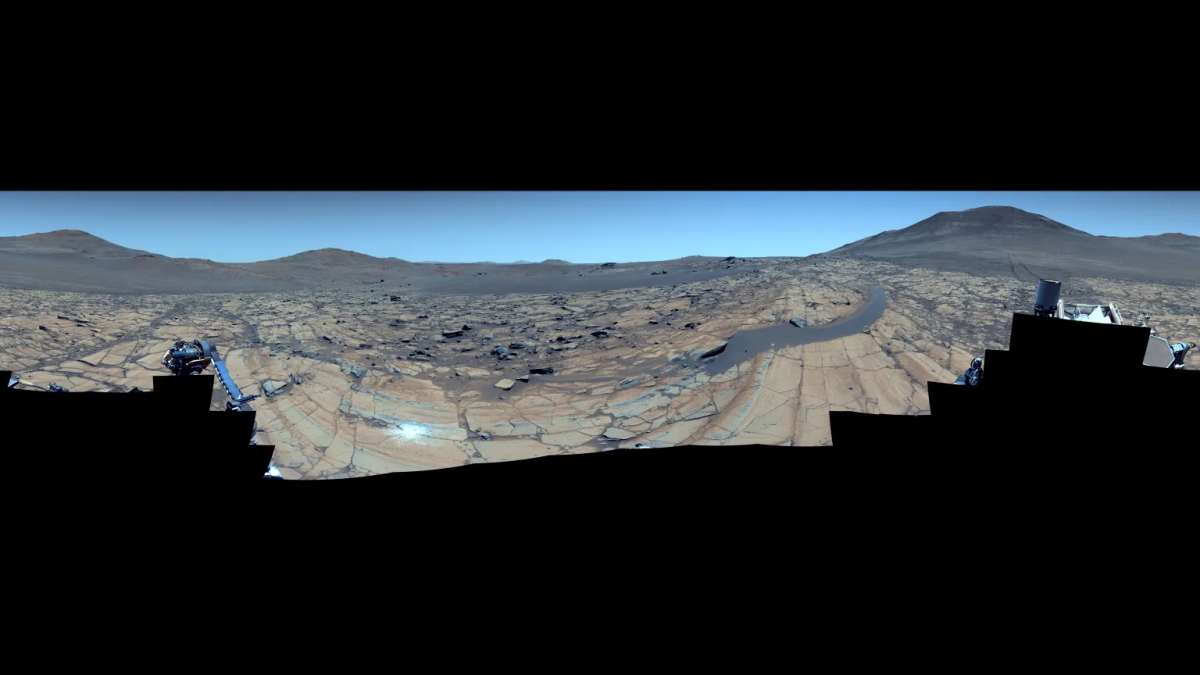
NASA's Perseverance rover has delivered a breathtakingly sharp panoramic view of the Martian landscape, revealing details from nearby geological curiosities to distant hills. The images captured in a spot dubbed "Falbreen" showcase the Red Planet's surprisingly clear skies and a variety of geological features that are captivating scientists, as per NASA.
A few interesting sights here:
— NASA Mars (@NASAMars) August 6, 2025
- The abrasion patch made by the rover is 2 inches (5 centimeters) wide
- These tracks are about 300 feet (90 meters) away
- This peak is 40 miles (65 kilometers) away!https://t.co/yler3uvX00 https://t.co/fz44XK3QsI pic.twitter.com/hgy2v892EY
The panorama, stitched together from 96 individual photos taken on May 26, 2025, provides an unprecedented look at the Jezero Crater rim. The mosaic highlights a large rock seemingly "floating" on a sand ripple, a distinct boundary between two different rock types, and hills visible up to 40 miles away. In an enhanced-color version, the typically red Martian sky appears a deceptively clear blue.
Acting NASA Administrator Sean Duffy expressed his excitement, connecting the rover's discoveries to future human exploration. “Stunning vistas like that of Falbreen, captured by our Perseverance rover, are just a glimpse of what we’ll soon witness with our own eyes," Duffy said. "NASA’s groundbreaking missions, starting with Artemis, will propel our unstoppable journey to take human space exploration to the Martian surface."
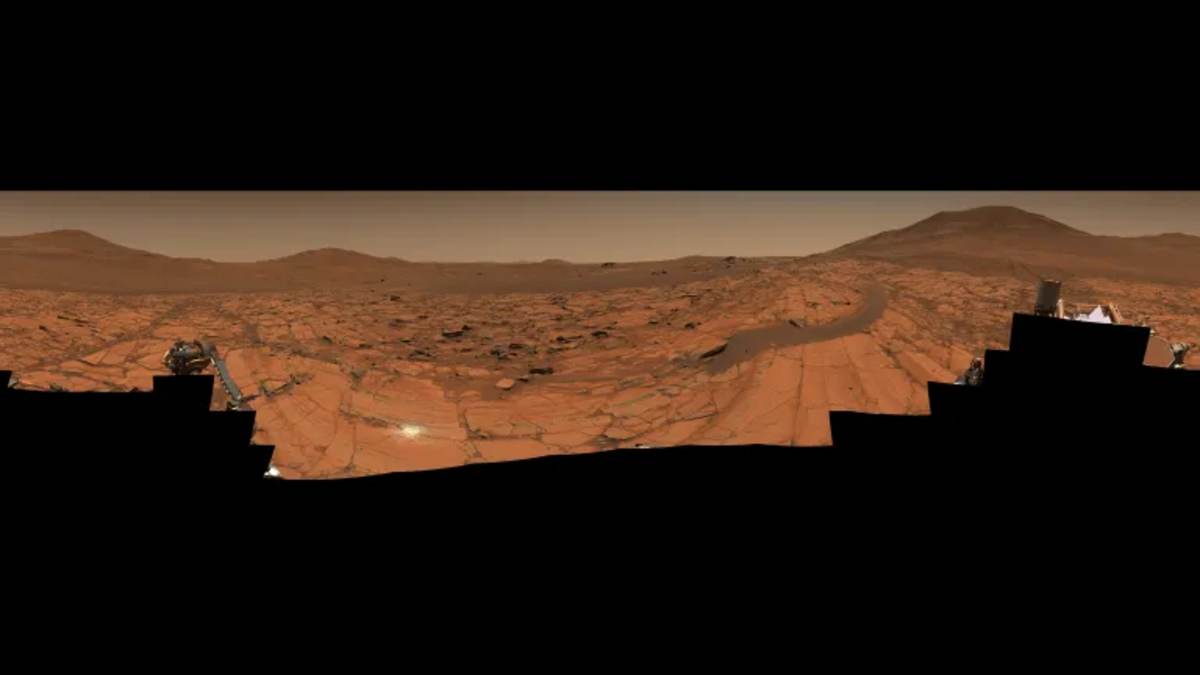
This particular location is of special interest to the science team as it may contain some of the oldest terrain the rover has explored since its landing in February 2021. The panorama also reveals a recent abrasion patch, the 43rd of its kind, where the rover's drill has scraped away the surface of a rock to allow for closer analysis before a core sample is taken. The images were captured by the rover's Mastcam-Z instrument, with principal investigator Jim Bell of Arizona State University noting the clarity of the dust-free atmosphere. "We have enhanced the color contrast, which accentuates the differences in the terrain and sky,” Bell stated.
Among the details that fascinate geologists is a "float rock," a boulder that appears to have been transported from another location and now rests on top of a sand ripple about 14 feet (4.4 meters) away from the rover. While the precise method of its arrival remains a mystery, scientists believe it was deposited before the ripple formed. Also visible are the rover's tracks, leading to a previous geological stop known as "Kenmore."
The stunning panorama is just one of the latest successes for the Perseverance mission, which is also making rapid progress in its primary goal of collecting Martian samples. The abundance of unique rocks on the rim of the Jezero Crater has exceeded scientists' expectations, providing a wealth of data about Mars' history and its potential to have supported life. The rover has been working at a striking pace, with scientists collecting samples faster than at any other point in the mission. On a slope named "Witch Hazel Hill," Perseverance has found an astonishing variety of rocks, boulders, and outcrops. The rover has already secured five rocks, sealing three of them in sample tubes for future return to Earth. Additionally, it has performed close-up analysis on seven rocks and used its laser to study 83 rocks from a distance.
“During previous science campaigns in Jezero, it could take several months to find a rock that was significantly different from the last rock we sampled and scientifically unique enough for sampling,” stated Perseverance’s project scientist, Katie Stack Morgan of NASA’s Jet Propulsion Laboratory. She further added, “But up here on the crater rim, there are new and intriguing rocks everywhere the rover turns. It has been all we had hoped for and more.”