NASA's Perseverance probes evidence of ancient magma activity in Martian rocks to explore its geological past
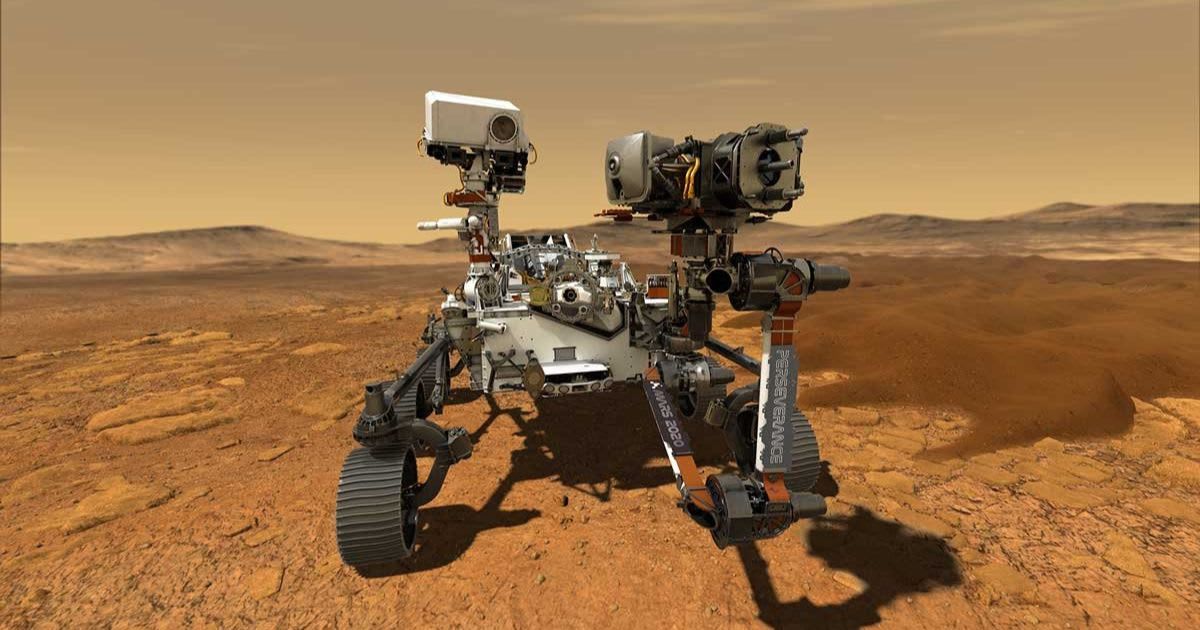
NASA's Perseverance rover is actively examining geological formations for signs of ancient subsurface magma activity, offering new insights into Mars' tumultuous past. The Perseverance rover recently resumed its westward journey, arriving at a location dubbed "Westport." This site marks the intersection of the clay-rich "Krokodillen" unit and a distinct olivine-bearing rock formation, per NASA.

Scientists hypothesize that these olivine-rich rocks may be an intrusive igneous unit, suggesting they solidified from molten magma that ascended from deep within Mars' interior and cooled beneath the surface. If confirmed, Westport would offer a rare glimpse into a dramatic period of Martian history, characterized by the forceful intrusion of molten material into pre-existing rock structures.

Such intrusive geological processes are well-documented on Earth, where the intense heat of invading magma can profoundly alter the surrounding rock through contact metamorphism. This "baking" effect can lead to the formation of a few minerals and potentially create environments conductive to microbial life. Conversely, the intrusive rocks themselves cool rapidly upon contact with existing solid rock.
At Westport, Perseverance's primary objective is to find evidence of these phenomena: Indications that the Krokodillen rocks were "baked" by the intrusion, and that the olivine-bearing rocks show signs of rapid chilling at their boundary. Initial images from the rover's Mastcam-Z instrument reveal a fascinating mix of dark, fractured rocks interspersed with lighter, smoother boulders at the contact zone. Both rock types present significant challenges for detailed analysis. The smaller, dark fragments have proven too rough for Perseverance's standard abrasion tools. However, the rover successfully used its gas Dust Removal Tool (gDRT) to clear the surface of a rock named "Holyrood Bay." An attempt to abrade a nearby boulder, "Drake's Point," was interrupted when the rock shifted. Despite these technical hurdles, the compelling scientific implications of this boundary ensure Perseverance will continue its efforts to study these critical samples.
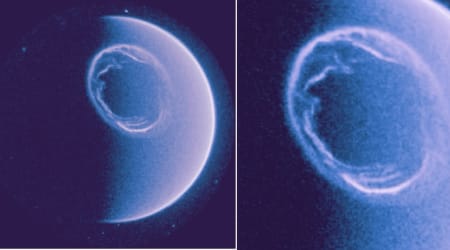
Beyond its geological pursuits, the Perseverance rover has achieved another groundbreaking milestone, capturing images of auroras directly from the Martian surface. In mid-March 2024, a powerful flare and coronal mass ejection erupted from the Sun, unleashing a torrent of solar material and magnetic energy. This event triggered spectacular auroral displays across the solar system, with perseverance achieving a historic first by observing them directly from the Martian surface. According to Elise Knutsen, lead author of the Science Advances study and a postdoctoral researcher at the University of Oslo, this discovery "opens up new possibilities for auroral research and confirms that auroras could be visible to future astronauts on Mars' surface."

On Earth, auroras like the Aurora Borealis are vibrant light shows that result from solar particles interacting with atmospheric gases near the poles, guided by our planet's global magnetic field. This often produces a characteristic green glow as oxygen atoms emit light at a specific wavelength. While scientists have long theorized about the existence of similar green auroras on Mars, they anticipated these displays would be significantly fainter and more challenging to detect than Earth's. This is primarily due to Mars' lack of a global magnetic field, a fundamental difference that leads to distinct types of Martian auroras.