Artemis II Pilot Victor Glover reveals tense moment when crew received 'cabin leak' warning in space
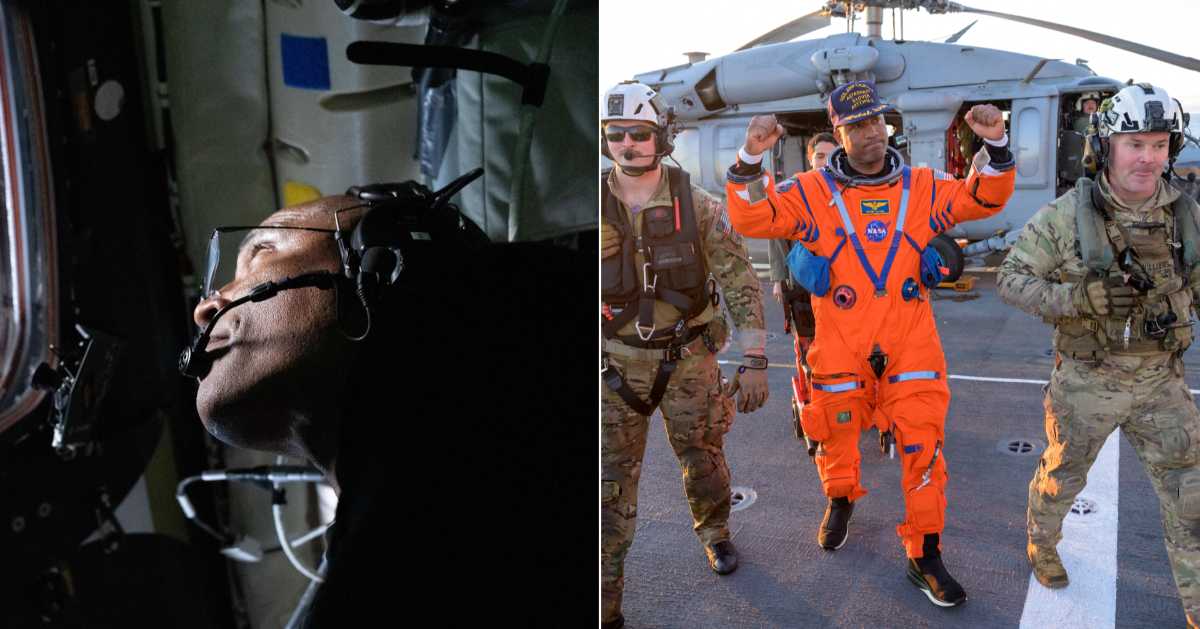
NASA’s historic Artemis II mission saw four astronauts visit the vicinity of the Moon for the first time in five decades. But as it turns out, the crew experienced a scare early in the mission just a day after its launch on April 1. Artemis II pilot Victor Glover revealed at the Starmus VIII festival in Tenerife on October 18 that the crew received a cabin leak warning just before the Orion spacecraft was about to break free from Earth’s gravity and head towards the Moon.
🌕 TO THE MOON AND BEYOND! 🚀 An extraordinary conversation at STARMUS VIII brought together two remarkable astronauts: Victor Glover, NASA astronaut and Artemis II pilot, and Chris Hadfield, former Commander of the International Space Station. From personal experiences in space to the future of lunar exploration, the conversation offered fascinating insights into humanity’s journey beyond Earth, inspiring us to dream bigger, explore further, and keep pushing the boundaries of what is possible! 🌌✨ This special event was made possible with the support of Agencia Espacial Española (AEE) and SATLANTIS. Together, we continue to inspire curiosity, discovery, and the next generation of explorers! 💙 #STARMUSVIII #TheSearchForTruth
— Starmus (@StarmusFestival) October 20, 2026
The Orion spacecraft spent a day in a highly elliptical orbit around Earth because NASA wanted to check critical systems before committing to a lunar journey, because once the trans-lunar injection (TLI) burn is performed, there’s no going back. A TLI requires a spacecraft to conduct a long-duration engine burn that helps it escape Earth’s gravity and set course for the Moon. In the elliptical orbit, Orion was roughly 100 miles above our planet at its shortest distance, and the TLI was planned when the spacecraft was traveling the fastest and closest to Earth.
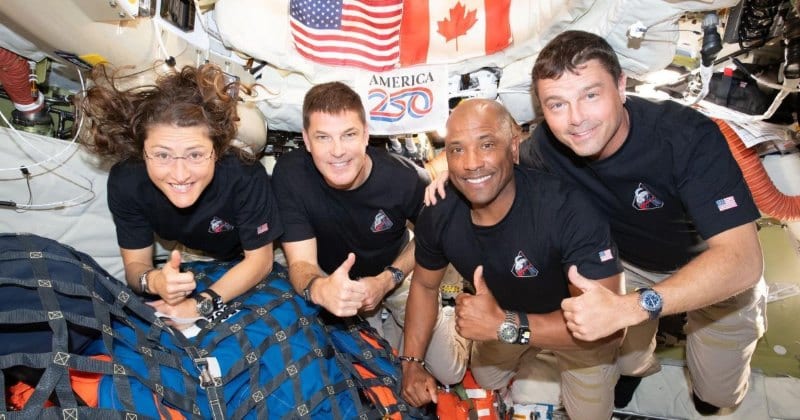
According to Glover, they received the leak warning just 15 minutes before the planned burn. “If it had happened five minutes later, we may not have been able to have that burn,” Glover said, per Space.com during his conversation with former Canadian astronaut Chris Hadfield. Now that the warning was issued, Glover said that “determining whether it was real or not was a big deal.” The crew had two choices—either to proceed with the TLI or abandon the mission, put on their spacesuits and prepare for a splashdown in the ocean. The timing of the leak was crucial as Orion was passing through regions of higher space debris and radiation as it approached perigee (the closest point). Thankfully enough, the warning was ruled a false alarm, which NASA confirmed during a media briefing later that day.

When the mission controllers greenlit the burn, Orion fired its main engine for five minutes and 50 seconds at 7:49 pm EDT on April 2, burning around 1,000 pounds and accelerating to 24,500 miles per hour. The Artemis II crew was finally on its way to the Moon.
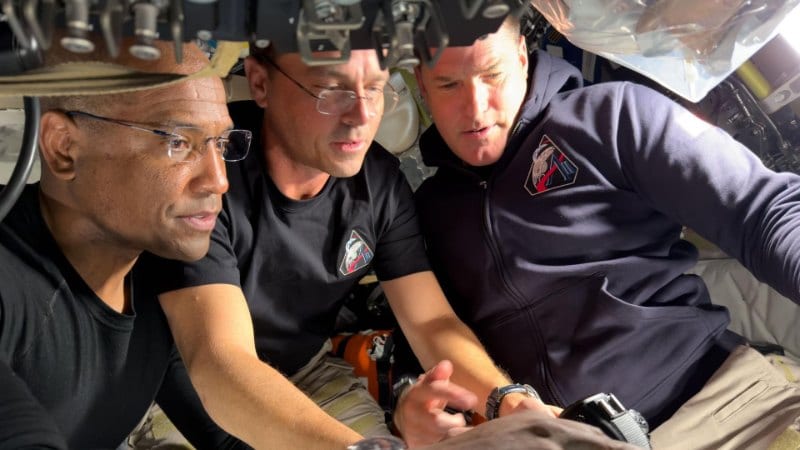
Glover was accompanied by mission commander Reid Wiseman and two mission specialists, Jeremy Hansen and Christina Koch. Glover, Wiseman, and Hansen accepted the Stephen Hawking Medal for Science Communication at the Starmus VIII festival on October 17. The honor recognizes Christina Koch as well, but she wasn't in attendance at the event. Artemis II ended on April 10 when Orion splashed down safely off the coast of San Diego. Apart from several personal achievements, the four astronauts set the record for traveling the farthest distance from Earth (252,756 miles), breaking the record set during Apollo 13 by over 4,000 miles.
More on Starlust
‘A jaundiced Moon’: Artemis II astronauts saw the lunar surface in colors like never before
NASA confirms Artemis II crew saw five lunar impact flashes—‘Most ridiculous thing I’ve ever seen’