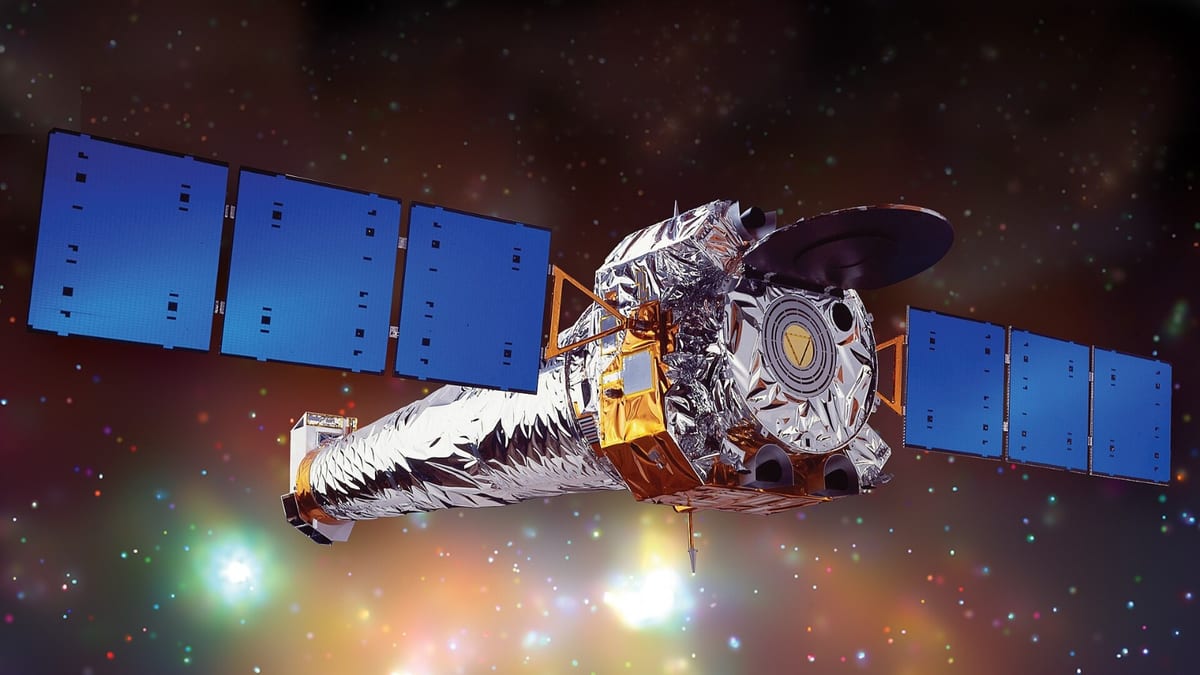
Launched on July 23, 1999, the Chandra X-ray Observatory, as its name suggests, is designed specifically to detect X-ray emissions. Named after Indian-American astrophysicist Subrahmanyan Chandrasekhar, this space telescope is one of NASA's four Great Observatories, and has helped scientists study supernova remnants, black hole growth, and pulsar jets, among other cosmic phenomena. Notably, Chandra provided scientists with evidence that confirmed the existence of Sagittarius A*, the supermassive black hole at the center of the Milky Way.
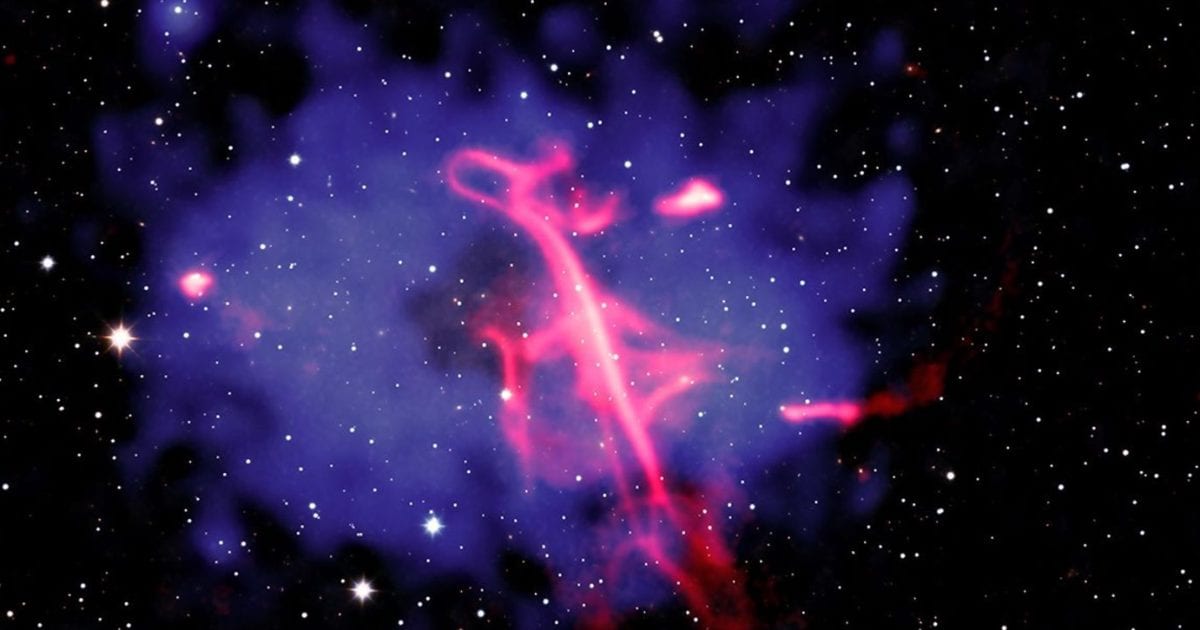
Musical symbol in space? NASA's Chandra Observatory helps reveal origins of 'Treble Clef' radio structure
Researchers have shed light on the origins of a mysterious treble clef-shaped radio structure lurking behind the Milky Way.
Updated: Oct 15, 2026 | By Purva Muley
"Never encountered objects that act like this": NASA’s Chandra reveals a new class of cosmic objects
The scientists found these sources among objects that appeared in the lowest X-ray-energy images in the Chandra archive but disappeared in higher-energy images.
Published: Sep 10, 2026 | By Pranjal Nath
NASA's Chandra finds two of the Milky Way's arms are 10% farther than we thought
This small correction could make us rethink how massive our galaxy actually is.
Published: Jul 6, 2026 | By Ankita Garkoti
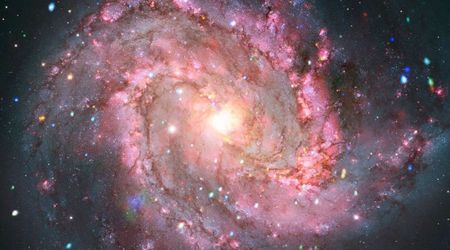
Scientists stunned by fireworks in nearby galaxy: 'Something unusual is going on in these objects'
NASA's Chandra telescope caught sources previously identified as supernova remnants displaying dramatic, completely unexpected variations in brightness.
Published: Jun 16, 2026 | By Pranjal Nath
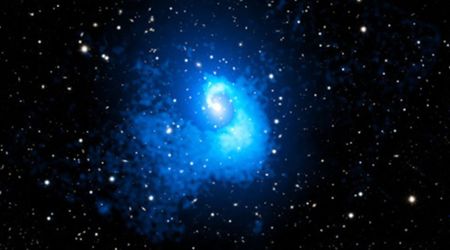
NASA's Chandra finds the 'most relaxed' galaxy cluster in the universe had a rather turbulent past
The cluster named Abell 2029 collided with a smaller galaxy cluster, and its effects are still visible.
Published: May 20, 2026 | By Biplab Das
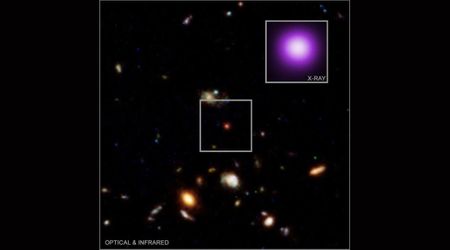
NASA's Chandra discovers a unique object that may explain James Webb's mysterious little red dots
NASA's Chandra has discovered an X-ray dot, which is tiny, red, and located at a distance of 11.8 billion light-years but also glows in X-ray, unlike the mysterious little red dots.
Published: Apr 30, 2026 | By Disita Sikdar
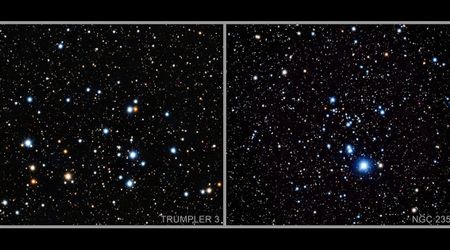
Young Sun-like stars are dimming faster than expected—and no, it's not like in 'Project Hail Mary'
NASA’s Chandra study hints Sun’s early X-ray drop may have helped Earth become habitable.
Published: Apr 15, 2026 | By Sandip Kishan
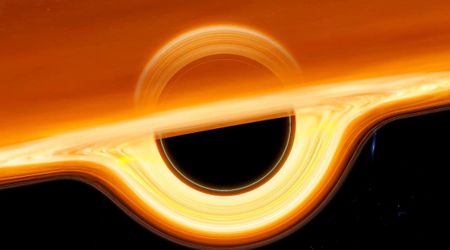
Why don't black holes grow as fast as they once did? NASA's Chandra helps find the answer
Black hole growth peaked about 10 billion years ago during a period known as the 'cosmic noon.'
Published: Mar 27, 2026 | By Nibedita Sen
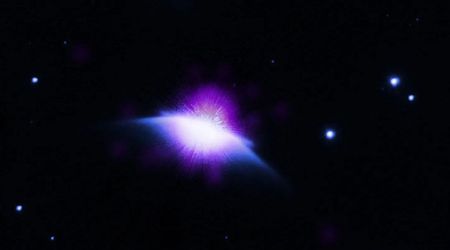
NASA's Chandra spots a young 'Sun' blowing bubbles for the first time
NASA's Chandra X-ray Observatory has captured images of the astrosphere around the young star HD 61005 for the first time.
Updated: Feb 25, 2026 | By Juhi Varma

NASA’s Chandra stitches decades of data on supernova remnant into its longest video yet
NASA’s Chandra video reveals 25 years of change in Kepler’s supernova remnant.
Updated: Jan 7, 2026 | By Pratham Gurung

NASA’s Chandra pops the cosmic cork with a stunning view of the Champagne Cluster
The Champagne Cluster was discovered back on December 30, 2020.
Published: Jan 5, 2026 | By Pratham Gurung

Not every galaxy has a supermassive black hole like the Milky Way's, NASA's Chandra Telescope finds
Smaller black holes tend to attract less material, making them naturally dimmer. Chandra would miss many of these faint objects.
Published: Dec 15, 2025 | By Pratham Gurung

NASA’s Chandra observed the violent internal conflict of a star before it exploded into a supernova
One of the most studied events in space, the Cassiopeia A supernova has much more to reveal about its past, as indicated by recent research.
Published: Aug 30, 2025 | By Mahalekshmi P

NASA Chandra discovers 'baby' exoplanet shrinking under attack from its host star
TOI 1227 b, a newly designated exoplanet, is a youthful 8 million years old—a thousand times younger than our Sun.
Updated: Jul 21, 2025 | By Raj Naik

New NASA Chandra image offers fresh insights into Andromeda galaxy
The new image combines data from across the electromagnetic spectrum, giving astronomers a complete picture of Andromeda's complex structure.
Published: Jun 27, 2025 | By Raj Naik

NASA's Chandra telescope discovers fracture in galactic 'bone' caused by a speeding pulsar
Astronomers describe a fracture they discovered in the Milky Way galaxy with the assistance of NASA's Chandra X-ray Observatory telescope.
Published: May 6, 2025 | By Mahalekshmi P

NASA released 'haunting' audio emanating from massive black hole 240 million light-years away
The sound was recorded by the Chandra X-ray Observatory and remixed for human hearing by NASA engineers.
Published: Apr 15, 2025 | By Tom Urbain