NASA’s James Webb Space Telescope images 'Exposed Cranium' nebula in never-before-seen details
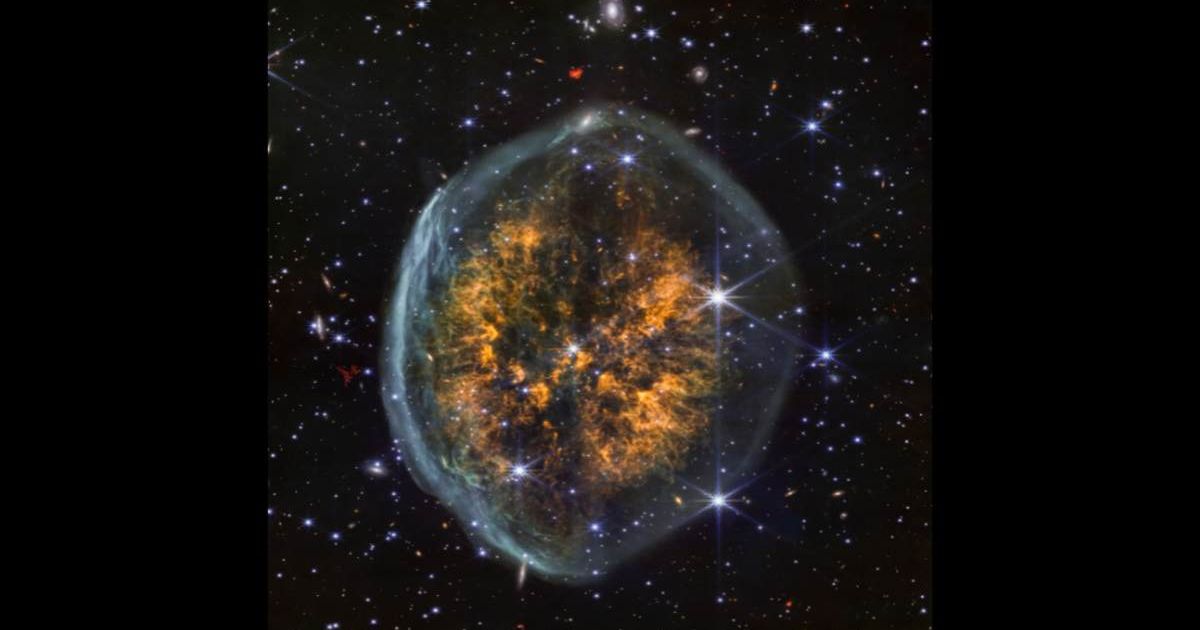
NASA's James Webb Space Telescope (JWST) has captured fresh images of Nebula PMR 1, which is also called the "Exposed Cranium Nebula" because it looks like a brain housed inside a transparent skull. While the now-retired Spitzer Space Telescope was the first to spot the nebula over a decade ago, the images furnished by Webb reveal new details about the little-studied object.
“Braaains!” Like zombies on the hunt, the Spitzer and #NASAWebb infrared space telescopes went looking for brains in space and captured these uncanny images of nebula PMR 1. A dying star is creating the nebula by expelling its outer layers: https://t.co/kqioT4yVML pic.twitter.com/nwDlGVWKKz
— Space Telescope Science Institute (@SpaceTelescope) February 25, 2026
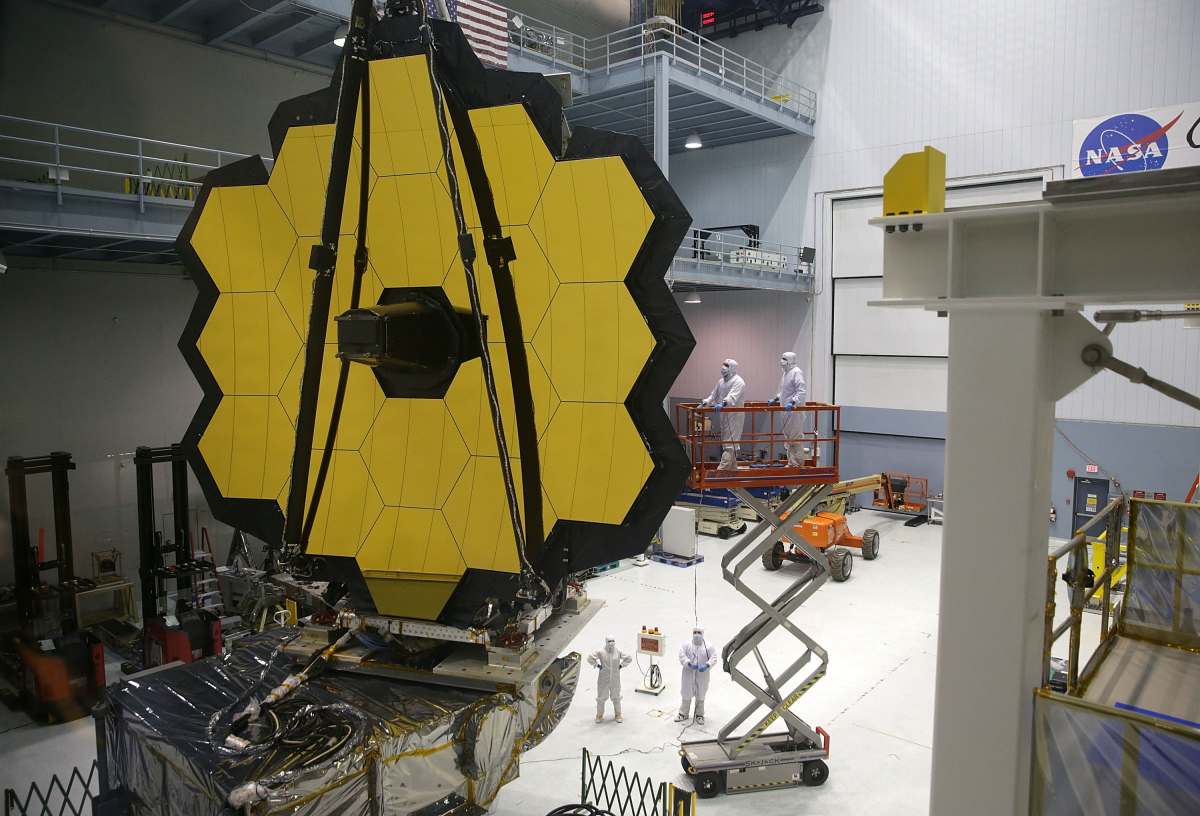
The James Webb Space Telescope, launched on December 25, 2021, is hailed as "the world's premier space science observatory." It studies every phase in the history of our universe, from the Big Bang to the formation of different stars and planets that constitute the Milky Way and beyond. Unlike the Hubble Space Telescope, it doesn't orbit the Earth. Instead, it goes around the Sun at the second Lagrange point (L2), which is a million miles away from our planet. Webb used its NIRCam (Near-Infrared Camera) and MIRI (Mid-Infrared Instrument) in order to capture the unusual features of the Cranium nebula in both near- and mid-infrared light. In Webb’s NIRCam, the stars and background galaxies are more prominent, while cosmic dust is clearly visible in the light captured by MIRI.
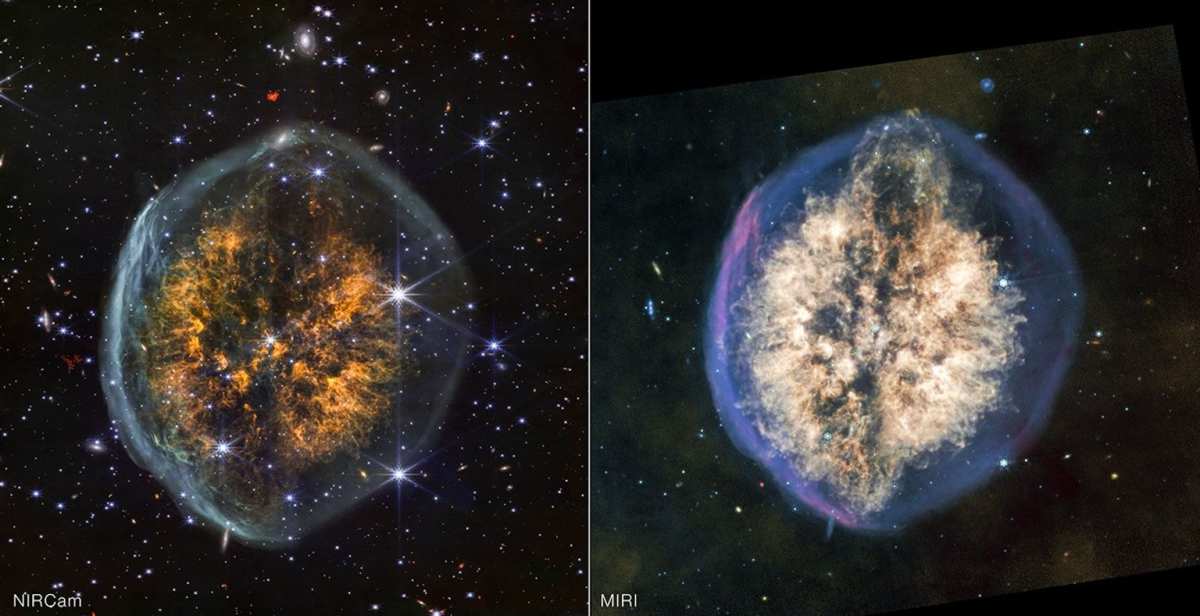
In the images, the nebula appears to have separate regions that capture the different phases of its evolution. There’s an outer layer of gas that was blown off first, mostly made up of hydrogen, and then another, more structured inner cloud, filled with a mix of gases. There is also a distinctive ‘dark lane’ running vertically through the middle of the nebula that divides the 'brain' into its so-called left and right hemispheres. These detailed images suggest that this lane may be a result of an outburst or outflow from a central star, which often happens when there’s a bipolar outflow of gas in opposite directions. This is particularly evident in the upper part of the nebula captured by Webb’s MIRI, where it appears that the inner gas is being pushed outward.
There is still a lot to understand and discover about this nebula. Still, this latest event confirms that this nebula is a creation of a powerful burst from a dying star at the center. While Webb has captured the star in its final days, the ultimate fate of the star is yet to be determined, as it greatly depends on its mass. If the star is very massive, it can later explode in a powerful supernova, while a smaller Sun-like star will shed layers until it transforms into a dense white dwarf, which will cool over time. This is a bigger step towards uncovering the mysteries of this relatively underexplored entity, allowing us to delve deeper into the enigmatic cosmos and helping us gain a better understanding of the universe.
More on Starlust
James Webb Space Telescope maps Uranus’s upper atmosphere for the first time ever
NASA's James Webb Space Telescope captures a rare jellyfish galaxy from 8.5 billion years ago