NASA’s Chandra observed the violent internal conflict of a star before it exploded into a supernova
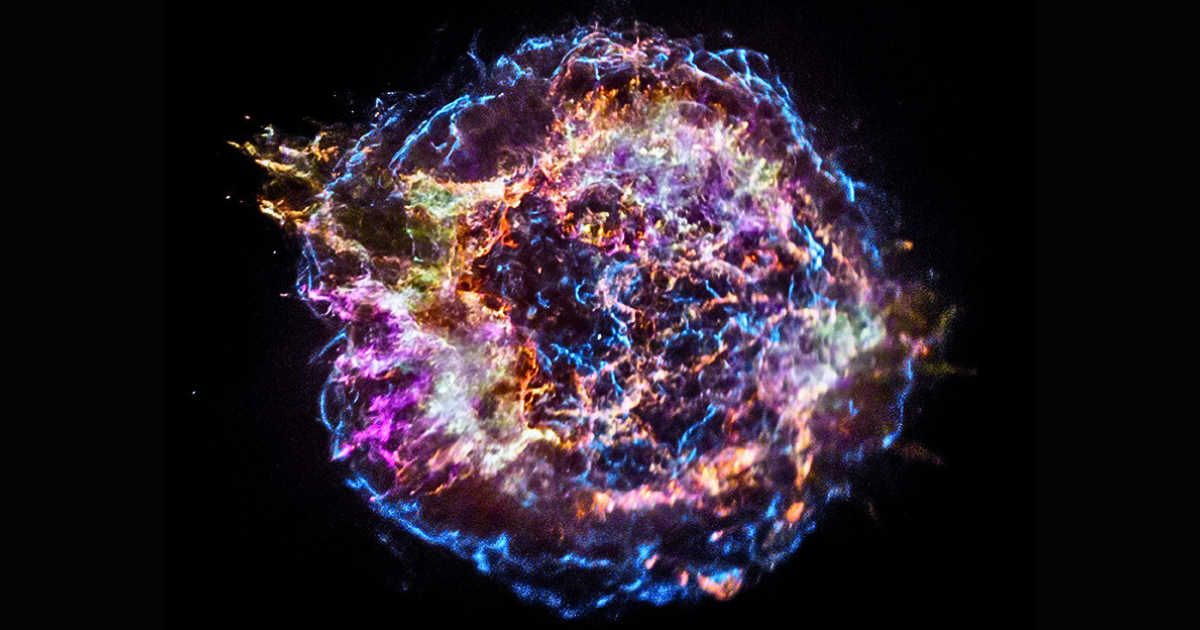
Astronomers always look for opportunities to find more about stars and their evolution in the cosmos. With recent attempts to learn about the final processes within massive stars, NASA’s Chandra X-ray Observatory contributed a find. Scheduled in an arXiv preprint, researchers revealed the final phase of a stellar activity known as a “shell merger.”
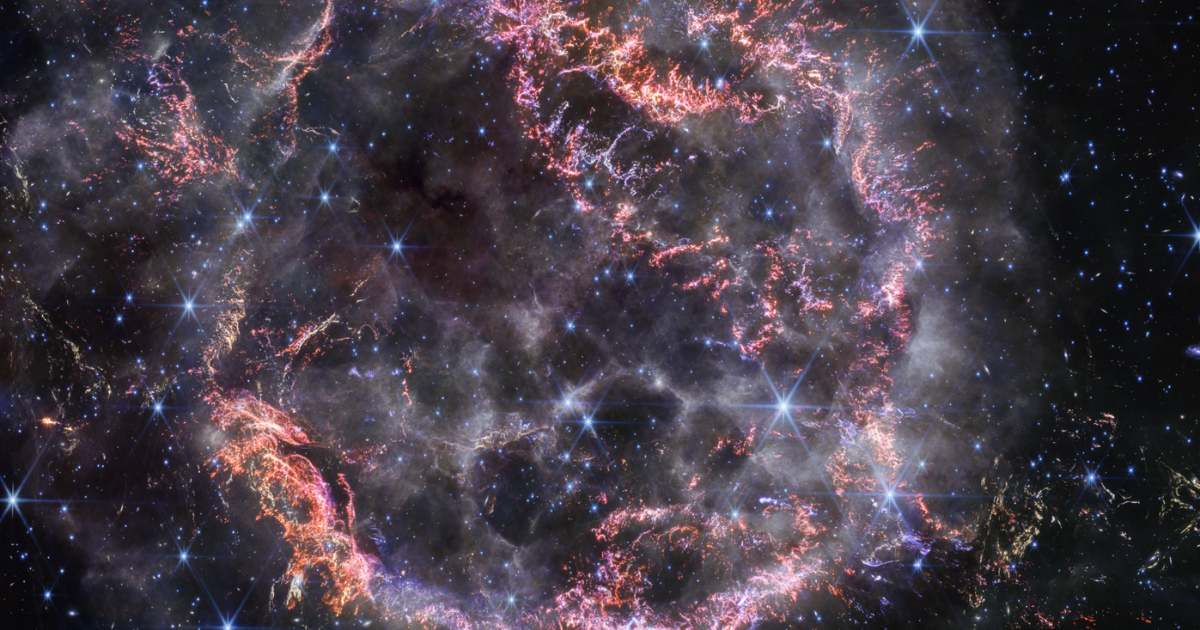
The interior of a star is swallowing its outer shell and turning on itself before explosion, in this process. This shattered star was the remains of the Cassiopeia A supernova, which was one of the best-studied objects in the sky. These remains were a giant star on the path of self-destruction, when it violently rearranged itself just before exploding. This change of stellar matter could influence the causes of the explosion and the behavior of its remnants.
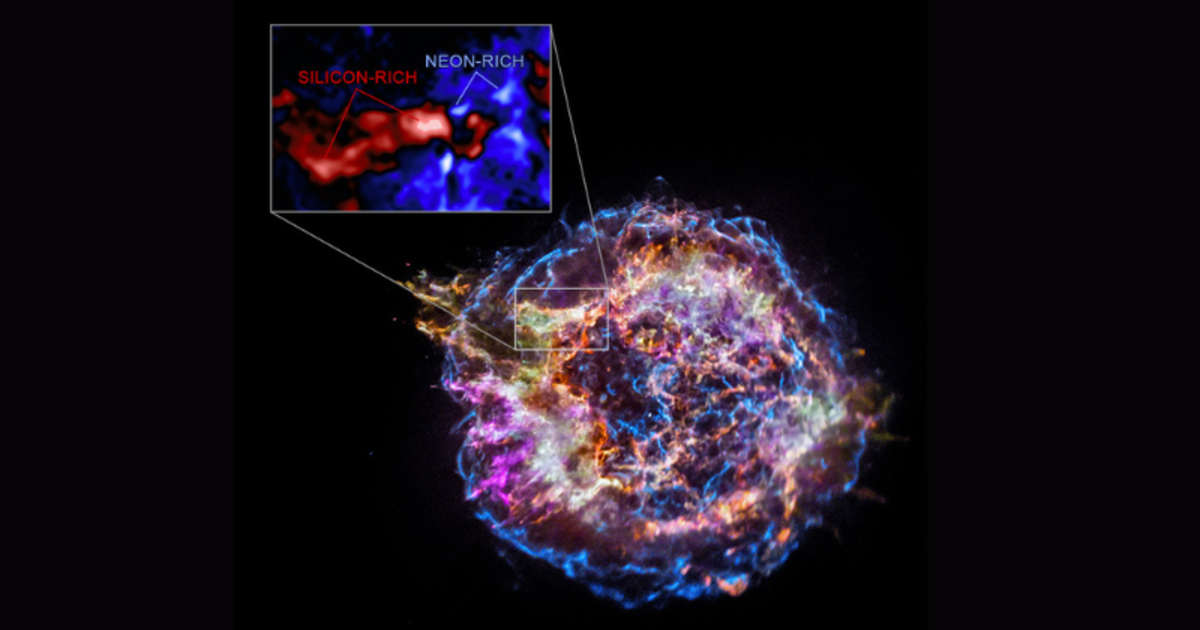
According to NASA, Cas A experienced significant shifts in its final moments before explosion after more than a million years. As stars age, heavier elements are formed within their interiors from nuclear reactions, creating various layers. The outer layer is largely hydrogen, followed by helium, carbon, and other heavier element layers in succession.
The star that exploded to become the Cassiopeia A supernova remnant appears to have undergone a dramatic event right before its demise. New evidence from Chandra indicates that the star's interior was violently rearranged just hours before the explosion: https://t.co/oRUQuulAaX pic.twitter.com/wLROfwcHkM
— Chandra Observatory (@chandraxray) August 28, 2025
The turning point is in the formation of Iron in the star’s core, which cannot hold its weight beyond a point. Once the mass exceeded around 1.4 times the mass of the Sun, it collapses on itself. When this happens, the outer layers begin falling into the collapsing core and rebound as a core-collapse supernova. “Our research shows that just before the star in Cas A collapsed, part of an inner layer with large amounts of silicon traveled outwards and broke into a neighboring layer with lots of neon,” explained the study co-author Kai Matsunaga of Kyoto University in Japan.
🌟💥 Just hours before exploding, the star that became Cassiopeia A violently twisted its insides, reshaping itself in a last cosmic gasp.
— NASA Marshall (@NASA_Marshall) August 28, 2025
NASA’s @chandraxray reveals this dramatic twist in stellar fate, offering new clues into how massive stars die and what their shattered… pic.twitter.com/9g0hjFdxBR
The observations revealed that the phenomenon was violent and rendered the barriers of the two layers invisible. This change in momentum caused silicon-rich material to travel outwards and materials rich in neon to travel inwards. The remains of Cas A’s supernova remnant revealed evident traces of these outward silicon flows and inward neon flows. The placement of the flow was based on the levels of the materials in them. This meant that regions rich in silicon and poor in neon were situated alongside regions rich in neon and poor in silicon.
The maintenance of these regions gave insights into the internal conflict of the star. It also showed that silicon and neon did not completely mix with other elements immediately after the explosion. This was predicted by detailed computer models of massive stars that were about to go supernova. This inner fight towards the end of its life could explain the lopsided shape of the Cas A remnant in three dimensions. The lopsided explosion and debris field could power the rest of the star’s core, which would explain the high speed observed in the object, now a neutron star.
NASA’s Chandra Reveals Star’s Inner Conflict Before Explosion
— Cerebral Overload (@CbrOvld) August 29, 2025
The inside of a star turned on itself before it spectacularly exploded, according to a new study from NASA’s Chandra X-ray Observatory. Today, this shattered star, known as the Cassiopeia A supernova remnant, is one... pic.twitter.com/l0c47KLTP1
“Perhaps the most important effect of this change in the star’s structure is that it may have helped trigger the explosion itself,” said co-author Hiroyuki Uchida, also of Kyoto University. “Such final internal activity of a star may change its fate—whether it will shine as a supernova or not,” they added. This indicated that the strong and turbulent flow was initiated by the internal shifts in the star. This likely caused the development of the supernova blast wave, leading to the star’s explosion. Cassiopeia A was one of the first objects observed by Chandra after its 1999 launch.