NASA's Mars Sample Return mission could be saved by new Lockheed Martin proposal

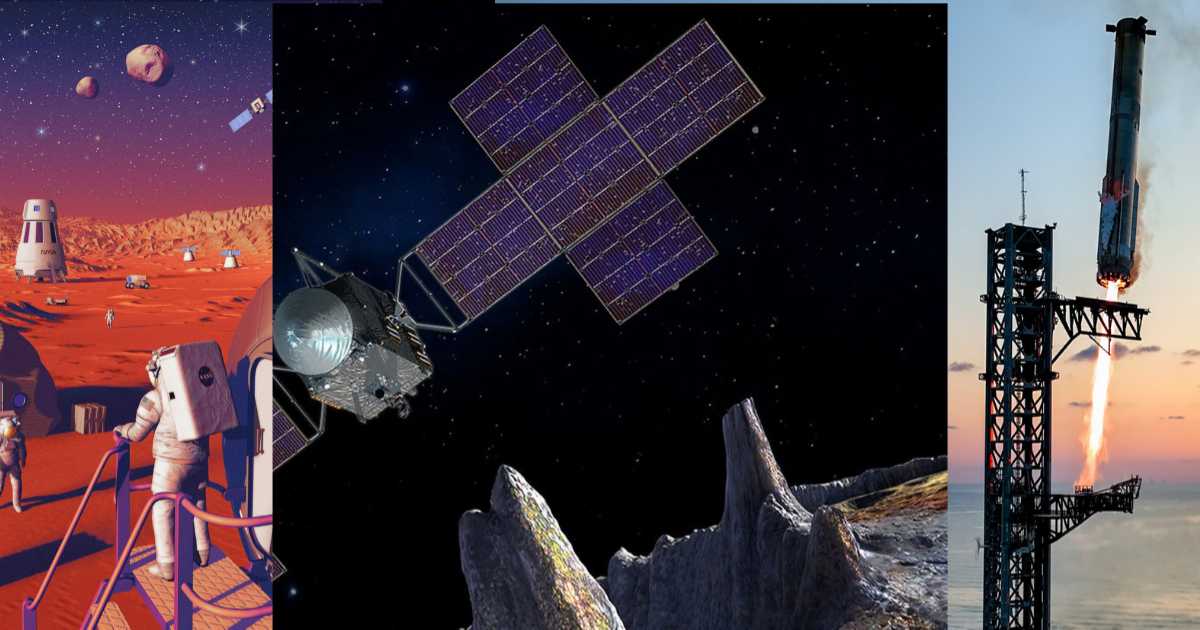
NASA's ambitious Mars Sample Return (MSR) initiative, currently facing potential cancellation due to escalating costs, may receive a critical boost from a new proposal by aerospace giant Lockheed Martin. The company has presented a significantly streamlined and more economical mission architecture aimed at retrieving the valuable Martian samples collected by the Perseverance Rover, as mentioned on Space.com.

The MSR program, designed to bring Martian geological specimens to Earth for in-depth analysis, has encountered substantial budgetary challenges. Independent assessments projected mission costs could balloon to $11 billion, leading to its proposed elimination in forthcoming Trump administration budget plans for 2026. Lockheed Martin, a long-standing partner in NASA's Mars exploration efforts with 11 spacecraft built for the agency's 22 Mars missions, is now championing a commercial, fixed-price solution. The proposed redesign focuses on drastically reducing mission mass and simplifying operations, utilizing smaller components for the lander, Mars ascent vehicle, and Earth entry system. This approach, according to the company, could execute the MSR mission for under $3 billion, a substantial reduction from current estimates of $7 billion.
“MSR represents the biggest bang for the science buck,” stated Lockheed Martin’s Director of Deep Space Exploration Whitley Poyser, emphasizing the company's five decades of experience with Mars missions. “With our 50 years of Red Planet mission experience, we have demonstrated that we can successfully navigate the technical complexities required while staying on budget and schedule, reducing the need for government oversight,” read a statement released by Lockheed Martin. Lockheed Martin asserts its unique qualifications for this undertaking, citing its extensive deep space experience, including the design and construction of spacecraft and return capsules for all three of NASA's robotic sample return missions, such as the successful OSIRIS-REx asteroid sample return in 2023. The company also currently operates all three of NASA's Mars orbiters, which are vital for current and future surface missions.

Lisa May, Lockheed Martin's senior manager of strategy for Deep Space Exploration, highlighted the company's comprehensive expertise, stating, “We are the only company in the world with flight experience in all the relevant disciplines, such as launch vehicle systems, planetary protection, and rendezvous and proximity operations.” Lockheed Martin further noted its history of successfully managing cost-capped planetary missions, often returning funds to NASA or underrunning several deep space science endeavors.
In a separate development underscoring advancements in national defense, the US Army and Lockheed Martin successfully conducted a crucial flight test of the PAC-3 Missile Segment Enhancement (MSE) interceptor within the Patriot air defense system on June 26, 2025, as per the recent blog by Lockheed Martin. This test at White Sands Missile Range showcased the evolving capabilities of the PAC-3 MSE against air-breathing threats (ABTs). The mission incorporated recent software updates and new seeker algorithm designs for the PAC-3 MSE, enhancing the PATRIOT system's ability to counter emerging threats in contested environments effectively.
"We’re continuously evolving PAC-3 to address the increasingly complex threat landscape," commented Brian Kubik, the vice president of PAC-3 Programs. He further emphasized the missile's critical role in integrated air and missile defense, stating, "Recent global events highlight the vital role PAC-3 plays in delivering integrated air and missile defense to protect lives, infrastructure, and strategic assets."