Moon under a blockade? Chinese scientists sound alarm on potential military conflicts in cislunar space
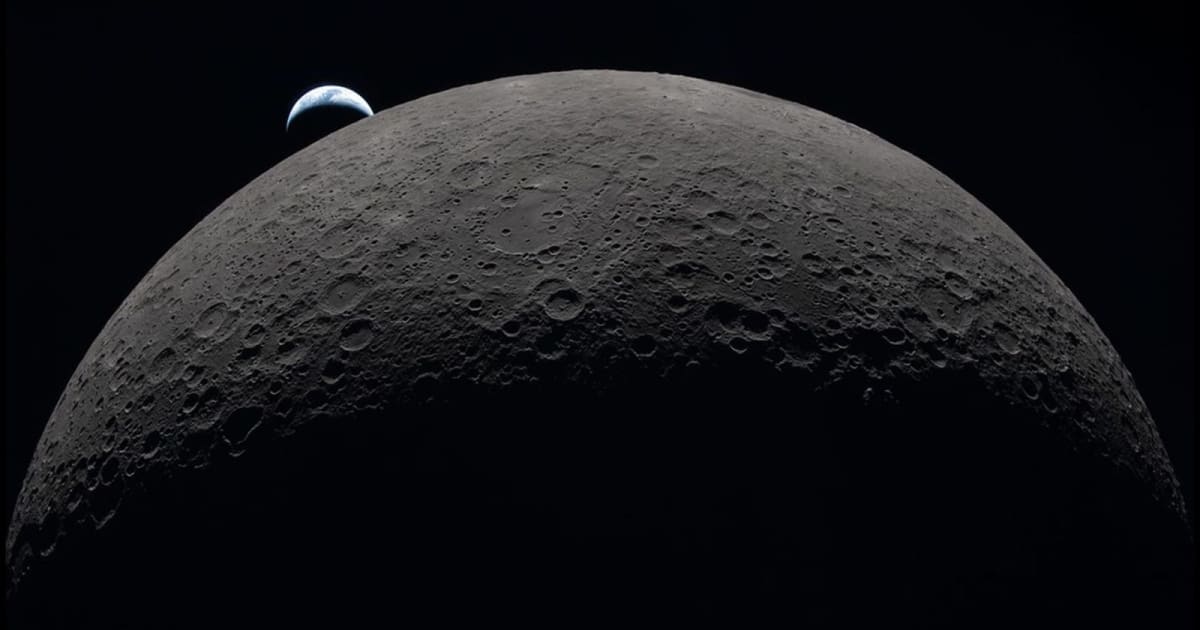
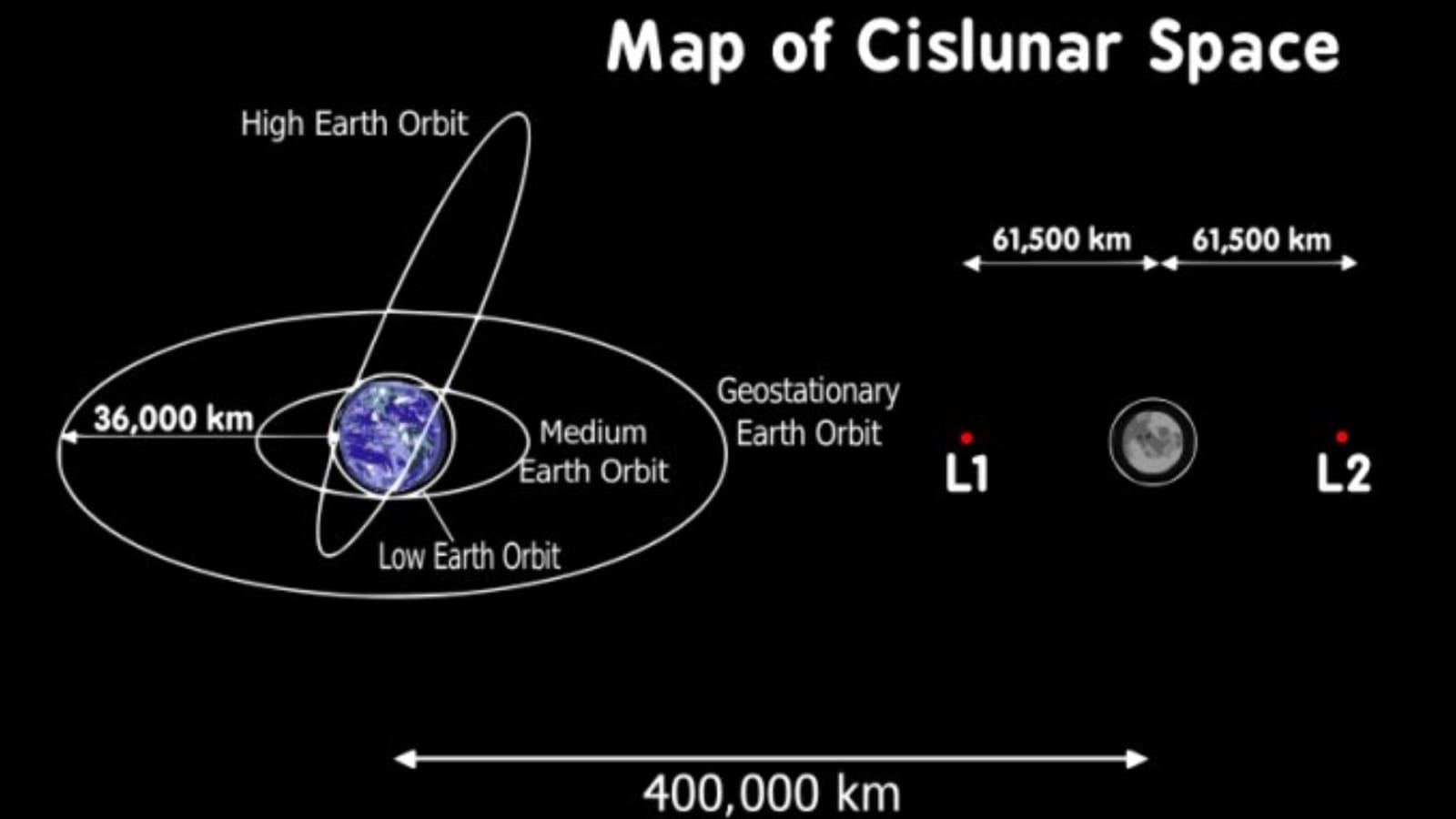
A team of aerospace researchers from China has issued a serious warning that the space between the Earth and the Moon may become the next battleground. As the space race is heating up, public and private companies from multiple nations are rushing to conquer the lunar surface first. This rush, researchers say, could lead them to resort to certain tactics in order to jeopardise the other’s mission and cripple critical space infrastructure. The paper by a team from the Northwestern Polytechnical University in Xian has been published in the Journal of Command and Control and it talks about how countries may strategically use their spacecraft in the cislunar space—the vast region between Earth and the Moon where the gravity of these two bodies affect a spacecraft’s movement—against their enemies. Interestingly, it could be done without even firing a weapon.
“Without directly using force, [a country could] compel an adversary to change its route, delay a mission, give up a launch window or incur higher costs,” Dang Zhaohui, the lead author and an associate professor at Northwestern Polytechnical University’s school of astronautics, said per the South China Morning Post.
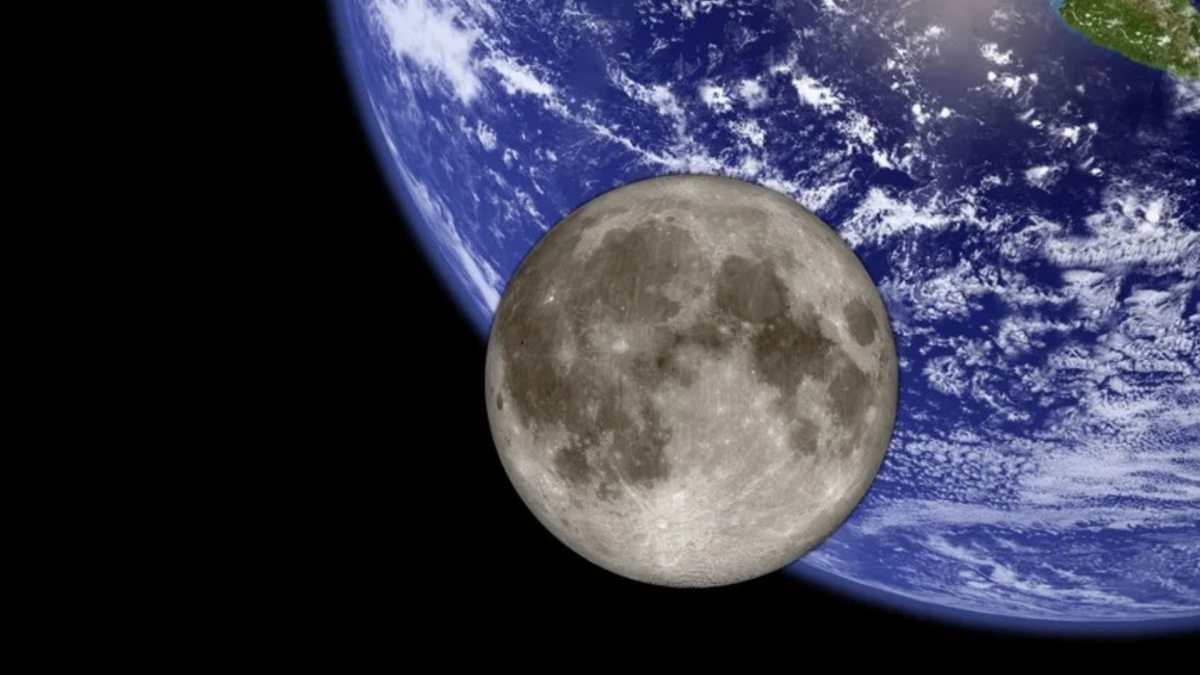
The cislunar space has some routes leading to the Moon that are fuel-efficient and strategically important. The experts believe that this might drive competition to control such routes and cause trouble for rival missions—this is similar to controlling key shipping routes such as the Strait of Hormuz on Earth. A spacecraft might chase and evade the other in order to wrest control of 'choke points' and even use the cislunar space to hide and move towards targets closer to Earth. Secrecy plays a major role in space ambitions of countries like China and they would want to avoid giving away information on trajectories and mission goals.
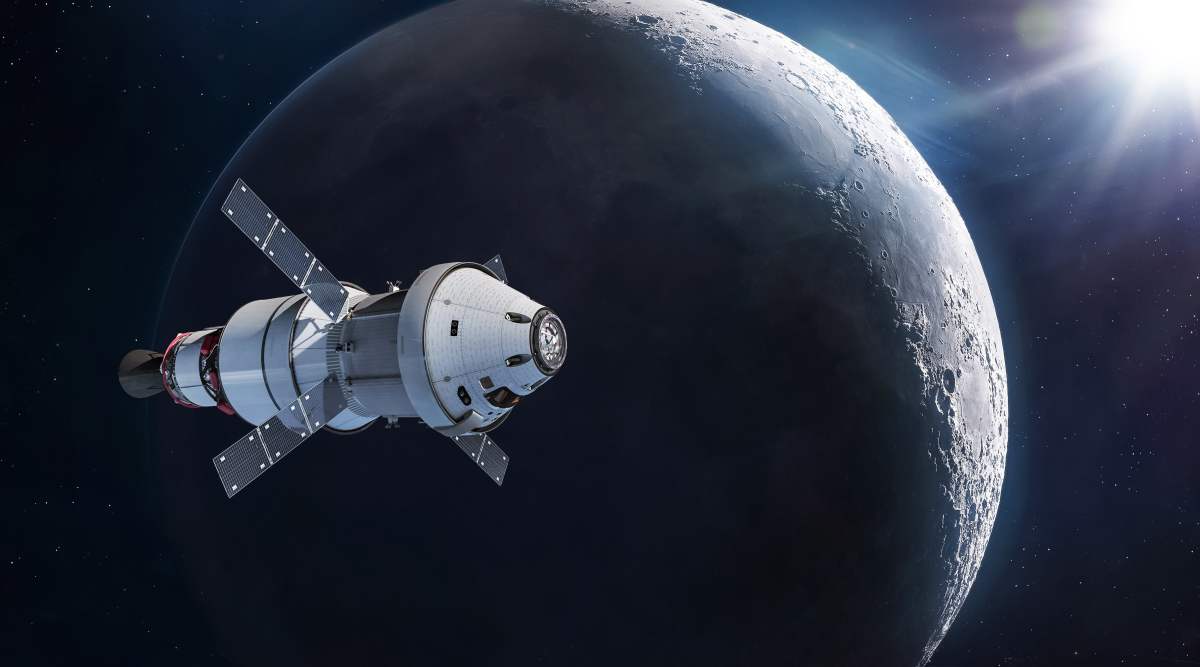
Space-based capabilities such as communication, navigation, surveillance and intelligence which rely on satellites play a huge role in a nation’s military strength and while protecting your own assets is important, we might see rivals prevent each other from protecting theirs. In the paper, the researchers examined different scenarios in which the cislunar confrontation may take place. These reportedly include pursuit and evasion, attack and defence, blockade and counter-blockade, and deception and identification. A spacecraft might play deceptive by pretending to be heading towards a particular location and executing fake maneuvers, and make their opponent reveal their plan, waste valuable time and miss a chance to act while unnecessarily burning fuel. It may also intercept a spacecraft and force it to take less-efficient routes to its destination.
While models often assume that a spacecraft can be tracked reliably and the rivals are aware of each other’s mission goals, the authors warned that confrontations in the real world may be worse than what they’ve predicted. There might be instances when a country is unaware of rival spacecraft’s location and intentions, thus future research is required to study how decisions will be made with incomplete information.
More on Starlust
NASA’s permanent Moon base could span hundreds of square miles: 'We'll not slow down'
Can NASA restrict China's access around its Moon Base? Here's what space law says