Microbes may survive asteroid impacts and travel between planets, new study finds
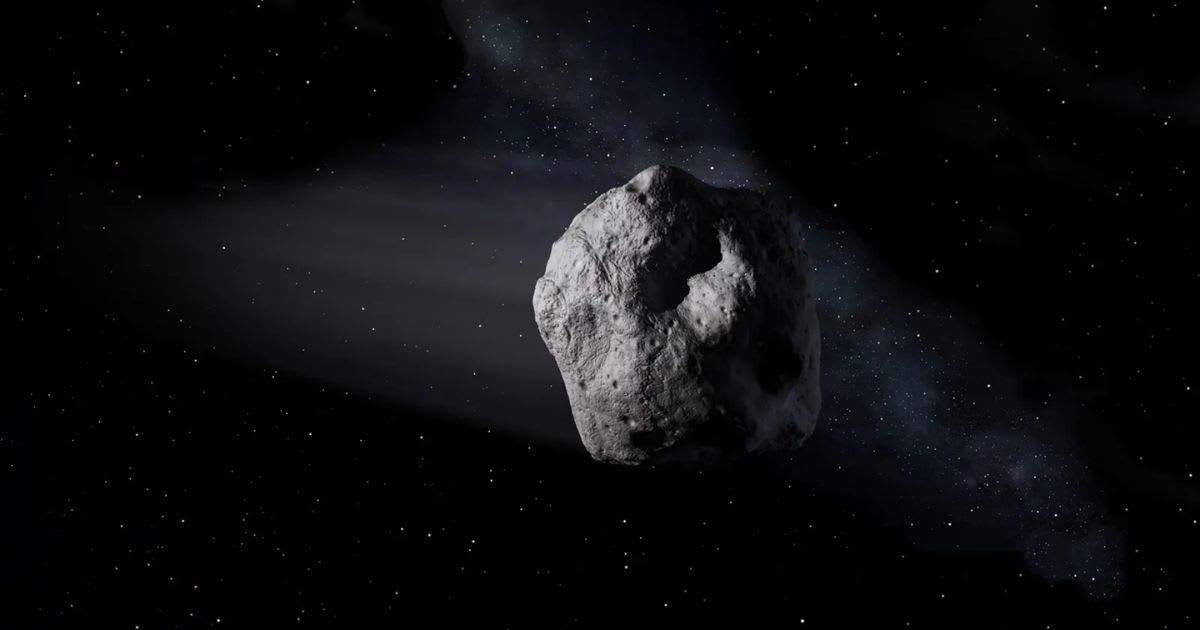
Can microscopic life travel between planets and manage to survive? A new Johns Hopkins University study seems to suggest so. Hypothetically, if an asteroid hits a planet, certain bacteria might be able to stay alive inside fragments of rock that are blasted off. The findings published in PNAS Nexus suggest that these microbes could potentially survive conditions like extreme pressure—usually the case with asteroid strikes. If they really are able to survive such violent journeys, the study could challenge the present understanding of life’s origin and interplanetary travel.
In @nytimes: Did life originate on Earth or hitch a ride from… elsewhere? ☄️ Prof. K.T. Ramesh and team fired metal plates at microorganisms, simulating asteroid impacts that could blast rocks (and life?) from one planet to another. The 🦠 survived! https://t.co/F4BHuQT5NR https://t.co/wlWzaYhcHP
— Johns Hopkins Engineering (@HopkinsEngineer) March 3, 2026
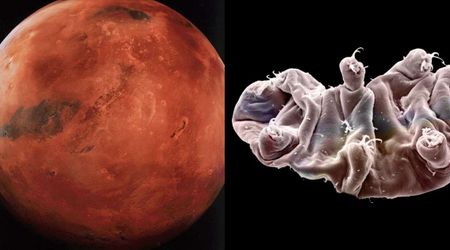
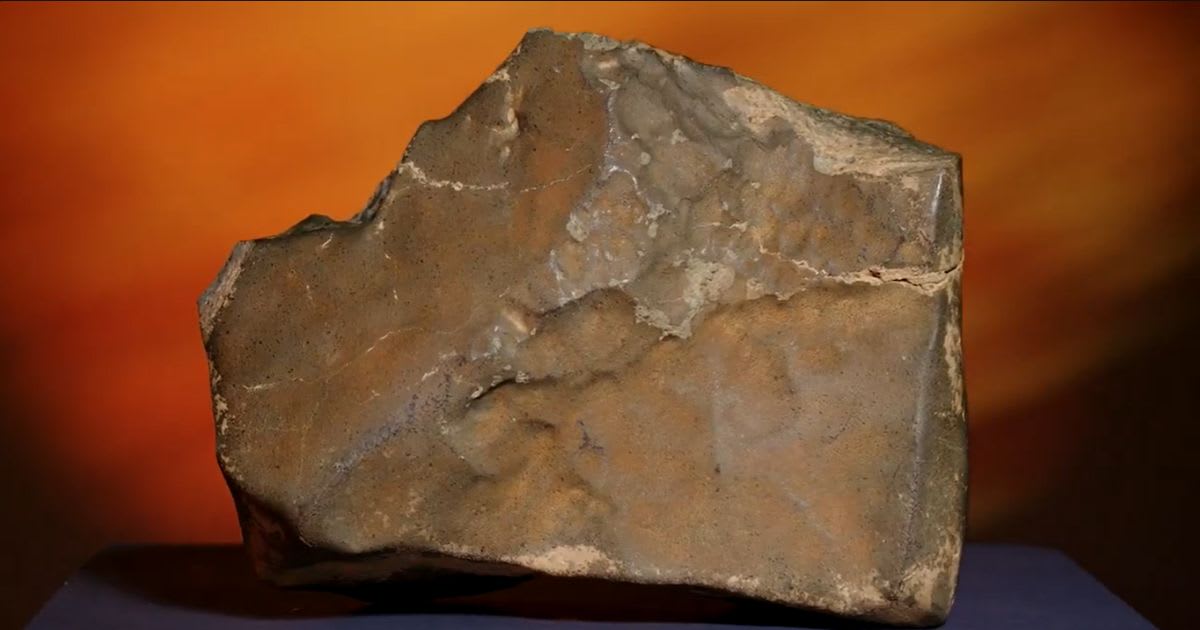
The concept of life being able to travel between planets inside rocks blasted into space by asteroid crashes isn’t particularly new. It’s called lithopanspermia, and the latest JHU study simply builds on it and tests the hypothesis. Even within our solar system, debris from asteroid impacts on planets like the heavily cratered Mars is known to have been scattered to neighboring planets like Earth, as evident from Martian meteorites found here. So, there is a possibility that some microorganisms could have survived this violent journey through space and made it to Earth.
The research team behind the study selected Deinococcus radiodurans, an extremely resilient bacterium found in the harsh environments of Chilean deserts. The bacterium has a thick shell and can also repair itself. "We do not yet know if there is life on Mars, but if there is, it is likely to have similar abilities," said senior author K.T. Ramesh, an engineer who studies materials under extreme conditions, in a statement.
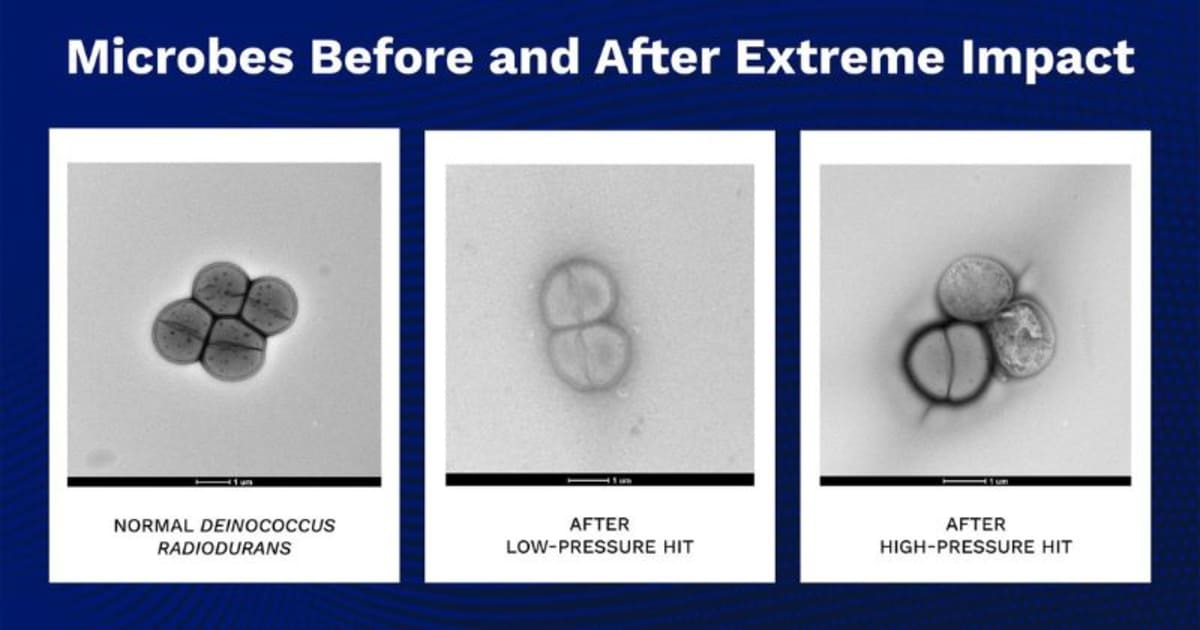
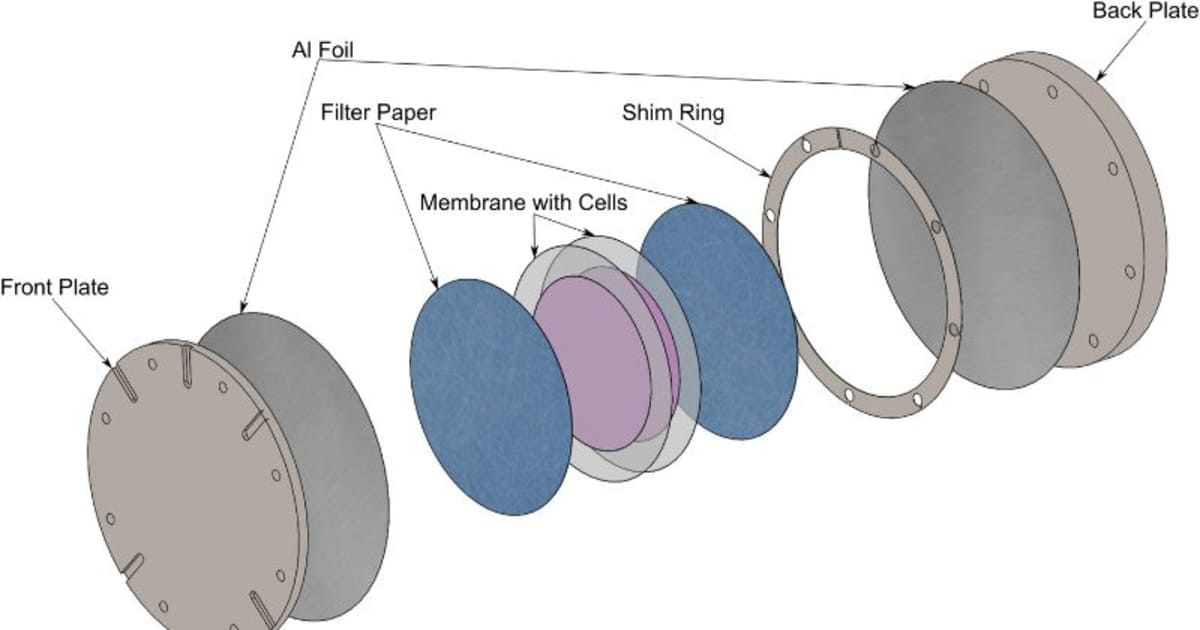
The next step in the study was to simulate an asteroid impact, at least in terms of the extreme pressure such an event usually generates. With the microbial samples sandwiched between metal plates, the scientists fired a projectile from a gas gun at speeds of almost 300 miles per hour to create 1 to 3 gigapascals (GPa) of pressure. For the uninitiated, the pressure at the bottom of the Mariana Trench (the Earth’s deepest point) is barely one-tenth of a gigapascal. Yet, the bacteria survived almost all tests.
The study found that the bacteria survived nearly every test at 1.4 GPa. At an increased pressure of 2.4 GPa, about 60% of them survived. The lower pressure hits barely left any impact on the microbes, while higher pressures seemed to cause some ruptured membranes and internal cell damage. It was, in fact, the metal test plates that succumbed to the intense pressure, while the microbes mostly survived.
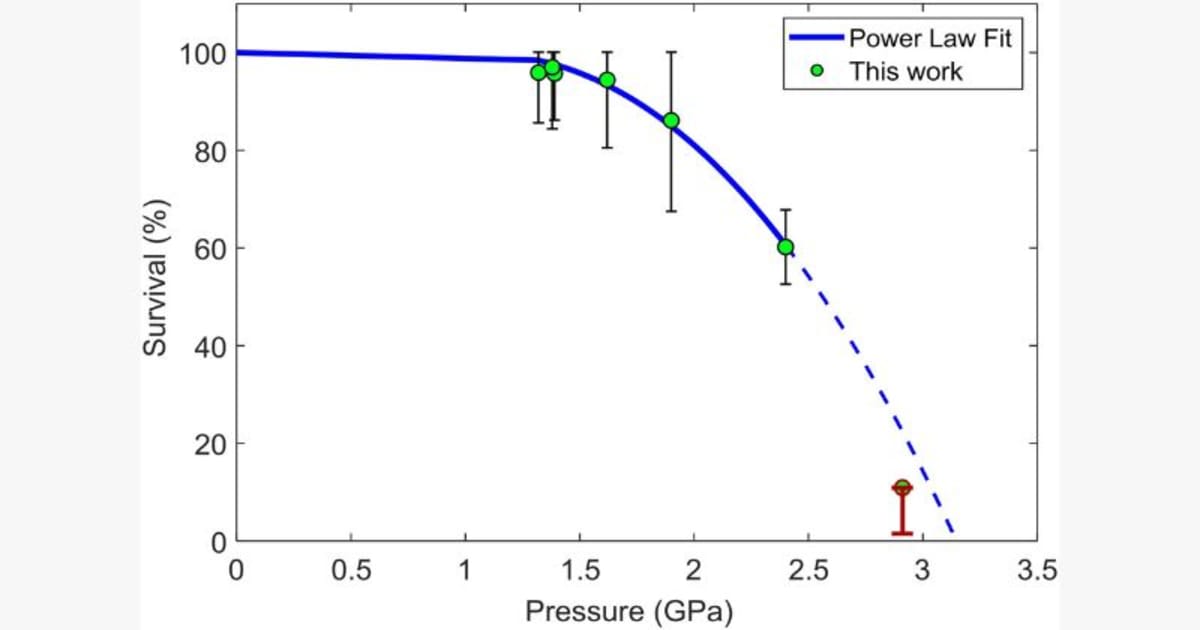
This experiment’s simulated pressure is comparable to the actual likely pressure of around 5 GPa or higher experienced by ejected fragments. So, the microbial life that survived nearly 3 GPa might just be able to survive that too. "We have shown that it is possible for life to survive large-scale impact and ejection," said lead author Lily Zhao, a graduate student. "What that means is that life can potentially move between planets. Maybe we're Martians!"
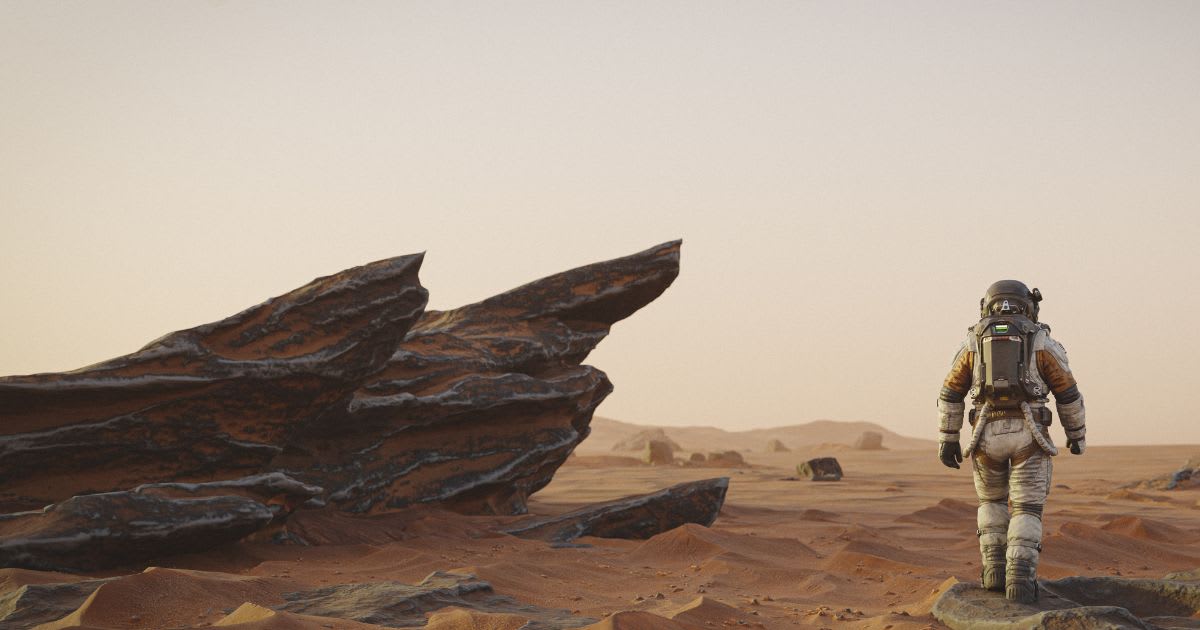
If microscopic life could really travel between planets, planetary protection policies will have to change accordingly. With crewed missions to Mars getting closer to reality, it is important to follow protocols that prevent biological contamination between worlds. This is particularly crucial while bringing samples back to Earth. The research team behind this study aims to explore more cases like the effects of repeated asteroid impacts on microbial populations, as well as how other organisms, like fungi, can possibly survive interplanetary journeys.
More on Starlust
Asteroid Bennu samples contain 'key to happiness' among other fascinating things
Astronauts may be able to grow plants on Mars and the Moon—the 'how' will surprise you