Mars looks purple in a stunning new ESA image. Here's what's behind the color
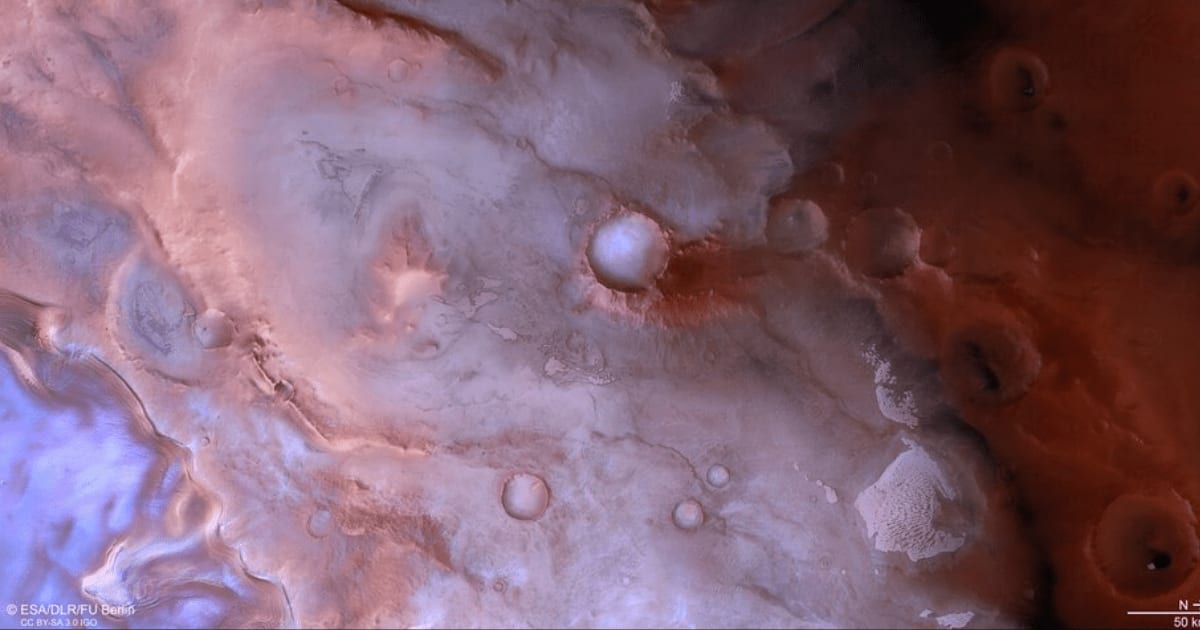
The European Space Agency (ESA) has shared a new image from its Mars Express spacecraft that shows the Red Planet in gorgeous purple swirls. In this image, you can see an icy cliff near the south pole of Mars that is covered in swirls of purple, pink, and red. That is a long way from the tans, reds, and browns we usually see in Mars photos, which are the colors that come from high levels of oxidized iron, better known as rust.
Summer in Europe may be coming to an end, but the Red Planet is still us giving raspberry ripple ice cream vibes in this latest image from #MarsExpress 🍦
— ESA Science (@esascience) September 16, 2026
Explore the image and find about more about this cliff of ice near Mars's south pole 👉 https://t.co/IJlYbBKQDM pic.twitter.com/bTeY43L3QN
What is Thyles Rupes, and how big is it?
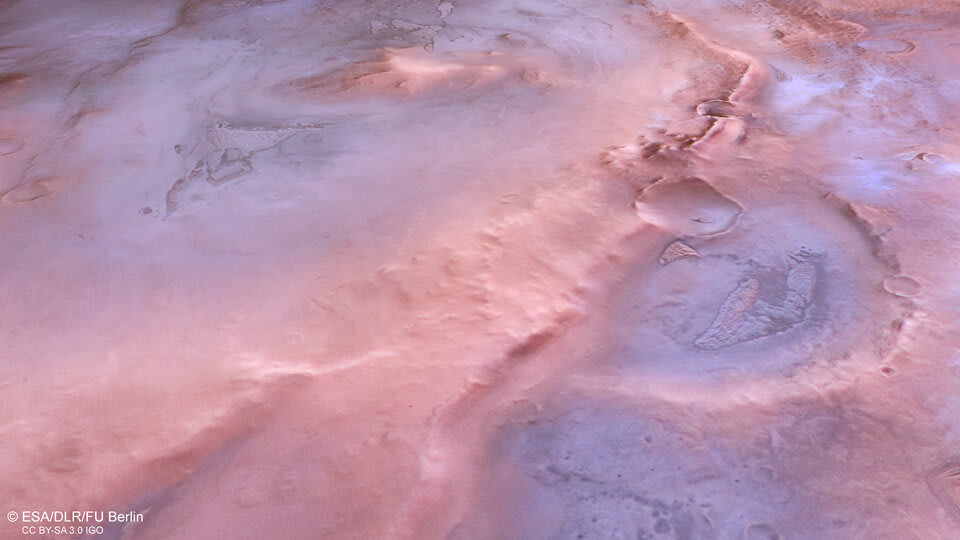
The cliff in the image is called Thyles Rupes. The name has a story behind it. "Rupes" is Latin for cliff, while "Thyles" refers to Thule, which is a legendary place that classical geographers placed beyond the edge of the known world. The formation can be found in the southern highlands, and it stretches for hundreds of miles. Commenting on this image, ESA notes, "The rocky cliffs of Thyles Rupes can reach towering heights of over 1 km tall in some places." On top of that, the surrounding terrain is covered with impact craters.
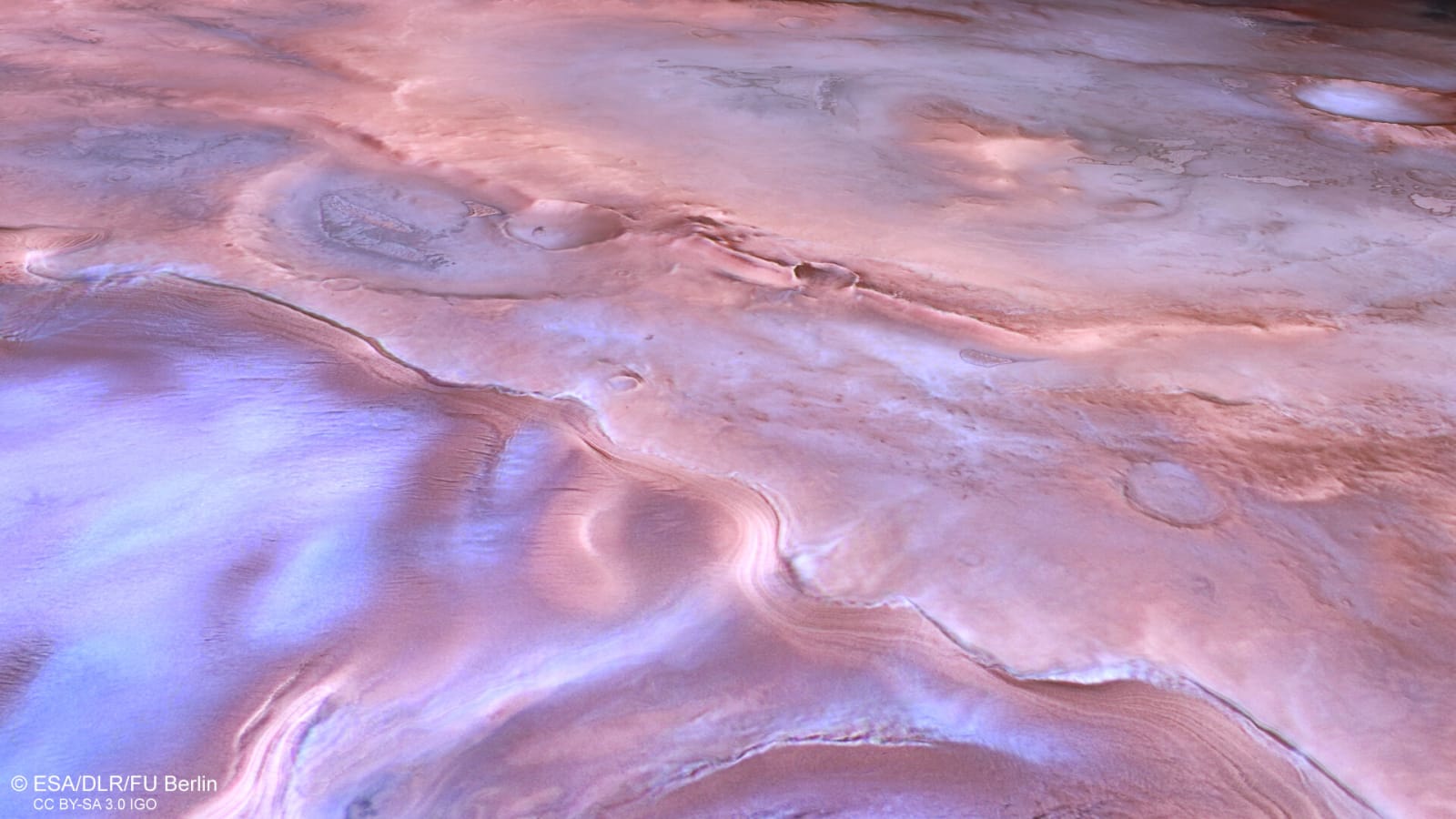
But why does this part of Mars look purple?
The reason behind this look comes from the material that volcanoes made and spread around. This further makes the surface rich in minerals called olivine and pyroxene. Both of these are common in Earth's mantle. The paler areas are frosty deposits of carbon dioxide, which stick around here even in Martian spring, when the region was imaged. They show up as a bluish coating on dunes and inside craters.
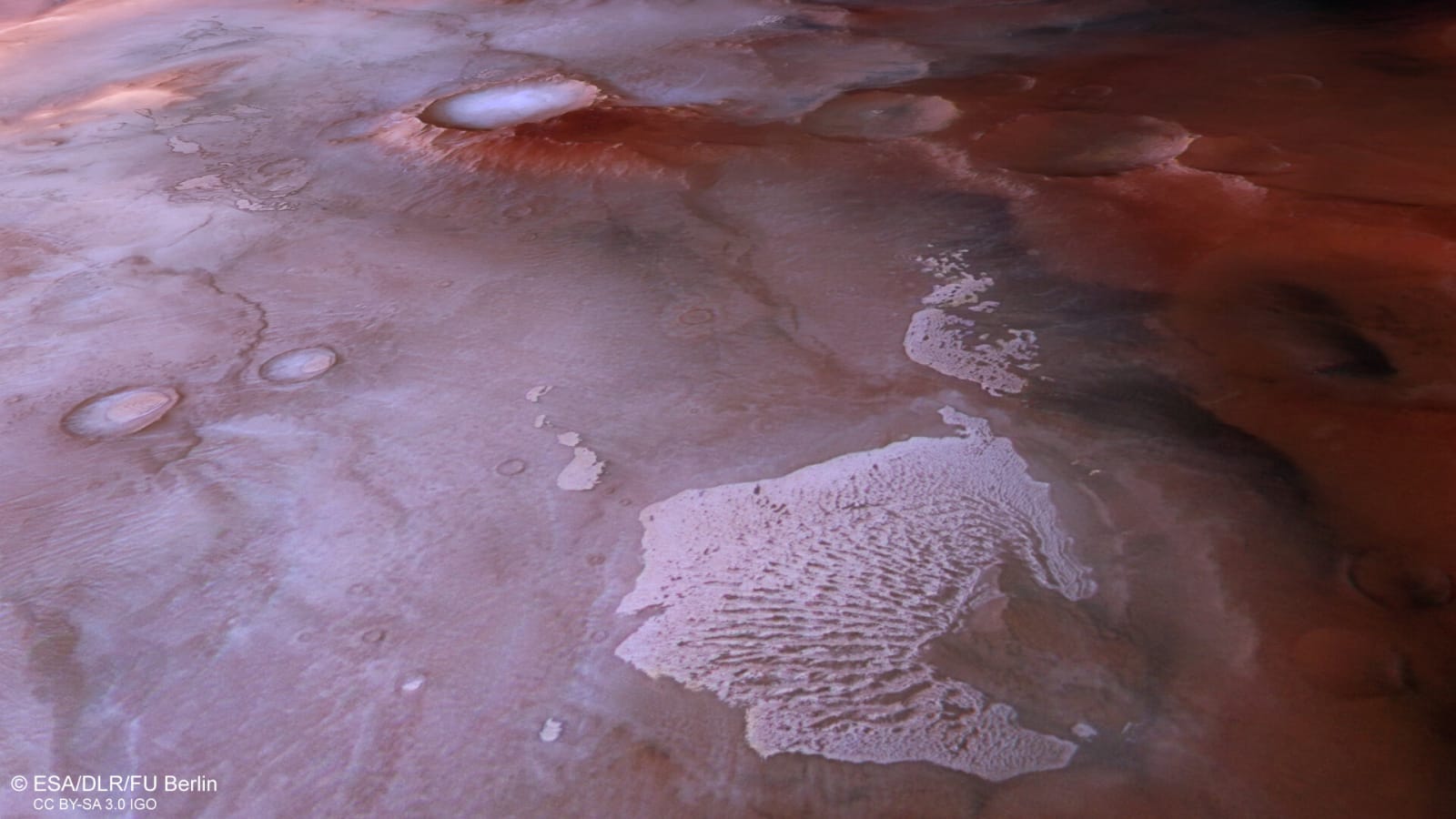
As for the purple itself, ESA says, "The general berry-purple hue of this scene is due to a mix of light, dust, and frost." The atmosphere on Mars can change quite a bit, and as a result, images taken at different times of day can have noticeably different colors.
How did a cliff this tall form on Mars?
The cliffs are thought to have formed from movement in the planet's crust. When Mars's interior began to cool and shrink, it deformed the crust above it. Hence, sections of the surface were pushed together, and due to this, one rose over the other to build a steep wall. The picture was taken from the High Resolution Stereo Camera (HRSC), which is one of eight instruments on Mars Express. ESA also shared 3D close-ups and a topographic map to show how high or low the ground sits. Mars Express has been mapping Mars in color and 3D since it launched in 2003.
Apart from ESA's Mars Express, NASA's Mars Reconnaissance Orbiter (MRO) as well as the Perseverance rover have also been actively exploring the planet. Perseverance is actively searching for signs of life on the Red Planet. In fact, recently, the orbiter gave us the strongest clue to life on another planet yet. The rover has found complex organic carbon in mudstones in an ancient dried‑up river channel in Jezero Crater. The study has been published in the National Library of Medicine.
More on Starlust
NASA Spirit rover data reveals fresh hidden clue that water once covered large parts of Mars
Scientists amazed as NASA's Curiosity images honeycomb-like features on Mars