'Like a 4-billion-year-old weather report': NASA's Perseverance offers glimpse of ancient Mars
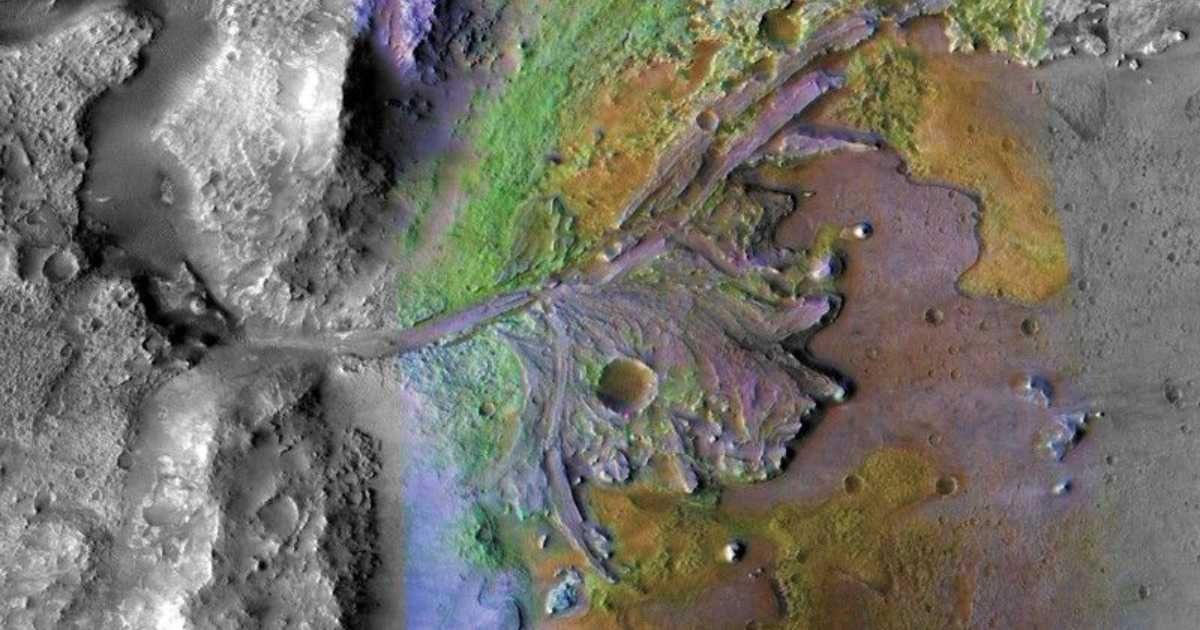
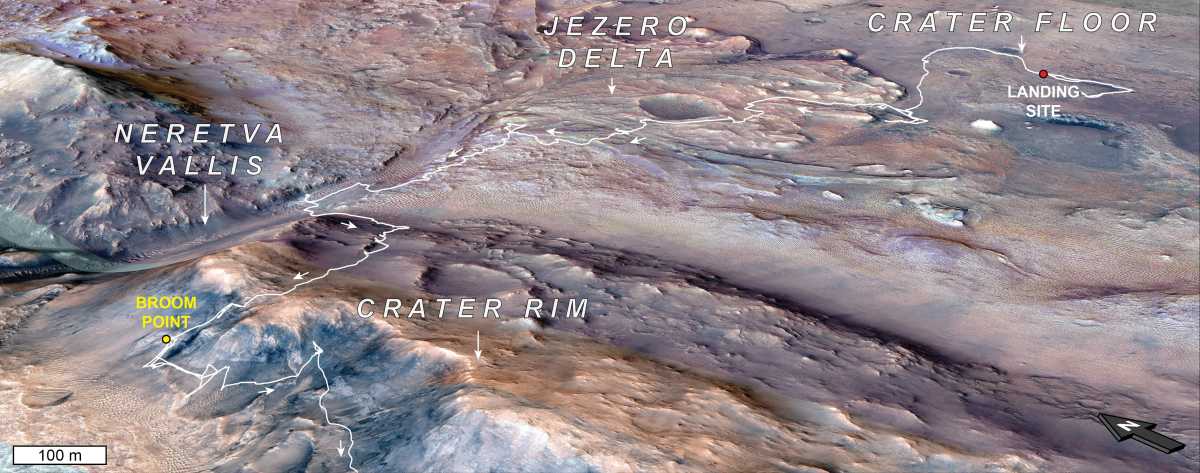
While roaming across Mars, NASA's Perseverance rover has stumbled upon an ancient stack of layered rocks on the rim of Jezero Crater. Referred to as the Broom Point member by the rover science team, the rocks form a towering sequence about 75 meters (245 feet) thick that scientists believe is more than 3.9 billion years old. The findings, published in the Journal of Geophysical Research: Planets, offer an extraordinary glimpse into a turbulent time in the early solar system.
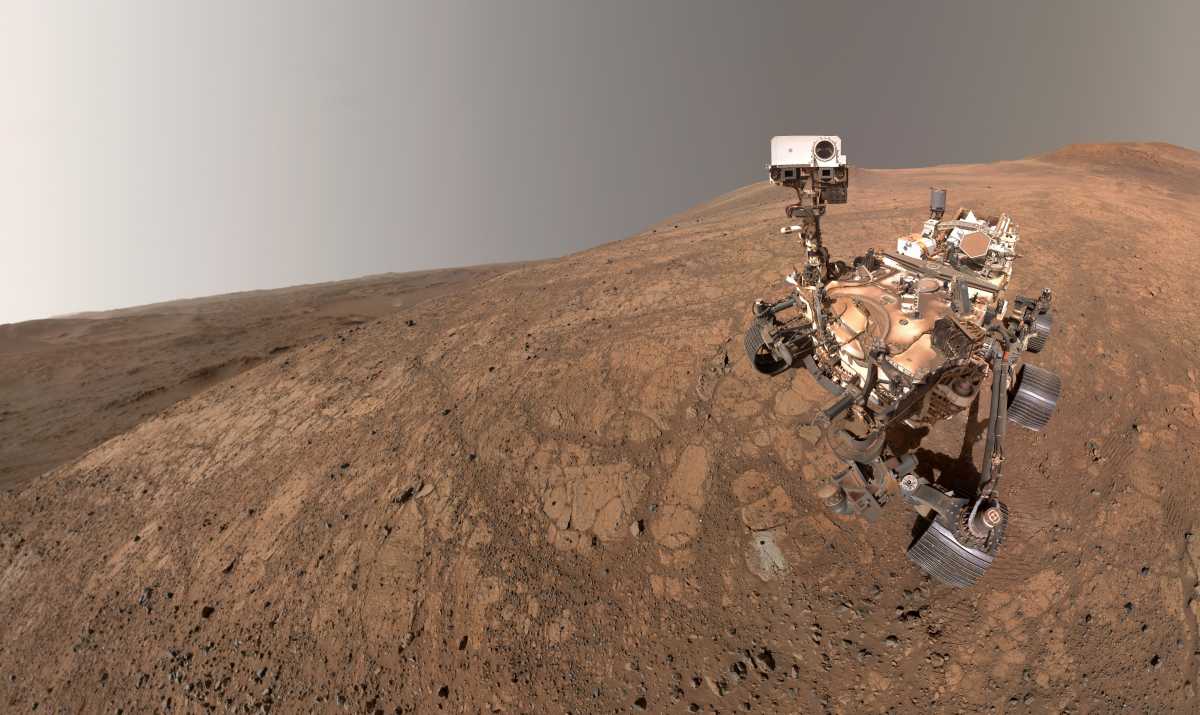
Scanning the Broom Point formation with its suite of scientific instruments, the rover helped researchers identify six distinct rock types. Among them were breccias—rocks composed of angular fragments fused together after violent collisions—alternating with thin layers of finely pulverized rock dust. The rover also captured images of countless tiny, glassy beads embedded throughout the rocks. While volcanic eruptions can form similar droplets, their overwhelming abundance points to something much more dramatic: powerful asteroid impacts that melted rock and flung it into the atmosphere, where it cooled and morphed into glass. Some of the largest beads are comparable in size to those produced by the Chicxulub impact on Earth—the asteroid strike that ended the reign of the dinosaurs 66 million years ago.
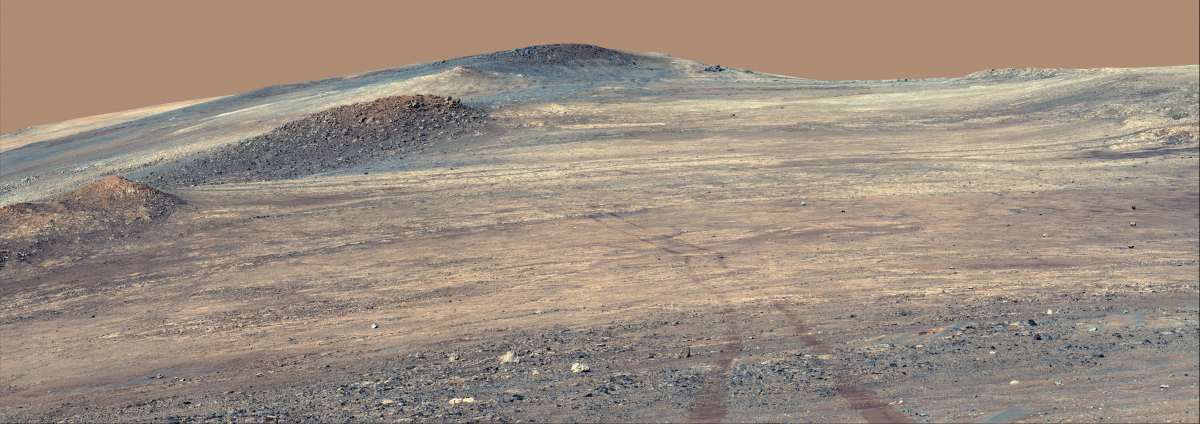
“On Earth, our earliest geologic history has been fundamentally broken up, deformed, and erased by plate tectonics,” said Ken Farley, Perseverance project scientist at Caltech in Pasadena, California, according to a statement. “Because Mars lacks plate tectonics to recycle its crust, this ancient record remains intact, giving us a rare glimpse into a geological time period that doesn’t exist on our own planet.” The layered rocks didn’t form in the wake of a single massive impact. Instead, early Mars was battered by a wave of asteroid bombardment over an extended period, giving rise to a sequence of impact-generated layers that appears again and again throughout the thick rock formation.
Some impacts occurred far away, scattering debris across vast distances. Others, meanwhile, struck much closer to where these rocks were accumulating. Together, they gradually built a layered archive of cosmic collisions. The researchers say that the rocks may preserve another intriguing clue. Several layers appear to have formed from fast-moving, ground-hugging debris flows, which on Earth are usually created when molten material crashes into water or ice, producing explosive bursts of steam that propel hot debris across the landscape. If such a process occurred on ancient Mars, it suggests that water or ice may already have existed in the region when some of these asteroid impacts happened.
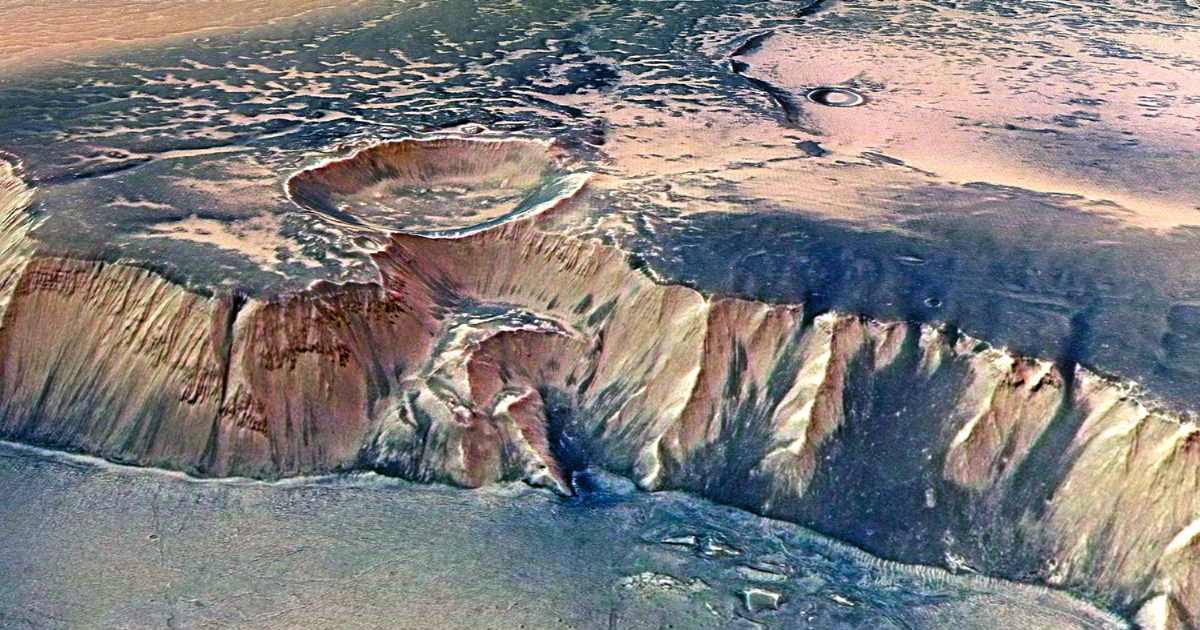
Looking at some of Broom Point’s unusually steep, nearly vertical rock layers, scientists suspect that the landscape was shaped by two colossal impacts. The first one created the enormous Isidis Basin, stretching roughly 1,200 miles (1,900 kilometers) across. The force of that collision tilted what had once been flat rock layers. The next one carved out Jezero Crater itself—a basin about 28 miles (45 kilometers) wide. That second impact fractured, uplifted, and exposed the already-tilted rocks, leaving them accessible for exploration billions of years later.
To date these events, Perseverance has already collected two rock cores from the formation, nicknamed Bell Island and Main River. If a future Mars Sample Return mission succeeds in bringing them to Earth, scientists could determine their precise ages using laboratory techniques impossible to perform on Mars. “If we can pin down the ages of these layers, it would be like reading a cosmic weather report from 4 billion years ago,” said Alex Jones, a Ph.D. student in planetary geology at Imperial College London and lead author of the paper.
More on Starlust:
NASA tests new rover technology that would put Perseverance and Curiosity to shame
Stunning new study claims Mars may have supported life longer than initially suspected