Groundbreaking supercomputer simulations explain why black holes are so bright
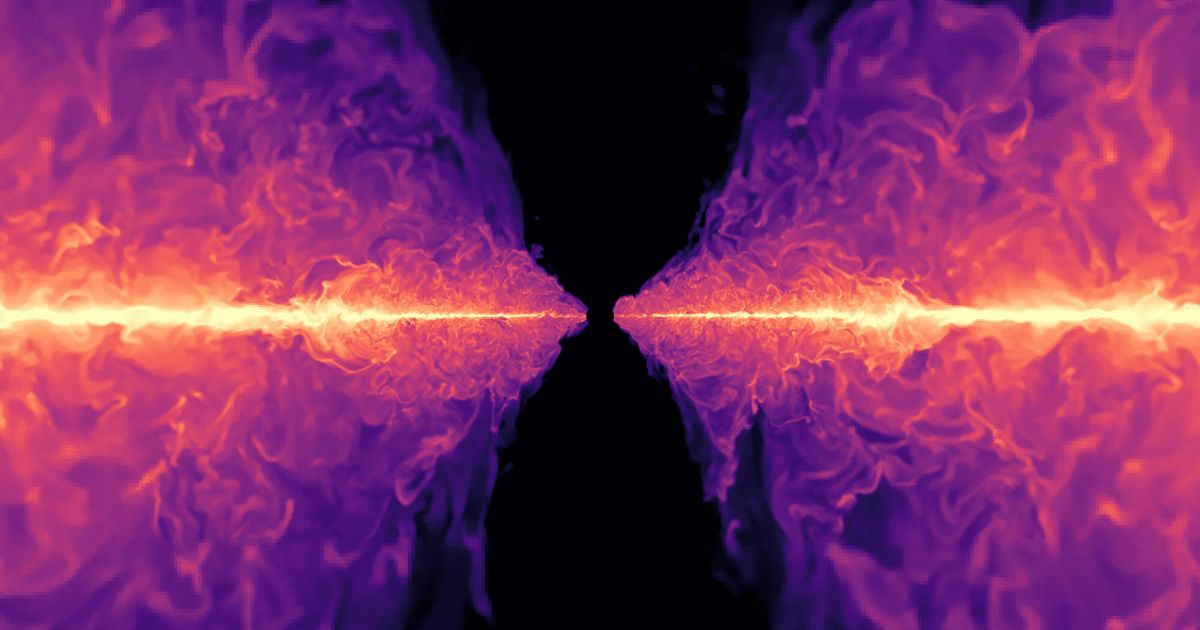
A team of computational astrophysicists has developed a simulation that explains the behavior of matter around black holes.
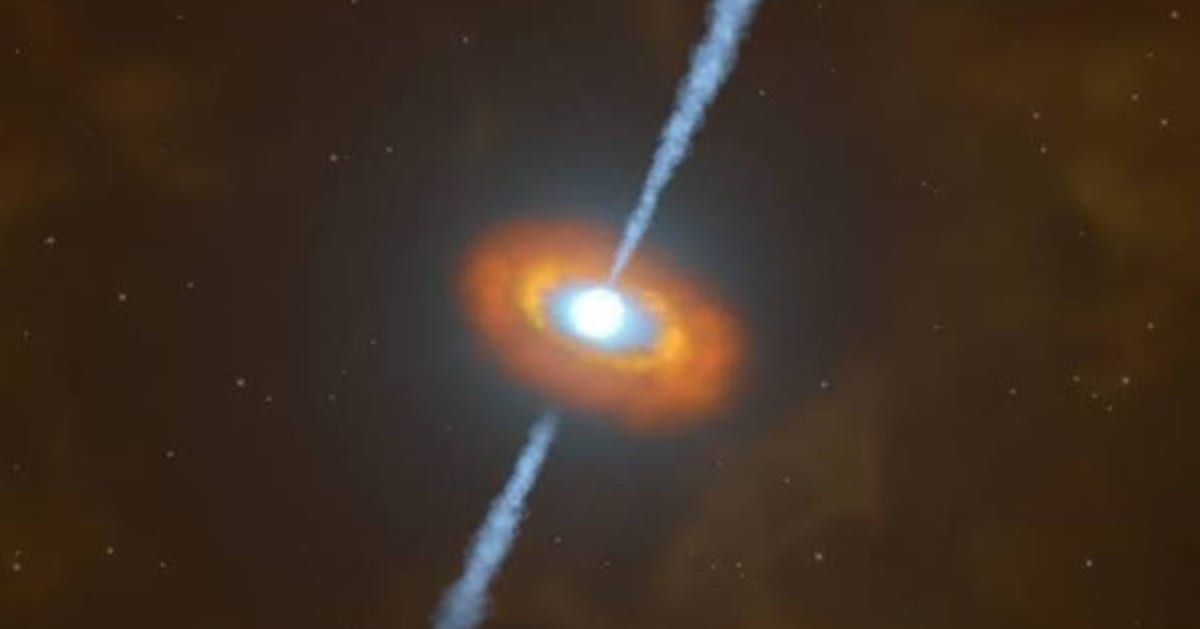
The accretion flow forms a thermal disk near the black hole (center). Despite the flow being radiation-dominated, the disk (yellow) remains stable. (Cover Image Credit: L. Zhang et al.)

Despite what their names might suggest, black holes are some of the brightest objects in the universe. The glow comes from the gas and dust that flow around and into a blackhole. The most comprehensive simulation of how this happens has now been developed by a team of computational astrophysists. To figure out the behavior of the material present around black holes, the researchers used a full treatment of how light moves and interacts with matter within Albert Einstein's general relativity. 

3d render image of a Black Hole in space surrounded by its orbiting remnants. (Representative Photo by Cavan Images / Luca Pierro / Getty Images)

Incorporating Einstein's theory of general relativity was a non-negotiable, as a model of black holes would be incomplete without it. After all, the theory describes how the massive bodies distort space-time, which, in turn, influences how light created by the material falling in interacts with the surrounding material. "Previous methods used approximations that treat radiation as a sort of fluid, which does not reflect its actual behavior," explained lead author Lizhong Zhang, per Phys.org. Zhang, who is also a research fellow at the Simons Foundation's Flatiron Institute in New York City, then warned that oversimplifying assumptions can distort outcomes, before noting how the simulations produced by his team can replicate the behavior of black holes seen in the sky with remarkable consistency. "In a sense, we've managed to 'observe' these systems not through a telescope, but through a computer."

The James Webb Space Telescope (JWST or Webb) observes outer space to detect anomalies. Elements of this image are furnished by NASA (Representative Image by alex-mit / Getty Images)

The results, published on December 3 in the Astrophysical Journal, could offer an explanation for little red dots (LRDs)—faintly luminous objects that the James Webb Space Telescope observed in the early universe. Their paper supports a leading theory that suggests that these objects are black holes that are feeding on material through a process referred to as 'super-Eddington accretion' in the middle of galaxies as old as time. 
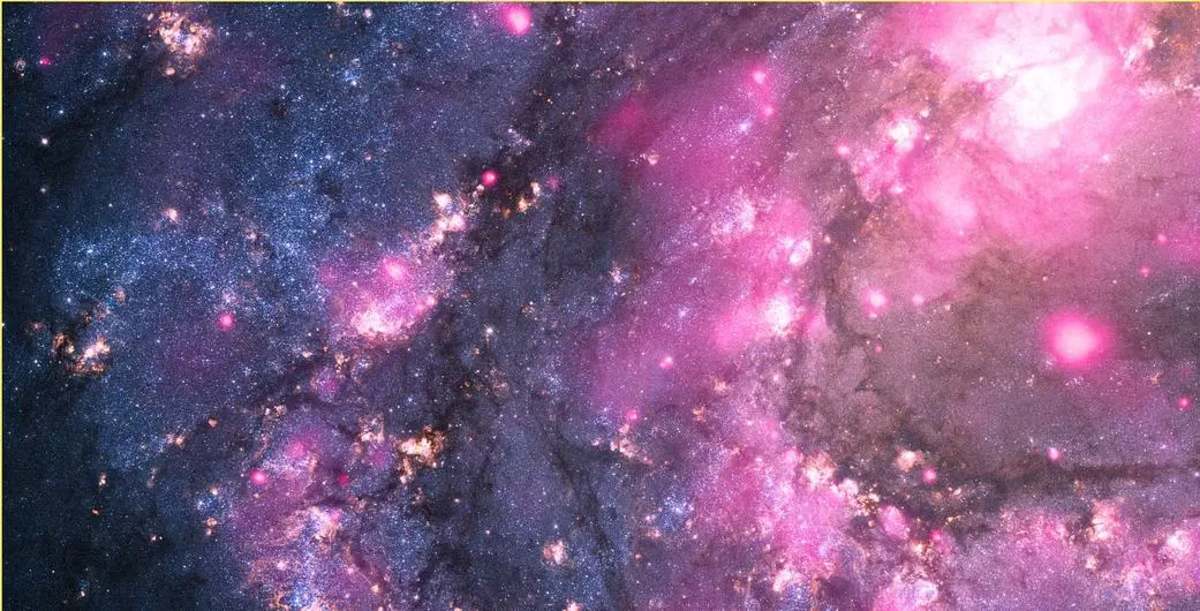
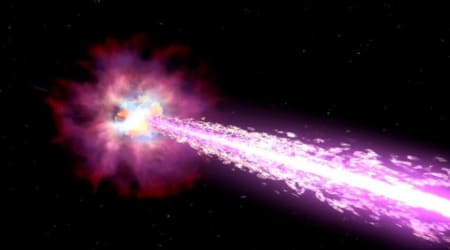
An extraordinary outburst produced by a black hole in a nearby galaxy has provided direct evidence for a population of old, volatile stellar black holes (Image Source: NASA)

The simulation is going to be crucial for the study of stellar mass black holes as well. While supermassive black holes have been captured in high-resolution images, stellar mass ones cannot be observed that way, as they appear as pinpoints of light. So to chart how energy is distributed around these structures, scientists resort to converting light into a spectrum. Zhang and his team found that their simulation was in agreement with the spectrum provided by observational data—something that is crucial for making a better interpretation of the limited data that stellar mass black holes come with. 
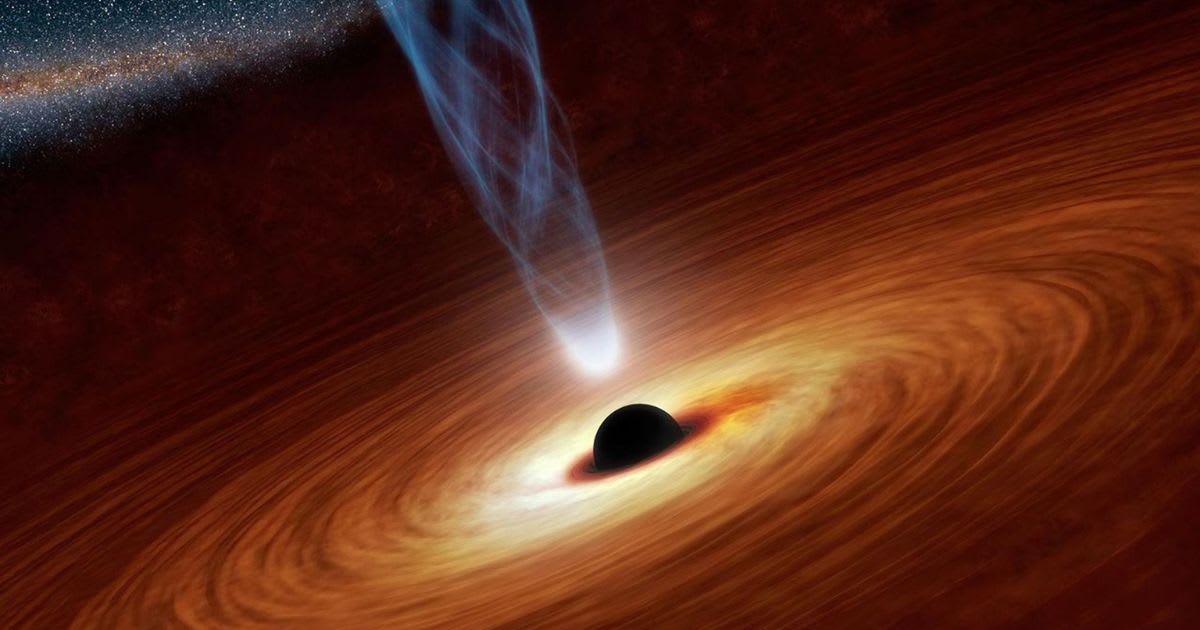
This artist concept illustrates a supermassive black hole with millions to billions of times the mass of our Sun (Cover Image Source: NASA/JPL-Caltech)

The simulations in question were based on an algorithm developed by Yan-Fei Jiang of the CCA. It blends an angle-sensitive method for following how radiation moves and interacts with matter with a fluid-flow model describing motion around a spinning sphere under a powerful magnetic field.

This is the first image of Sgr A*, the supermassive black hole at the centre of our galaxy, with an added black background to fit wider screens. (Representative Photo by NASA Via Getty Images)

The team responsible for the simulations will work to test if their model applies to all types of blackholes. Apart from helping understand stellar mass black holes, the simulations could also help study supermassive black holes, which are the driving force behind the evolution of galaxies. Part of the team's efforts will be aimed at accounting for the various ways in which radiation and matter interact across temperatures and densities. 
More on Starlust

Groundbreaking finding: Objects near black hole Sagittarius A* are orbiting safely, not falling in after all

ESA’s Euclid telescope provides remarkable insights into formation of galaxies and supermassive black holes

MORE STORIES

“Two completely independent measurements have found hints of time variation in dark energy"
5 hours ago
Hubble and Webb have been used simultaneously to uncover secrets of 27 tiny objects beyond Neptune.
1 day ago
The scientists found these sources among objects that appeared in the lowest X-ray-energy images in the Chandra archive but disappeared in higher-energy images.
2 days ago
The superbubble is gigantic, measuring around 210 by 140 light-years across.
3 days ago
The possibility of lensing appears to be the most convincing yet in describing the unusual source.
3 days ago
"This object gives us a rare chance to study material that formed somewhere completely different from our own solar system."
4 days ago
A new paper has warned about how countries may strategically use their spacecraft to gain control of the space between Earth and the Moon.
6 days ago
“It's thrilling to wonder if this could be the first hint of a dark-matter observation.”
Sep 3, 2026
Dark matter makes up much of the universe but is invisible, making detection a tricky affair.
Sep 1, 2026
This newly found 'mega-Earth' is forcing astronomers to rethink how rocky planets form. Here’s how.
Aug 20, 2026