5 mind-blowing discoveries NASA's James Webb Space Telescope made that Hubble Telescope couldn't
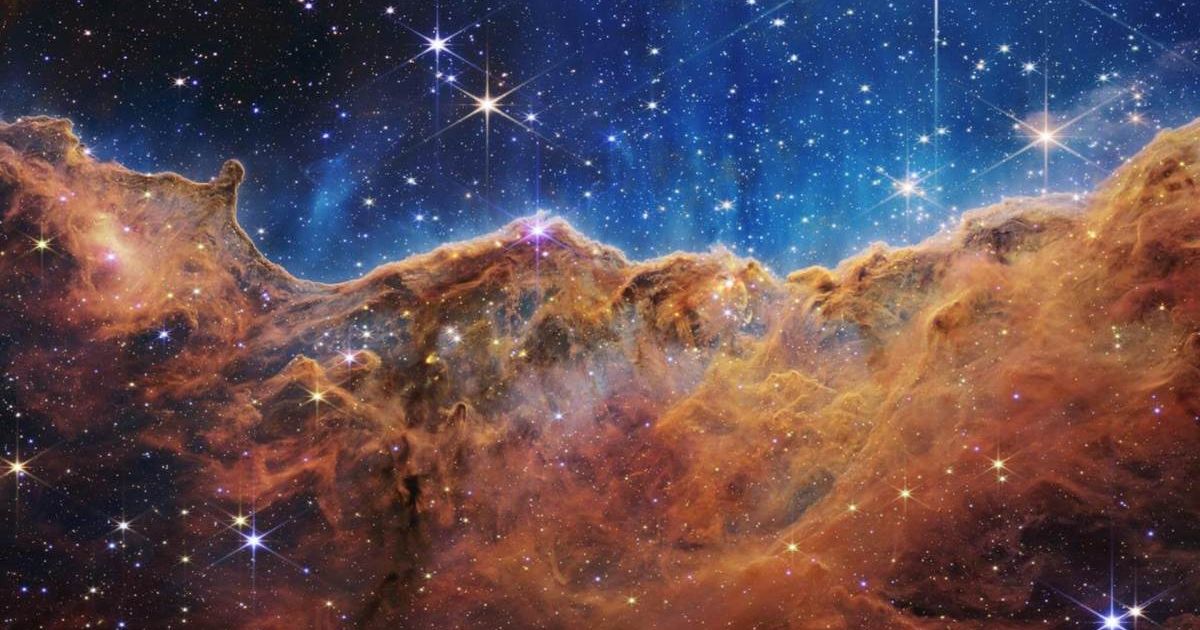
The breathtaking visuals of the universe released by NASA are credited to its talented inventory of spacecraft and telescopes. The space agency's James Webb Space Telescope (JWST) continues to deliver extraordinary results alongside its predecessor, the Hubble Space Telescope. Comparisons are natural, as the James Webb captures more detailed images. According to NASA, Hubble observes mainly in ultraviolet light and visible light, while Webb sees in the entire infrared spectrum. Hence, Webb has captured some elements that the Hubble has missed in its observations, of which we have handpicked five for you.
Invisible Rings of Uranus Made Visible
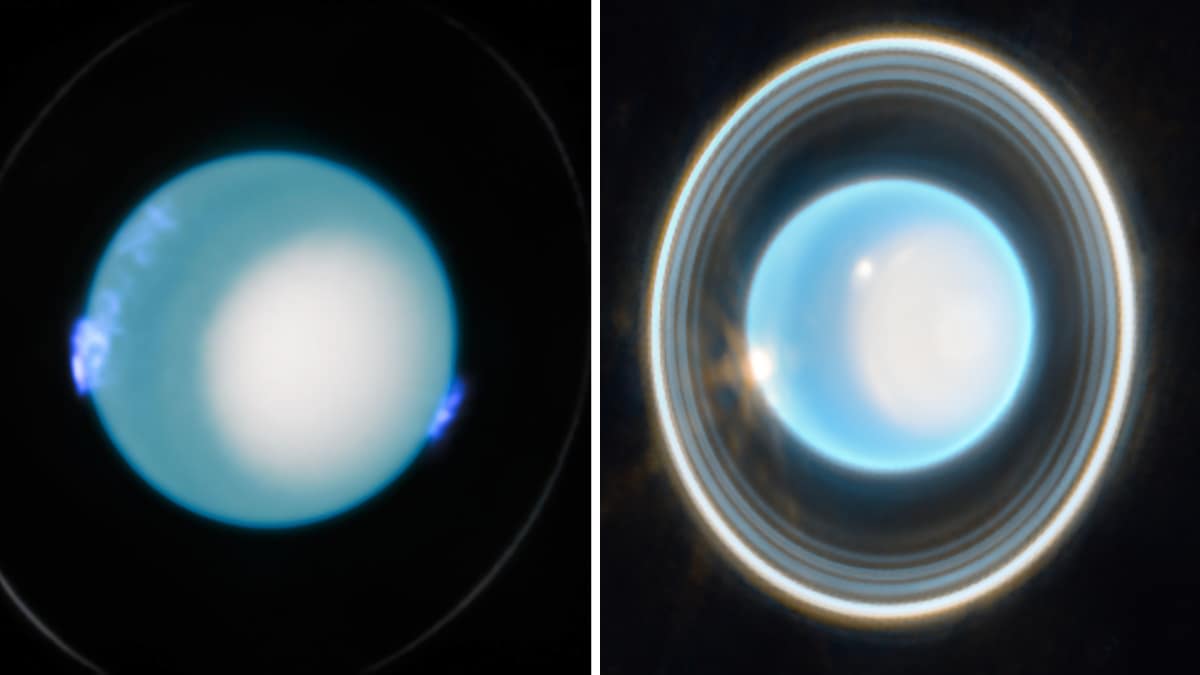
JWST’s image of the planet Uranus showed dramatic rings around it, along with bright features in the planet’s atmosphere. The Webb’s Near-Infrared Camera (NIRCam) combines data from two filters at 1.4 and 3.0 microns, according to NASA. This is shown in blue and orange, and the resulting representative-color image shows a blue hue. The image captured by the Hubble didn't highlight these features as it focused on capturing the planet's aurorae. It was part of NASA's attempt to measure Uranus' interior rotation rate. The image by Webb will also help study the mysterious mechanism of the polar cap shining in direct light, something that Hubble couldn't capture.
Webb Observes Jupiter's Auroras and Storms
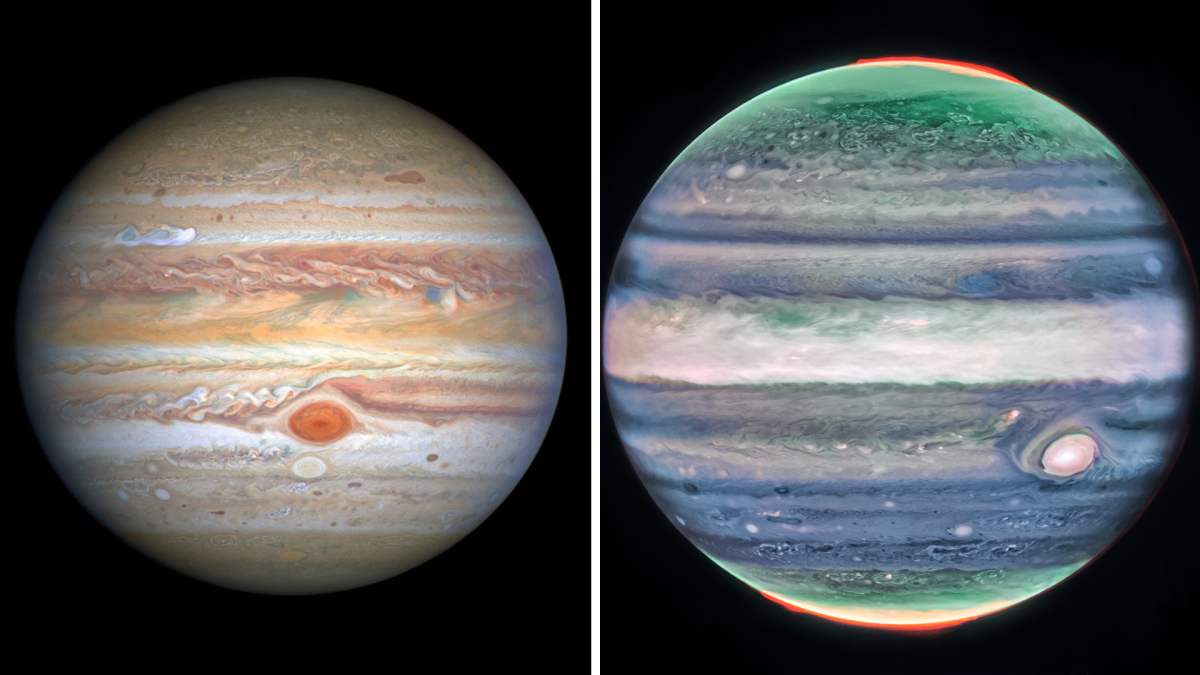
New details of the auroras of the gas giant planet Jupiter were captured by James Webb. According to NASA, the auroras on Jupiter are not only bigger but also a hundred times more energetic than those of Earth. Webb’s advanced sensitivity helps study the phenomena to understand Jupiter’s magnetosphere better. The energy in the shades of red, green, and purple was missed by the ultraviolet observation of the Hubble Telescope. Hubble only captured the detail in the Great Red Spot, with which NASA hinted at a new storm.
Witness Numerous Stars in the Pillars of Creation
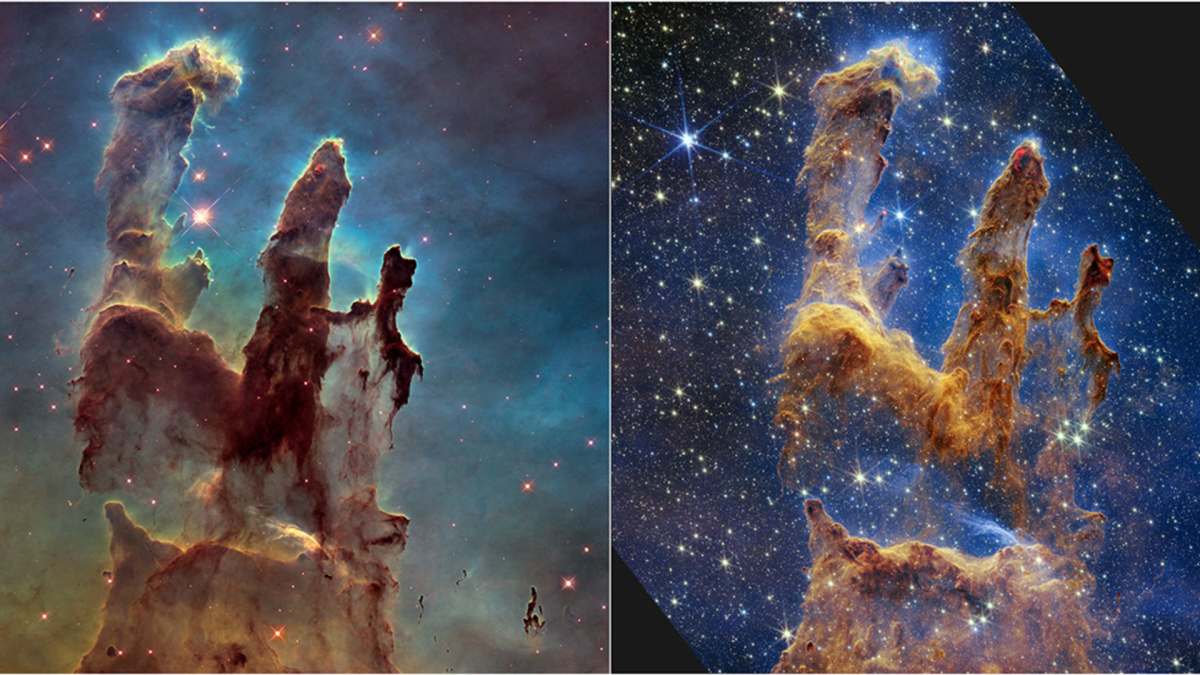
A highly detailed capture of the iconic Pillars of Creation showed bright red orbs, which were newly formed stars. This region was where new stars formed within dense clouds of gas and dust, as per NASA. The image captured by Webb’s Near-Infrared Camera (NIRCam) also showed wavy lines that looked like lava at the edge of some pillars. These were ejections from stars that were still forming, which shoot out supersonic jets that collide with clouds of material. Compared to the image of the Hubble, James Webb was able to “pierce through” the clouds.
Webb Captures Spectacular Galaxy Cluster
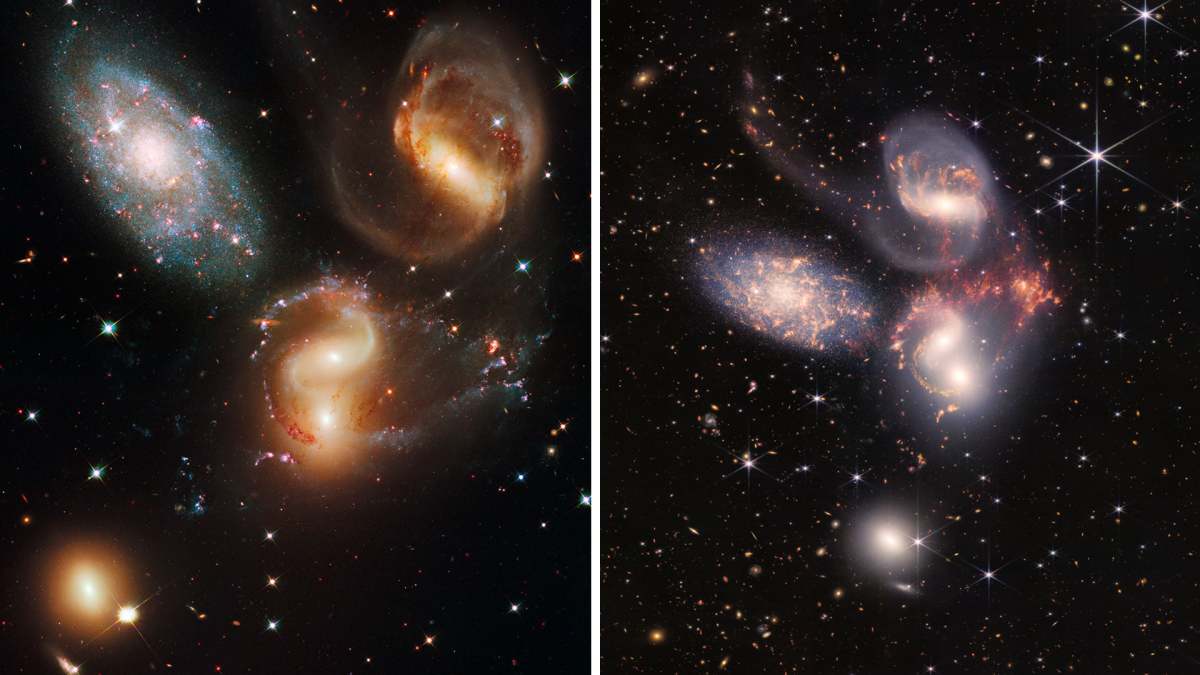
Details that were previously unknown about the galaxy group "Stephan's Quintet" were captured by the James Webb. This view in proximity helped astronomers learn about galactic mergers and interactions. The image shows in detail how star formations are triggered by interacting galaxies and how gas in the galaxies is disturbed, according to NASA. The Hubble image was a composite of separate exposures and couldn't capture the details of the constellation. NASA mentioned the use of six filters to sample broad and narrow wavelength ranges of imaging.
The Southern Ring Nebula has Two Stars
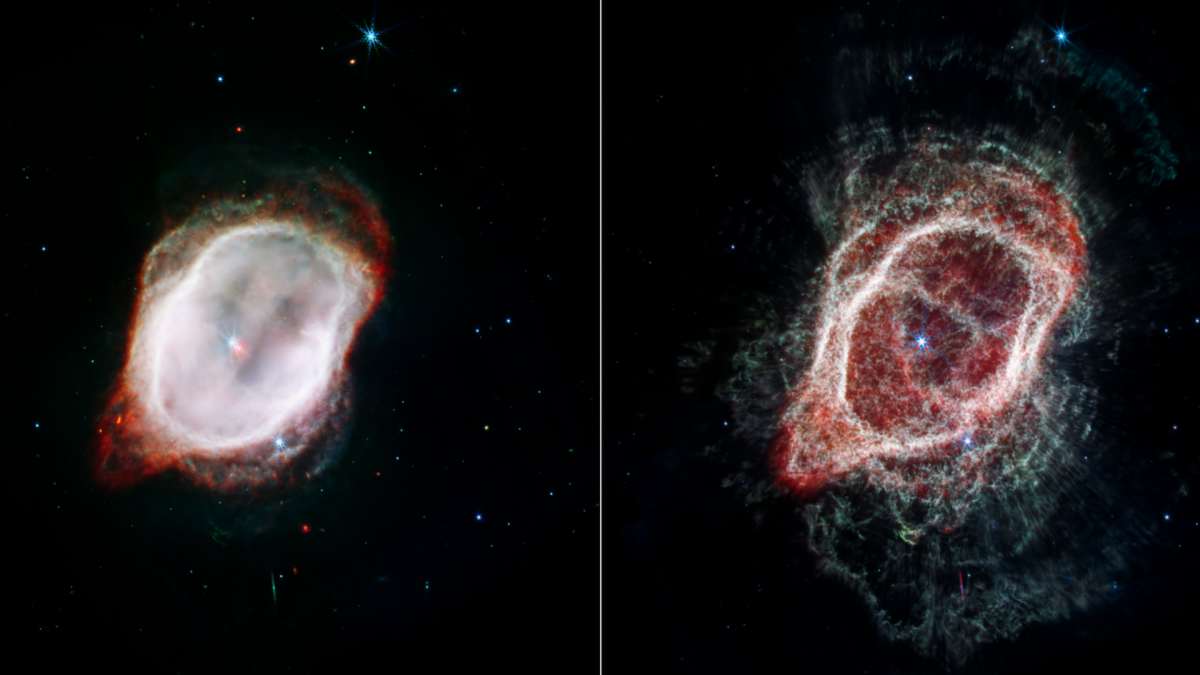
Astronomers always suspected multiple stars in the Southern Ring Nebula, and the James Webb shows there were at least two, or possibly three, of them. This is the region where a dying star is slowly removing the layers of its atmosphere in successive waves. This created ever-expanding bubbles of colorful gas, as per NASA. The image showed the star in red as it is surrounded by a dusky disk. Experts proposed that the star was not alone and had at least one companion join the central star to create the Southern Ring Nebula. The Hubble image, in contrast, shows the lack of detail in the red disk, and the companion star is missing.
More on Starlust
NASA’s James Webb Space Telescope observes mysterious ultraviolet radiation in stellar nursery