China launches twin satellites to test detection technology in space
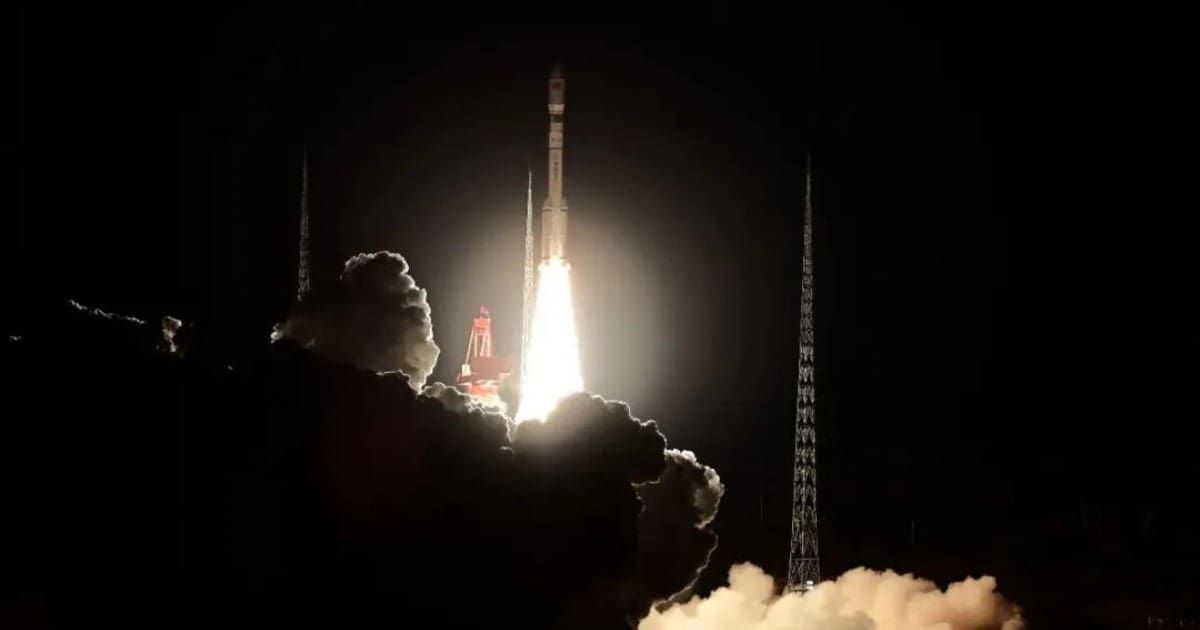
The Shijian-29A and Shijian-29B satellites were launched aboard a Long March-7A carrier rocket.
 The Long March 6A rocket successfully launched 15 satellites for low-Earth orbit (LEO) for satellite internet (Representative Cover Image Source: China Aerospace Science and Technology Corporation | Photo by Zhang Man)
The Long March 6A rocket successfully launched 15 satellites for low-Earth orbit (LEO) for satellite internet (Representative Cover Image Source: China Aerospace Science and Technology Corporation | Photo by Zhang Man)

The Wenchang Space Launch Site on the coast of the southern island province of Hainan in China saw the liftoff of two new satellites. According to Xinhua News, the Shijian-29A and Shijian-29B satellites were launched on December 31 at 6:40 a.m. (Beijing Time) aboard a Long March-7A carrier rocket and entered the designated orbit successfully. The satellites will be mainly tasked with processes related to new technology verification for space target detection, which, per Space Daily, usually entails on-orbit sensing, tracking, and characterization of space objects.
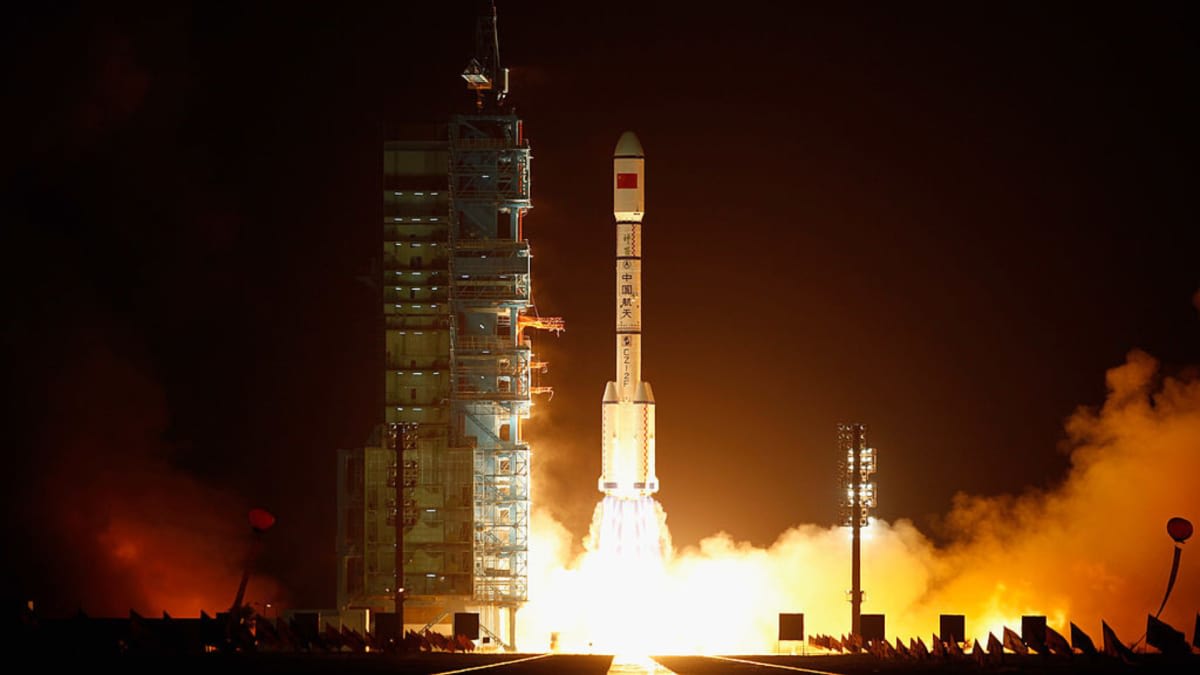
A Long March 2F rocket carrying the country's first space laboratory module Tiangong-1 lifts off from the Jiuquan Satellite Launch Center on September 29, 2011, in Jiuquan, Gansu province of China. (Cover Image by Lintao Zhang/Getty Images)
A Long March 2F rocket carrying China's first space laboratory module Tiangong-1 lifts off from the Jiuquan Satellite Launch Center. (Representative Image by Lintao Zhang/Getty Images)

So far, detailed technical specifications have not been made publicly available, but the dual-satellite configuration is proof of certain experiments in space. These could include coordinated observations, navigating objects in relation to others, or formation-flying techniques to improve performance in space object surveillance.
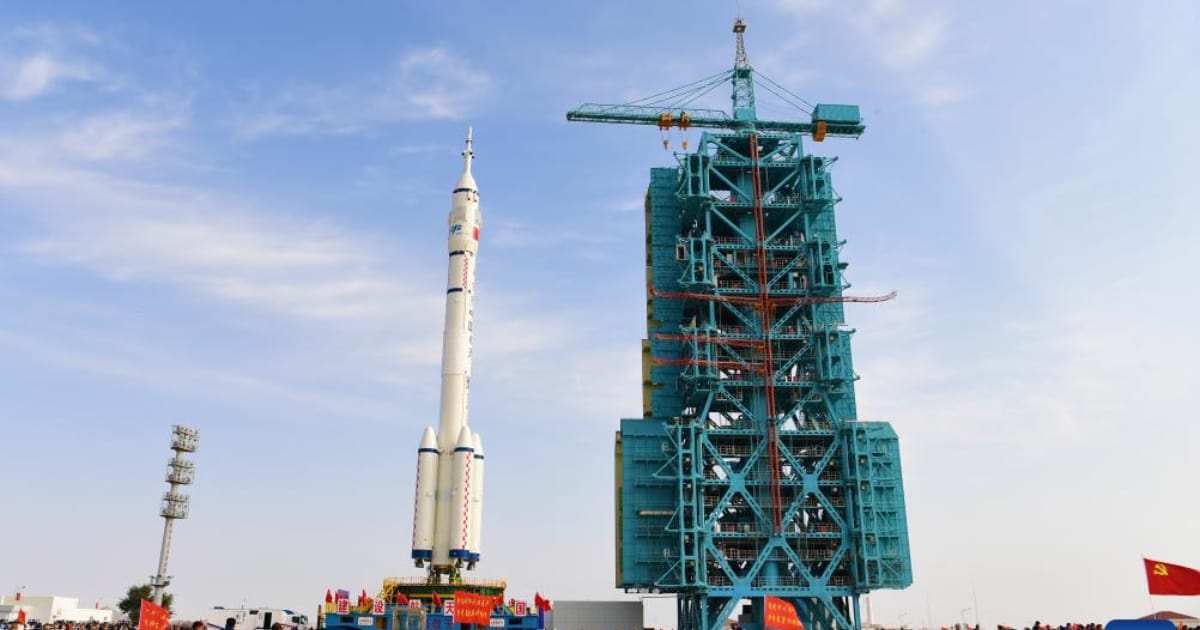
This photo, taken on Oct. 24, 2025, shows the combination of the Shenzhou-21 crewed spaceship and a Long March-2F carrier rocket being transferred to the launching area (Cover Image Source: Xinhua | Wang Jiangbo)
This photo, taken on Oct. 24, 2025, shows the combination of the Shenzhou-21 crewed spaceship and a Long March-2F carrier rocket being transferred to the launching area. (Representative Image Source: Xinhua | Wang Jiangbo)

As one of China's longest-running experimental satellite programs, the Shijian ("Practice") series is used to test new sensors, data links, technologies related to space environment, and propulsion systems before they get greenlit to become fully operational. Previous missions of Shijian and Shiyan carried payloads for space debris detection, space environment monitoring, and proximity operations. This shows how China uses test spacecraft technology to construct better infrastructure for space situational awareness.
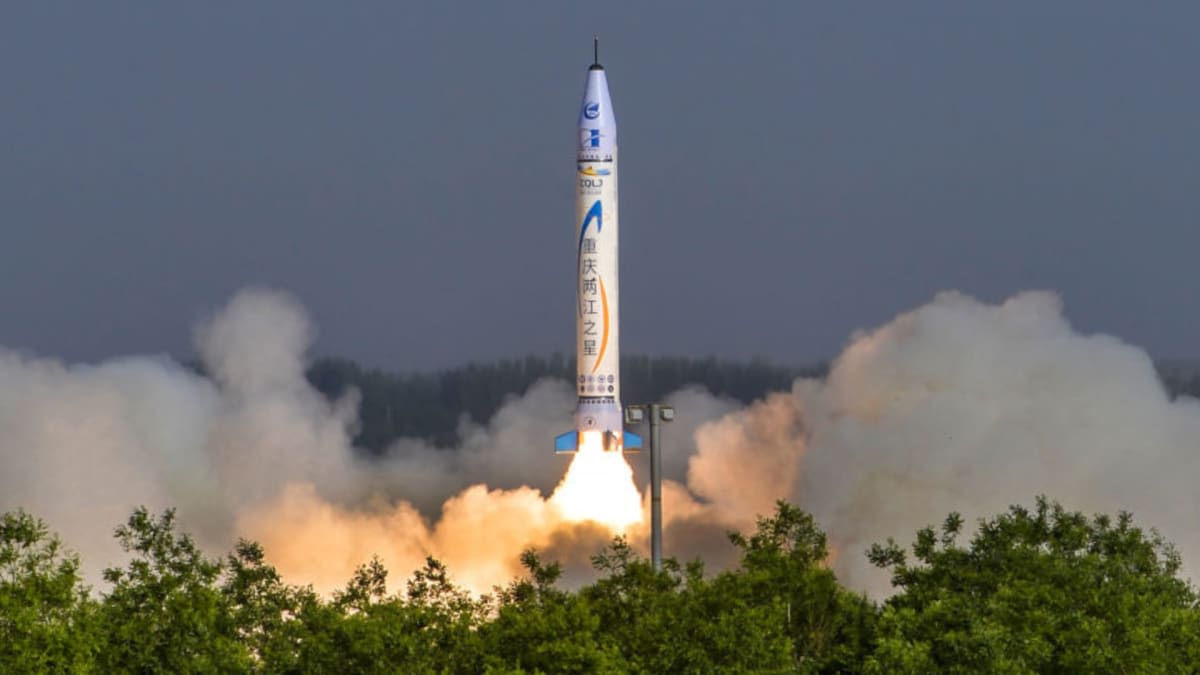
China first privately operated commercial suborbital rocket successfully launched on 17 May 2018 in northwest China. (Representative Cover Image Source: Getty Images | Photo by TPG)
China's first privately operated commercial suborbital rocket successfully launched on 17 May 2018 in northwest China. (Representative Image Source: Getty Images | Photo by TPG)

Technologies for space target detection typically include optical imaging, infrared sensors, and radar or laser ranging systems. All the features are designed to pinpoint and distinguish satellites and debris across a wide array of orbits. Data from these missions can improve collision avoidance systems and catalog accuracy. Moreover, on certain occasions, it can even be used to support national security applications that need comprehensive knowledge of space assets. 
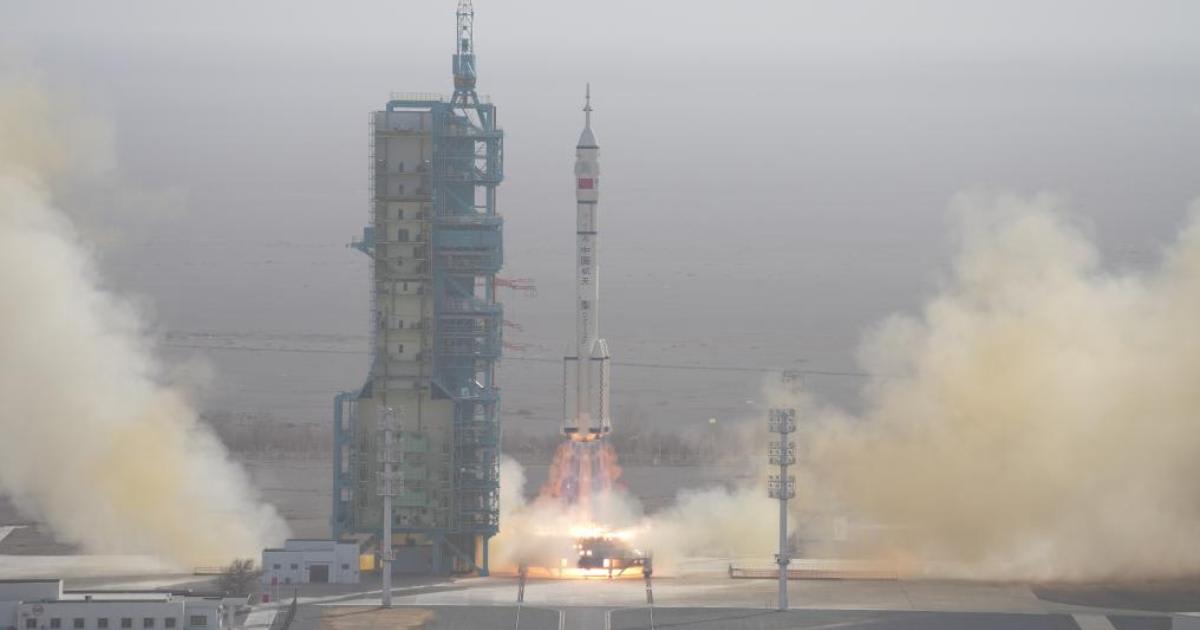
China launches the Shenzhou-22 spaceship from the Jiuquan Satellite Launch Center in northwest China on Nov. 25, 2025. (Image Source: Xinhua | Li Minggang)
China launches the Shenzhou-22 spaceship from the Jiuquan Satellite Launch Center in northwest China on Nov. 25, 2025. (Representative Image Source: Xinhua | Li Minggang)

Developed by the China Academy of Launch Vehicle Technology under the China Aerospace Science and Technology Corporation (CASC), the Long March 7A launcher is a three-stage, medium-to-heavy class rocket that is built for high-energy orbits, including geostationary transfer and other demanding trajectories. CASC rockets have completed 73 missions this year, up from 51 last year, according to CGTN.  The latest launch marked the 623rd flight of the Long March series. The fact that the mission was launched from Wenchang, China's newest coastal spaceport, signals an ongoing shift of the country's most advanced space missions to the Hainan site, which offers better flight paths over open oceans.
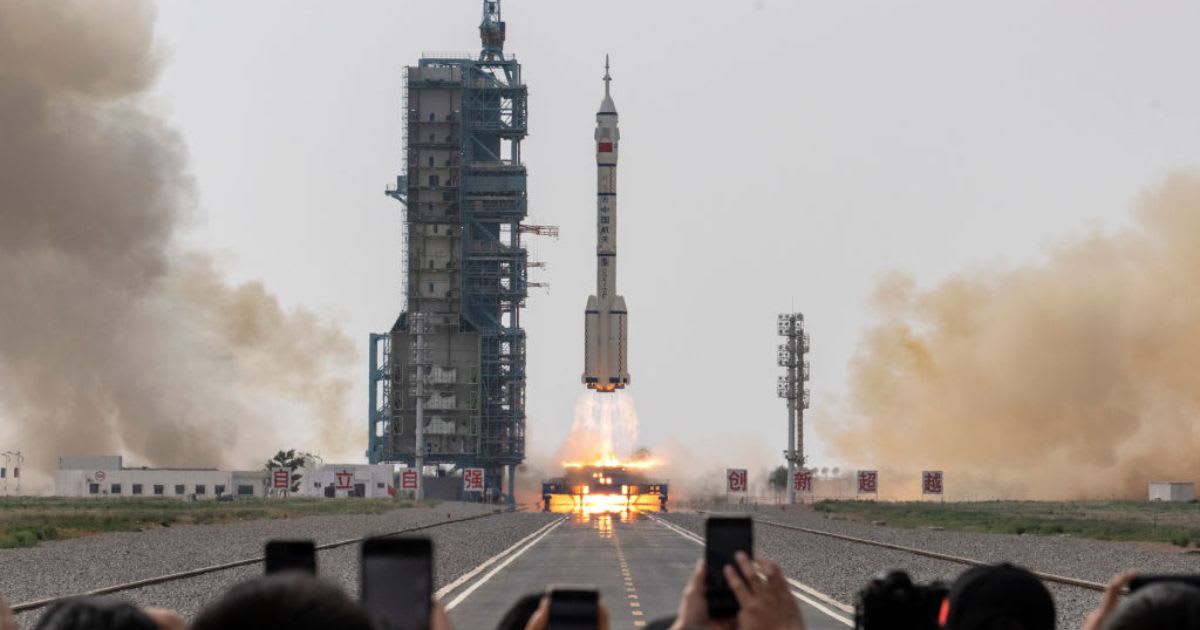
Members from China's Manned Space Agency and visitors watch as the Shenzhou-16 spacecraft onboard the Long March-2F rocket launches at the Jiuquan Satellite Launch Center (Cover Image Source: Getty | Kevin Frayer)
Members from China's Manned Space Agency and visitors watch as the Shenzhou-16 spacecraft onboard the Long March-2F rocket launches at the Jiuquan Satellite Launch Center (Representative Image Source: Getty Images | Kevin Frayer)

The successful deployment of the Shijian-29A and 29B satellites in their target orbit underscores China's continued emphasis on technology verification missions that help draw long-term plans for a more informed presence in space. In many ways, it is also an important win for China, considering it failed at its second attempt at a reusable rocket test. Of course, more details about the payload suite, orbital behavior, and specific objectives of the latest mission are awaited. These details are expected to emerge in the coming months through tracking data and various official releases. 

More on Starlust

The Artemis II crew: All about the people powering NASA’s return to the Moon

China sets new space record with three Long March rocket launches within 19 hours
MORE STORIES

Space exploration will require healthcare systems that can function without guidance from Earth.
5 hours ago
The Shenzhou-21 crew had launched to the Tiangong space station on October 31, 2025, and returned to Earth on May 29, 2026.
6 hours ago
'A lot of people talk about Mars. We like Mars, we're gonna land on Mars. We're gonna do a city on Mars. But let's get it started with a flyby.'
11 hours ago
Asteroids hovering between Mars and Jupiter could be mined for key resources such as metals and fuel.
14 hours ago
The system could solve one of the Moon's biggest problems: surviving two weeks of total darkness.
14 hours ago
On May 26, NASA announced that Blue Origin would play a big role in setting up the initial elements of its Moon Base this year. Now, the space agency may have to reconsider.
2 days ago
Prior to Thursday's explosion, New Glenn had faced a number of issues, from delays to failed tests.
3 days ago
The explosion seemed to begin from close to the engines before the upper stage exploded as well.
2 days ago
The experiment was delivered to the Tiangong space station on a recent resupply mission.
3 days ago
China is merging its robotic lunar missions and its human spaceflight program into a single effort.
4 days ago