Asteroid discovered just 2 days ago whizzed past the Earth and is now headed for a lunar flyby today
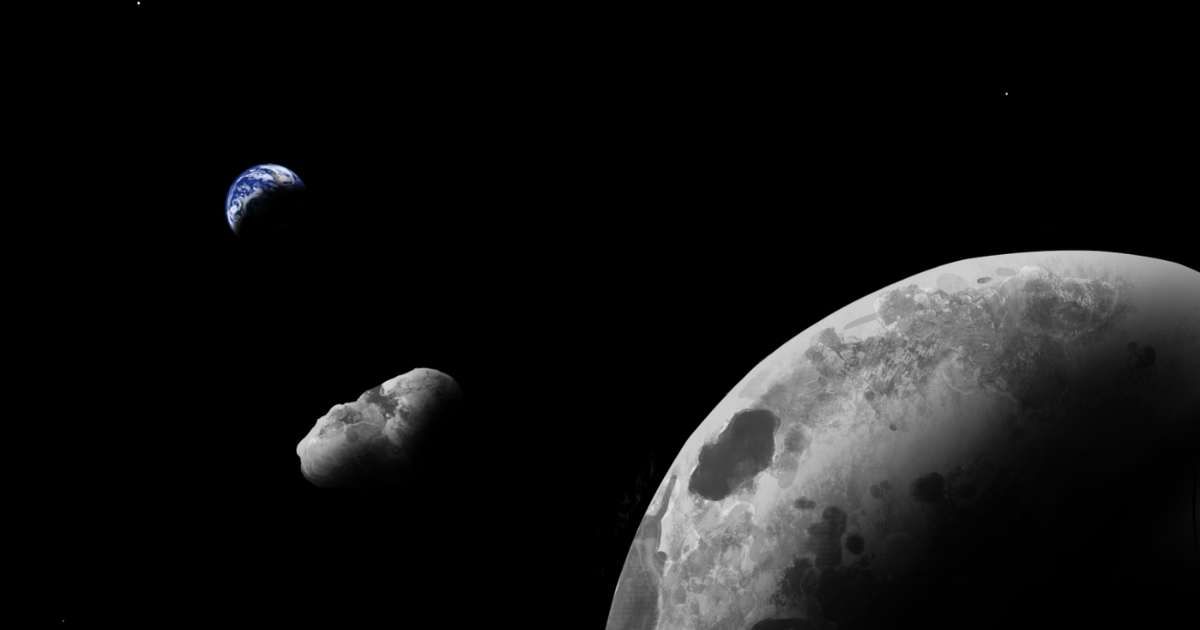
The asteroid is expected to approach the lunar surface as closely as 74,616 miles, according to recent data.
UPDATED OCT 16, 2025
An artist's impression of Earth quasi-satellite Kamo`oalewa near the Earth-moon system (Representative Cover Image Source: University of Arizona | Addy Graham)

The moderately sized asteroid 2025 TP5 will make a close flyby of the Moon today, Thursday, October 16, after its remarkably near approach to Earth just yesterday, according to the data from NASA’s Jet Propulsion Laboratory (JPL).
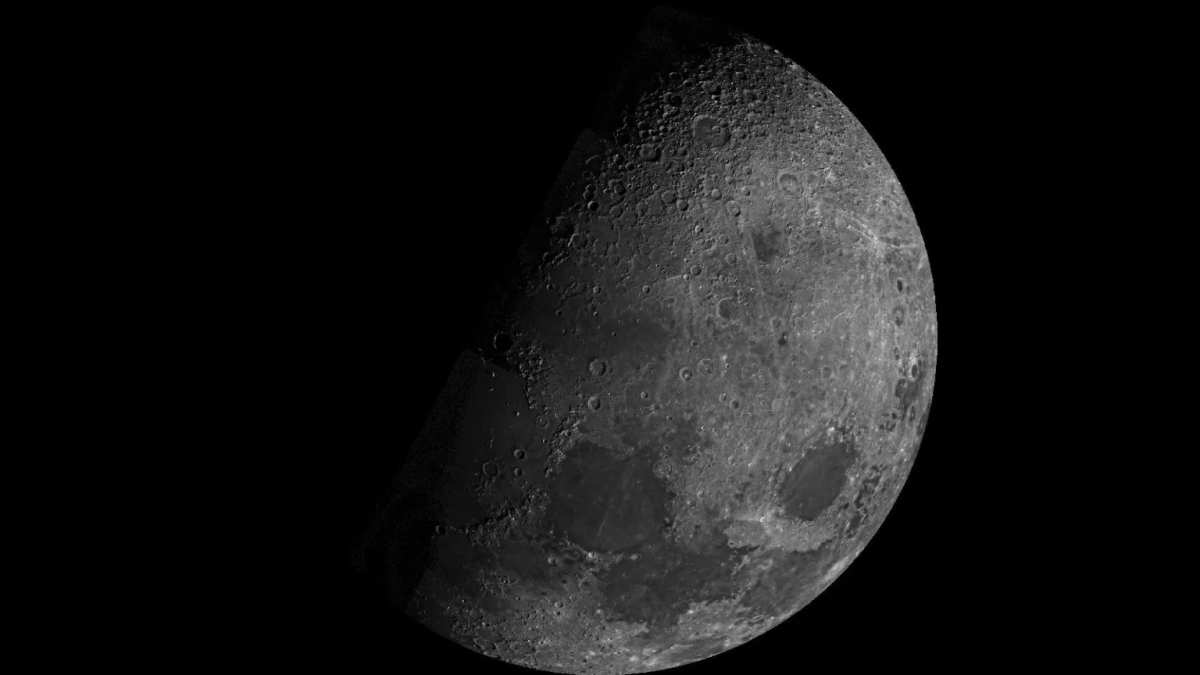
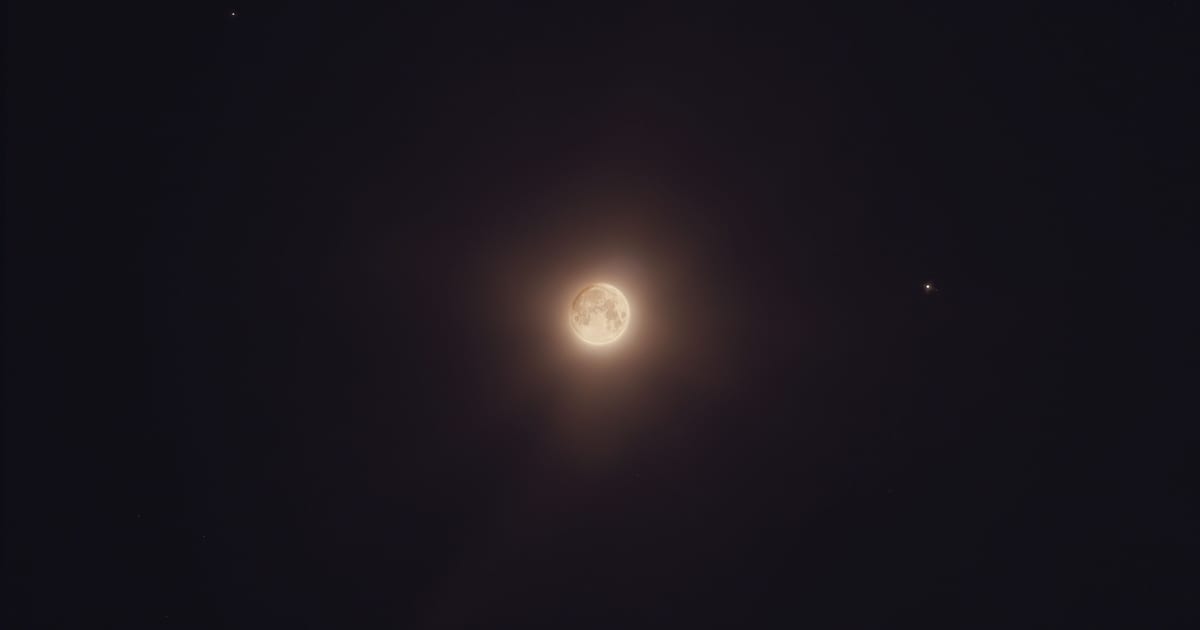
The Moon as viewed by NASA’s Mariner 10 in 1973, well before research would find signs of rust on the airless surface.
(Image Source: NASA/JPL/Northwestern University)
The Moon as viewed by NASA’s Mariner 10 in 1973, well before research would find signs of rust on the airless surface. (Image Source: NASA/JPL/Northwestern University)

The data also indicates that the space rock is scheduled to pass as close as 74,616 miles (120,084 km) to the lunar surface. This follow-up lunar passage comes on the heels of the asteroid's dramatic close encounter with our planet. According to Space.com, on Wednesday, October 15, 2025 TP5 zipped safely by Earth at a distance of only 60,328 miles (97,089 km) at 4:09 p.m. EDT (2009 UTC). This minimum distance was less than a quarter of the average distance to the Moon, which is approximately 238,855 miles.
Artwork of an Asteroid approaching Earth (Representative Image Source: Getty | SCIEPRO)

The asteroid, estimated to be about 54 feet (16 meters) in diameter, similar in scale to the 2013 Chelyabinsk meteor, was only discovered on Tuesday, October 13, by the Asteroid Terrestrial-impact Last Alert System (ATLAS) in Hawaii. Despite a 1979 close approach, the object remained undetected until the ATLAS system, funded by NASA, spotted it. Astronomers confirmed the object posed no threat to Earth. 
An asteroid possible collision with the Earth's atmosphere (Representative Cover Image Source: Getty | Naeblys)
An asteroid possible collision with the Earth's atmosphere (Representative Image Source: Getty | Naeblys)

The system responsible for the rapid identification of 2025 TP5 is the Asteroid Terrestrial-impact Last Alert System (ATLAS), according to ATLAS. Developed by the University of Hawaii and backed by NASA funding, ATLAS functions as a critical early warning network. The system utilizes a coordinated array of four telescopes, two located in Hawaii, one in Chile, and one in South Africa, which continuously scan the entire night sky for moving objects. The warning time provided by ATLAS is directly related to an asteroid's size. While a small object, such as the approximately 20-meter 2025 TP5, can be detected several days before impact, a larger, 100-meter asteroid, which possesses a destructive force roughly ten times that of the 2021 Tonga volcanic eruption, can be identified weeks in advance, providing crucial preparation time. 

However, 2025 TP5 is not the only celestial body drawing attention this week. The distant Comet C/2025 R2 (SWAN) is also on an inbound trajectory for its closest Earth approach of the century, set for Monday, October 20.
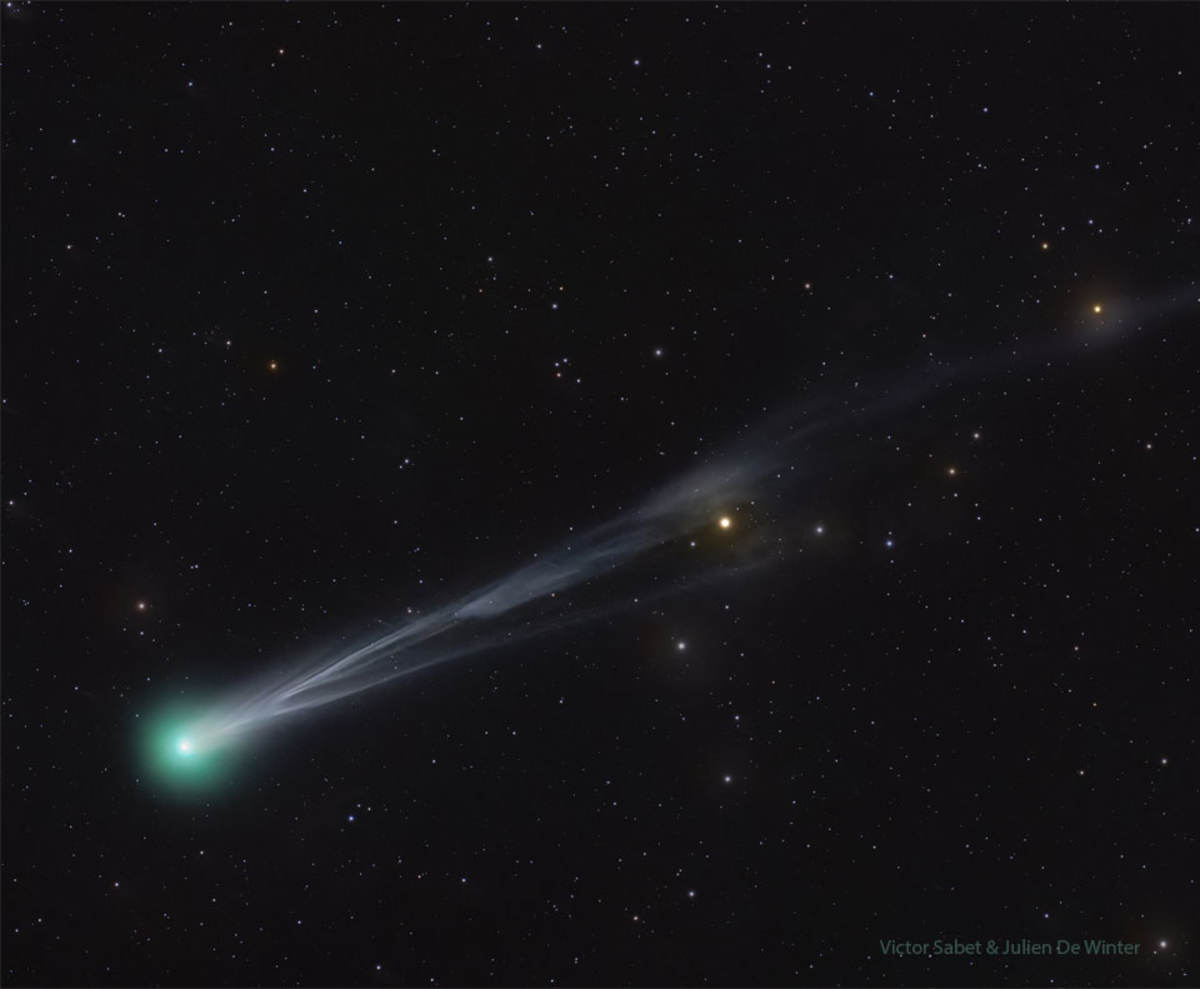
Comet Lemmon is brightening and moving into morning northern skies (Cover Image Source: NASA APOD | Victor Sabet, Julien De Winter)
Comet Lemmon is brightening and moving into morning northern skies (Image Source: NASA APOD | Victor Sabet, Julien De Winter)

On that date, the comet will pass within approximately 39 million kilometers (0.26 Astronomical Units) of our planet. According to Sky Live, C/2025 R2 (SWAN) is situated in the constellation of Serpens, currently measured at a distance of about 40 million kilometers from Earth. Given its absolute magnitude of 5.9, according to COBS data, the comet is considered relatively faint. Astronomers can pinpoint its current location using the coordinates: a Right Ascension of 16h 13m 44s and a Declination of -16°41'04''.
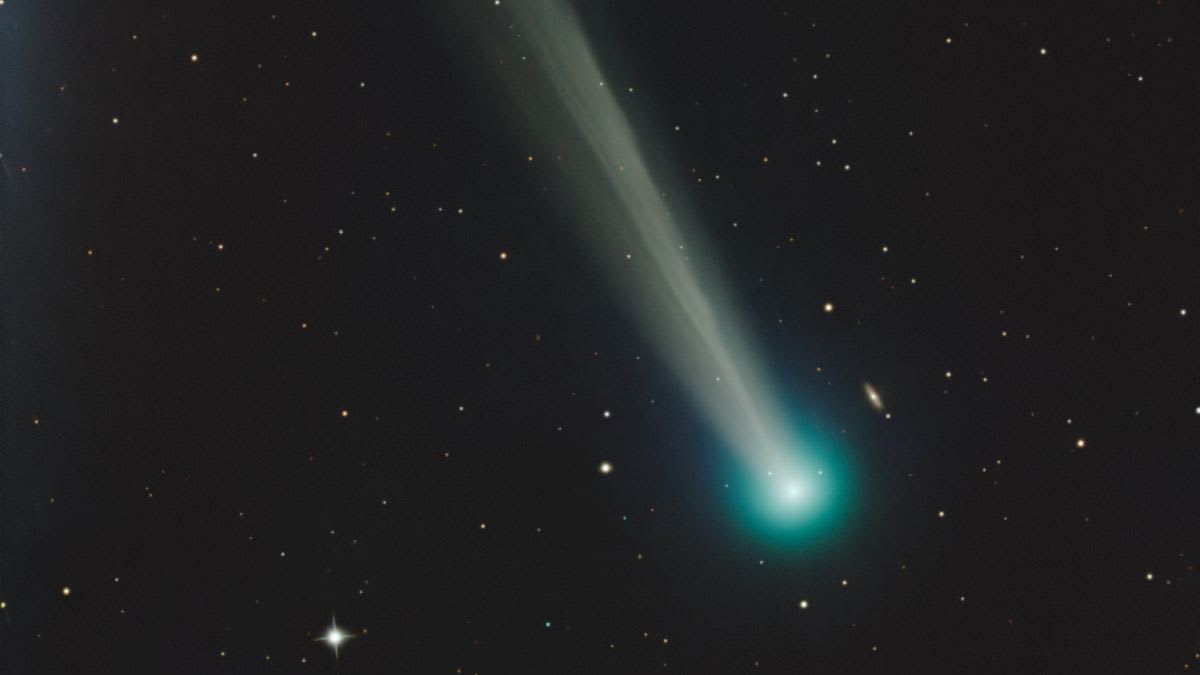
Image of the newly identified interstellar Comet C/2025 R2 (SWAN) soars across the sky in the constellation Virgo. (Cover Image Source: APOD | Photo by Team Ciel Austral)
Image of the newly identified interstellar Comet C/2025 R2 (SWAN) soars across the sky in the constellation Virgo. (Image Source: APOD | Photo by Team Ciel Austral)

At its closest point to the Sun, the comet will swing within approximately 0.5 Astronomical Units (AU), a distance even nearer than the average orbit of Venus. With a vast semi-major axis (a) of 76.5 AU, this immense orbit results in an orbital period of roughly 670 years for the comet to complete a single journey around the Sun. 

More on Starlust

Asteroid the size of a skyscraper set for a close approach to Earth this month—should we be worried?


Asteroid to hit our Moon? Scientists consider destroying 220-foot asteroid 2024 YR4 before it is too late

MORE STORIES

The X5-class solar flare on Wednesday bombarded energetic protons toward Earth and they are penetrating the atmosphere all the way to the ground.
6 hours ago
The Moon will be approximately 221,965 miles from Earth during the final supermoon appearance of the year.
16 hours ago
The Northern Taurids meteor shower, active from late October to early December, typically generates a low maximum rate of just five meteors per hour.
1 day ago
Situated approximately 202 million miles away, interstellar comet 3I/ATLAS is currently traversing the constellation Virgo.
2 days ago
The comet currently resides in the constellation Ophiuchus (The Serpent-bearer), positioned about 147 million kilometers from our planet.
5 days ago
This significant, Supermoon-proximate lunar event offered breathtaking photographic subjects, spanning from urban skylines to major sporting events.
6 days ago
Earth faces an imminent solar impact, with a Coronal Mass Ejection (CME) predicted to arrive as soon as Thursday evening, November 6 (EST).
6 days ago
For the most dramatic visual effect, experts recommend watching for the Moon just as it ascends above the eastern horizon at sunset.
7 days ago
The closest approach of comet 3I/ATLAS to Earth will happen on Friday, 19 December 2025, at a distance of 1.797478 Astronomical Units.
7 days ago
Observers should plan to observe the spectacle throughout the evenings of Tuesday, November 4, and Wednesday, November 5, 2025.
Nov 4, 2025