Artemis II astronauts enter quarantine as launch period inches closer

The quarantine will make sure that the astronauts don't catch any bugs that might delay the mission.
UPDATED JAN 27, 2026
The Artemis II crew poses in front of an Orion simulator on January 23, 2026, at NASA’s Johnson Space Center in Houston. (Cover Image Source: NASA/Robert Markowitz)

With the SLS rocket and the Orion spacecraft already at Launch Pad 39B, the four astronauts of the Artemis II mission entered quarantine on Friday. Referred to as the 'health stabilization program,' it begins about 14 days prior to launch and ensures that astronauts are not exposed to any illnesses that could delay or compromise their mission, according to NASA

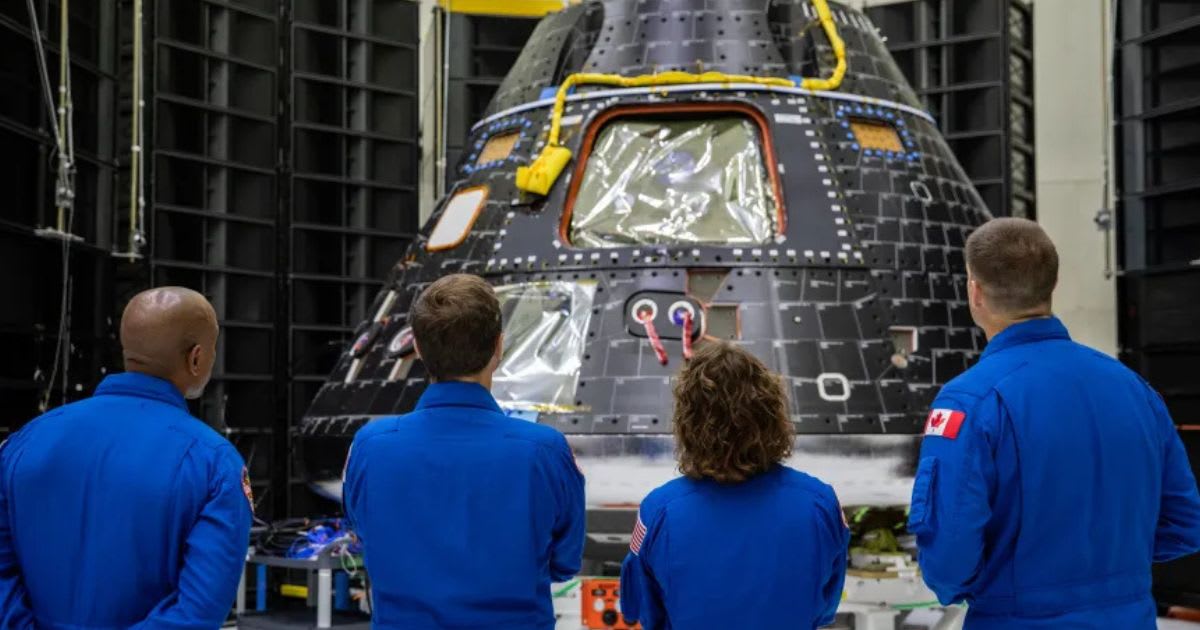
The Four Astronauts take a look at the Orion spacecraft. ( Image Source: NASA)
The four astronauts of Artemis II take a look at the Orion spacecraft. (Image Source: NASA)

NASA hasn't decided on a launch date yet, which is, of course, dependent upon the success of the upcoming wet dress rehearsal, among other things. That being said, the launch period does begin on February 6. A quarantine now makes sense because of the flexibility it offers as teams work towards launch opportunities. Once the wet dress rehearsal and other tests are successful, NASA astronauts Reid Wiseman, Victor Glover, Christina Koch, and CSA (Canadian Space Agency) astronaut Jeremy Hansen can come out of quarantine and re-enter again a fortnight before any launch date.
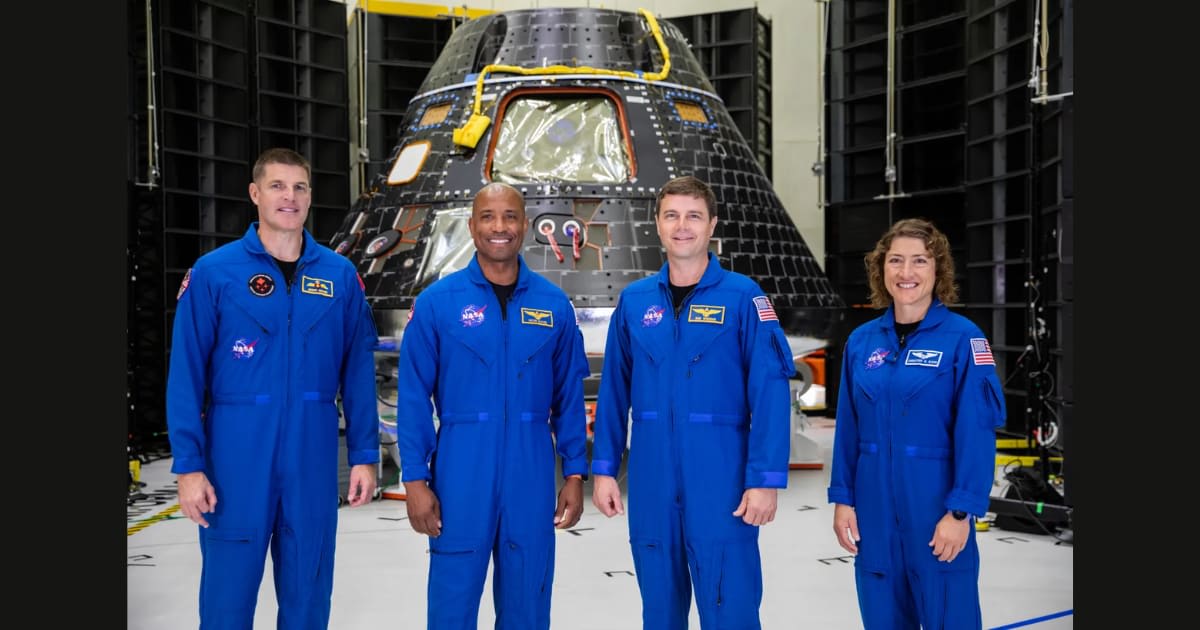
The Artemis II crew is shown inside the Neil Armstrong Operations and Checkout Building at NASA’s Kennedy Space Center in Florida in front of their Orion crew module on Aug. 8, 2023. From left are: Jeremy Hansen, mission specialist; Victor Glover, pilot; Reid Wiseman, commander; and Christina Hammock Koch, mission specialist. (Image source NASA)
The Artemis II crew is shown inside the Neil Armstrong Operations and Checkout Building at NASA’s Kennedy Space Center in Florida in front of their Orion crew module on August 8, 2023.  (Image source: NASA)

If all tests yield expected results, the four-person crew will fly out of Houston, where they began their quarantine, to NASA's Kennedy Space Center in Florida six days before launch. There, they will be housed inside the Neil A. Armstrong Operations and Checkout building before they depart for the Moon. In case you are wondering, yes, the astronauts will be able to contact their friends and family during the quarantine, provided they comply with all the guidelines, stay away from public places, and wear masks while maintaining social distance with others as they carry out their final training activities. These will continue along with mission simulations and medical checkouts.  
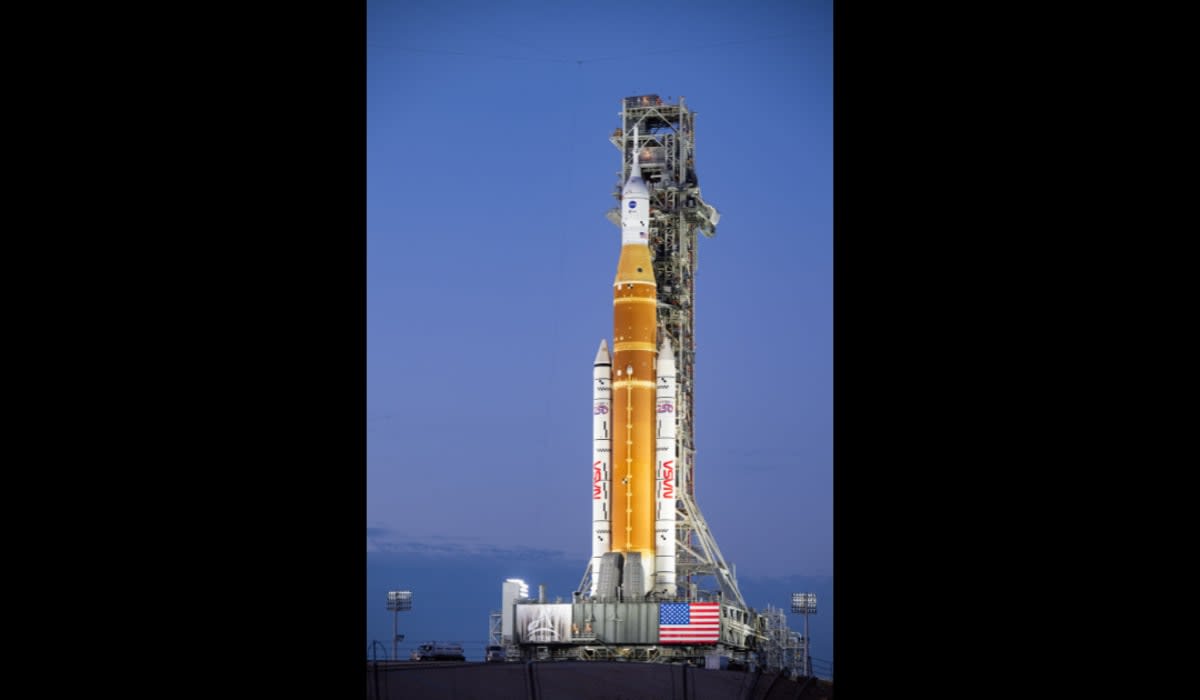
NASA’s Artemis II Space Launch System (SLS) rocket and Orion spacecraft at Launch Complex 39B, on Saturday, January 17, 2026, at NASA’s Kennedy Space Center in Florida. (Image Source: NASA/Keegan Barber; Image Edited by Starlust Staff)

The SLS (Space Launch System) rocket and the Orion spacecraft, which will have crew members aboard them for the first time, are undergoing preparations at the Kennedy Space Center. Meanwhile, cryogenic propellant lines, mechanical power systems, and engines at Launch Pad 39B have all undergone necessary checkouts. The press release from NASA also added that on Saturday, January 24, the perimeter of the launch area would be cleared of all non-essential individuals to make way for the SLS booster servicing.

NASA's Orion Capsule of the successful uncrewed Artemis I Moon Mission is drawn toward the U.S.S. Portland on December 11, 2022, in the Pacific Ocean off the coast of Baja California, Mexico. (Photo by Caroline Brehman-Pool/Getty Images)

In a different part of the country, meanwhile, teams from both the space agency and the U.S. Department of War, which will be responsible for bringing the Artemis II crew back home following their splashdown in the Pacific Ocean and will be traveling to the splashdown soon after launch, are busy simulating their tasks at sea. 
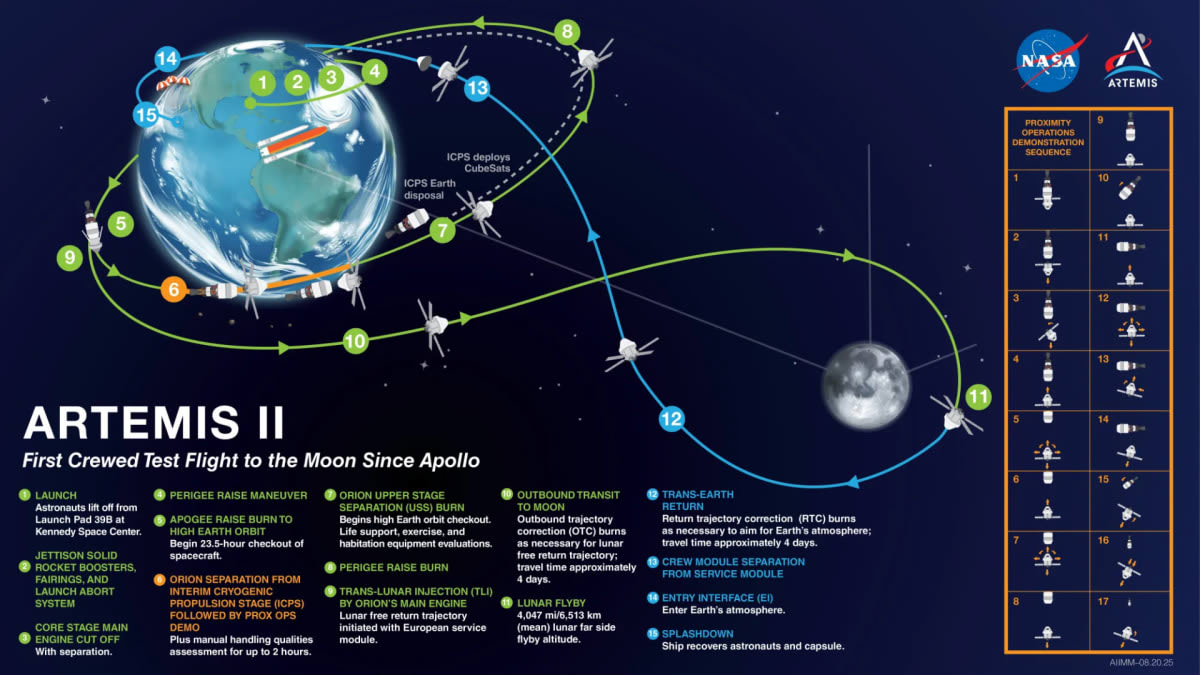
A flight map detailing the mission milestones to be achieved by Artemis II. (Image Source: NASA)

While none of the four astronauts will set foot on the surface of the Moon during the 10-day mission, they will be responsible for testing the hardware and systems aboard the SLS rocket and the Orion spacecraft for their suitability for crewed deep space missions. This will pave the way for Artemis III, which, in fact, will see Americans land on the lunar surface once again. The Artemis II mission will also have huge implications for crewed missions to Mars.

More on Starlust

Artemis II: Here's a visual guide to the historic NASA mission that will take humans back to the Moon

NASA’s Artemis II mission to carry mementos into space, honoring America’s independence
MORE STORIES

The launch was preceded by a couple of delays due to bad weather.
1 day ago
Crew-12 is now en route to the ISS, where it will unite with Expedition 74 and conduct science experiments.
1 day ago
It carried GSSAP for the US Space Command’s Space Surveillance Network in near-geosynchronous orbit.
1 day ago
ISS prepares itself for the arrival of Crew-12 in SpaceX’s Dragon capsule on Saturday, February 14, 2026.
1 day ago
The activation helped obtain critical data that will support the testing of the new exploration upper stage for Artemis IV.
2 days ago
NASA aims to establish a long-term presence on the Moon and Mars through learnings of Artemis II.
3 days ago
NASA Administrator Jared Isaacman said, 'We are giving our crews the tools to capture special moments for their families."
3 days ago
Her colleague Sophie Adenot will also be carrying a special personal item.
4 days ago
The launch could be delayed to February 13 if conditions are not good enough.
4 days ago
SpaceX CEO Elon Musk cites feasibility as the driving factor behind the decision.
4 days ago