Watch: SpaceX's Transporter-18 sends Google's AI test satellite to orbit with 129 other payloads
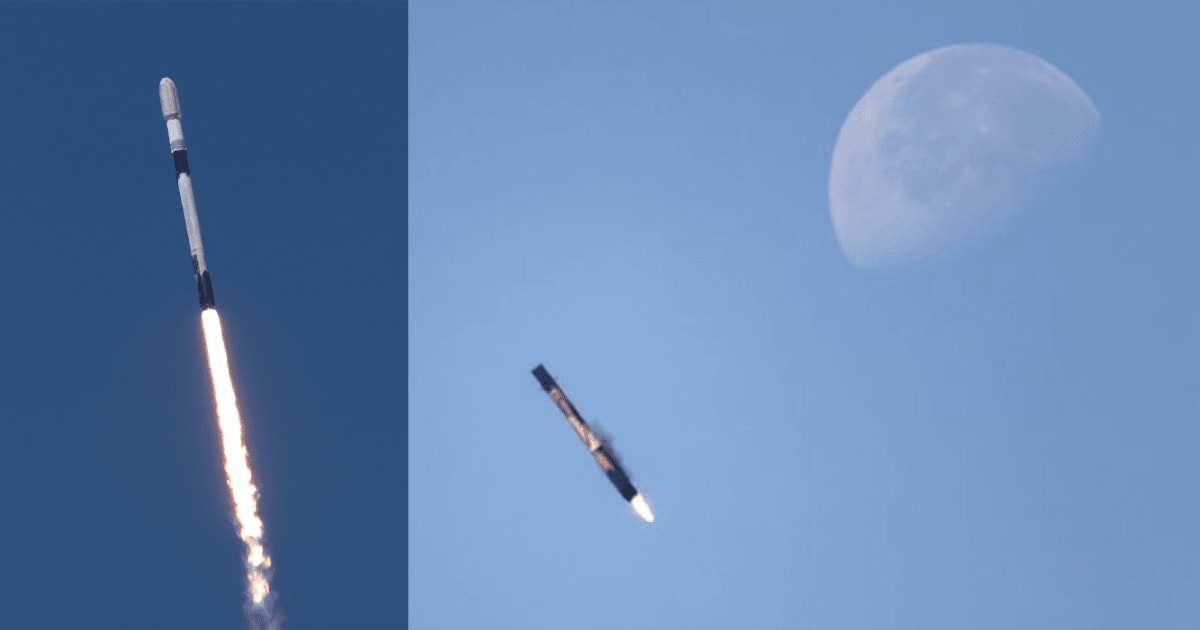
SpaceX launched its Falcon 9 rocket again on October 1, 2026, this time for the Transporter-18 mission, after sending up NASA's Crew-13 astronaut mission earlier that day. The launch took place from the Vandenberg Space Force Base in California at 11:32 AM PT, and the rocket carried a total of 130 payloads into low Earth orbit. According to SpaceX, the company has now launched more than 1,800 payloads to orbit under its entire Rideshare program.
Watch Falcon 9 launch the Transporter-18 mission to orbit https://t.co/W4VS07HPRZ
— SpaceX (@SpaceX) October 1, 2026
Under the rideshare mission, SpaceX carries many small spacecraft under a single rocket. Transporter-18 is one such dedicated smallsat mission. Two of the satellites on board are tied to plans for AI data centers in space, one of which is from Google and another from Cowboy Space. The payload included a pathfinder (early test version) for Google's Project Suncatcher. SpaceX is now preparing to launch NROL-97 on a Falcon Heavy later today, with launch starting at 11:53 p.m. ET. Here’s the link to watch the event live.
Key highlights of the Transporter-18 launch
About 7.5 minutes after liftoff, the rocket's first stage, the lower part of the vehicle, returned to Vandenberg for landing. It was this booster's 25th flight, and it had previously launched USSF-62, OneWeb Launch 20, NROL-145, and 21 Starlink missions. Meanwhile, the upper stage continued toward orbit and was scheduled to start deploying payloads 54.5 minutes after launch. With 130 payloads, Transporter-18 came close to the record of 143 payloads on a single launch, set by the Transporter-1 mission in January 2021.
Falcon 9 launches the 18th Transporter rideshare mission and delivers 130 payloads to orbit pic.twitter.com/VQd0RmbmA6
— SpaceX (@SpaceX) October 1, 2026
What is Google's Project Suncatcher?
Project Suncatcher is Google's plan to build and operate an AI constellation in low Earth orbit. The Pathfinder is the highest-profile payload on this flight. It will help the project team determine how tensor processing units, or TPUs, perform in the space environment. These are Google chips that sit at the core of Suncatcher's hardware. Google will closely observe how well the chips withstand space radiation and how efficiently they get rid of the heat they generate.
What else was on board Transporter-18?
Cowboy Space, another company with AI data center ambitions, also flew a satellite on the mission. In a post on X, Cowboy Space described the purpose of its Reason-1 satellite. "Its job is to prove out power beaming: using a high-power laser to transfer energy from low Earth orbit to a receiver on the ground," the company wrote. "If you want to build data centers in space, you have to master the optical systems between orbit and Earth. This is where that journey begins." Starfish Space, a Washington-based company, also launched its first Otter servicing satellite on the same flight.
More on Starlust
3 rockets, 2 coasts, 13 hours: SpaceX attempts rare launch marathon today