Watch: Russia’s Progress spacecraft docks with International Space Station carrying 3 tons of cargo
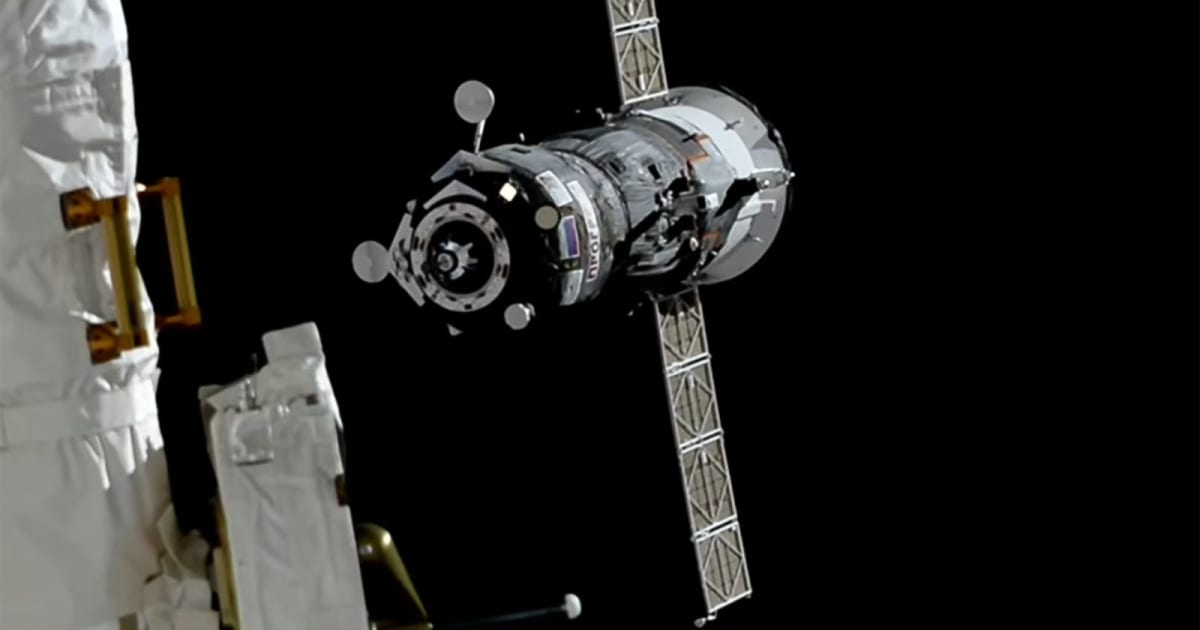
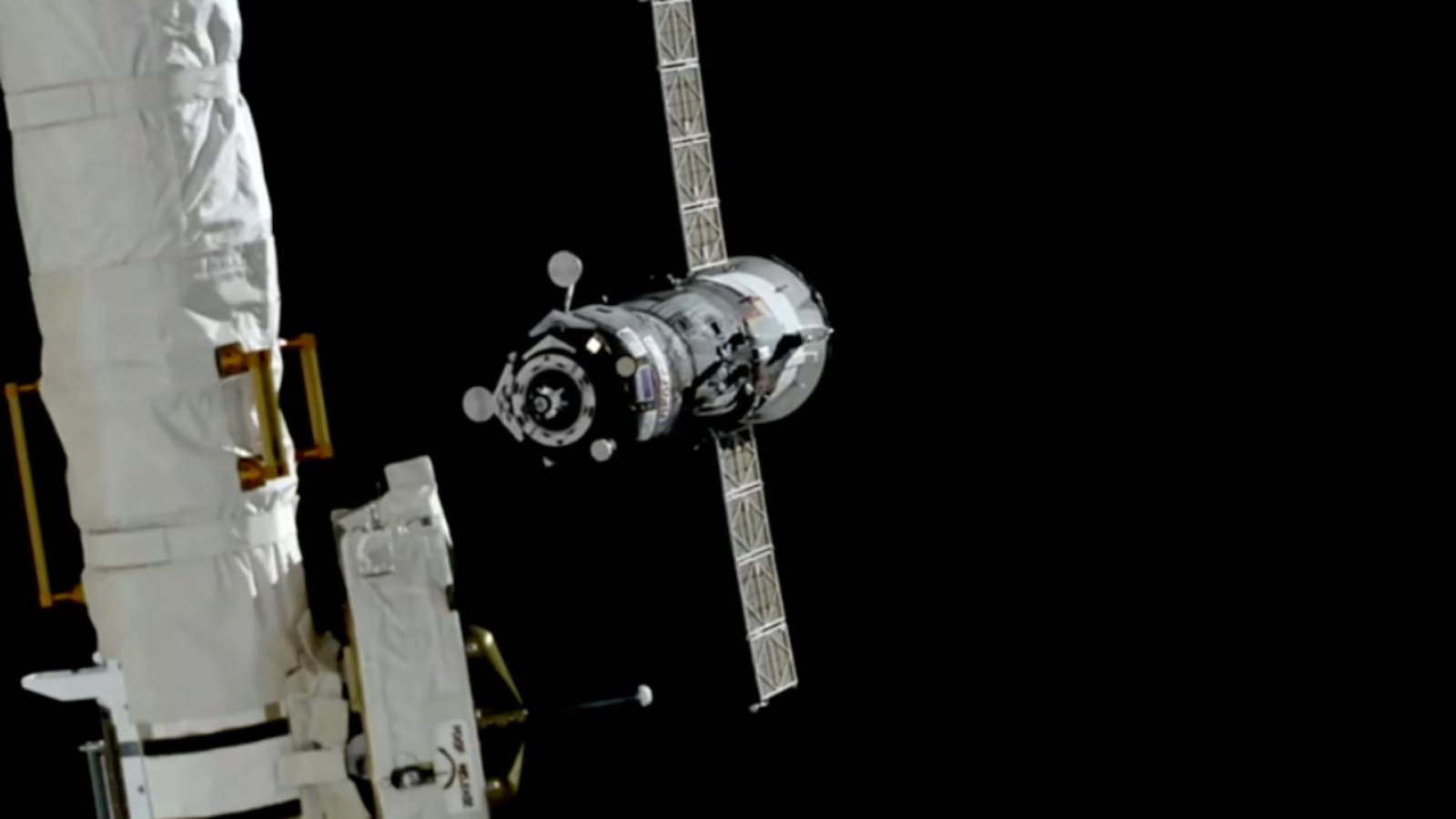
Russia’s Progress 96 spacecraft docked with the International Space Station (ISS) on September 19, three days after its launch. The spacecraft lifted off at 9:33 pm EDT on September 16 atop the Soyuz Soyuz-2.1b rocket from the Baikonur Cosmodrome in Kazakhstan and chased the station for sixty hours. At 9:44 am EDT on Saturday, it finally caught up with the station and docked at the Poisk module carrying invaluable cargo.
The Progress M-35 has docked at the International Space Station, bringing about 3 tons of equipment and supplies at 9:44 a.m. EDT (1344 UTC). pic.twitter.com/c2klQgCyTg
— Spaceflight Now (@SpaceflightNow) September 19, 2026
“The spacecraft is delivering about three tons of food, fuel and supplies for the Expedition 75 crew and will remain at the space station for about five months before departing for a planned destructive re-entry that will dispose of trash,” NASA said in a statement after the docking. The ISS is currently occupied by seven astronauts who make up Expedition 75. These astronauts are NASA’s Jack Hathaway, Jessica Meir and Anil Menon, European Space Agency’s (ESA) Sophie Adenot, and Russian space agency Roscosmos’s Pyotr Dubrov, Andrey Fedyaev and Anna Kikina.
A Progress 96 cargo spacecraft packed with about three tons of food, fuel and supplies lifted off from Kazakhstan at 9:33 a.m. EDT today. It will dock to the station at 9:46 a.m. on Saturday, Sept. 19. More... https://t.co/sJygyqBlrQ pic.twitter.com/vMSY96bBCW
— International Space Station (@Space_Station) September 16, 2026
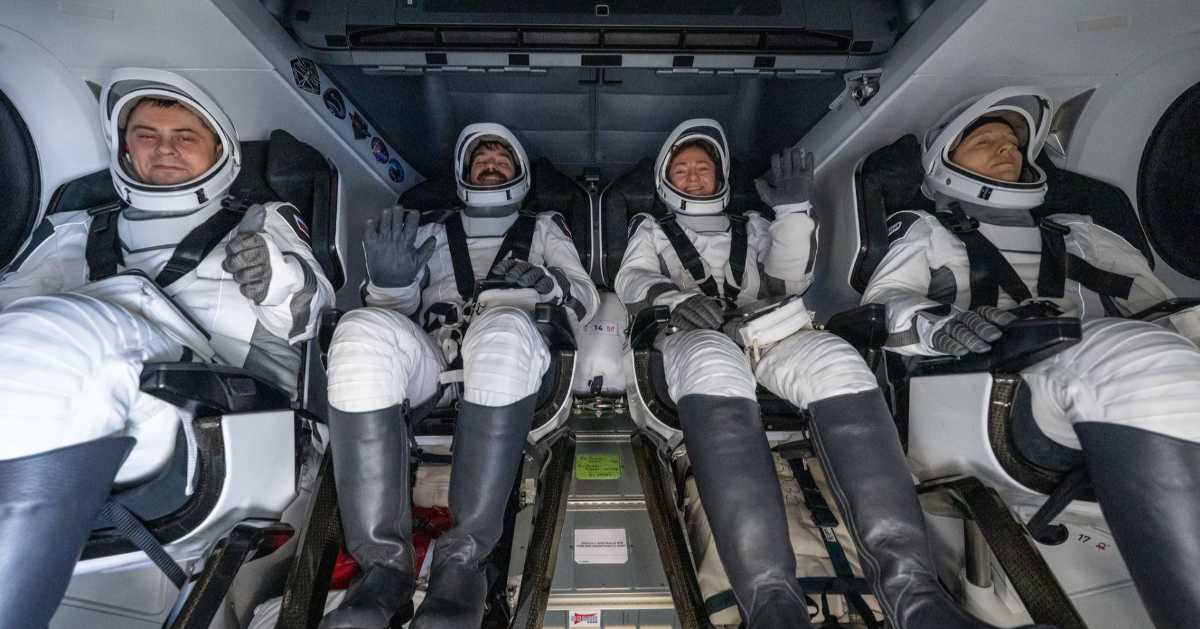
The Expedition 75 is being led by current station commander Meir, who launched to space in February on the Crew-12 mission. Other members of Crew-12 are Fedyaev, Hathaway and Adenot—all four are due to return in October after the arrival of Crew-13. The remaining three (Menon, Kikina and Dubrov) launched on a Russian MS-29 Soyuz spacecraft in July 2026 and will stay aboard the station for at least six months. NASA is currently preparing with SpaceX to launch the Crew-13 mission which is targeted for early October. It was initially scheduled for September 12 but engineers found an oxidizer leak in the Dragon spacecraft’s propulsion system which forced NASA to postpone the launch.
There’s another resupply mission that is targeted for October launch by SpaceX from Cape Canaveral Space Force Station in Florida. The Dragon spacecraft will again carry tons of food, supplies, and equipment including the final sets of International Space Station Roll-Out Solar Arrays (IROSA) that will be installed during spacewalks by astronauts. According to NASA, it will be sending several new experiments including hardware to manufacture artificial retinas that could help restore vision for patients on Earth, 3D heart cell models to advance large-scale drug testing on future space missions and brain organoids that could provide potential treatment for neurodegenerative diseases like Alzheimer’s, Parkinson’s, and multiple sclerosis.
More on Starlust
NASA selects SpaceX to launch StarBurst gamma-ray detector to study neutron star mergers