Unknown asteroid flew past Earth closer than a satellite—and we didn't spot it until hours later

The giraffe-sized asteroid flew over Antarctica unnoticed.
PUBLISHED NOV 26, 2025
Meteorite from outer space, falling toward planet Earth (Representative Cover Image Source: Getty Images | Photo by dottedhippo)

Astronomers were slow at spotting a small giraffe-sized asteroid that zoomed past our planet on Tuesday, September 30, 2025, at 8:47 p.m. EDT. The encounter was not discovered until hours later as the space rock flew over Antarctica at just 265 miles above Earth's surface, according to the European Space Agency (ESA). First observed by the Catalina Sky Survey, the asteroid was estimated to be between 3.3 and 9.8 feet wide and never posed a danger to Earth.
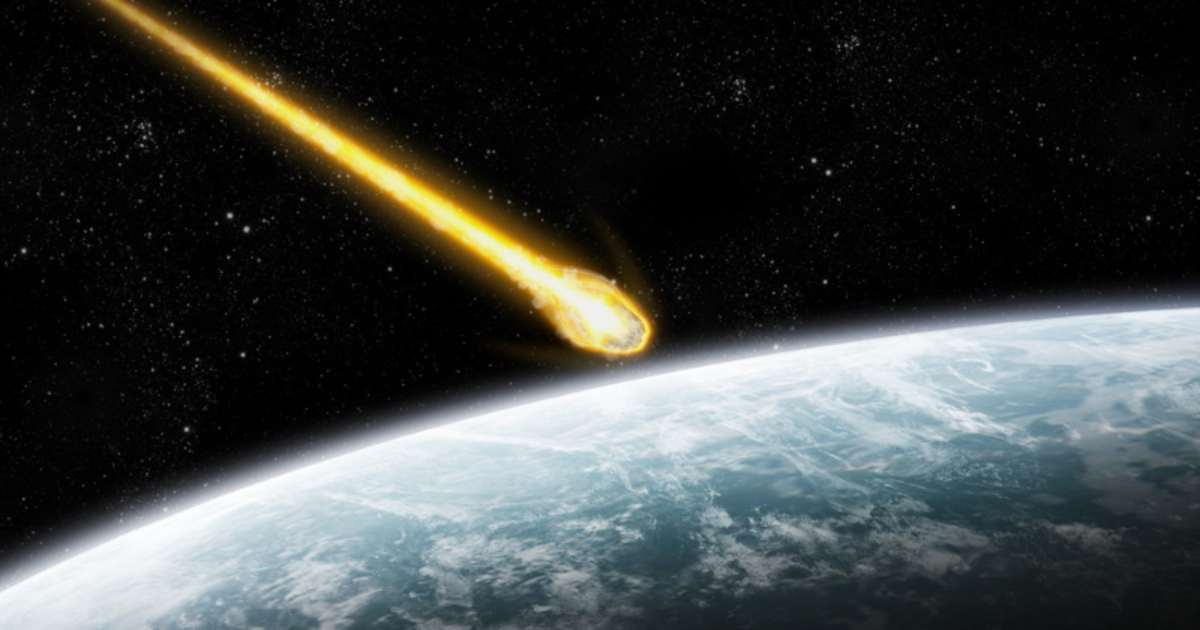
An image of an asteroid over the planet Earth.
(Representative Image Source: Getty Images | Sdecoret.)
An image of an asteroid over the planet Earth. (Representative Image Source: Getty Images | Sdecoret.)

However, even small asteroids can cause problems for spacecraft, and this one zoomed past at about the same altitude as the International Space Station (229 to 285 miles approx.). Fortunately, their paths did not cross. Once discovered, astronomers at ESA’s Planetary Defense Office observed the object, now named 2025 TF, using the Las Cumbres Observatory telescope in Siding Spring, Australia. In what was a commendable feat, they were able to track down the meter-scale object, despite its location being uncertain.
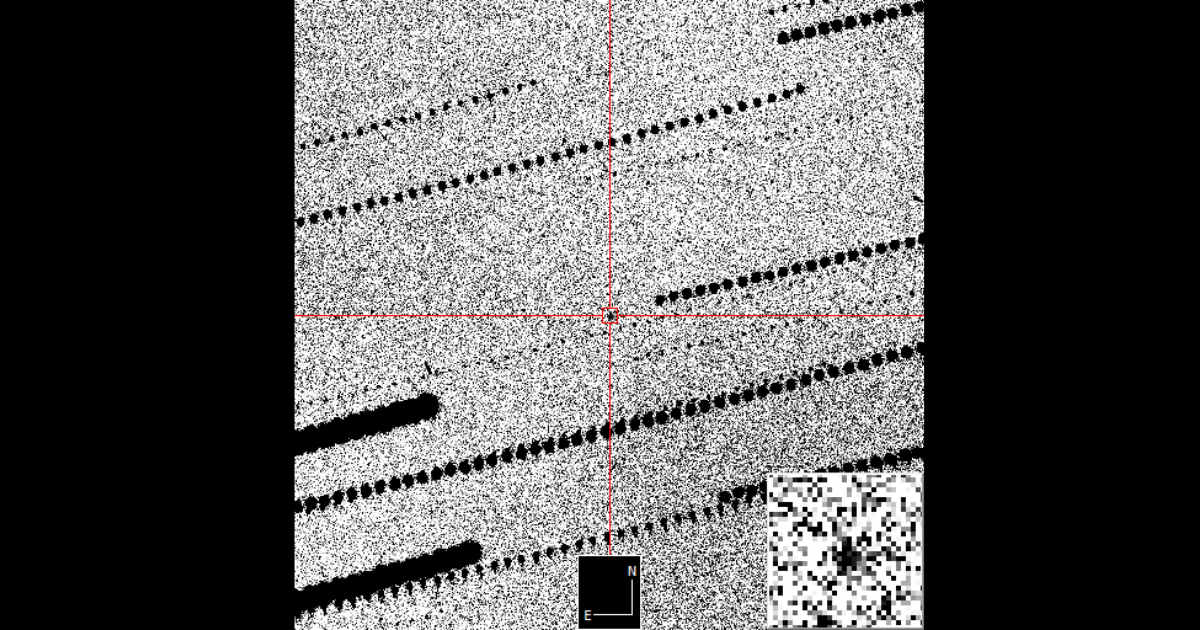
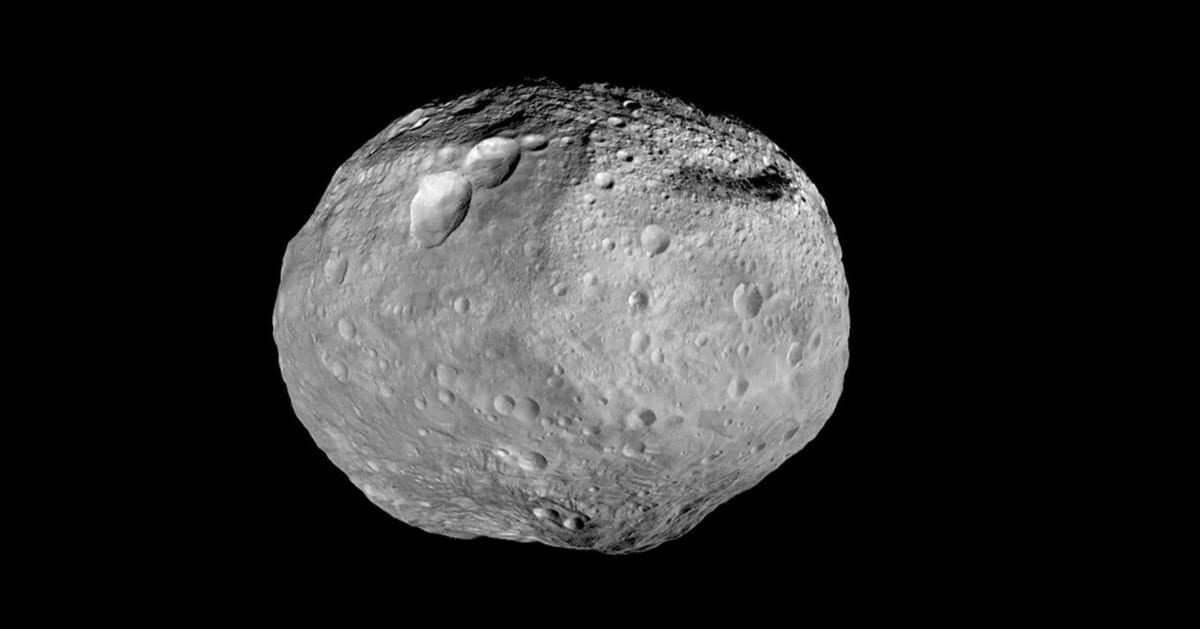
Image of Asteroid 2025 TF (Resized and set against a black background using Canva) (Image Source: ESA / Las Cumbres Observatory)

This observation helped astronomers discern the close approach distance and time of the object with great precision. No announcement on the asteroid was made by NASA, which kept all its work on hold due to the U.S. government shutdown. However, an entry on the asteroid was made in an update on NASA's Center for Near-Earth Object Studies website. The space rock is not expected to fly by our planet again until April of 2087, as per Live Science. Thousands of such known near-Earth objects are tracked by space agencies like NASA and ESA.
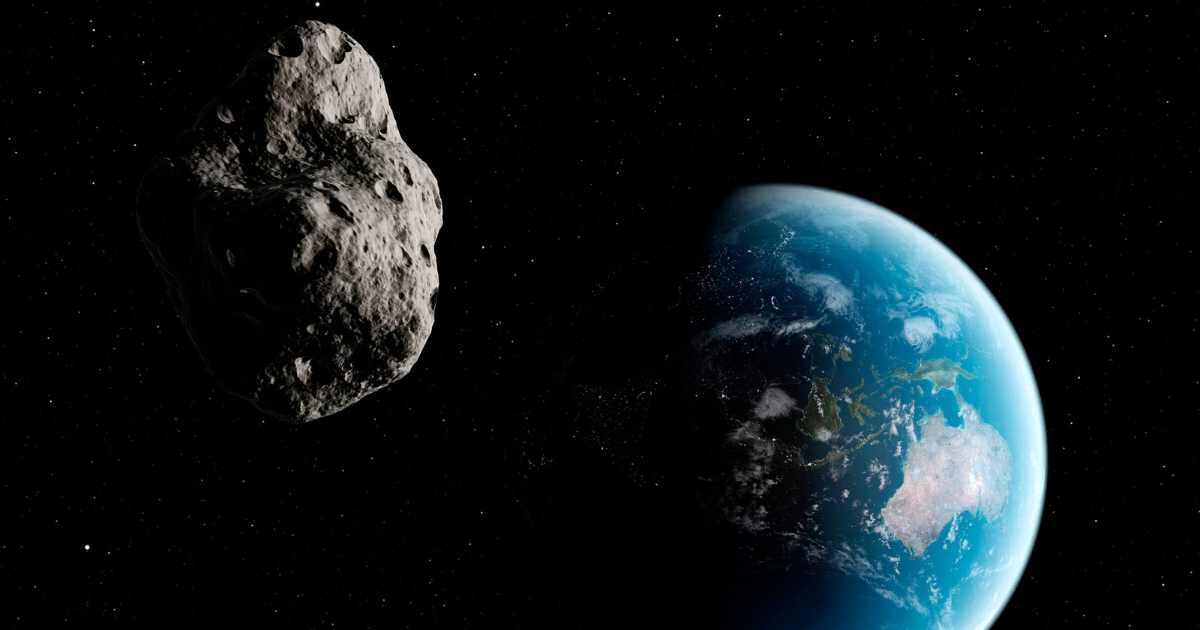
Computer artwork of an Asteroid approaching Earth (Representative Cover Image Source: Getty | SCIEPRO)
Computer artwork of an Asteroid approaching Earth (Representative Image Source: Getty Images | Photo by SCIEPRO)

To be considered "potentially hazardous," an object must measure at least 460 feet in diameter. It should also follow an orbit that comes within 4.65 million miles of Earth, or around 20 times the average distance between Earth and the moon. However, thankfully, no known object poses a significant threat to the planet for at least a hundred years. Asteroid 2025 TF also fell short of the threshold set for size, which also explains how it went undetected until it passed by.

Blue Earth and asteroids in the space along with a view of planet Earth, elements of this image furnished by NASA (Representative Cover Image by mikdam / Getty Images)
Blue Earth and asteroids in space, along with a view of planet Earth, elements of the image furnished by NASA (Representative Image Source: Getty Images | Photo by mikdam)

The asteroid 2025 TF is the second closest approach of any known asteroid, the first being 2020 VT4, as per Universe Today. It is a slightly larger asteroid that passed about 386 km above the Pacific Ocean in November 2020. This asteroid was also spotted after completing its closest approach, around 15 hours later, compared to the 6 hours taken to discover 2025 TF. 
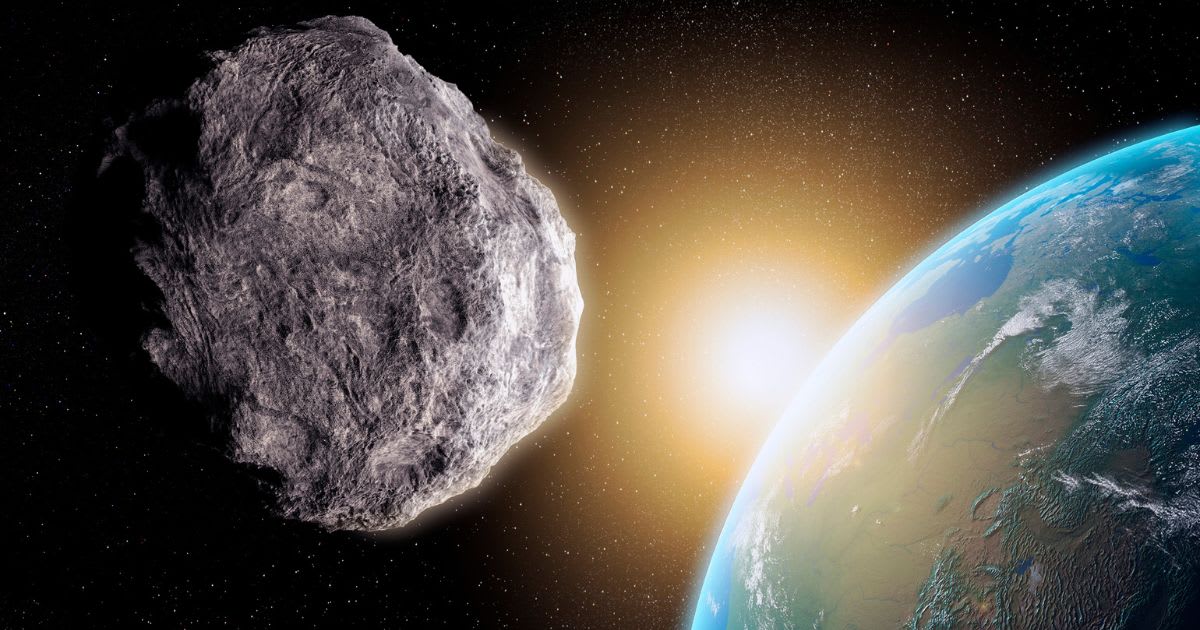
An artwork of a Near-Earth asteroid headed towards Earth (Representative Cover Image Source: Getty | Science Photo Library - ANDRZEJ WOJCICKI)
An artwork of a Near-Earth asteroid headed towards Earth (Representative Image Source: Getty Images| Photo by Science Photo Library)

This near-miss asteroid encounter did not result in a "fireball" since the asteroid did not hit Earth's atmosphere, but skywatchers had the Draconid meteor shower peaks to look forward to at the time. Earth will also be welcoming the annual glimmer of the Geminids meteor shower soon. 

More on Starlust

Asteroid to hit our Moon? Scientists consider destroying 220-foot asteroid 2024 YR4 before it is too late

Giant asteroid 2025 RL2 to make closest approach to Earth this week—when and how to watch
MORE STORIES

The data suggest this small, super-hot world is shrouded in a thick layer of gas, likely hovering above a planet-wide ocean of magma.
4 hours ago
The region around black holes was not thought to be conducive to star formation, yet research proved otherwise.
22 hours ago
The discovery, validated by a separate European team led by the University of Exeter, may offer fresh insight into interactions between planets and binary star systems.
1 day ago
During its 1986 observation of the planet in the first and only flyby, the spacecraft measured a surprisingly strong electron radiation belt.
2 days ago
Previously, the most ancient supernova ever confirmed dated back to when the universe was 1.8 billion years old.
2 days ago
NASA's Fermi telescope was the first to identify the highly unusual cosmic explosion.
3 days ago
An international team of astronomers conducted a ten-day observation of the NGC 3783 black hole using mainly the XRISM space telescope.
3 days ago
A nova is a massive, temporary star explosion caused when a dense white dwarf star pulls material from a nearby star, setting off an uncontrolled nuclear reaction.
5 days ago
A team of computational astrophysicists has developed a simulation that explains the behavior of matter around black holes.
7 days ago
A study has also concluded that the interior of 3I/ATLAS is rich in metal, which could challenge our current understanding of comet formation.
Dec 5, 2025