Sun fires off massive X-class flare resulting in radio blackouts in Australia and parts of Southeast Asia
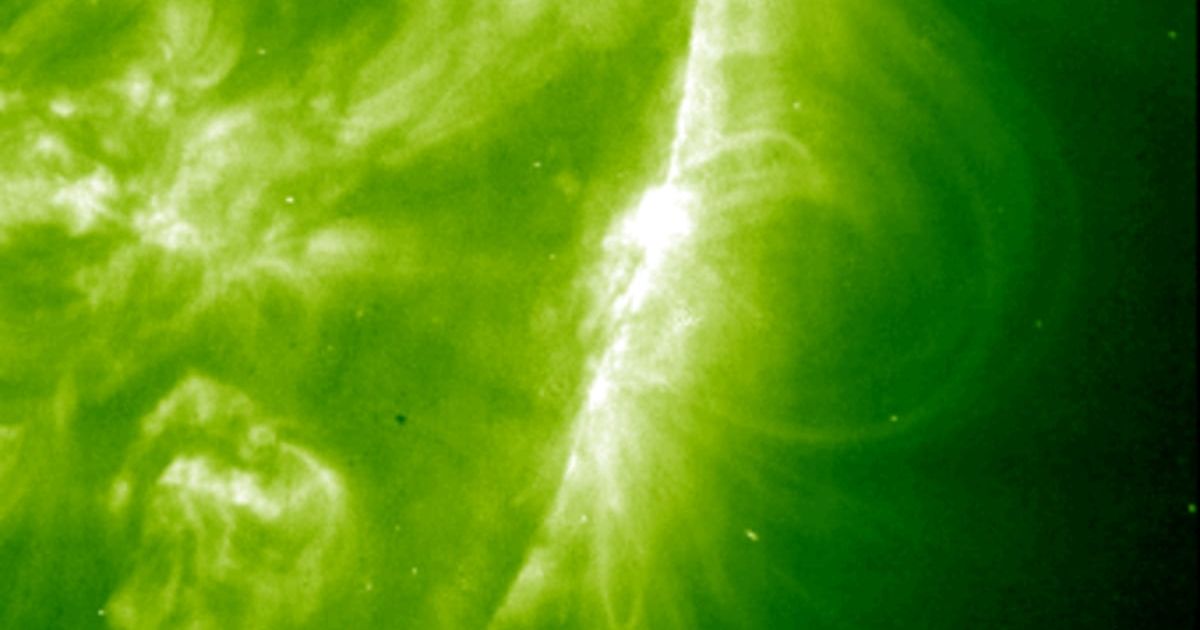
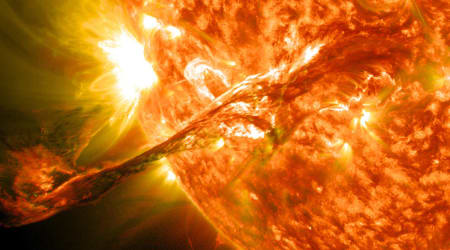
Just past midnight on December 8, 2025, the Sun let loose a very intense X1.1 solar flare that caused radio communication blackouts in Australia and parts of Southeast Asia, according to NASA. An image of the event that peaked at 12:01 a.m. was taken by NASA's Solar Dynamics Observatory.
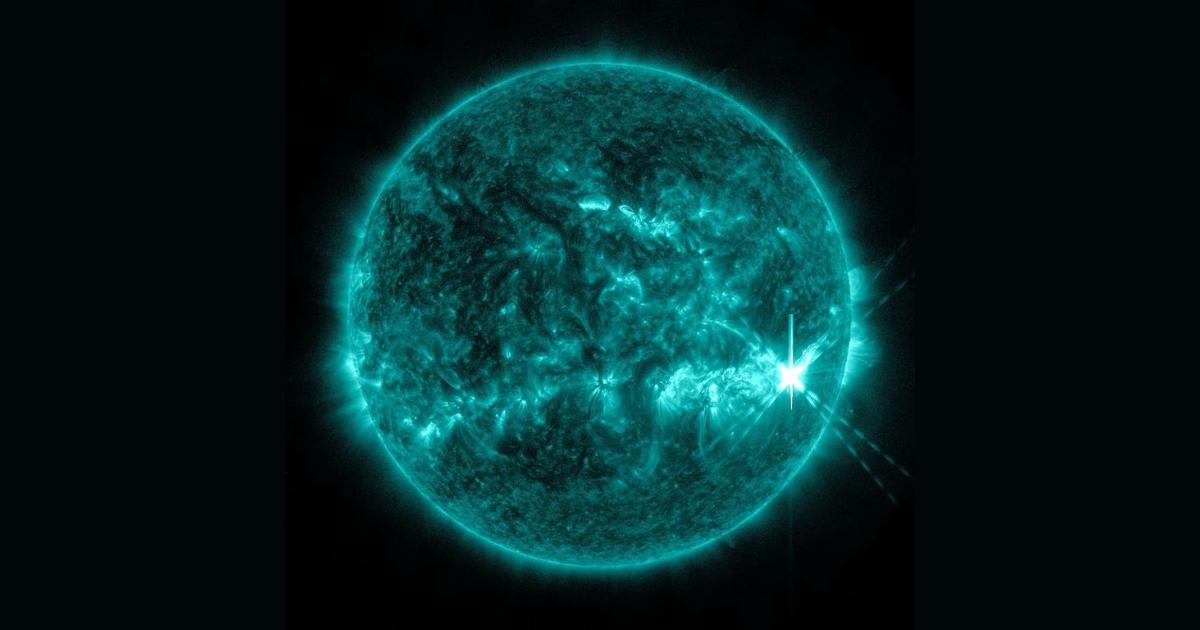
The sudden, intense eruption came from a sunspot called AR4298, currently rotating toward the far side of the Sun, per NOAA's Space Weather Prediction Center (SWPC). While a large cloud of plasma, or CME, was also launched, Space.com reported that satellite analysis suggests it is not headed for Earth. Generally, high-frequency radio signals can travel for long distances because they are reflected from high, thin layers of the ionosphere. But during a high-intensity flare, the denser, lower layers are ionized instead. And when high-frequency radio waves pass through these layers, they hit particles on their way, thereby losing energy and causing disruption in signals.
The severity of radio blackouts is officially measured on the NOAA Space Weather Scale, which is directly related to the maximum intensity of the soft X-rays reached by the solar flare, according to the Space Weather Prediction Center. SWPC commonly forecasts the chance of C, M, and X-class flares and correlates that with the chance of radio blackouts ranging from R1 (minor) to R5 (extreme).
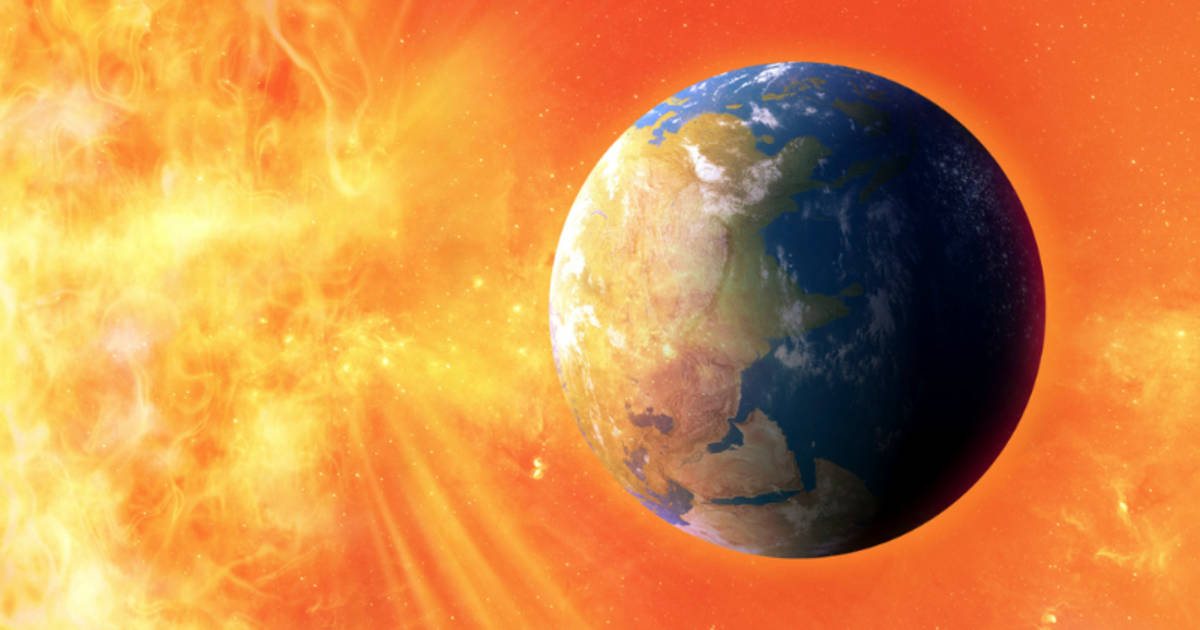
This latest powerful flare comes after a period of sustained high solar activity. Several CMEs, produced from earlier eruptions, were already forecast to arrive at Earth between December 8 and 9. In anticipation of this, space weather forecast centers, including NOAA's SWPC, issued a strong geomagnetic storm (G3) watch. Such storms could result in auroras over the northern states, as well as some in the Midwest.

To properly measure the energy of an event like this, scientists use a classification system for solar flares similar to the Richter scale for earthquakes. This classification ranks flares according to their peak energy output, with each level representing a tenfold increase in power. The weakest, barely detectable eruptions are the A-class flares. As the energy rises, they go through B-class, C-class, and M-class flares. The most powerful are the X-class flares, into which the latest flare falls. Since this scale is logarithmic, the X1.1 flare that just erupted is ten times more powerful than a high-end M-flare and a hundred times stronger than a typical C-class flare.
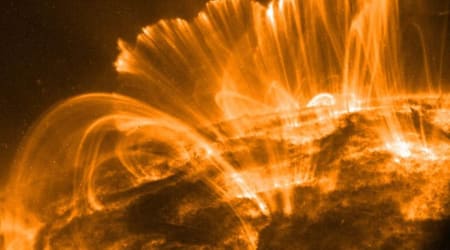
Solar storms are generated by the Sun's tangled, dynamic magnetic fields, per NASA. Because the Sun's equator rotates faster than its poles, the magnetic field lines on the Sun become increasingly twisted and strained. A solar storm often begins when these stressed magnetic field lines become so contorted and stretched that they suddenly snap and reconnect in a process called magnetic reconnection. This violent release of stored energy launches the huge bursts of plasma and radiation into space that we call solar flares.
More on Starlust
NASA and NOAA forecast CME impact on December 9, geomagnetic storm warning issued