NASA's SpaceX Crew-12 successfully launched to International Space Station, docking set for February 14
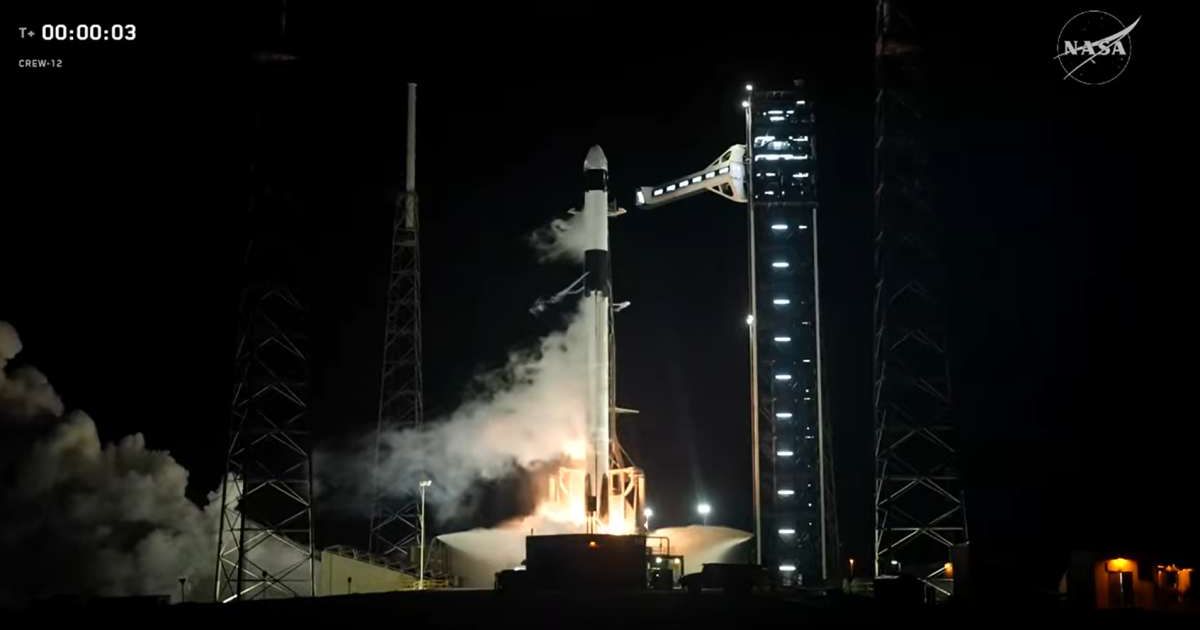
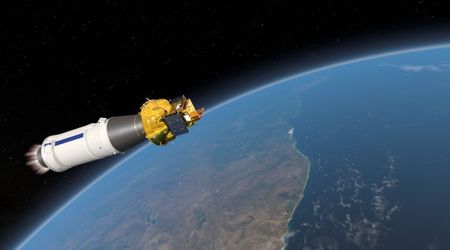
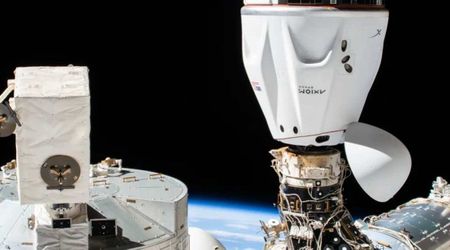
NASA and SpaceX have successfully launched the Falcon 9 rocket carrying the Crew-12 mission with its four astronauts to the International Space Station. The liftoff took place at 5:15 am EST on Friday, February 13, 2026. Pending further updates, the Dragon capsule will travel over a period of about 34 hours before docking at the projected time of 3:15 pm EST on Saturday, based on recent reports. Following separation, the first stage of the Falcon 9 rocket re-entered Earth and landed on Landing Zone-40 at Cape Canaveral Space Force Station less than eight minutes after launch. Meanwhile, the Dragon spacecraft separated from the second stage at 5:24 am EST.
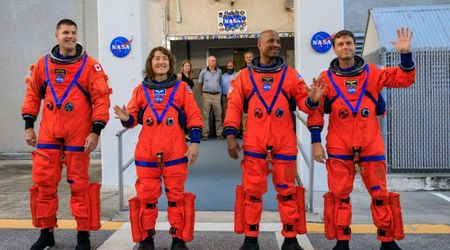
Earlier, Expedition 74 members aboard the ISS did their part of the mission by preparing the space station for the arrival of the new crew. As the countdown clock ticked down to liftoff, about 3 hours before launch, the crew arrived at the launchpad of the Space Launch Complex 40 at Cape Canaveral Space Force Station. Once they were inside Dragon, the hatch was closed off about an hour and 45 minutes prior to the flight. Another hour on from this, in one of the final physical changes to the launch setup, the crew access arm was retracted.
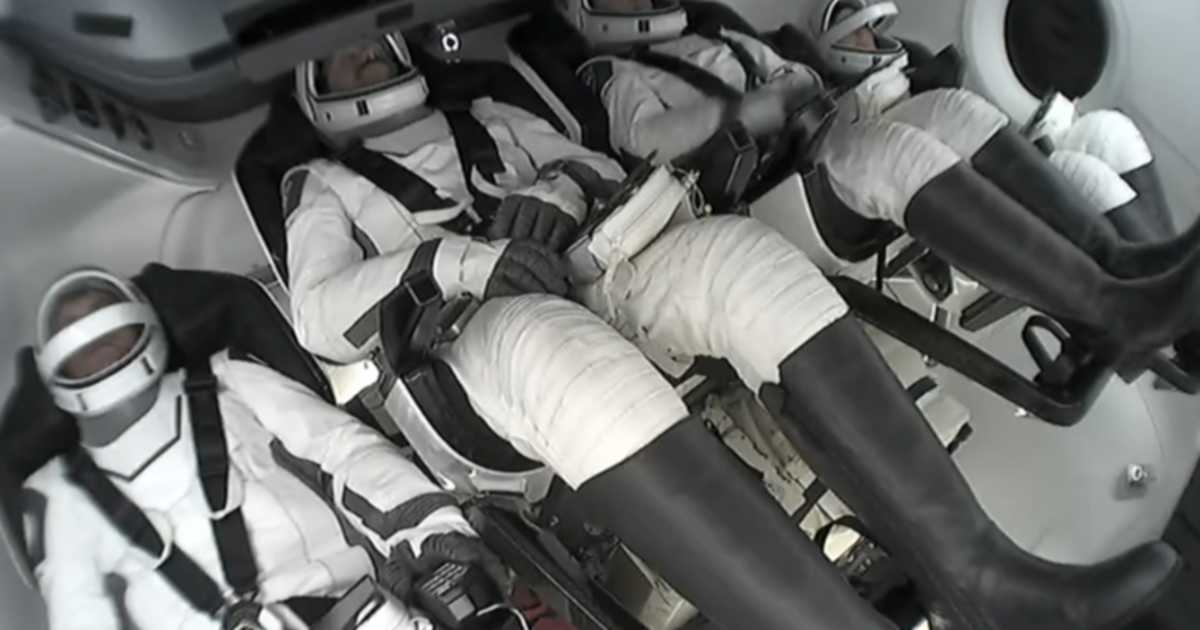
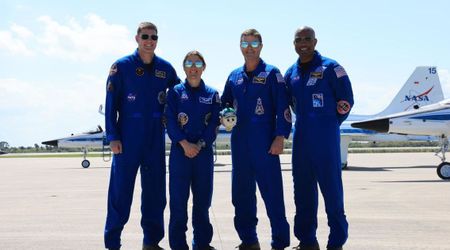
Crew-12 marked SpaceX's 12th crew rotation flight and 13th crewed mission under NASA's Commercial Crew Program. This mission, having been delayed by a couple of days from Wednesday, replaces the Crew-11 astronauts, who returned early due to an unprecedented medical emergency, restoring the station’s full complement of seven residents with Expedition 74. Led by Commander Jessica Meir, the team includes Pilot Jack Hathaway of NASA, European Space Agency astronaut Sophie Adenot on her maiden mission, and Roscosmos cosmonaut Andrey Fedyaev. Throughout their eight-month stay, the crew will conduct experiments in microgravity, focusing on human health, plant growth, and technology for deep space travel.

The crew’s research builds directly on the station’s ongoing science agenda as well as the expertise of each member of the crew. Per NASA, the crew will study the effects of physical characteristics on blood flow during spaceflight. Other work includes IV (intravenous) fluid generation, automated plant health monitoring, and investigation of plant and nitrogen-fixing microbes to boost food production in space. The agenda also includes studying pneumonia-causing bacteria to improve treatments.
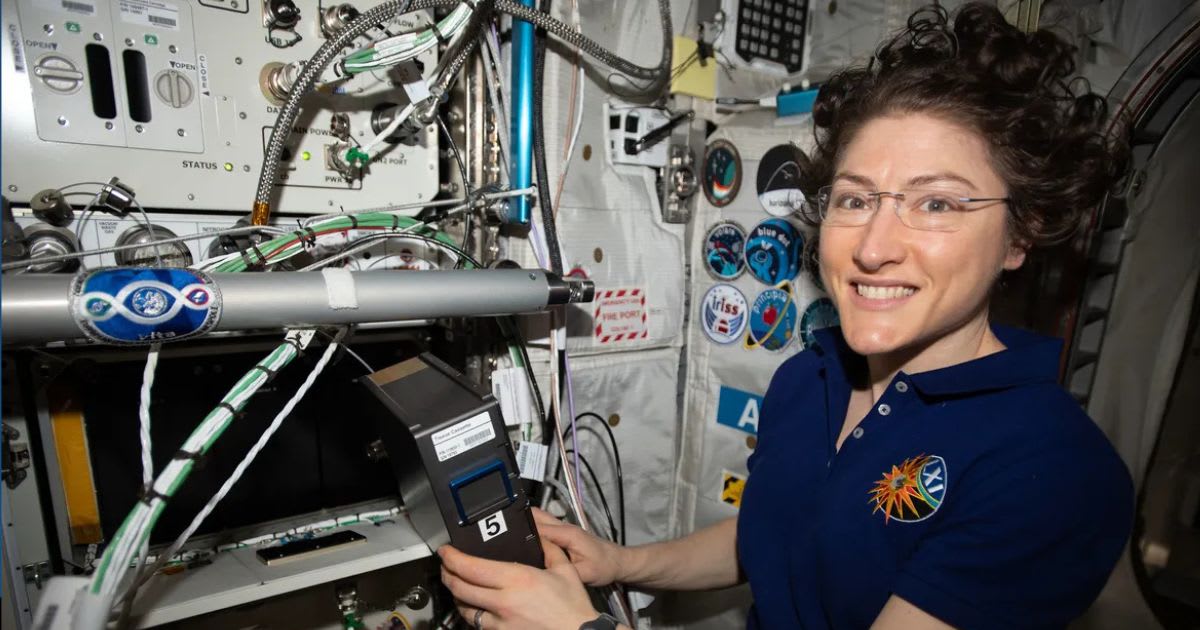
As NASA progresses toward landing the first humans on the Moon in over 50 years via Artemis III, ISS research from missions like Crew-12 ensures safe human exploration beyond low-Earth orbit. As Crew-12 Commander Jessica Meir stated in a feature broadcast during NASA’s live stream in the build-up to liftoff, “This mission is not for me or Crew-12, but for all of humanity.”
More on Starlust
NASA's Artemis II and Crew-12 astronauts will be first to carry latest smartphones to space
NASA's SpaceX Crew-12 commander will carry her 3-year-old daughter's stuffed rabbit to the ISS