SpaceX to launch NASA-ESA's Sentinel-6B climate satellite aboard Falcon 9 today
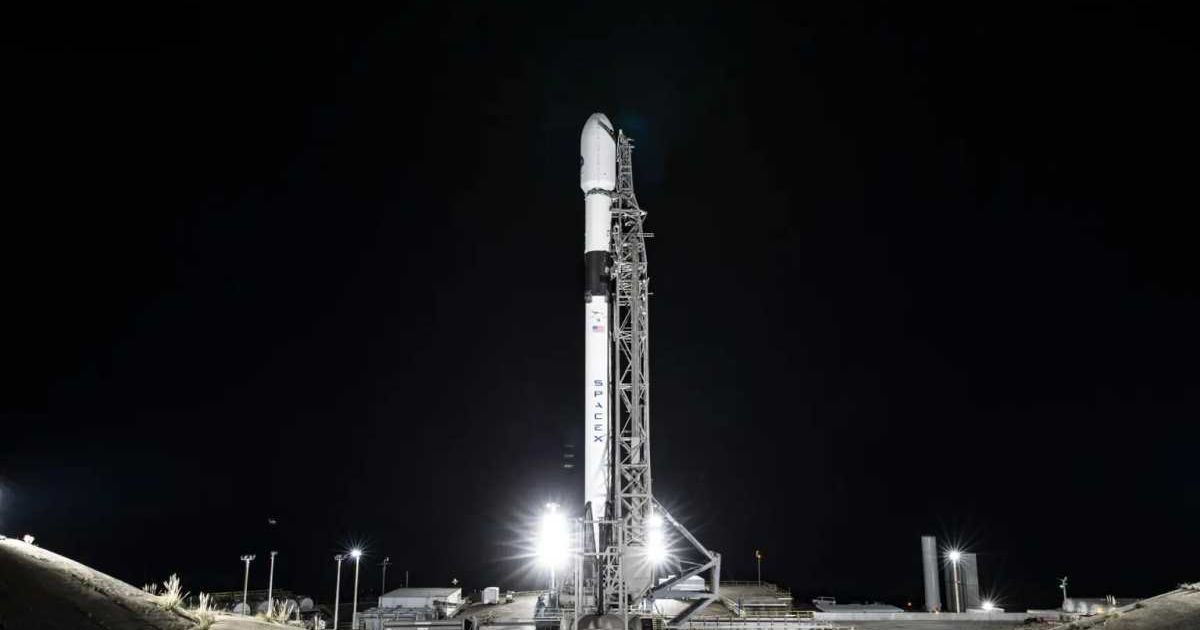
SpaceX is launching a Falcon 9 rocket carrying Sentinel-6B, an advanced ocean-monitoring satellite that will help reinforce the global effort to track rising sea levels and better forecast weather patterns facilitated by climate change, according to the space agency. The launch window is set to open on Monday, November 17, at 12:21 a.m. EST from Vandenberg Space Force Base's Space Launch Complex 4 East in California.
Falcon 9 is vertical at pad 4E in California ahead of tonight’s launch of Sentinel-6B. Weather is currently 60% favorable for liftoff → https://t.co/G0p3ak303D pic.twitter.com/DLfEMWm0sc
— SpaceX (@SpaceX) November 16, 2025
The mission represents a major international collaboration between NASA, the European Space Agency (ESA), EUMETSAT, and NOAA to continue a multidecade dataset of sea-level measurements from orbit, per NASA.
Teams encapsulated the Sentinel-6B satellite into Falcon 9’s fairing ahead of arriving at the hangar at pad 4E in California. Liftoff is targeted for 9:21 p.m. PT on Sunday, November 16 → https://t.co/SH0sBON6W8 pic.twitter.com/pYDn69GtmM
— SpaceX (@SpaceX) November 14, 2025
Sentinel-6B, the second of two satellites in the Sentinel-6/Jason-CS (Continuity of Service) mission, will take over for its five-year-old twin, Sentinel-6 Michael Freilich, also launched by a Falcon 9. The new satellite features a radar altimeter designed to measure ocean topography across nearly all of Earth's seas with unprecedented precision. The data is crucial to improving public safety, as well as for planning coastal cities and supporting commercial and defense maritime interests. Besides tracking sea-level rise, the spacecraft will collect high-resolution vertical temperature profiles through the atmosphere. The information is crucial for measuring changes in atmospheric temperature and can be incorporated into existing models to improve the accuracy of weather predictions.
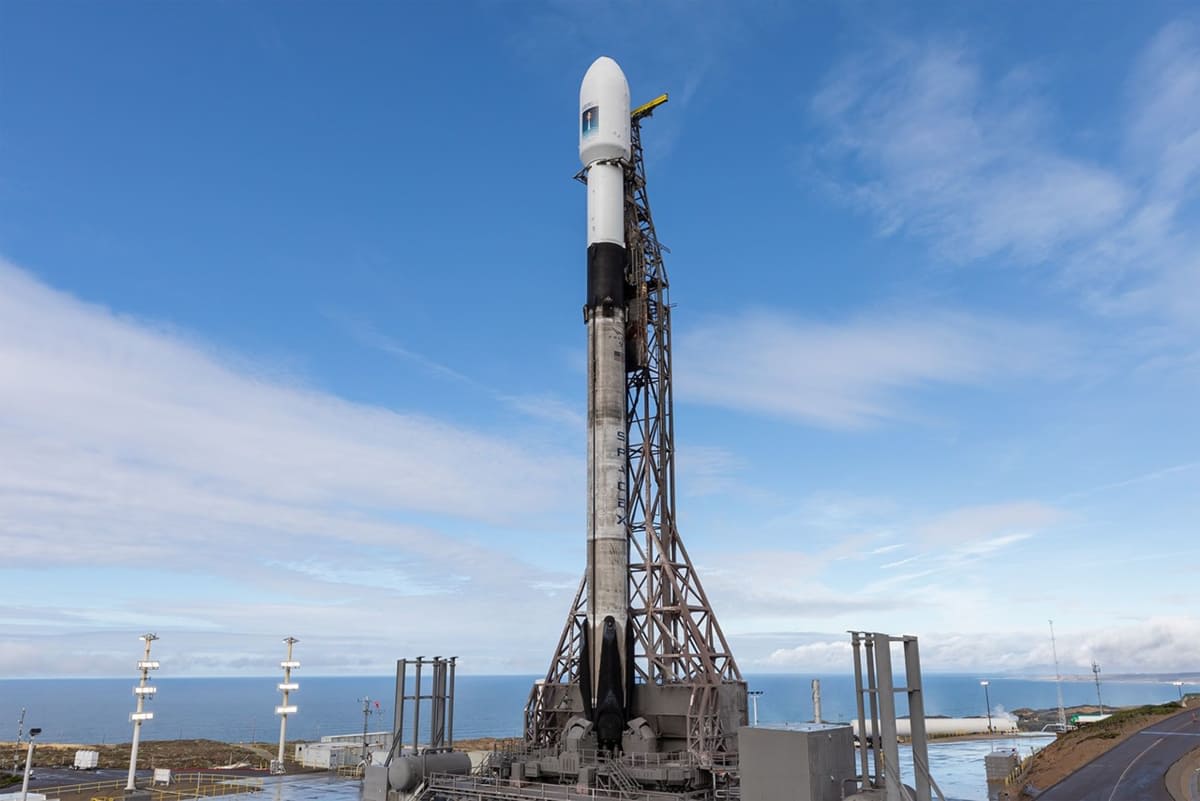
The first-stage booster supporting this launch is a veteran of two previous Starlink missions, per SpaceX. After separation, the booster will undergo an autonomous landing at LZ-4 back at Vandenberg Space Force Base. The launch vehicle's descent and landing may produce one or more sonic booms that could be audible to residents in the surrounding Santa Barbara, San Luis Obispo, and Ventura counties. The experience of the sound will depend on local atmospheric and weather conditions. A live broadcast of the liftoff will begin approximately one hour before the launch, available via NASA+ streaming platforms.
But even as the main focus is Earth science, some of the data coming from the Sentinel-6/Jason-CS mission finds unexpected applications in NASA's larger agenda. Environmental data aids in refining Goddard Earth Observing System models, which the NASA Engineering Safety Center then incorporates when formulating better ways of planning safer reentry procedures for astronauts returning from Artemis missions to the Moon. According to NASA, the very precise data on ocean dynamics, including the smaller tug of Earth's tides on the Moon, presents valuable insight for future deep space and lunar exploration planning.
LIVE: Sentinel-6B, a new satellite that will help measure Earth's sea levels, is set to launch soon! Listen to agency leaders and mission partners discuss the mission and answer media questions: https://t.co/fDaLzMmRp9 pic.twitter.com/96US8AdkNI
— NASA (@NASA) November 15, 2025
The observational data from Sentinel-6B will contribute to national security and defense. It will provide continuous, near-real-time measurements of the ocean and atmosphere, feeding advanced weather and ocean modeling systems directly that offer foresight to decision-makers. This is very important in protecting high-value coastal military installations from environmental hazards, particularly those events such as nuisance flooding caused by sea-level rise and storm surges. Accurate and forward-looking insights into meteorological and oceanic conditions enable the satellite to support both strategic planning and tactical operations.
More on Starlust
Blue Origin's New Glenn successfully launches NASA’s twin ESCAPADE spacecraft