NASA-ISRO's historic NISAR satellite lifts off to observe changes down to the centimeter on Earth's surface
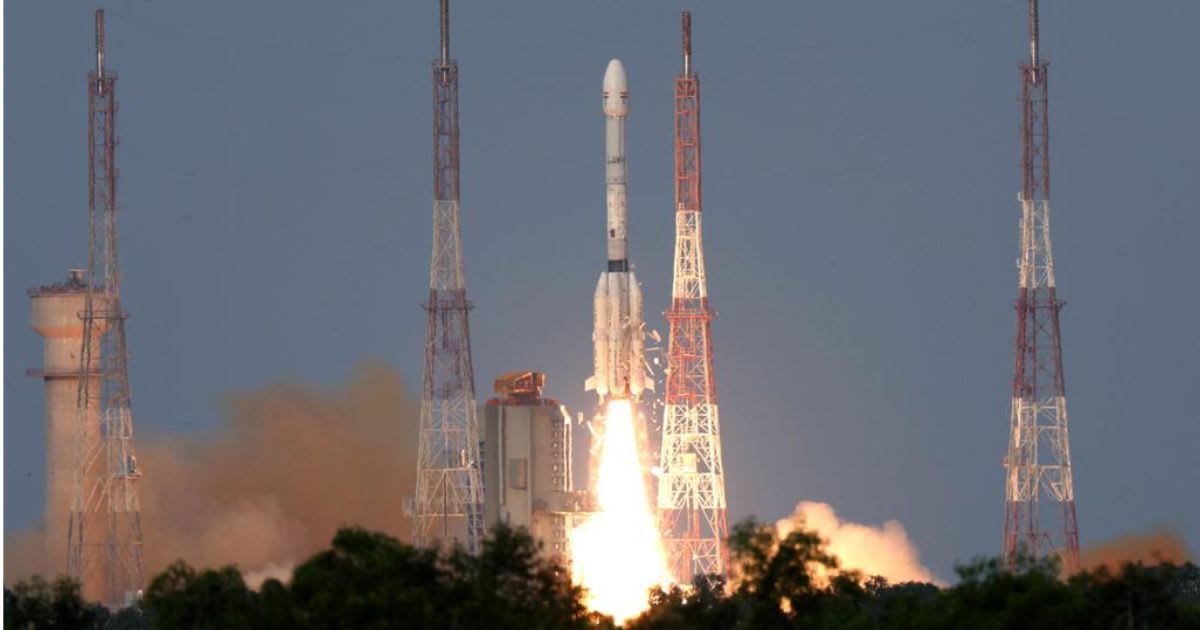
A collaborative satellite venture between the United States and India has successfully launched, promising a striking three-dimensional perspective of Earth's ever-changing surfaces. The NISAR (NASA-ISRO Synthetic Aperture Radar) satellite, a product of joint development by NASA and the Indian Space Research Organization (ISRO), lifted off on Wednesday, July 30, from the Satish Dhawan Space Centre, as per NASA.
Earth's surface is in motion: earthquake faults slip, crops grow, levees crumble, glaciers retreat.
— NASA (@NASA) July 30, 2025
A joint NASA/@ISRO radar satellite, NISAR, launched today to measure land and ice land and ice changes like these to within a fraction of an inch: https://t.co/NGDTpBBgb7 pic.twitter.com/CvLKuhZJIJ
The advanced spacecraft, equipped with a sophisticated radar system, will deliver critical insights into land and ice movements, detectable down to the centimeter. This mission represents a significant stride in the US-India civil space partnership and is poised to deliver vital, actionable data for diverse applications, including disaster response, infrastructure monitoring, and agricultural management.
The satellite commenced its journey aboard an ISRO Geosynchronous Satellite Launch Vehicle (GSLV) rocket at 8:10 a.m. EDT (5:40 p.m. IST) on Wednesday. ISRO ground control established communication with NISAR approximately 20 minutes post-launch, confirming its nominal operation. “Congratulations to the entire NISAR mission team on a successful launch that spanned across multiple time zones and continents in the first-ever partnership between NASA and ISRO on a mission of this sheer magnitude,” stated Nicky Fox, Associate Administrator for the Science Mission Directorate at NASA Headquarters. She added, "NISAR’s data will help ensure the health and safety of those impacted on Earth, as well as the infrastructure that supports them, for the benefit of all.”
GSLV-F16/NISAR
— ISRO (@isro) July 30, 2025
Liftoff Rewind
Catch the liftoff visuals from GSLV-F16/NISAR launch. #NISAR #GSLVF16 #ISRO #NASA pic.twitter.com/umEyrBCF8T
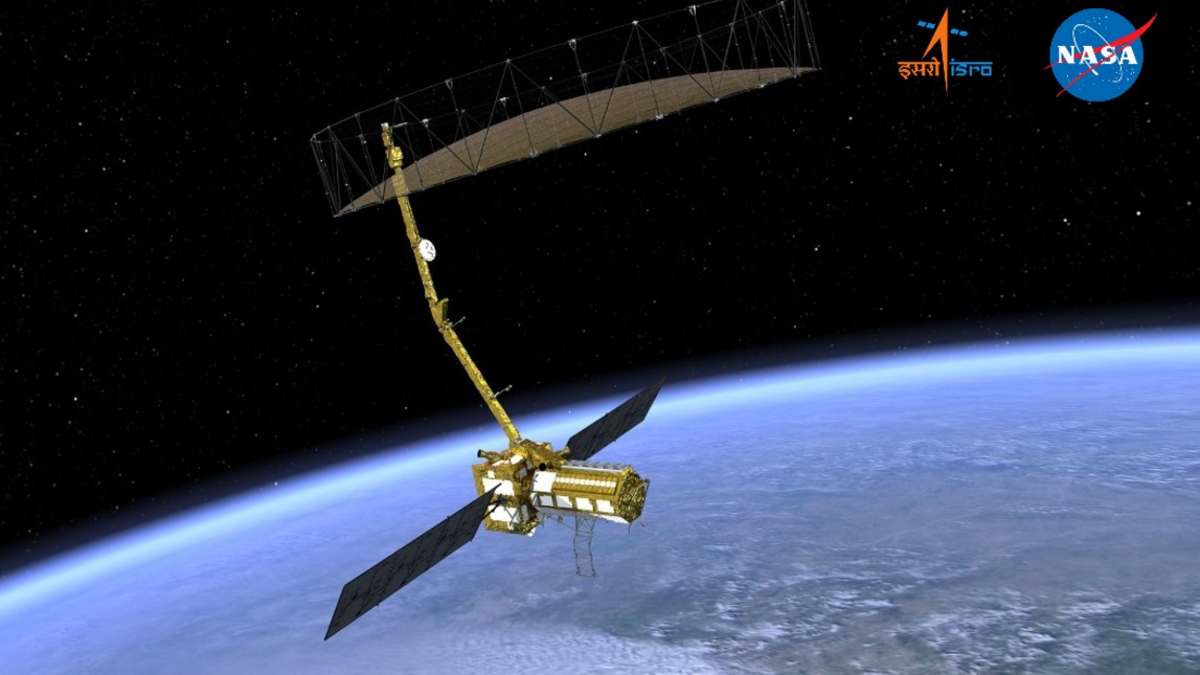
Weighing 5,273 pounds, NISAR is a one-of-a-kind Earth observation satellite. It's the first to observe our planet using a dual-frequency Synthetic Aperture Radar, combining NASA's L-band and ISRO's S-band. Both frequencies leverage NASA's 39-foot unfurlable mesh reflector antenna, integrated with ISRO's modified 13K satellite bus. This advanced setup allows NISAR to observe Earth with a wide 150-mile swath and high spatial resolution, utilizing groundbreaking SweepSAR technology for the first time, according to ISRO. The L-band system radar excels at measuring soil moisture, forest biomass, and the motion of land and ice surfaces, while the S-band radar is optimized for monitoring agriculture, grassland ecosystems, and infrastructure movement, as mentioned on NASA.
Built across continents in phases, NISAR is a result of global teamwork and tech. NISAR came together through years of integration and testing.
— ISRO (@isro) July 25, 2025
2 Nations, 1 Mission.
NISAR’s build journey is a story of teamwork.
Milestone of Firsts
✅ First dual-band radar satellite
✅ First… pic.twitter.com/ykQwPjN7lP
From an orbit of 464 miles above Earth, NISAR will employ two cutting-edge radar instruments to track shifts in Earth's ecosystems, monitor the dynamics of frozen surfaces, and measure crustal movements with unparalleled precision. These measurements are crucial for understanding the behavior of the land surface before, during, and after seismic events, volcanic eruptions, and landslides.

ISRO Chairman V Narayan hailed the launch as a pivotal moment. “ISRO’s GSLV has precisely injected the NISAR satellite into the intended orbit, 747 kilometers (464 miles). I am happy to inform you that this is GSLV’s first mission to a Sun-synchronous polar orbit. With this successful launch, we are at the threshold of fulfilling the immense scientific potential NASA and ISRO envisioned for the NISAR mission more than 10 years ago,” Narayan remarked. “The powerful capability of this radar mission will help us study Earth’s dynamic land and ice surfaces in greater detail than ever before.”
GSLV-F16/NISAR
— ISRO (@isro) July 30, 2025
From a majestic liftoff to the flawless separation, witness the full journey.
Watch spectacular moments of NISAR launching aboard GSLV-F16 and its precise separation, captured on-board.
A milestone in global space collaboration.#ISRO #NASA #GSLVF16 #NISAR pic.twitter.com/BZkqRujFHd
The mission's dual-band radar system will survey nearly all of the planet's land and ice-covered regions twice every 12 days, including polar Southern Hemisphere areas often overlooked by other Earth-observing radar satellites. The collected data will also empower researchers to assess long-term changes in forests, wetlands, agricultural zones, and permafrost. In the coming weeks, NISAR will undergo a 90-day commissioning phase, during which its 39-foot (12-meter) radar antenna reflector will deploy. This reflector will be key to directing and receiving microwave signals, enabling researchers to interpret surface characteristics and monitor changes over time as NISAR revisits locations.
GSLV-F16/NISAR
— ISRO (@isro) July 30, 2025
✅ Launch
✅ Orbit
✅ Separation
WHAT next?
Next: Commissioning, calibration, then science.
Stay tuned!
For more information:https://t.co/XkS3v3M32u#NISAR #GSLVF16 #ISRO #NASA