NASA test proves its DAVINCI probe can survive a scorching descent into hellish Venus
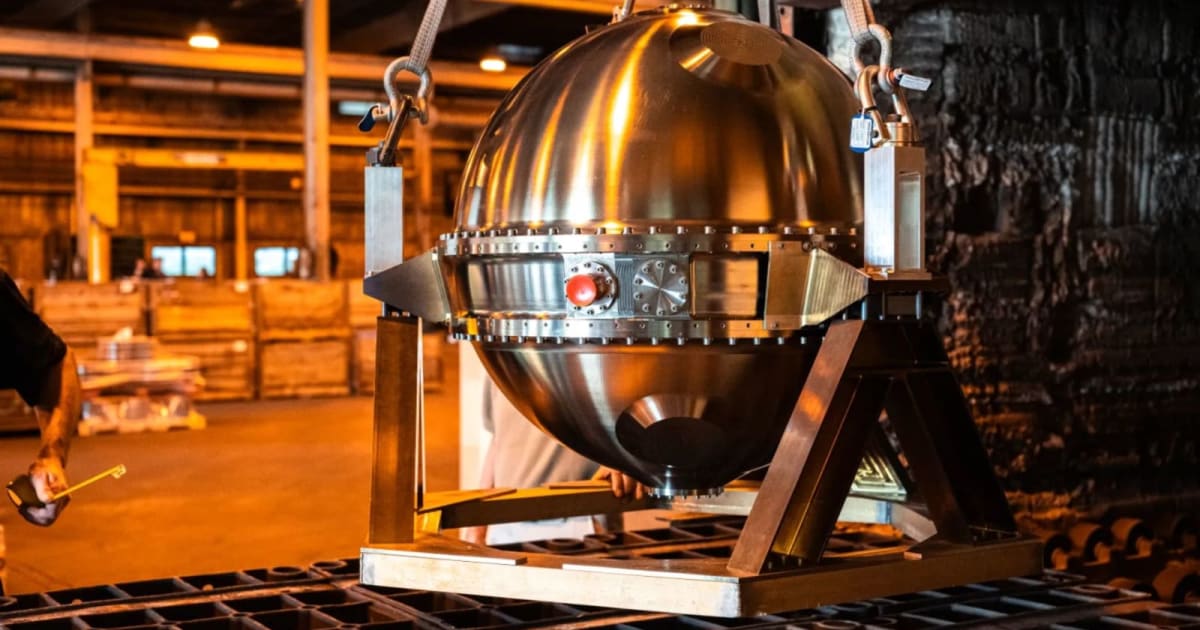
NASA’s DAVINCI mission, which will explore the hellish atmosphere of Venus, has passed a major hurdle. The agency announced last week that an engineering unit of the mission’s descent probe that will be dropped to the surface has passed a crucial thermal test, proving it can survive extreme temperatures when it descends through the atmosphere. The test was conducted at Rex Heat Treat in Bedford, Pennsylvania, where the engineers subjected the yoga-ball-sized orb to temperatures as high as 869 degrees F (465 degrees C) over the course of an hour. NASA says this is the same pace the probe will heat up during its descent to the Venusian surface, and this thermal testing was conducted a total of six times.
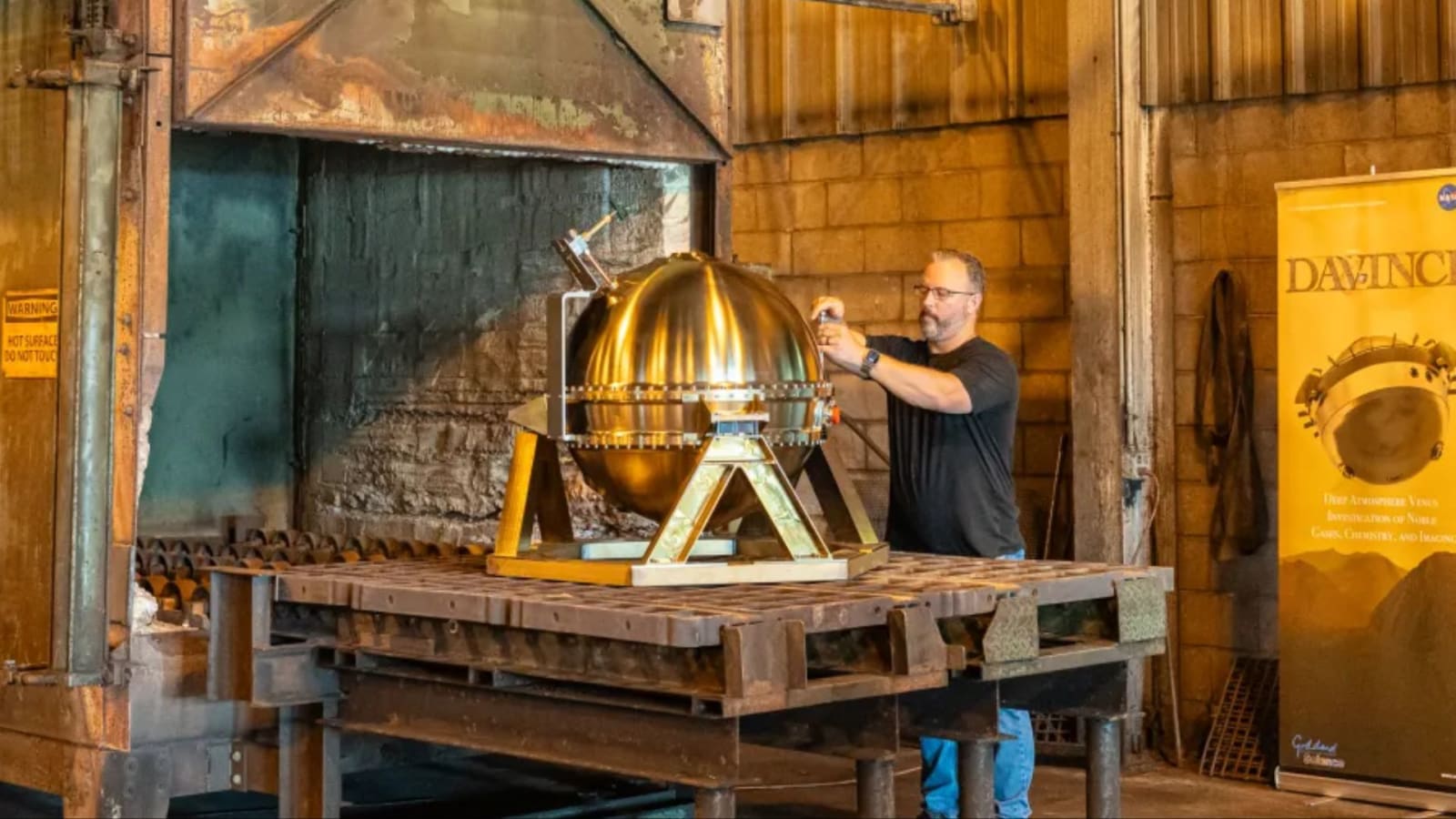
“The experiment was a rousing success, with six runs to Venus’ surface temperature on our descent timeline of 55–60 minutes with full internal instrumentation,” Jim Garvin, the principal investigator for DAVINCI at NASA’s Goddard Space Flight Center, said in a statement. “There hasn’t been such a complete assessment of spacecraft-scale hardware at Venus temperatures in the U.S. since the mid-1970s.”
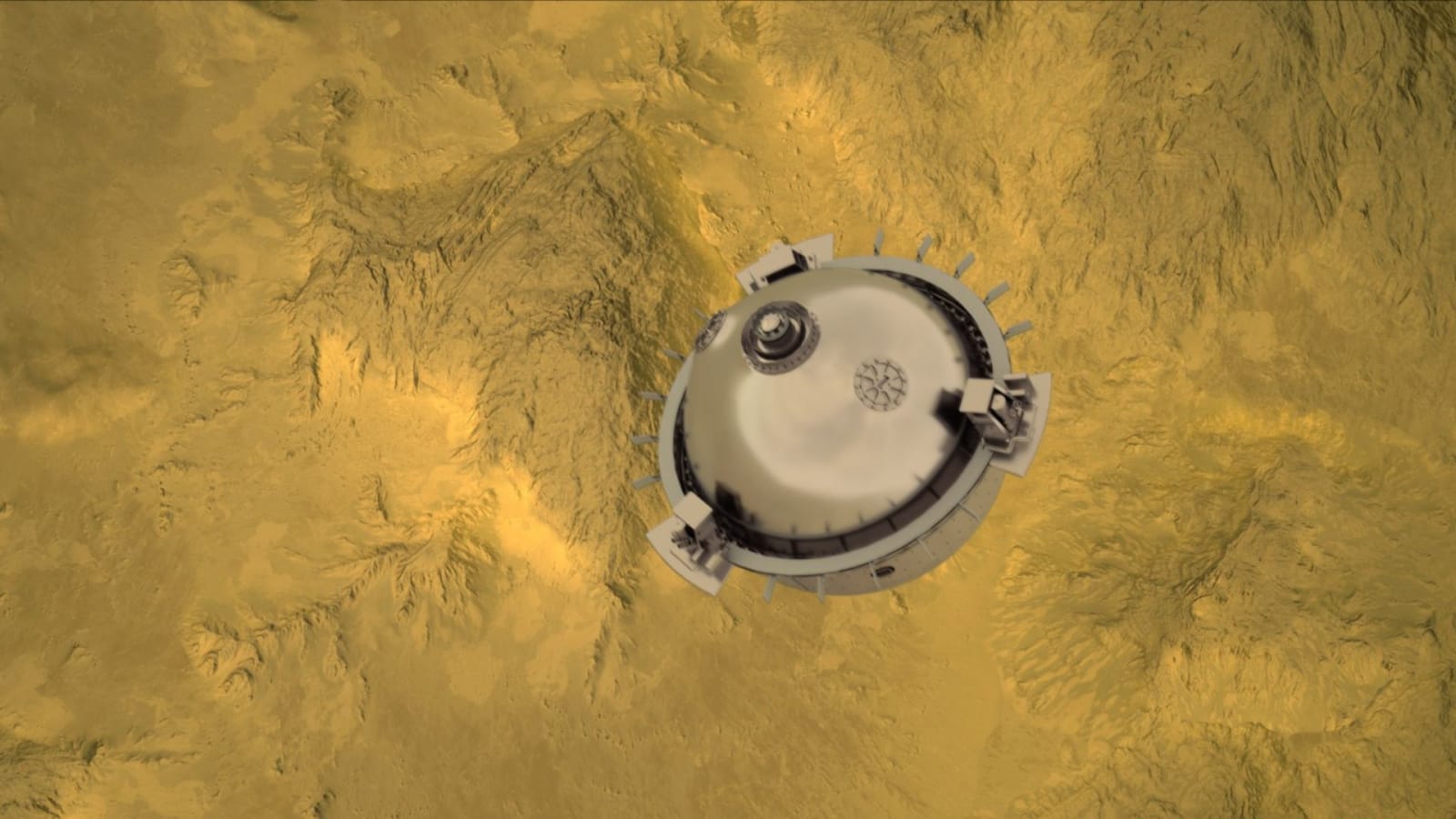
The test unit passed each thermal cycle unscathed, as it should, because it must shield key instruments during the free fall. The tests proved that the simulated instruments inside the orb, which were being monitored by more than 100 thermal sensors, will survive the punishing descent.
This probe, which is designed to sample the atmosphere’s chemical makeup, as well as the temperature, pressure, and winds, makes up just one half of the mission. The other is a spacecraft that will conduct a series of flybys approximately 5,600 miles (9,000 kilometers) above the surface and will be tasked with tracking the motions of Venus’ clouds and mapping its surface composition. Earlier this year, engineers tested the descent probe’s imaging system to confirm that its cameras and instruments can image the landscape in optical and infrared wavelengths.
Why is NASA launching the DAVINCI mission?
The objective of the DAVINCI mission—named for the acronym Deep Atmosphere Venus Investigation of Noble gases, Chemistry, and Imaging, which honors the Italian scientist Leonardo da Vinci—is to study the formation and evolution of the Venusian atmosphere over the past 4.5 billion years as well as the little-known surface features. It is slated for launch in the early 2030s to fill the gaps in findings by dozens of previous missions that made it to Venus. The descent probe has a huge role to play as it will capture the first close-up views of Alpha Regio, a unique mountainous region which may be among the oldest surfaces on the planet.

The descent probe will have instruments encased within its titanium shell that will sample the atmosphere above the clouds and take pictures of the surface when it is below the clouds. These images will be used to make a 3D map, while a radio system transmits the data back to the spacecraft conducting flybys overhead. According to NASA, DAVINCI will be the first to analyze the chemical composition of Venus’ lower atmosphere between 90,000 feet and the moment before the probe impacts the surface. Findings from this mission are expected to reveal why Venus, which is also known as Earth’s twin, is so different from our planet today.
More on Starlust
Venus may once have been a paradise: New study suggests oceans covered 90% of planet
Did life come to Venus from Earth or Mars? New study offers clues