NASA’s second ESCAPADE spacecraft nails a key trajectory maneuver
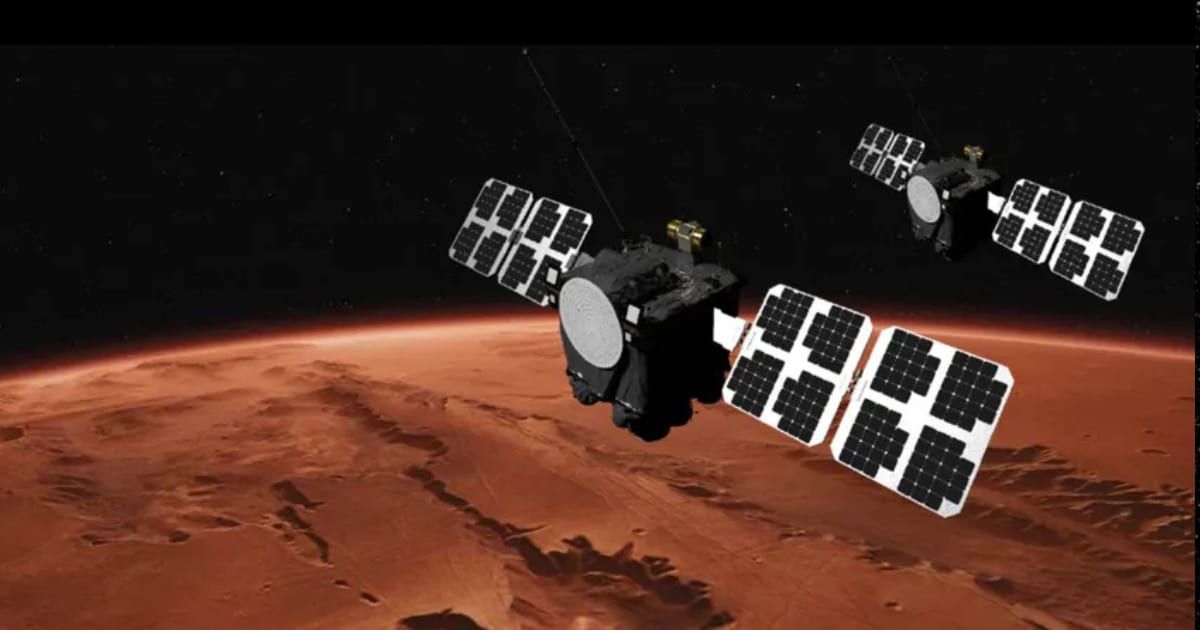
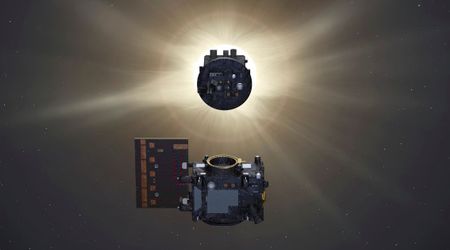
NASA’s ESCAPADE mission has cleared another major milestone as the second of its twin spacecraft successfully completed a crucial trajectory correction maneuver, keeping the mission on course for Mars. According to NASA, on January 6, NASA’s mission operations team carried out the maneuver after postponing an earlier attempt in December 2025. ESCAPADE, short for Escape and Plasma Acceleration and Dynamics Explorers, is made up of two identical spacecraft designed to fly together and study Mars as a coordinated pair.
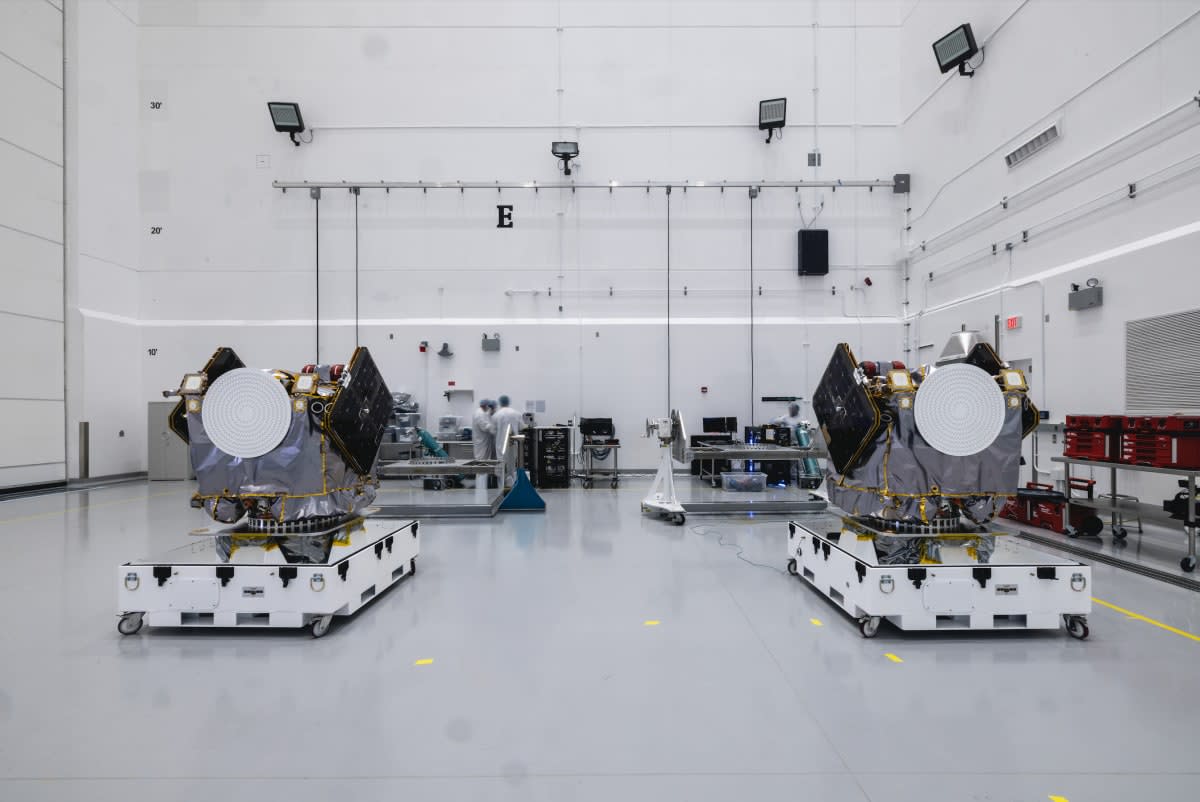
While one spacecraft completed its two trajectory correction maneuvers as planned in December, engineers observed lower-than-expected thrust during burn attempts on December 8 and December 12 for the second spacecraft. Because of this, the team delayed its maneuver to analyze the issue and proceed cautiously. The January 6 maneuver places the spacecraft into what is known as a “loiter” or Earth-proximity orbit. From this position, the spacecraft will circle a stable region of space called Lagrange Point 2, located about one million miles from Earth.
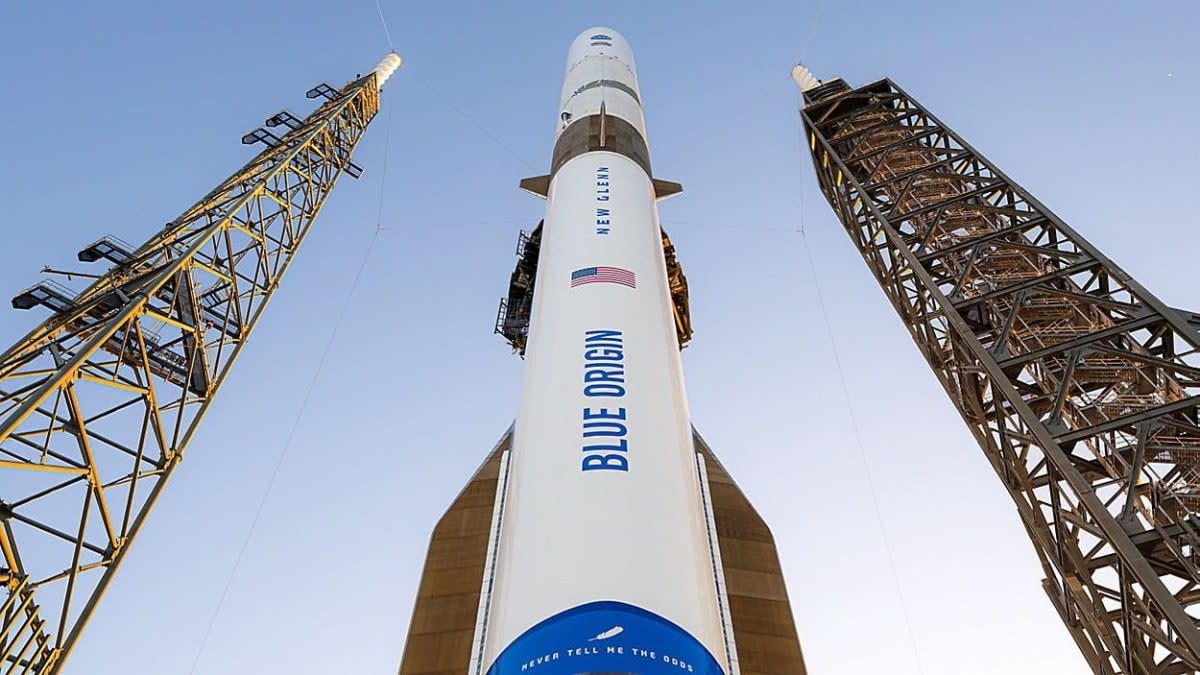
In November 2026, both ESCAPADE spacecraft will return for a close flyby of Earth. During this pass, they will use Earth’s gravity to gain speed and redirect their trajectory toward Mars. If all continues as planned, the twin spacecraft will arrive at Mars in September 2027. Once in orbit around Mars, ESCAPADE will begin its primary science mission: studying how the solar wind, a stream of charged particles flowing from the Sun, interacts with the Martian environment. Unlike Earth, Mars does not have a strong global magnetic field to protect it. Instead, it has a unique “hybrid” magnetosphere made up of leftover magnetic fields in the planet’s crust and a weaker magnetic field in its upper atmosphere. These magnetic structures interact continuously with the solar wind and Mars’ thin atmosphere, driving atmospheric escape.
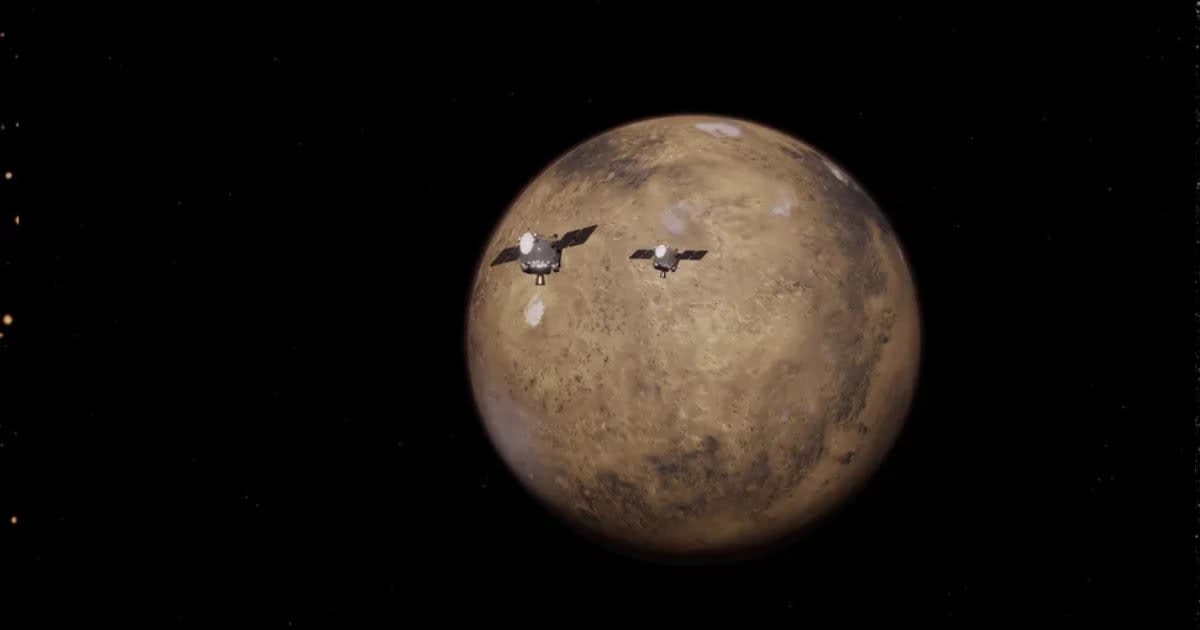
ESCAPADE’s twin spacecraft, according to NASA, will orbit Mars at altitudes ranging from about 100 to 6,200 miles. By taking measurements from two locations at the same time, the mission will allow scientists to observe how solar wind energy moves through Mars’ magnetosphere and upper atmosphere in real time. At times, one spacecraft will be upstream in the solar wind, while the other will observe the response inside Mars’ magnetic environment. This two-point approach will help scientists better understand how atmospheric loss happens and how quickly it can change.
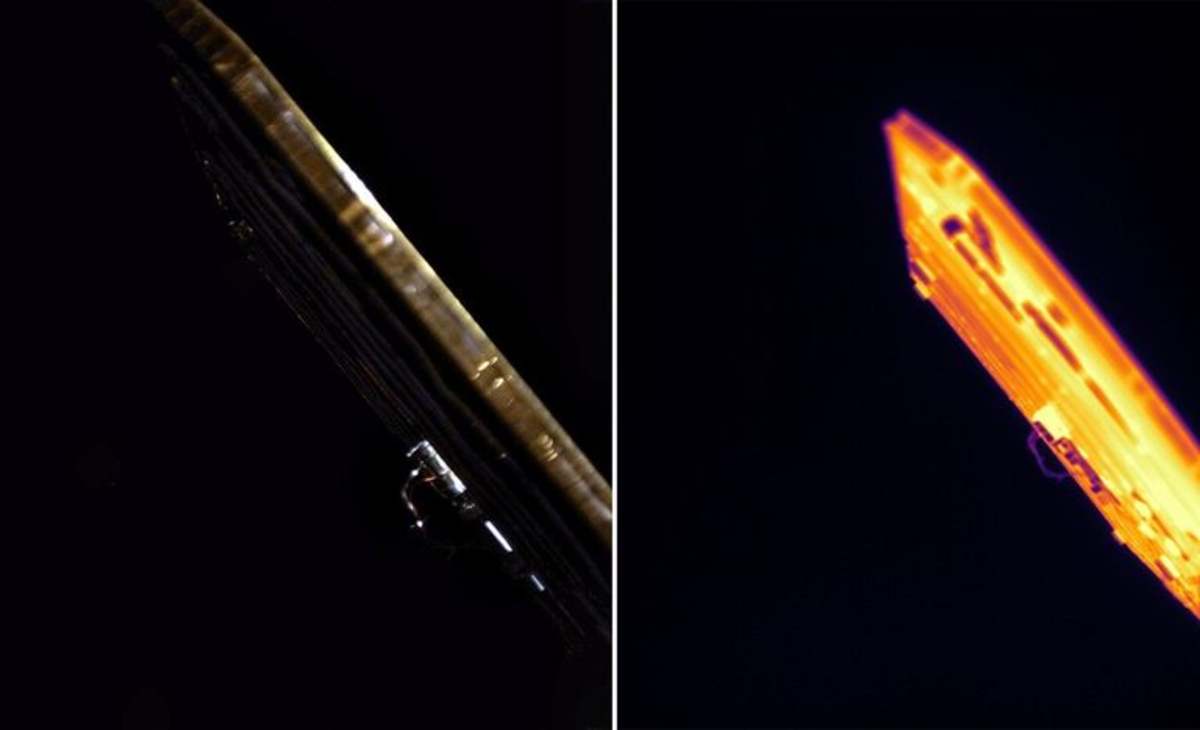
ESCAPADE is managed by the Space Sciences Laboratory at the University of California, Berkeley. Key partners include Rocket Lab, NASA’s Goddard Space Flight Center, Embry-Riddle Aeronautical University, Advanced Space LLC, and Blue Origin. By studying how Mars lost its once-thick atmosphere, scientists hope to gain insight into how planetary climates evolve over time. The results could also help researchers better understand the habitability of distant exoplanets and guide the design of future robotic and human missions that must operate in Mars’ challenging space-weather environment.
More on Starlust
China eyes lunar water ice as Chang’e 7 gets ready for the Moon's south pole