Europe may soon be getting a self-healing spacecraft
ESA-backed project tests carbon-fiber composites that detect damage and fix themselves.
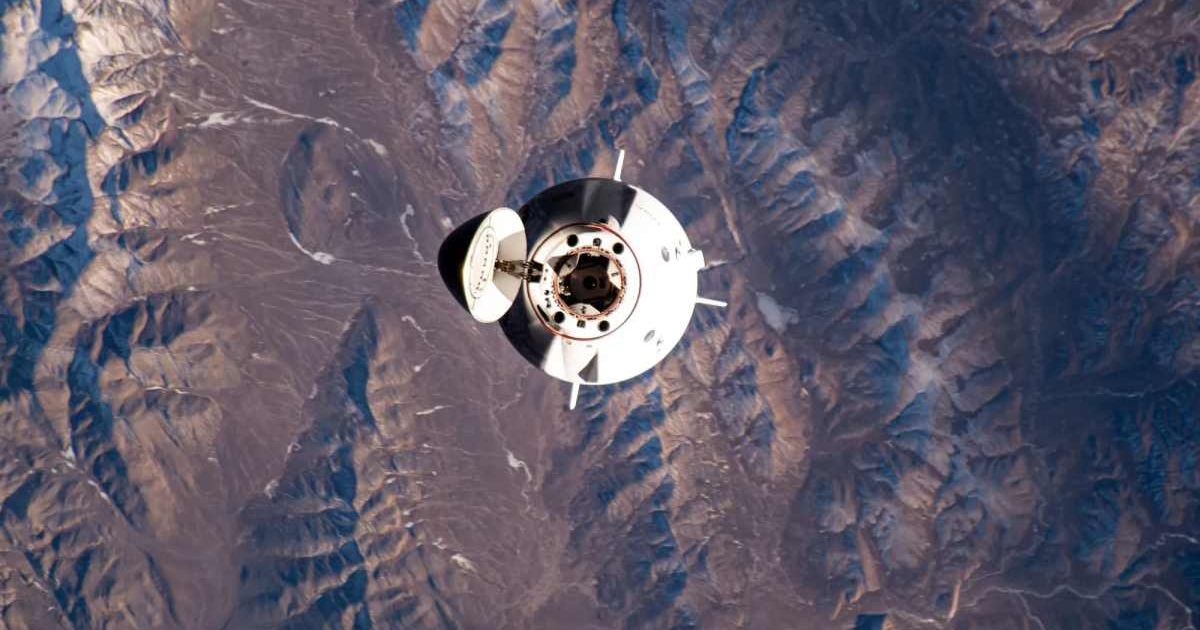
The SpaceX Dragon Freedom spacecraft carrying the four-member Axiom Mission 3 (Ax-3) crew is pictured approaching the International Space Station 260 miles above China north of the Himalayas. (Representative Cover Image Source: NASA)

Imagine a damaged spacecraft that can fix itself—that's exactly what the European Space Agency (ESA) is currently working on. Engineers from Swiss companies CompPair and CSEM and Belgian firm Com&Sens have partnered up with ESA on Project Cassandra (short for Composite Autonomous SenSing AnD RepAir). This tech initiative specifically focuses on building spacecraft structures that are able to detect damage and repair themselves autonomously. The concept is nothing short of a game-changer, as it may allow future spacecraft to be more durable and reusable.
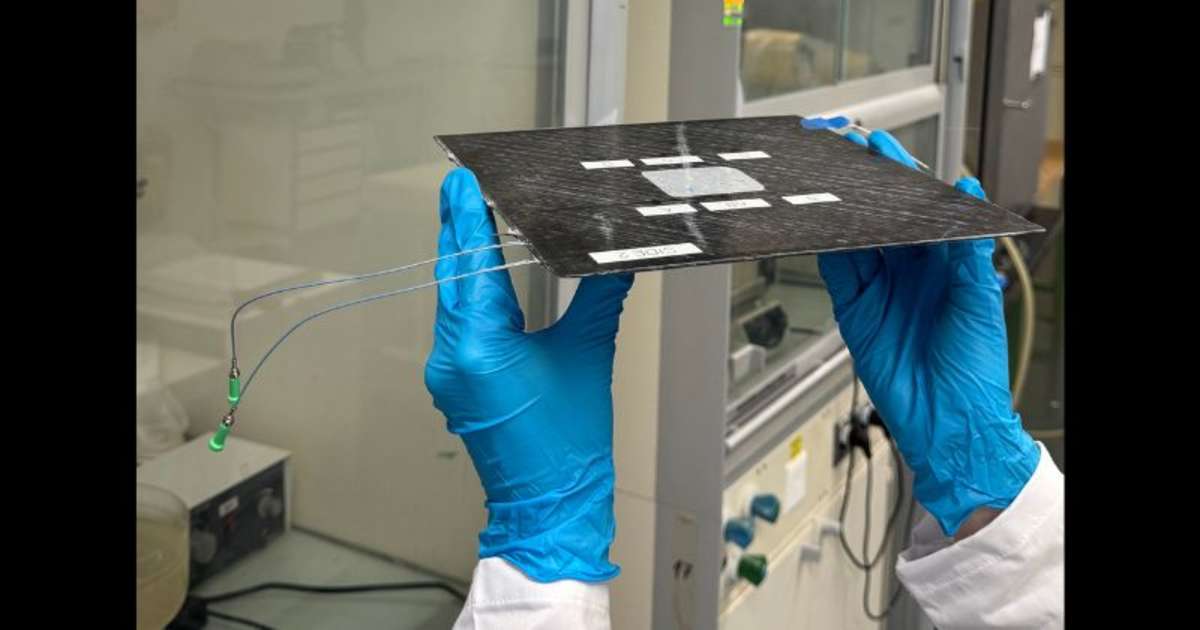
Image of a Cassandra demonstrator panel in a laboratory. (Image Source: ESA)

ESA's Project Cassandra specifically targets composite materials like carbon-fiber-reinforced polymers that are used in spacecraft. While these materials are quite strong and durable themselves, they are still prone to structural damage like cracks. These cracks, even if they are small, can worsen over time, and repairs can be both expensive and time-consuming.
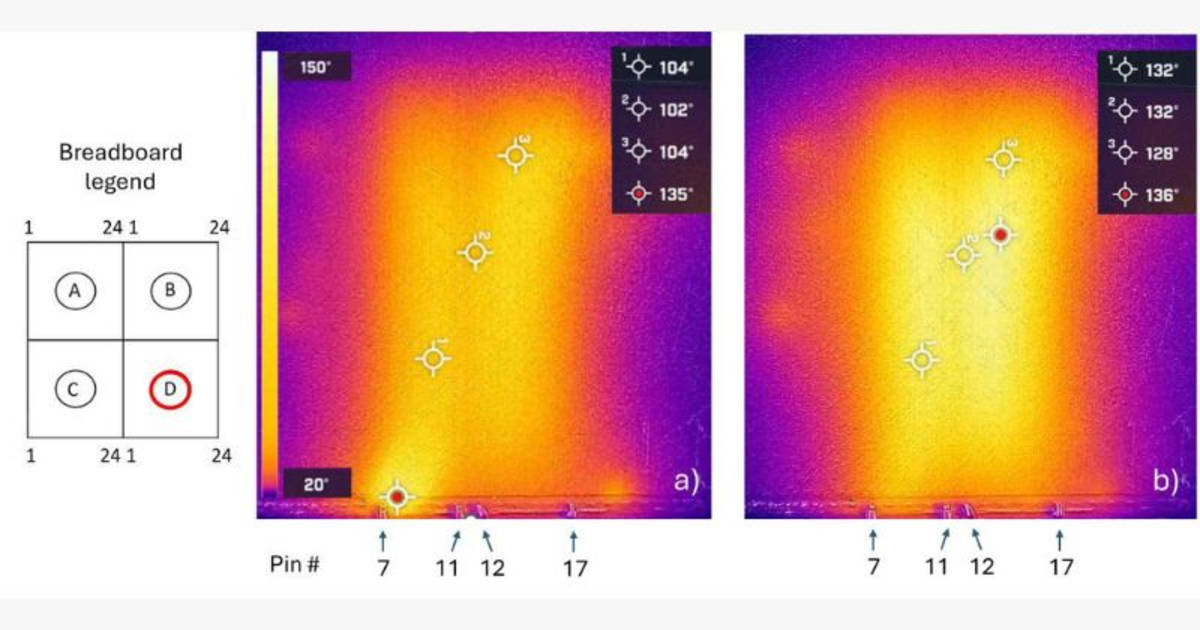
Infrared images of Cassandra repair process on a test sample through heating. (Image Source: ESA / CompPair)
Infrared images of the Cassandra repair process on a test sample through heating. (Image Source: ESA / CompPair)

This is where the CompPair-developed 'HealTech'—a composite material with the ability to "self-heal"—comes in. When the material is exposed to heat, a healing agent inside it activates and flows into the damaged area to repair it. A prototype of the structure, which has a network of fiber-optic sensors integrated into HealTech's fibers, has already been produced. The fiber-optic sensors look out for signs of strain or damage to the material. If it detects a problem, the repair process is quickly initiated, and HealTech’s healing agent flows into affected areas. To fix a crack or stress point, the integrated heating elements use 3D-printed aluminum grids for heating the composite material to 100–140°C.
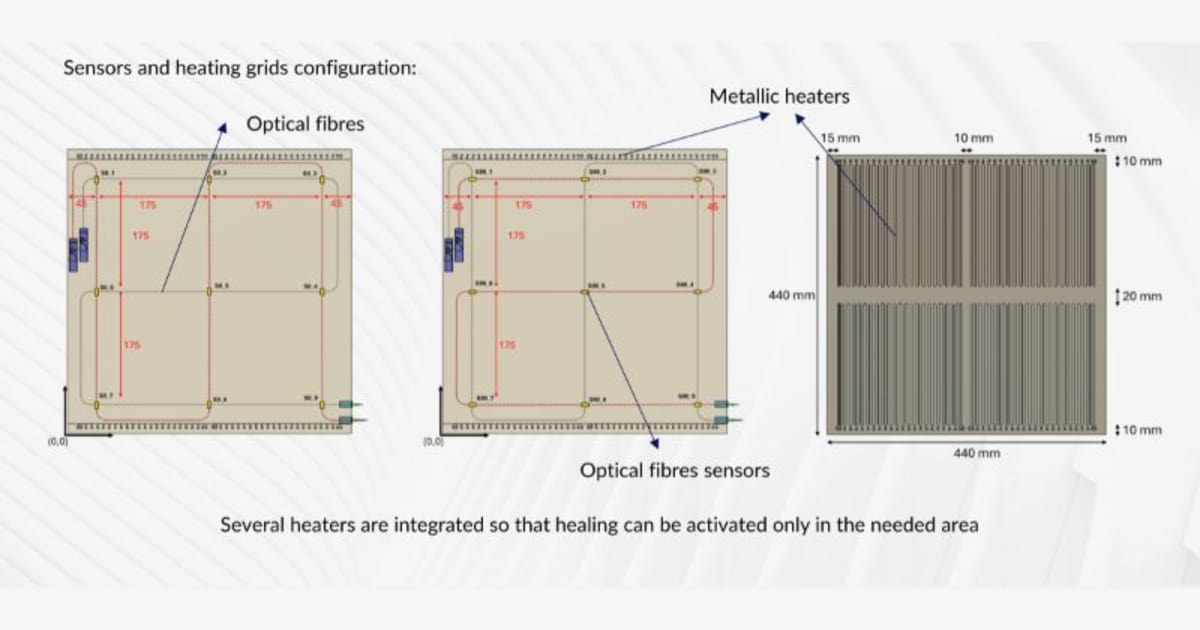
Diagram showing the design of Cassandra demonstrator, from left, the optical fibres connecting the sensors and right, the heating elements. (Image Source: ESA / CompPair)

But just how well would Project Cassandra fare in the unforgiving conditions of outer space? To address this, the team of engineers produced samples of the material ranging from 2 x 10 cm to 40 x 40 cm panels. The system’s damage detection, heating performance, and self-repair were all tested rigorously. Thermal shock tests were also done to see how the material behaved in extreme temperature conditions, like in a cryogenic tank. The next stage is testing the material on an even larger scale, like in a complete cryo tank.
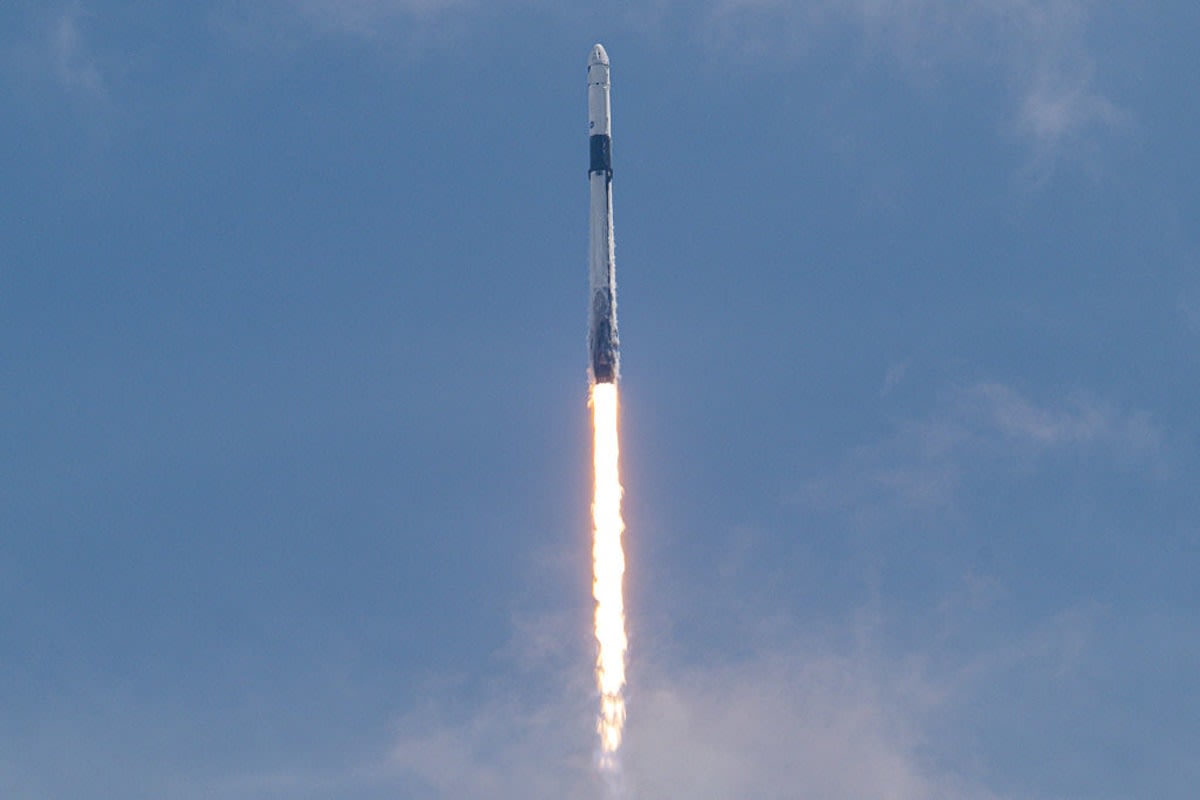
A SpaceX Falcon 9 rocket carrying the Dragon spacecraft is launched on NASA's SpaceX Crew-11 mission from Kennedy Space Center Launch Complex 39A on August 1, 2025, in Cape Canaveral, Florida. (Photo by Miguel J. Rodriguez Carrillo/Getty Images)
A reusable SpaceX Falcon 9 rocket carrying the Dragon spacecraft is launched on NASA's SpaceX Crew-11 mission from Kennedy Space Center Launch Complex 39A on August 1, 2025, in Cape Canaveral, Florida. (Image Source: Miguel J. Rodriguez Carrillo/Getty Images)

This technology may prove to be extremely useful for reusable launchers like the ones SpaceX uses to maintain its superlative launch cadence. Moreover, it may also help battle the ever-growing problem of space waste. "Implementing this technology into our systems could have enormous benefits for space transportation," claims ESA's Bernard Decotignie. "It will help develop reusable space infrastructure and reduce mission costs.” Project Cassandra is part of ESA’s Future Innovation Research in Space Transportation (FIRST!) initiative.

More on Starlust

Russia reveals plan to build a new space station using recycled modules from the ISS

NASA and Vast sign an order to give the company the sixth private astronaut mission to the ISS
MORE STORIES

The imaging was done using an instrument that also found changing composition of the comet.
1 hour ago
The rover ventured farther west than it had ever been since landing at the Jezero Crater in 2021.
2 days ago
When used in future space missions, it could process huge amounts of data directly in space instead of taking most of the help from Earth.
4 days ago
Called Solar Neutrino Astro-Particle PhYsics CubeSat (SNAPPY), the project launched on May 3, 2026, atop a SpaceX Falcon 9 rocket.
May 8, 2026
The STORIE instrument will be installed on the exterior of the International Space Station, from where it will measure the speed and direction of energetic neutral atoms in the ring current.
May 8, 2026
The new technology, called LESTR, mimics cold temperatures without the use of cryogenic liquids.
May 7, 2026
Part of ESA’s Copernicus program, the constellation allows all-weather, day-night monitoring.
May 5, 2026
New study shows abrasive lunar regolith can boost composites, cutting cost for future Moon missions
Apr 28, 2026
The modified Nikon Z9 was put through space-like conditions to test if it could hold its own in a radiation-heavy environment.
Apr 27, 2026
"This Earth Day, we are reminded that solid evidence is the foundation of effective action to protect our planet." 
Apr 23, 2026