NASA's Jonny Kim and crew land aboard Soyuz MS-27 after spending eight months in space
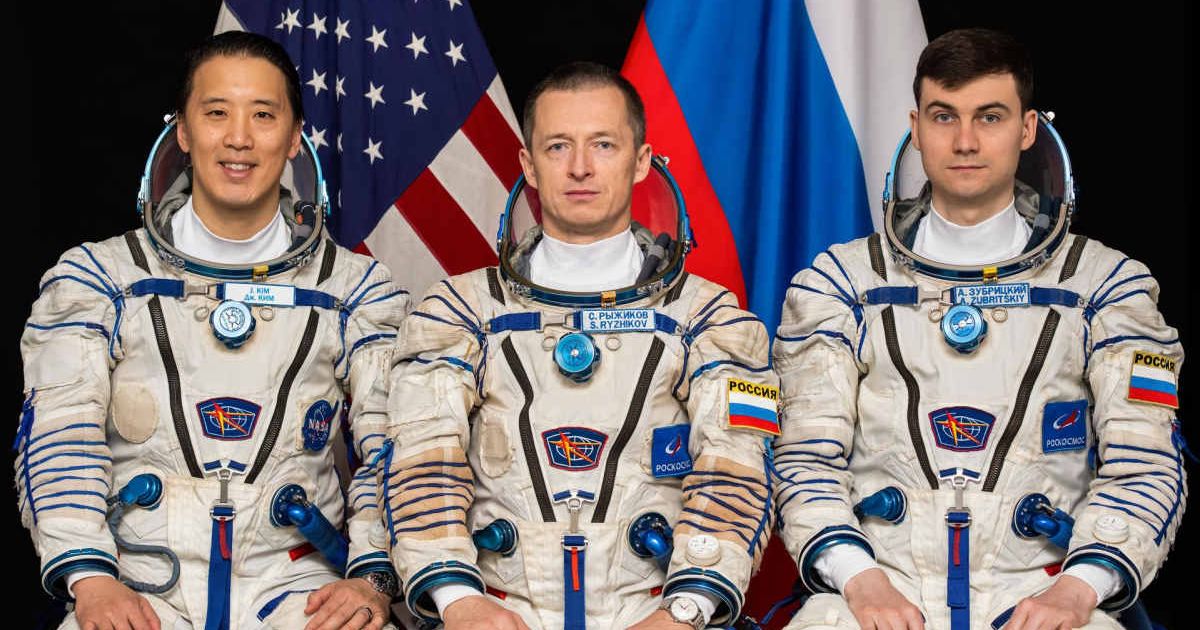
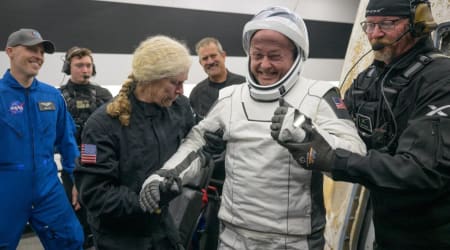
NASA astronaut Jonny Kim landed safely on the steppe of Kazakhstan just past midnight on Tuesday, after an eight-month-long mission aboard the International Space Station, according to NASA. Kim, who was accompanied by Roscosmos cosmonauts Sergey Ryzhikov and Alexey Zubritsky, left the space station at 8:41 p.m. EST on Monday, December 8. The trio successfully landed on Earth at 12:03 a.m. Tuesday, December 9, in an area southeast of the city of Dzhezkazgan.
LIVE: After departing from the @Space_Station at 8:41pm ET on Dec. 8 (0141 UTC Dec. 9), @JonnyKimUSA is returning to Earth aboard the Soyuz MS-27 spacecraft. Landing is targeted for 12:04am ET on Dec. 9 (0504 UTC). https://t.co/XxnahIBtXl
— NASA (@NASA) December 9, 2025
The returning crew spent 245 days in orbit. According to NASA, during their time aboard, they completed 3,920 orbits of the Earth, logging a distance of about 104 million miles. This was the first spaceflight for astronaut Kim and the first trip to the space station for cosmonaut Zubritsky. For cosmonaut veteran Ryzhikov, this marked his third successful return trip from the station. With that additional time, cosmonaut Ryzhikov has accumulated 603 total days in space spanning three missions, making him the 13th most experienced space traveler in history.
On Dec. 8, NASA astronaut @JonnyKimUSA will depart the @Space_Station, heading home to conclude his eight-month mission in low Earth orbit. Learn when and where you can watch his return to Earth: https://t.co/nEwX4DaSg1 pic.twitter.com/Zht3WuSDEJ
— NASA (@NASA) December 4, 2025
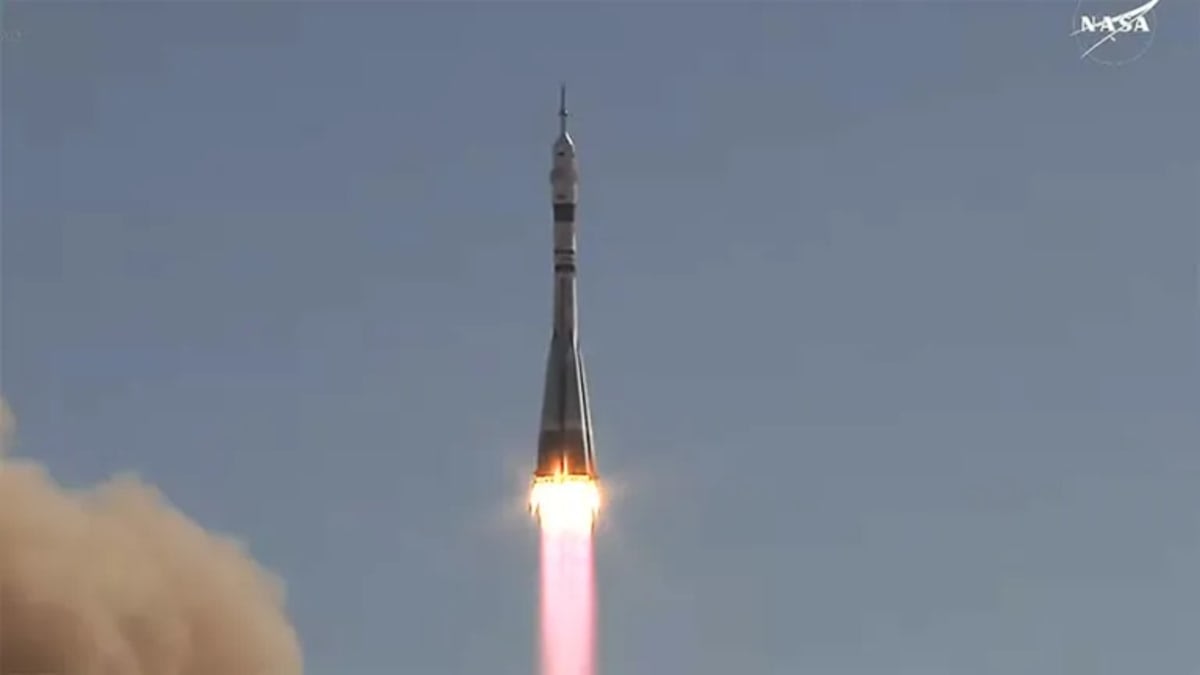
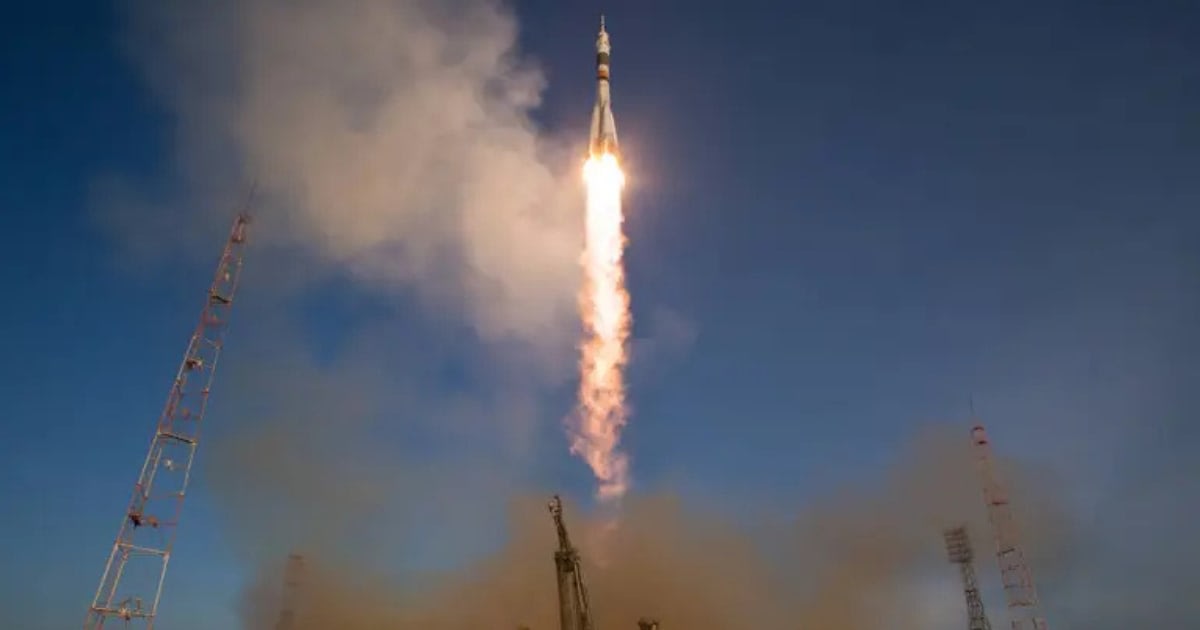
The long-duration mission of the crew began when their crewed Soyuz MS-27 spacecraft launched successfully on April 8 at 1:47 a.m. EDT, 10:47 a.m. local time from the Baikonur Cosmodrome, per NASA. After a short two-orbit trajectory, a total of just about three hours in space, the vehicle automatically docked to the Prichal module of the station at 4:57 a.m. EDT, thereby kicking off the eight-month stay.
After having landed back on Earth, the three will immediately be taken by helicopter to the recovery base in Karaganda, Kazakhstan. From there, the crew members will split up: NASA astronaut Kim will fly home in a NASA aircraft to return directly to his home base in Houston, Texas, while cosmonauts Ryzhikov and Zubritsky will return to their training center in Star City, Russia.
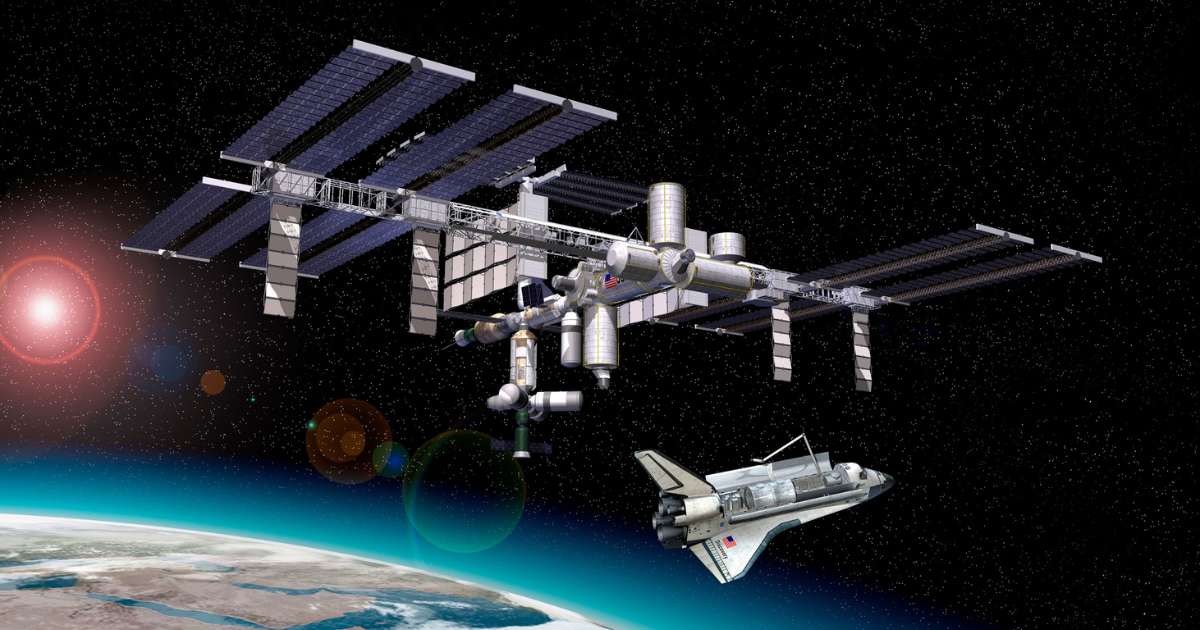
A new crew had already arrived at the International Space Station ahead of the departure of Kim and his cosmonaut companions. The Soyuz MS-28 spacecraft docked with the ISS's Rassvet module on November 27 at 7:34 a.m. EST, carrying NASA astronaut Chris Williams and Roscosmos cosmonauts Sergey Kud-Sverchkov and Sergei Mikaev. The journey began that morning when it launched at 4:27 a.m. from the Baikonur Cosmodrome in Kazakhstan, per NASA.
The three newcomers joined the existing Expedition 73 crew, which consisted of outgoing Kim, Ryzhikov, and Zubritsky, NASA astronauts Mike Fincke and Zena Cardman, JAXA astronaut Kimiya Yui, and Roscosmos cosmonaut Oleg Platonov. Williams, Kud-Sverchkov, and Mikaev are expected to spend about eight months on the station, returning in summer 2026.
The mission completed by Kim's crew contributes to the continuous legacy of the International Space Station, which has supported continuous human presence and work in space since November 2000. The ISS remains a true global endeavor, having hosted more than 280 individuals from 23 nations, serviced by a variety of international and commercial spacecraft. As a unique microgravity laboratory, the station has facilitated more than 4,000 scientific experiments conducted by over 5,000 researchers in more than 110 countries. The space station is actively driving the development of a commercial marketplace in low Earth orbit, particularly for research, technology advancement, and the transportation of both crew and cargo, per NASA.
More on Starlust
How to spot the International Space Station with the naked eye before it deorbits in 2030