NASA's Hubble revisits Crab Nebula to capture its expansion 25 years after first observation
![NASA’s Hubble Space Telescope captured the intricate detail of the Crab Nebula with its Wide Field Camera 3. [Cover Image Source: NASA, ESA, STScI, William Blair (JHU); Image Processing: Joseph DePasquale (STScI)]](https://d3hedi16gruj5j.cloudfront.net/796442/uploads/040f46a0-2746-11f1-b4cf-f5a760d6d8c6_1200_630.jpeg)
NASA’s Hubble Space Telescope made fresh observations of the Crab Nebula 25 years after it observed the supernova remnant for the first time. Revisiting the supernova remnant revealed that it’s still expanding and evolving over time, as detailed in a new study published in The Astrophysical Journal. Scientists compared the images from now and a quarter century ago to get a rare before-and-after view of the Crab Nebula.
![This newly processed image of the Crab nebula comes from data originally captured by NASA’s Hubble Space Telescope in 1999 and 2000. [Image Source: NASA, ESA, STScI, William Blair (JHU); Image Processing: Joseph DePasquale (STScI)]](https://de40cj7fpezr7.cloudfront.net/a55789af-6777-4c7f-8642-ad1ba51d6e2e.jpg)
Hubble’s long lifetime allowed the scientists to directly observe this expansion like never before. The space telescope’s capabilities have significantly improved, thanks to the installation of the Wide Field Camera 3, since the last time it laid its eyes on the nebula. “We tend to think of the sky as being unchanging, immutable,” said astronomer William Blair of Johns Hopkins University, who led the new study. “However, with the longevity of the Hubble Space Telescope, even an object like the Crab Nebula is revealed to be in motion, still expanding from the explosion nearly a millennium ago."
This new Hubble view revisits the same nebula, giving an unparalleled, detailed look at the aftermath of a supernova and how it has evolved over Hubble’s long life.
— Hubble (@NASAHubble) March 23, 2026
Find out how it's changed: https://t.co/QFgWs6J76z pic.twitter.com/Eq5b9DRWFK
The new image captured by Hubble observes the nebula’s intricate filamentary structure. These filaments are essentially strands of gas and dust shaped by the supernova explosion. They have visibly moved outward in the past 25 years and are expanding at nearly 3.4 million miles per hour. For comparison, Hubble’s 1999 image of the Crab Nebula was reprocessed. The differences in color between the old and the new image show a combination of changes in temperature, density, and chemical composition.
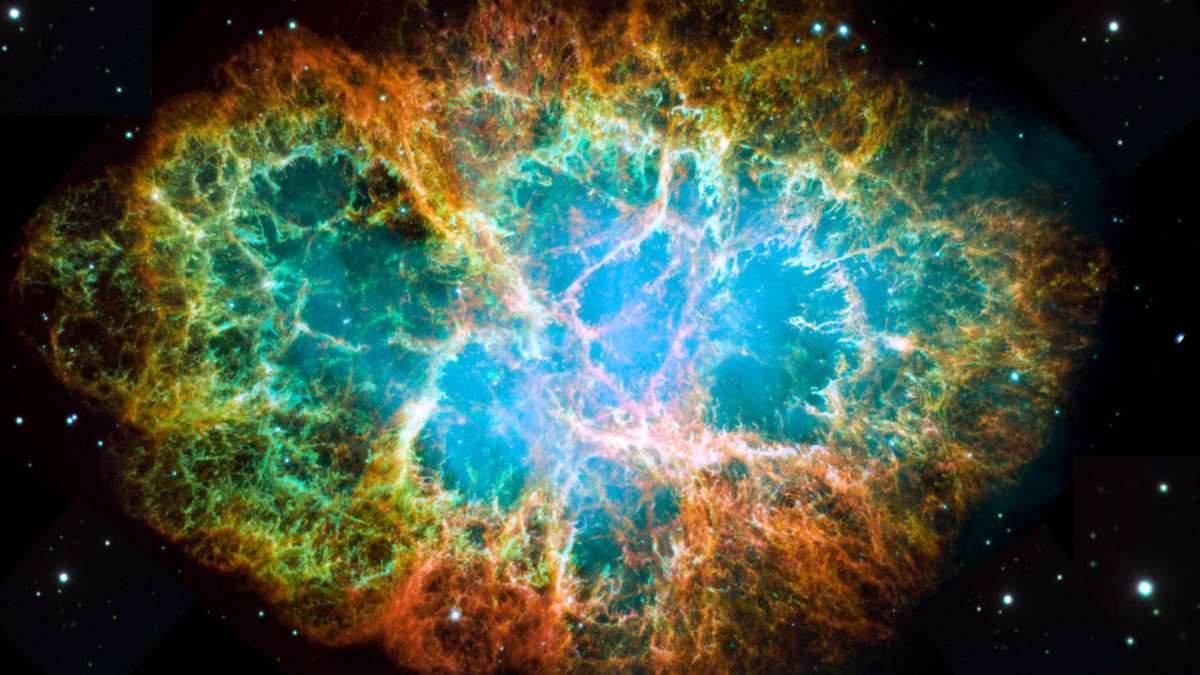
The space telescope observed that filaments at the edges had moved more than those near the center. And they aren't stretching the nebula either, just moving outward as a whole. The reason behind this is that the Crab Nebula is a pulsar wind nebula. While other supernova remnants expand due to shockwaves from the explosion, the Crab’s expansion is driven by the central pulsar’s energy (synchrotron radiation).
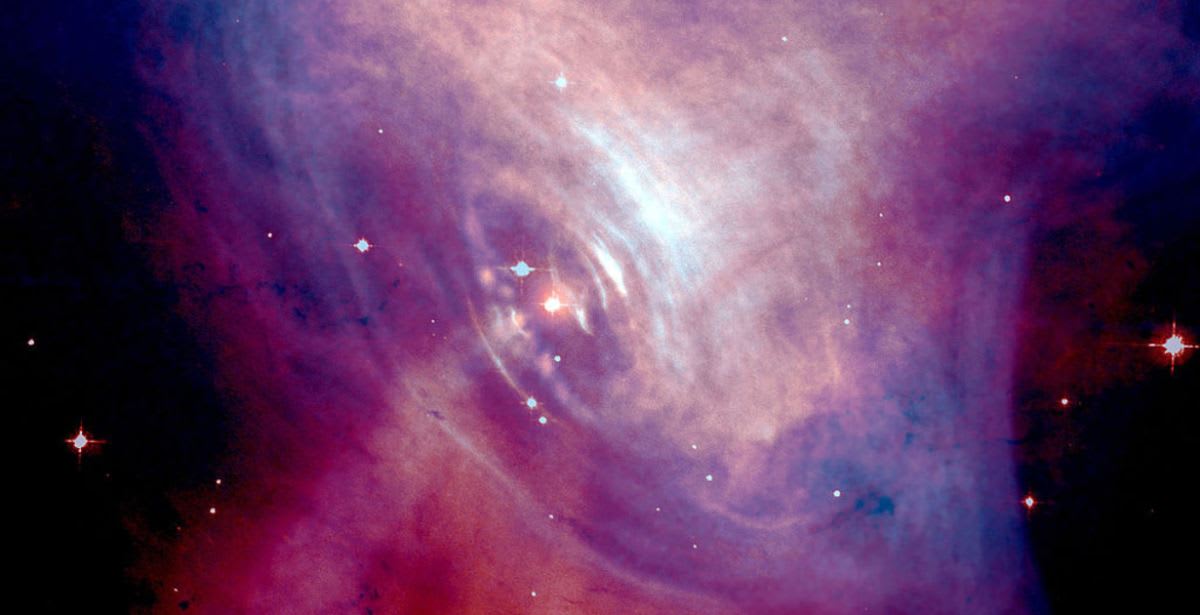
The improved detail in the new Hubble images is also helping reveal the Crab Nebula’s complex 3D structure. Shadows of some filaments can be seen cast onto the haze of synchrotron radiation, and these can help determine their depth and position. Some bright filaments showed no shadows, meaning they are on the far side of the nebula. More data from other telescopes, like NASA’s James Webb Space Telescope, can be combined with Hubble’s observations for even more insights into the Crab Nebula.

While the Hubble Space Telescope itself has been an icon in astronomy since 1990, the Crab Nebula’s 1,000-year legacy surpasses it without a doubt. Located in the constellation Taurus, about 6,500 light-years away from Earth, the supernova remnant was first spotted in the sky in 1054. Back then, it was recorded as a bright new star, being visible even during the daytime for weeks. Interestingly, the nebula’s Hubble connection began in the 1950s, as Edwin Hubble was among several astronomers who connected the dots between old Chinese astronomical records of a supernova and the position of the Crab Nebula.
More on Starlust
Hear the sound of a dying star with the sonification of Crab Nebula's Pulsar heart
Hubble Telescope accidentally captures comet C/2025 K1 (ATLAS) breaking up after perihelion