NASA's DART created history by altering orbit of asteroid Didymos around the Sun
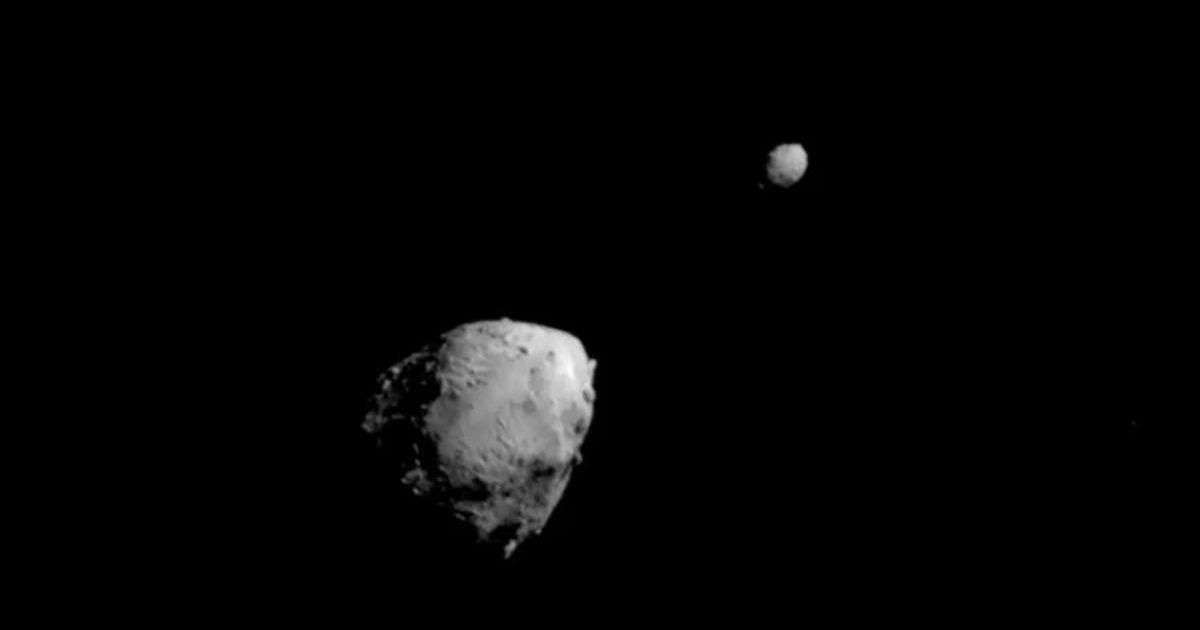
New research reveals that NASA's DART mission has altered the orbit of the asteroid Dimorphos and its larger comrade, Didymos, around the Sun through the spacecraft's planned crash into the former in September 2022. This marks the first time a human-made object has substantially modified a celestial body’s path around the Sun.
The DART mission, the Double Asteroid Redirection Test by NASA, was launched on November 24, 2021, and was the first-ever mission dedicated to investigating and demonstrating the kinetic impact method of asteroid deflection, which changes an asteroid’s motion in space. Launched aboard a SpaceX Falcon 9 rocket, its planned targets were asteroid Didymos and its moonlet Dimorphos. The two are linked together by gravity and orbit each other around a common center of mass—an arrangement referred to as a binary system—where changes to one body affect the other as well.
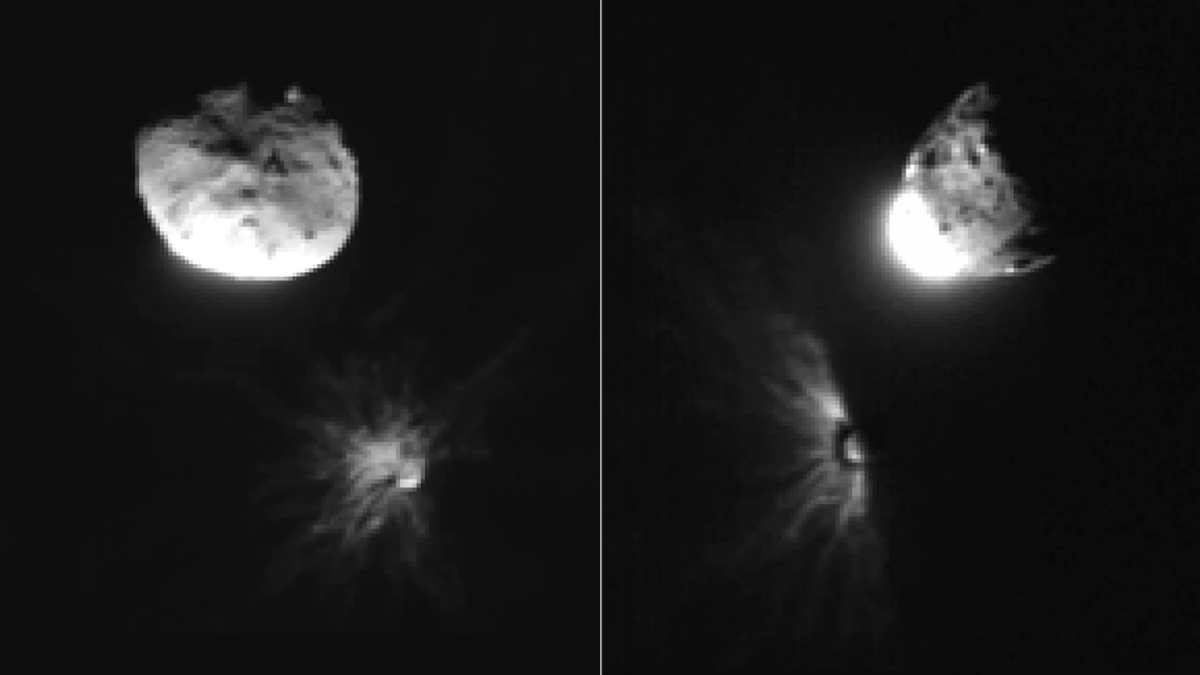
DART spacecraft's impact on Dimorphos deflected the combo’s 770-day orbital period around the Sun by a fraction of a second, as revealed through the observations detailed in a study published in the journal Science Advances. This study’s results highlight the efficacy of kinetic impact for protecting Earth against future asteroid hazards. “This is a tiny change to the orbit, but given enough time, even a tiny change can grow to a significant deflection,” said Thomas Statler, lead scientist for solar system small bodies at NASA Headquarters in Washington, in a statement. “The team’s amazingly precise measurement again validates kinetic impact as a technique for defending Earth against asteroid hazards and shows how a binary asteroid might be deflected by impacting just one member of the pair.”
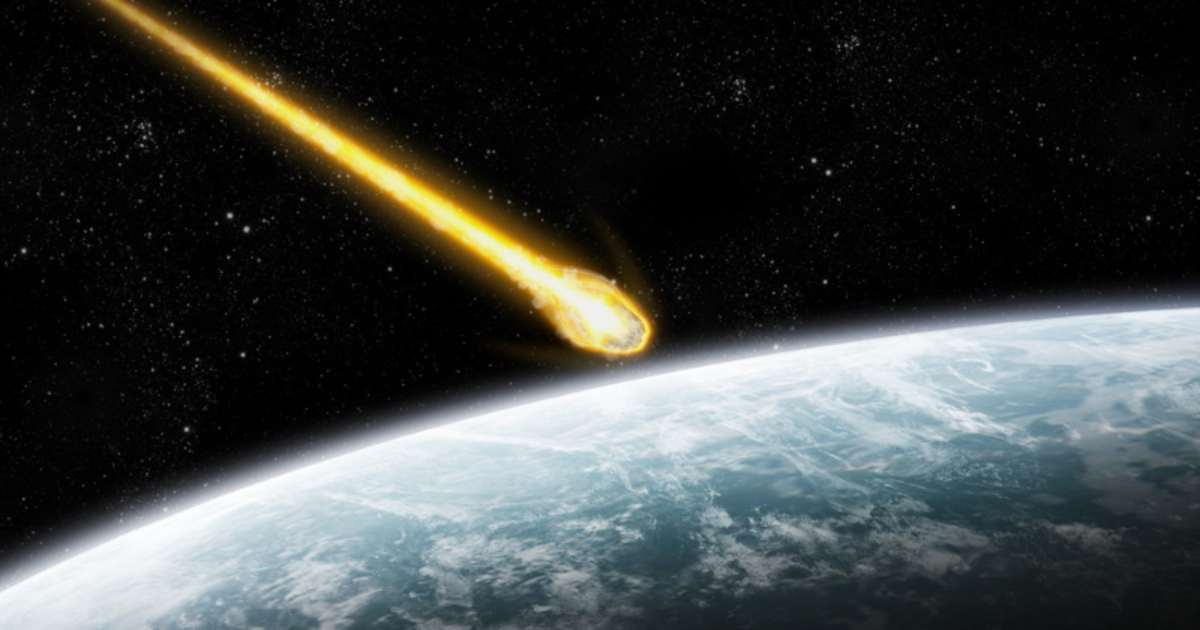
When DART struck
The collision with DART altered the 560-foot-wide Dimorphos' shape from a roughly symmetrical “oblate spheroid” shape to a "triaxial ellipsoid," as stated by Shantanu Naidu, a navigation engineer at NASA’s Jet Propulsion Laboratory in Southern California. Additionally, the debris that was dislodged due to the impact gave the asteroid an explosive thrust, which scientists call the momentum impact factor. This momentum of the debris effectively doubled the impact’s force by a factor of two, which altered the binary’s orbital period around the Sun by 0.15 seconds, according to the new research, in addition to reducing Dimorphos' 12-hour orbital period around the 805-meter-wide Didymos by about 33 minutes, as revealed in a previous study.
![The Hubble Space Telescope observed two tails of dust ejected from the Didymos-Dimorphos asteroid system several days after NASA’s DART spacecraft impacted the smaller asteroid. [Image Source: NASA, ESA, Jian-Yang Li (PSI), Joe Depasquale (STScI)]](https://de40cj7fpezr7.cloudfront.net/f3ac273a-b2c3-4ec5-ba51-e8ad98b1747d.jpg)
“The change in the binary system’s orbital speed was about 11.7 microns per second, or 1.7 inches per hour,” said Rahil Makadia, the study’s lead author at the University of Illinois Urbana-Champaign. “Over time, such a small change in an asteroid’s motion can make the difference between a hazardous object hitting or missing our planet.”
Detecting the changes by DART
Researchers tracked stellar occultations to measure the impact of the DART spacecraft on the two asteroids. Stellar occultations occur when an asteroid passes exactly in front of a star and temporarily blocks its light for a fraction of a second, like an eclipse. Measuring these occultations is quite challenging for astronomers, as they have to track the event from a variety of different locations that are often miles apart. “When combined with years of existing ground-based observations, these stellar occultation observations became key in helping us calculate how DART had changed Didymos’ orbit,” said study co-lead Steve Chesley, a senior research scientist at JPL. “This work is highly weather-dependent and often requires travel to remote regions with no guarantee of success. This result would not have been possible without the dedication of dozens of volunteer occultation observers around the world."
Volunteer astronomers around the globe recorded 22 stellar occultations between October 2022 and March 2025 to get an accurate measurement of the asteroid deflection. The researchers also studied the changes in Didymos’ motion to calculate the accurate densities of both asteroids. They found that Dimorphos is a little less dense than its bigger companion, thereby reinforcing the theory that it was born of the latter's debris.
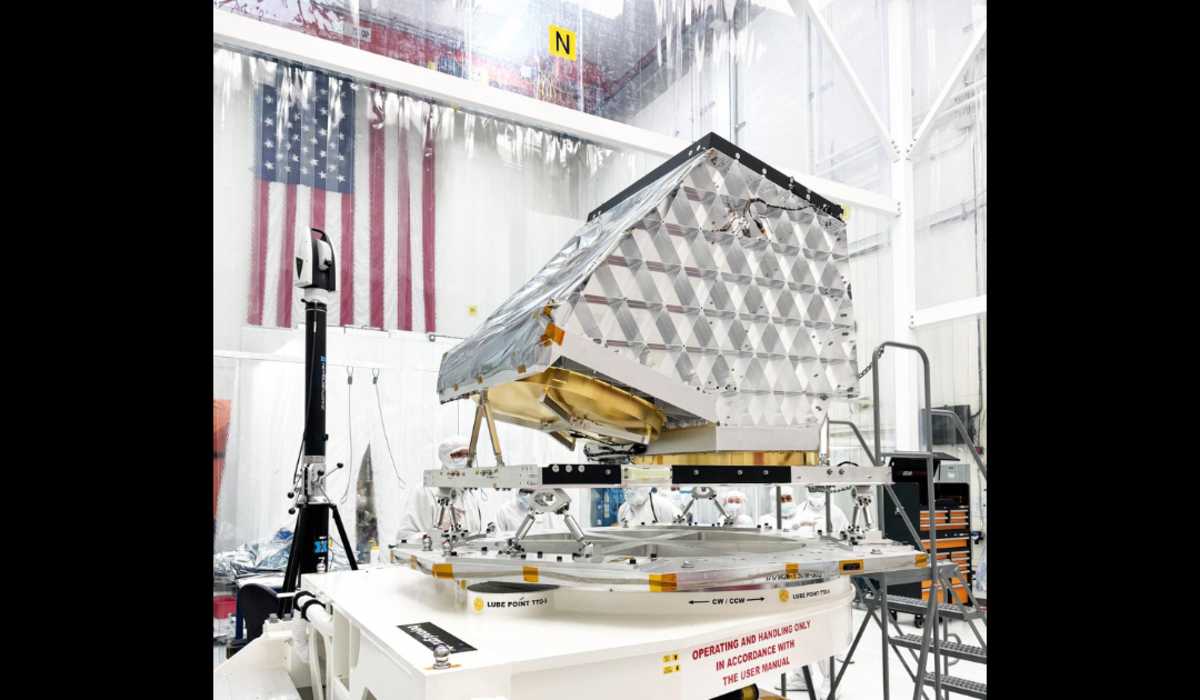
Even though Didymos was not on an impact trajectory with Earth, the DART mission marked an important milestone for kinetic-impactor-aided defense mechanisms against possible not-so-harmless asteroids in the future. In fact, NASA is building the Near-Earth Object (NEO) Surveyor mission, which is a first-of-its-kind, next-gen space survey purely for planetary defense. This will spot hard-to-find near-Earth objects like comets and asteroids that do not reflect any visible light and detect potential hazards of impact in advance, so a kinetic impactor can be sent.