January's Supermoon is going to be special, thanks to a rare triple brightness boost
This event serves as the grand finale to a four-month Supermoon cycle that has been lighting up the skies since last October.
PUBLISHED JAN 2, 2026
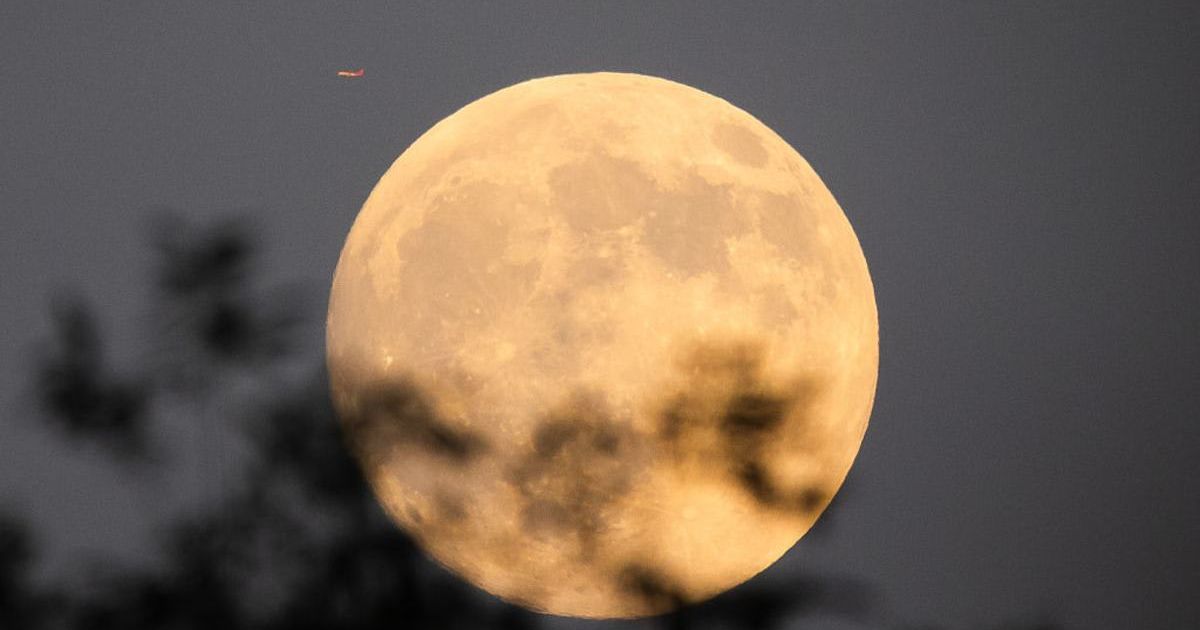
An airplane flies near the full moon as tree branches are seen in the foreground during the Mid-Autumn Festival on October 6, 2025, in Qianjiang, Hubei Province, China (Representative Cover Image Source: Getty | Cheng Xin)

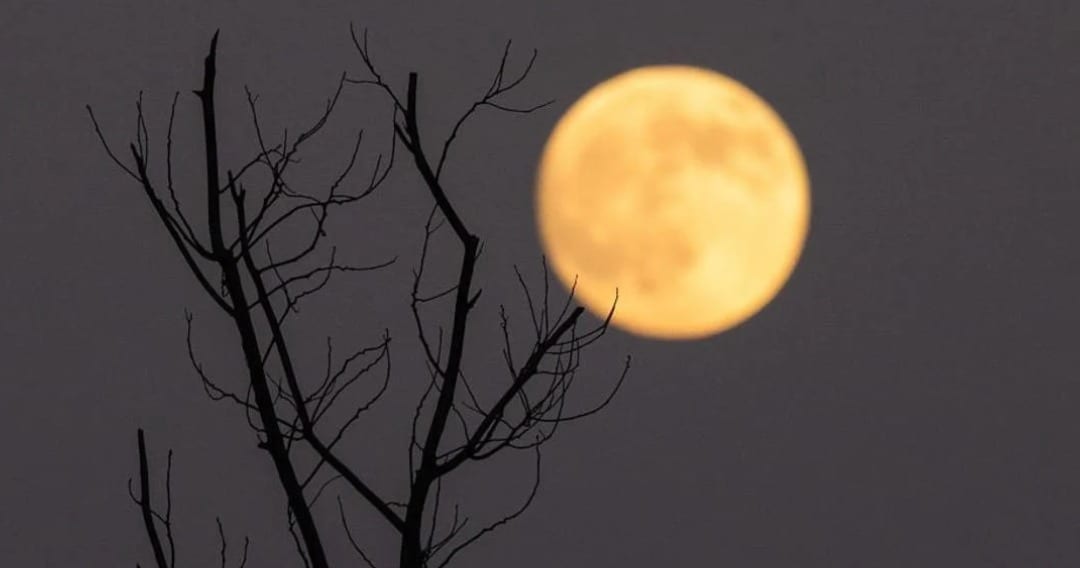
Early morning sky watchers will have a delightful view this Saturday, January 3, as the "Wolf Moon," the first Full Moon of 2026, will shine bright in the sky. What's more? It's not just a simple Full Moon; it is a Supermoon that will see a rare mix of factors leading to one of the brightest appearances that the Moon is capable of.
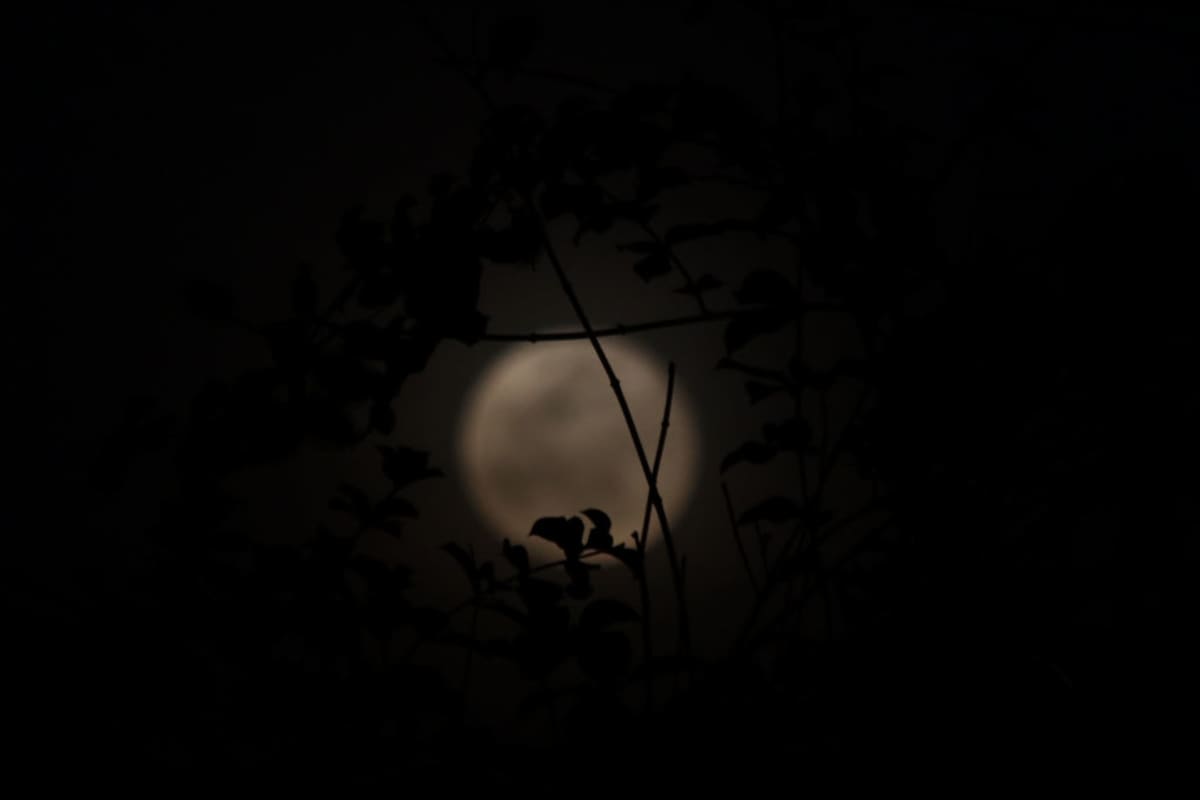
A view of the first full moon of the year, also known as the wolf moon due to its happening on January, as seen from the city on January 13, 2025 in San Salvador, El Salvador. (Photo by APHOTOGRAFIA/Getty Images)
A view of the first full moon of the year, also known as the Wolf Moon, as seen from the city on January 13, 2025, in San Salvador, El Salvador. (Photo by APHOTOGRAFIA/Getty Images)

The Supermoon—the last one of the Supermoon cycle that began last October—will rise at 5:03 a.m. EST. It will have an exceptional glow thanks to three factors lining up perfectly. First of all, the perigee (the point at which the Moon is the closest to Earth) of the Supermoon will be approximately 362,312 kilometers (225,130 miles). This proximity to our planet will render the Moon's disk 14% bigger and 30% brighter compared to when it is farthest from the Earth. Besides that, according to Science Alert, the Earth will be just hours from perihelion—its closest point to the Sun, which is about 3.4 percent closer than its farthest point.
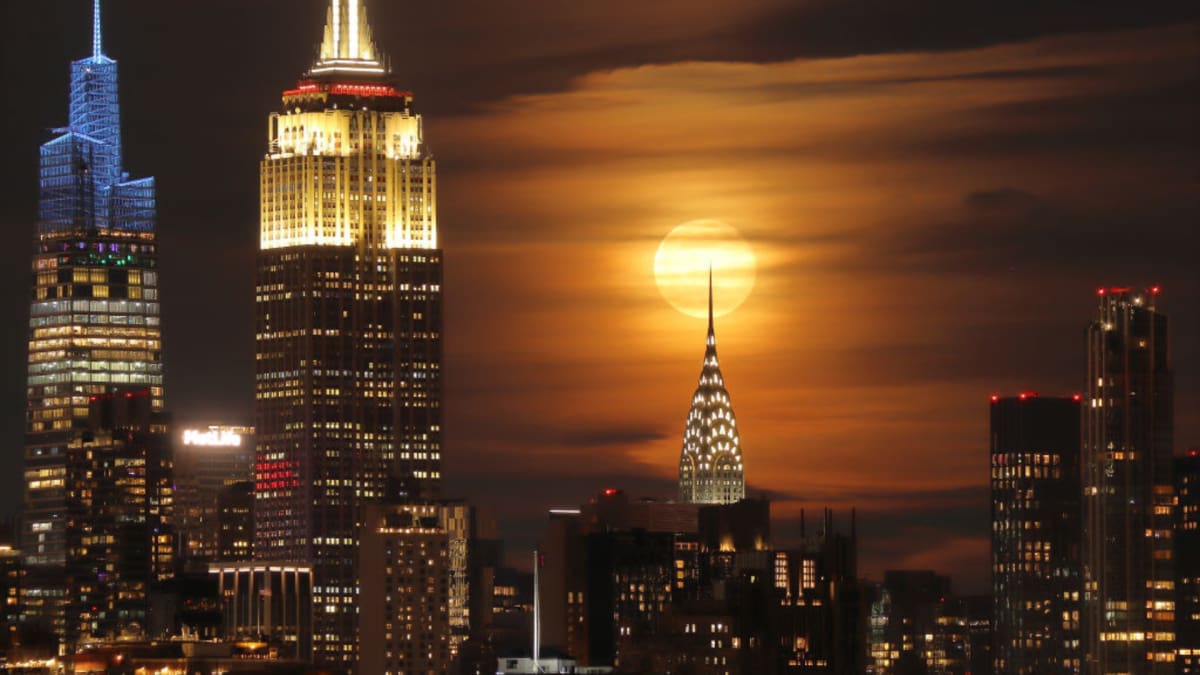
The Wolf Moon rises behind the Chrysler Building, the Empire State Building and One Vanderbilt in New York City on January 7, 2023, as seen from Jersey City, New Jersey. (Representative Image Source: Getty Images | Photo by Gary Hershorn)
The Wolf Moon rises behind the Chrysler Building, the Empire State Building, and One Vanderbilt in New York City on January 7, 2023, as seen from Jersey City, New Jersey. (Representative Image Source: Getty Images | Photo by Gary Hershorn)

This situation implies that Earth and the Moon will receive more solar energy, with the Full Moon appearing about 6.5 percent brighter than when the Earth is at aphelion—its farthest point from the Sun. Last but not least, the January polar air has almost no moisture for the northern hemisphere observers. The low humidity contributes to a much clearer sky, thereby letting the Moon's rays come through with higher brightness than during summer nights. 
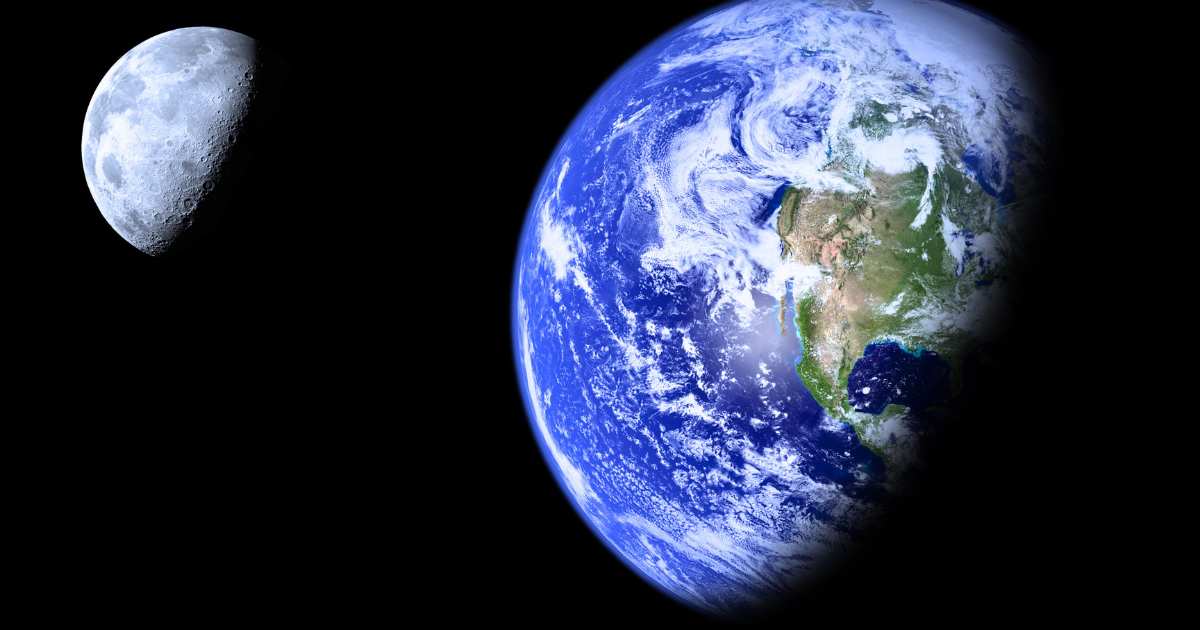
An outer space view of planet Earth, with a half view of the moon in the background. (Representative Cover Image Source: Getty | photovideostock)
An outer space view of planet Earth, with a half view of the moon in the background. (Representative Image Source: Getty | photovideostock)

The name "Wolf Moon" originates in the belief that wolves howl more during this time of the year on account of the nights being colder and food being scarcer. According to timeanddate, the name is generally thought to come from Celtic and Old English and was later in history introduced to North America by the Europeans. However, different cultures have different names for the Full Moon. For instance, some Native American tribes call the January Full Moon the "Center Moon," as they consider it to mark the middle of the winter season.
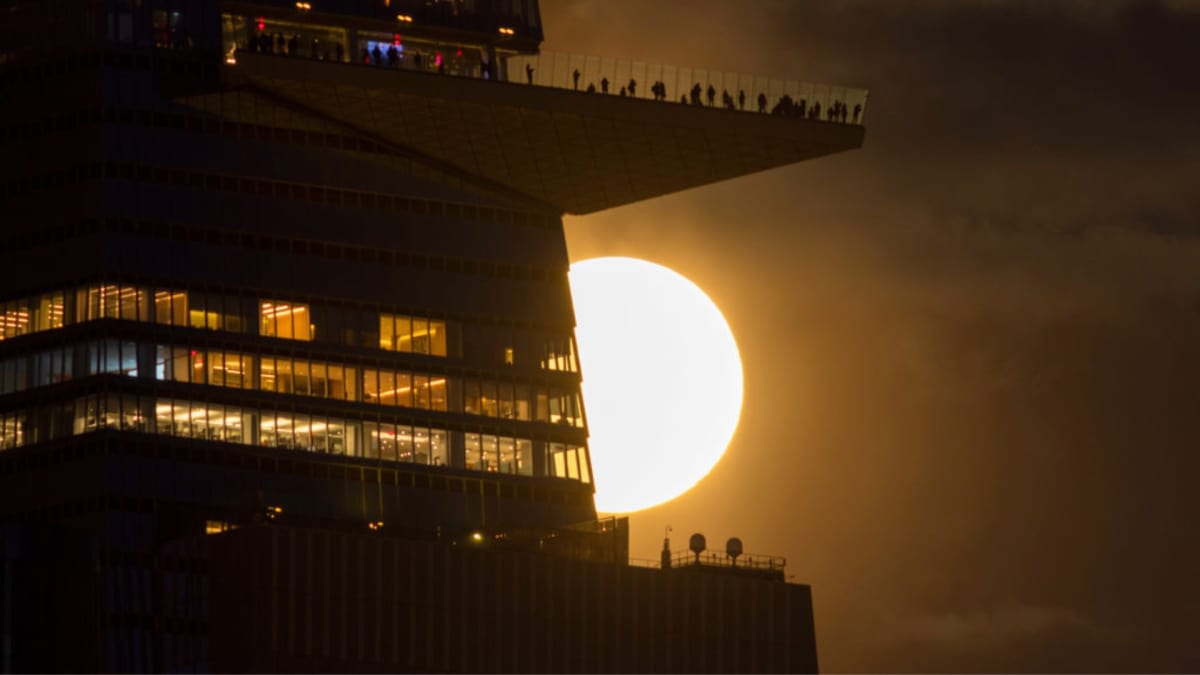
The full Wolf Moon rises behind people visiting the Edge NYC outdoor observation deck at Hudson Yards in New York City on January 13, 2025, as seen from Hoboken, New Jersey. (Representative Image Source: Getty Images | Photo by Gary Hershorn)

A Supermoon is the result of the moon's orbit not being a perfect circle but an oval. Hence, the Moon reaches its closest point to Earth approximately 13 times a year; however, we call it a "Supermoon" only when that closest approach perfectly coincides with the full moon phase. Every time the moon's path is altered by the sun's gravitational pull and other celestial forces, the distance of the Moon's closest approach is different. This Saturday’s event will be particularly important because it happens so close to Earth's own closest approach to the sun. 

You don’t need to have a telescope or any other expensive gear to enjoy the view. Simply locate a place where the sky is clearly visible, take a warm blanket along, and gaze at the sky. 

More on Starlust

2025 supermoons recap: 10 best images of the year's grand lunar events
Moon phases 2026: When is the next full moon?

MORE STORIES

The SLS rocket will be visible up to 70 seconds after launch depending on where observers are.
1 day ago
From the Pink Moon, bright Mercury, and a meteor shower to a comet streaking across the sky, April is filled with exciting sights for skywatchers.
1 day ago
After Ohio fireball sparks panic, NASA says meteor surge is normal.
2 days ago
Castor and Pollux, the Gemini twins, will be visible alongside Jupiter and will provide skywatchers with a celestial show.
7 days ago
Tonight on March 24, about 44% of the Moon's visible side will be illuminated by the Sun.
Mar 24, 2026
The ringed planet slips behind the Sun as it moves to the far side of the solar system.
Mar 24, 2026
In the event identified as 1828-2026 by the American Meteor Society, the meteor weighed 7 tons.
Mar 18, 2026
A Full Pink Moon will grace our eyes on April 1, appearing as large as a supermoon near the horizon.
Mar 18, 2026
The latter half of March has some really interesting skywatching events worth looking forward to.
Mar 16, 2026