International Space Station crew head count hits 10 as Soyuz MS-29 reaches orbital outpost
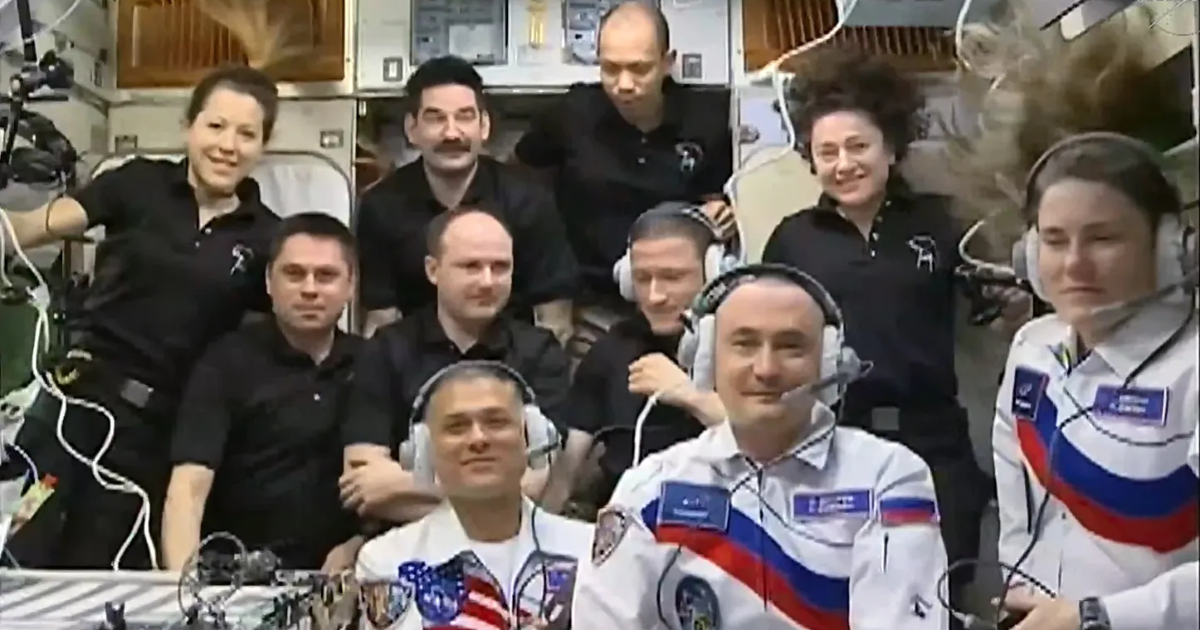
Expedition 74 crew members welcomed the three-person crew of Soyuz MS-29 aboard the International Space Station on Tuesday, July 14, following the opening of the hatch between the spacecraft and the ISS at 4:30 pm EDT. The trio of NASA's Anil Menon and Roscosmos cosmonauts Pyotr Dubrov and Anna Kikina will now conduct a variety of scientific investigations as well as station maintenance tasks during their approximately eight-month stay as part of Expeditions 74 and 75.
The hatches will open soon and three new crew members will enter the station and join the Expedition 74 crew live on @NASA+. https://t.co/49dKiNvUEc
— International Space Station (@Space_Station) July 14, 2026
The MS-29 spacecraft launched at 10:47 am EDT (7:47 pm local time) from the Baikonur Cosmodrome in Kazakhstan. After orbiting Earth two times and firing its thrusters for a series of automated mid-course corrections, the Soyuz docking mechanisms came together with those of the ISS at 1:52 pm EDT as it was flying over the Mediterranean. Mission controllers in Korolev, outside Moscow, and in Houston remained in communication with both crews as the Soyuz capsule closed in on the Prichal module. There was an Artemis III flavor in the proceedings as well, as the European Space Agency's Luca Parmitano took his place next to the flight director at the ISS Flight Control Room at the Johnson Space Center in Houston, while NASA's Marco Rubio was present at the launch site in Baikonur as a part of the family escort contingent.
.@NASA astronaut Anil Menon and Roscosmos cosmonauts Pyotr Dubrov and Anna Kikina lifted off atop the Soyuz MS-29 spacecraft at 10:47 a.m. EDT today for a 1:56 p.m. docking to the International Space Station. More... https://t.co/OgfE3jFh0Y pic.twitter.com/D0IWMdUbZP
— International Space Station (@Space_Station) July 14, 2026
During the communications before hatch opening, Kikina let mission controllers know that everything had gone well during the flight. She even reported that the MS-29 crew had some juice and fruit bars as they waited for leak checks to be completed before the hatch between the capsule and ISS could be opened. Menon also took time thanking the Russian teams for their work in helping him get to space for the first time. For Dubrov and Kikina, this was their second flight after their arrivals to the space station with Soyuz MS-18 and SpaceX Crew-5, respectively.
Three new crew members docked to the space station at 1:52 p.m. EDT today. They will enter the orbital outpost soon live on @NASA+ after leak checks. More... https://t.co/98ZXpIhAdD pic.twitter.com/ooXX1qtE1E
— International Space Station (@Space_Station) July 14, 2026
The Soyuz MS-29 crew were greeted by the rest of the Expedition 74 members in the Zvezda Service Module after they floated into the ISS. Initial greetings were followed by opening remarks after which the newly arrived crew had the task of drying out the suits they wore during the transit for future use and deactivating the systems aboard Soyuz. They were also scheduled for a midday meal and an extended sleep period set to continue through most of today.
Welcome aboard the International Space Station, @astro_anil.
— NASA Administrator Jared Isaacman (@NASAAdmin) July 14, 2026
Your mission is just getting started. Wishing you and your crewmates a successful expedition as you advance research and inspire millions back here on Earth. pic.twitter.com/Vp9ceT1Ea5
It was also revealed that this temporary rise in the ISS head count to ten will go back to being seven after twelve days, as the crew of Soyuz MS-28 will depart the station on July 26. Station commander Sergey Kud-Sverchkov, his fellow cosmonaut Sergei Mikaev, and NASA astronaut Chris Williams are scheduled for a return after an eight-month stay. The three spacefarers have been preparing for their journey home by organizing the items they will take back to Earth inside the Soyuz MS-28 spacecraft. NASA's astronaut Jessica Meir, who commanded SpaceX Crew-12 on their journey to the station, will become the next ISS commander on July 25, NASA revealed.
More on Starlust
NASA updates ISS schedule for 2026: Check new flight plan for the International Space Station
NASA announces SpaceX Crew-13 for International Space Station mission in September 2026