Comet C/2025 R2 (SWAN) can still be spotted from the Earth—viewing tips and its likely coordinates
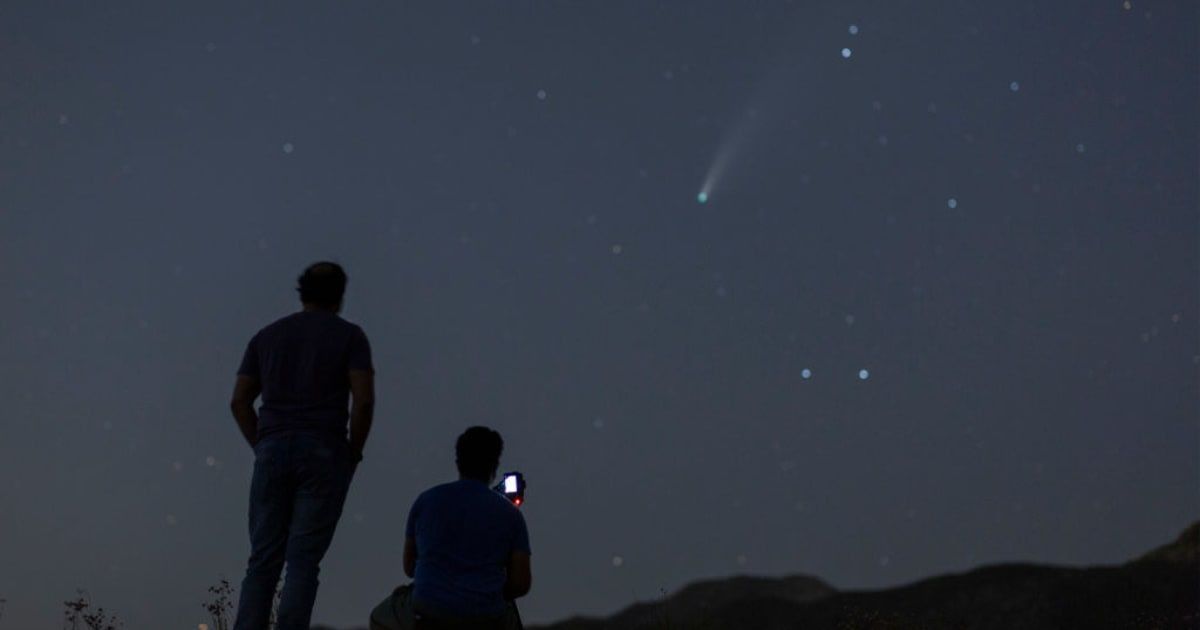
While Comet C/2025 R2 (SWAN) made its closest pass to Earth on October 20, 2025, at a distance of approximately 39.1 million kilometers (0.26 AU), it remains a visible, albeit challenging, target for sky-gazers this week, as per Sky Live.
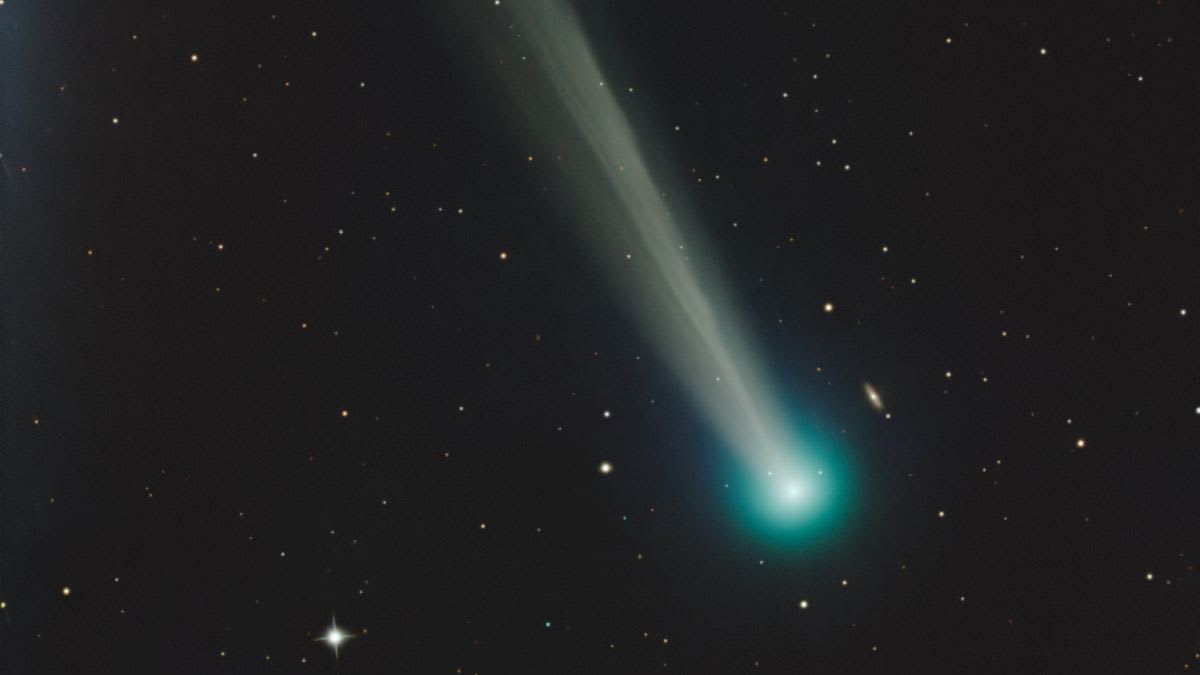
As of today, October 28, 2025, the celestial body is located in the constellation Aquarius and has traveled to a distance of over 29.2 million miles from our planet. Its light, which takes nearly two minutes and 37 seconds to reach us, currently registers at a magnitude of 6.6. Apparent coordinates place the comet at Right Ascension 21h 13m 08s and Declination -04° 32’ 33”.
Due to its decreasing brightness, the comet is not a naked-eye object and requires specialized equipment for observation. Given the current magnitude, observers should plan to use a pair of good 7 x 50 or 10 x 50 binoculars. A small telescope will provide the best view, though the comet will still appear as a subtle, faint glow. The visibility threshold for the unaided eye in even the darkest skies is typically magnitude 6.0, meaning the comet is already too faint to be seen without assistance.

To locate the comet, look toward the constellation Aquarius. Observers should check local astronomical charts for the best viewing window, which is generally during the late evening or early night hours. Crucially, any observer must seek out a location far removed from all sources of light pollution. Furthermore, allow your eyes 20 to 30 minutes to fully adjust to the darkness, a critical step for detecting such faint objects. For those tracking Comet C/2025 R2 (SWAN) on October 29, 2025, the celestial visitor is projected to have a magnitude of 9.89. Its coordinates for the night will be Right Ascension 21h 21m 49s and Declination -03° 55’ 02”, continuing its path through the night sky.
On October 30 the comet is expected to cross the threshold into magnitude 10, with a predicted brightness of 10.03. Astronomers should plot its location using the coordinates Right Ascension 21h 33m 37s and Declination -03° 03’ 18” to find the increasingly faint target. As the calendar turns to October 31, 2025, Comet SWAN’s predicted magnitude will drop slightly further to 10.18. For precise tracking, its position is forecast to be Right Ascension 21h 44m 35s and Declination -02° 14’ 52”, as mentioned on Sky Live.
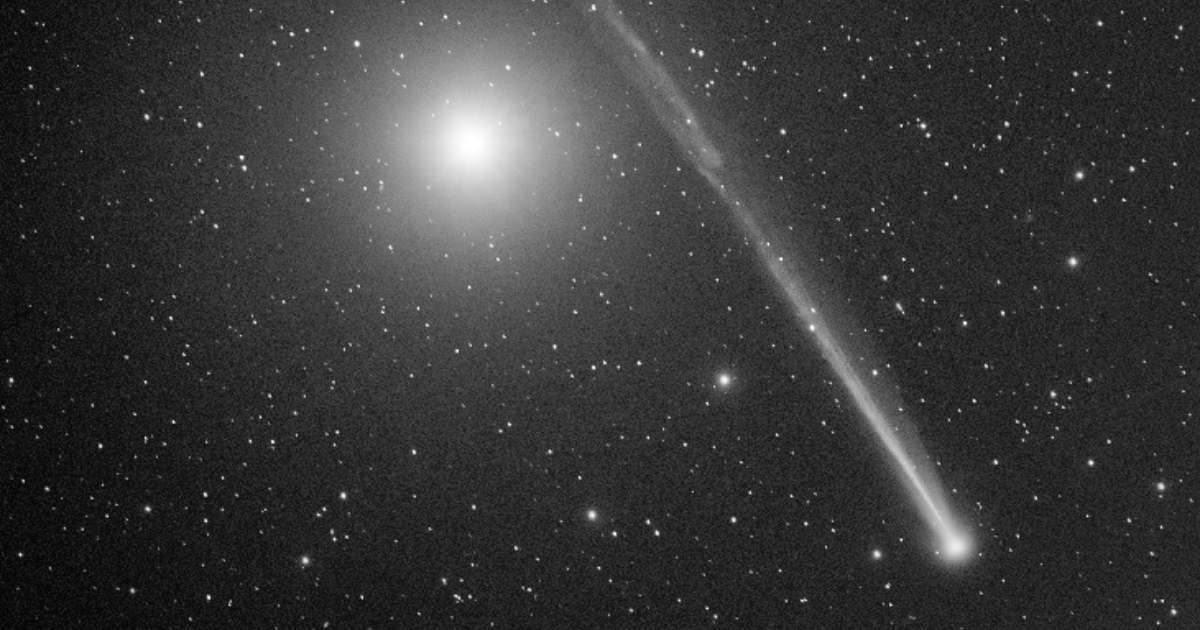
Moving into November 1, 2025, the comet’s observed brightness is anticipated to be approximately 10.32. Sky-gazers can look for the comet at Right Ascension 21h 54m 43s and Declination -01° 29’ 42”, highlighting the necessity of dark skies and powerful equipment. Finally, by November 2, 2025, the predicted magnitude for Comet C/2025 R2 (SWAN) will be around 10.46. Its expected coordinates for that date are Right Ascension 22h 04m 07s and Declination -00° 47’ 40”.
More on Starlust
Solar wind is causing 'major disturbance' to comet SWAN (C/2025 R2) gliding through space
Here's how to spot Comet SWAN (C/2025 R2) in the night sky from now until October 20