Bizarre spider-like feature spotted on Jupiter's Moon Europa may be similar to those on Earth
A team of researchers from multiple institutions, including the University of Central Florida, is studying “Damhán Alla”—a unique spider-like feature found in Manannán crater of Jupiter's moon Europa. First spotted by NASA's Galileo spacecraft, the feature may be similar to its counterparts here on Earth.
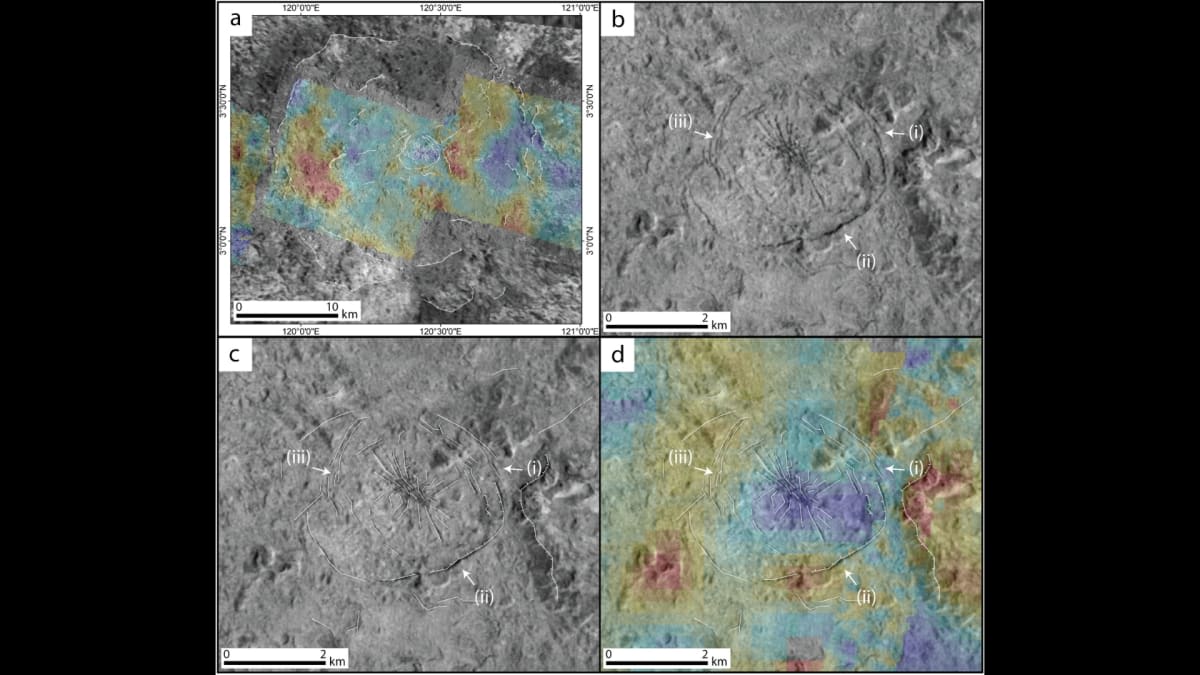
For their study, now published in the Planetary Science Journal, UCF Department of Physics Assistant Professor Lauren Mc Keown and her team carried out field observations, lab experiments, and modeling, comparing the feature on Europa with lake stars on Earth.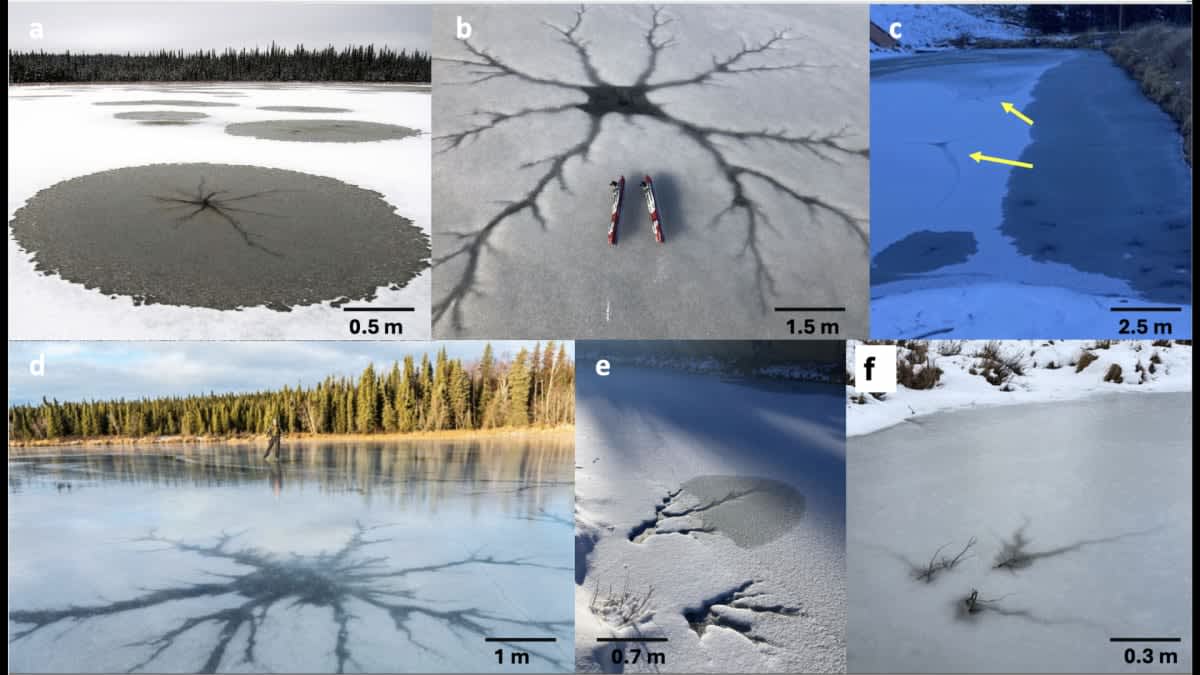
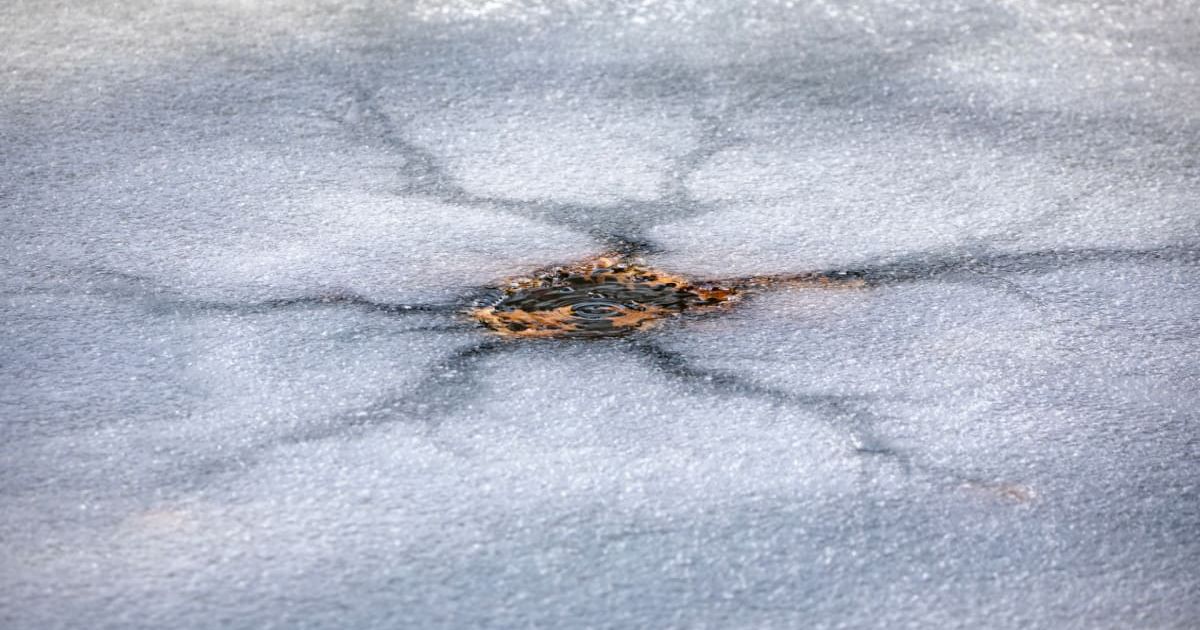
Lake stars on Earth form when warmer water rises through thin ice, spreading star shapes or as branches before freezing. The study in question suggests that the feature on Europa may have developed much like lake stars seen on Earth, triggered by brief spikes in temperature and pressure produced by the impact that formed Europa’s Manannán crater. In other words, a subsurface brine reservoir might have erupted, spreading through “porous surface ice,” creating the pattern. This was tested by observing lake stars in Breckenridge, Colorado, and conducting field and lab experiments. The team recreated the process in a cryogenic glovebox at NASA’s JPL by using liquid nitrogen to simulate Europa ice.

"We flowed water through these simulants under different temperatures and found that similar star-like patterns formed even under extremely cold temperatures (-100°C), supporting the idea that the same mechanism could occur on Europa after impact,” Mc Keown said, per the UCF. An expert on “Martian spiders,” Mc Keown explained how they are different, forming when escaping gas in a seasonal dry ice layer, erodes dust, and sand. Europa’s “asterisk-shaped” feature, on the other hand, may have formed from liquid brine that made its way to the surface via broken-up ice.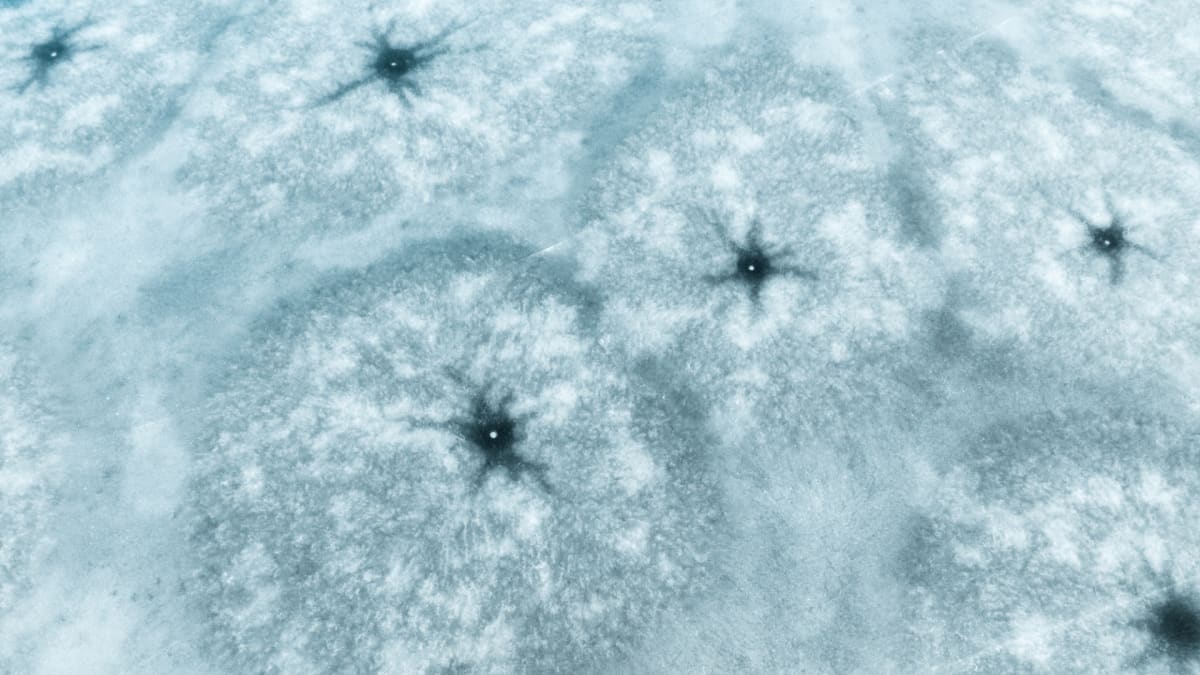
“Lake stars are radial, branching patterns that form when snow falls on frozen lakes, and the weight of the snow creates holes in the ice, allowing water to flow through the snow, melting it and spreading in a way that is energetically favorable,” she added about the process. Such Dendritic patterns are common in nature and can be created by lightning, or when tides flow through sand in beach rilles, and in many scenarios where liquid flows through porous surfaces.
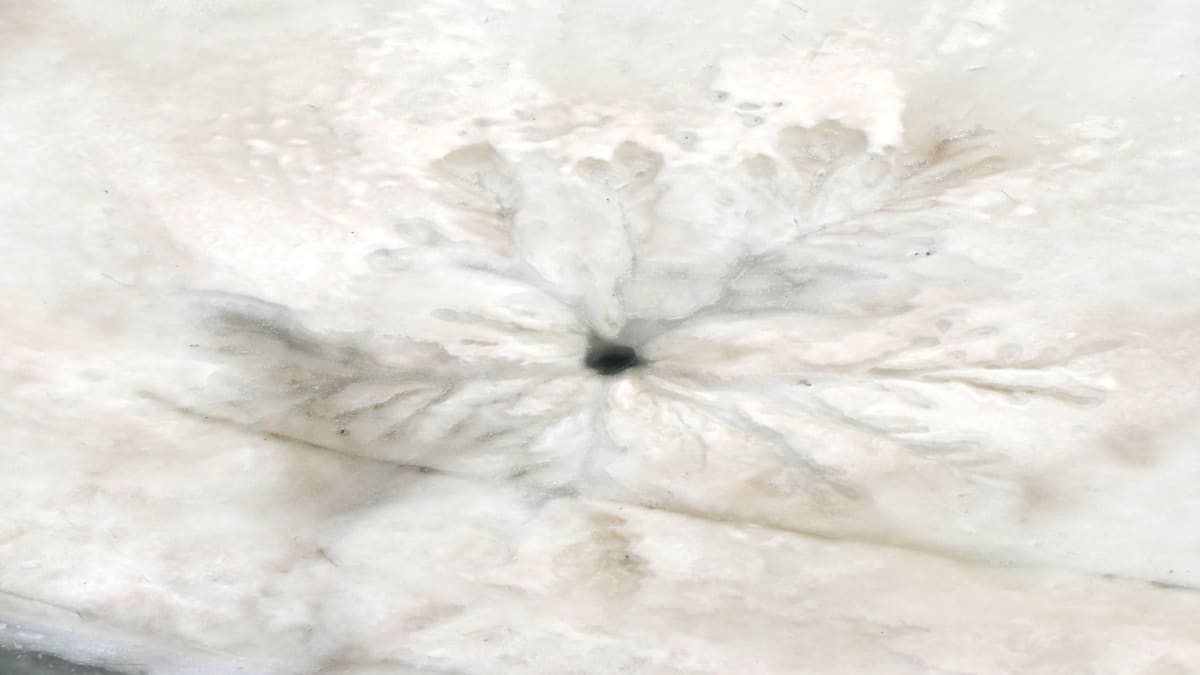
“The significance of our research is really exciting,” McKeown added. The team believes that similar surface features can reveal much about the processes beneath the ice. Finding more of them across Europa Clipper can indicate more local brine pools under the surface. These findings can be insightful as far as patterns on Europa are concerned. That being said, solely relying on the data from Earth to assess other planetary surfaces is far from ideal and should be avoided. “While lake stars have provided valuable insight, Earth’s conditions are very different from Europa’s,” Mc Keown warned. “Earth has a nitrogen-rich atmosphere, while Europa’s environment is extremely low in pressure and temperature." Going forward, she aims to look into how low pressure influences the formation of these features and if their formation is possible beneath an icy crust.
More on Starlust
James Webb Telescope uncovers Jupiter moon Europa's surprisingly dynamic and shifting ice shell