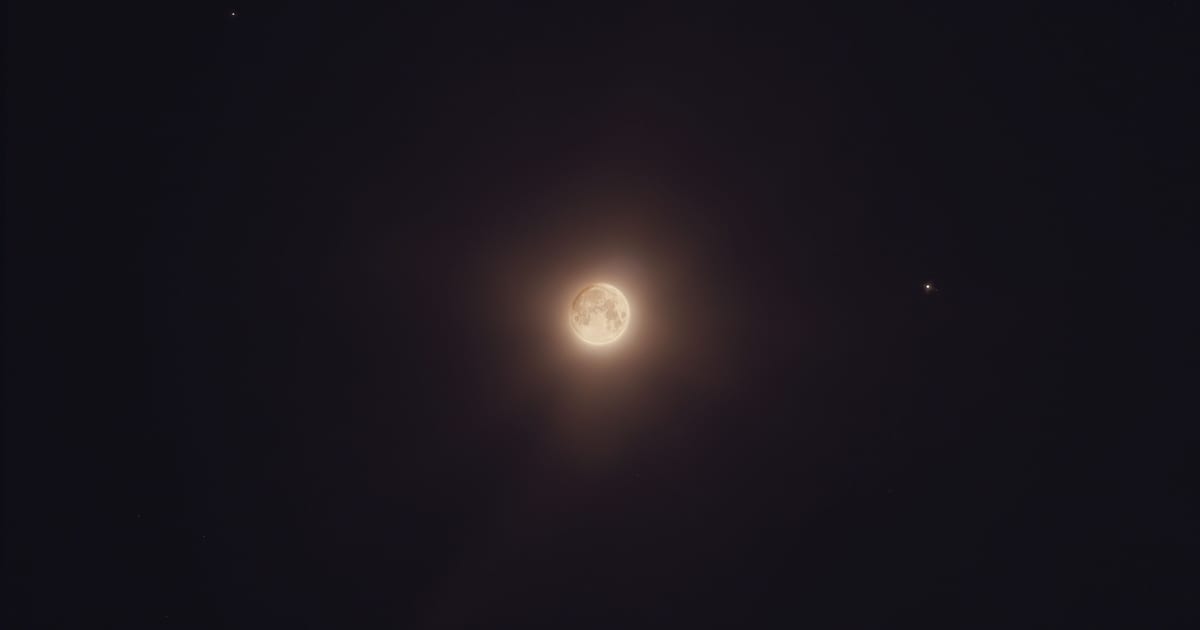
Beautiful crescent Moon shines bright next to Mars in the evening sky on August 25. Here's how to watch it.
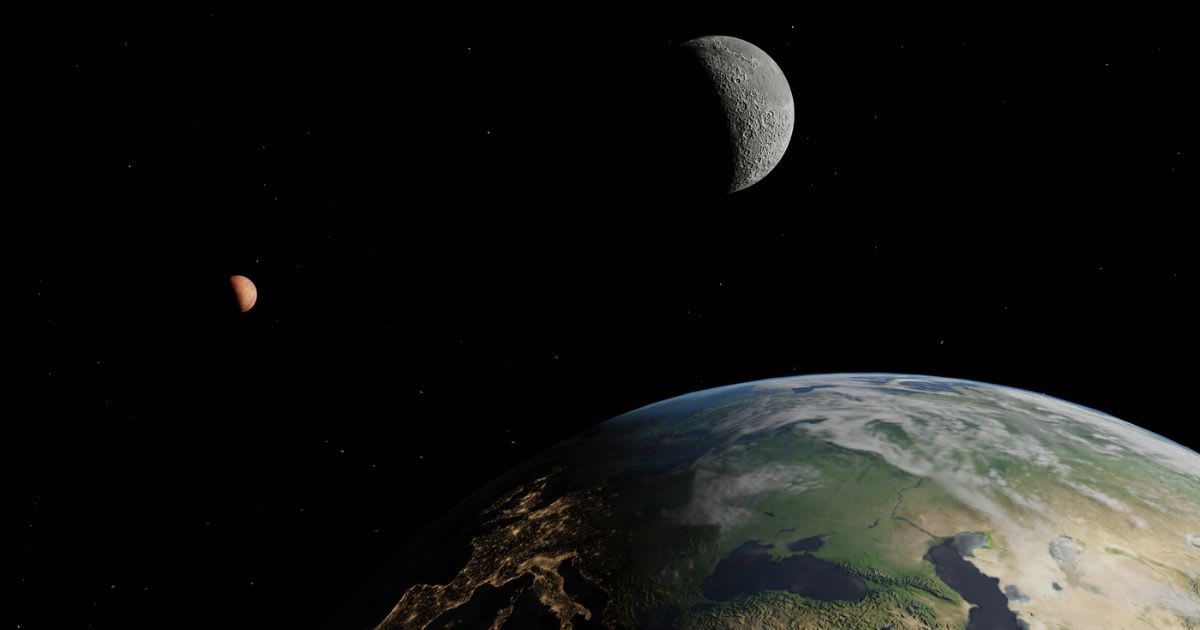
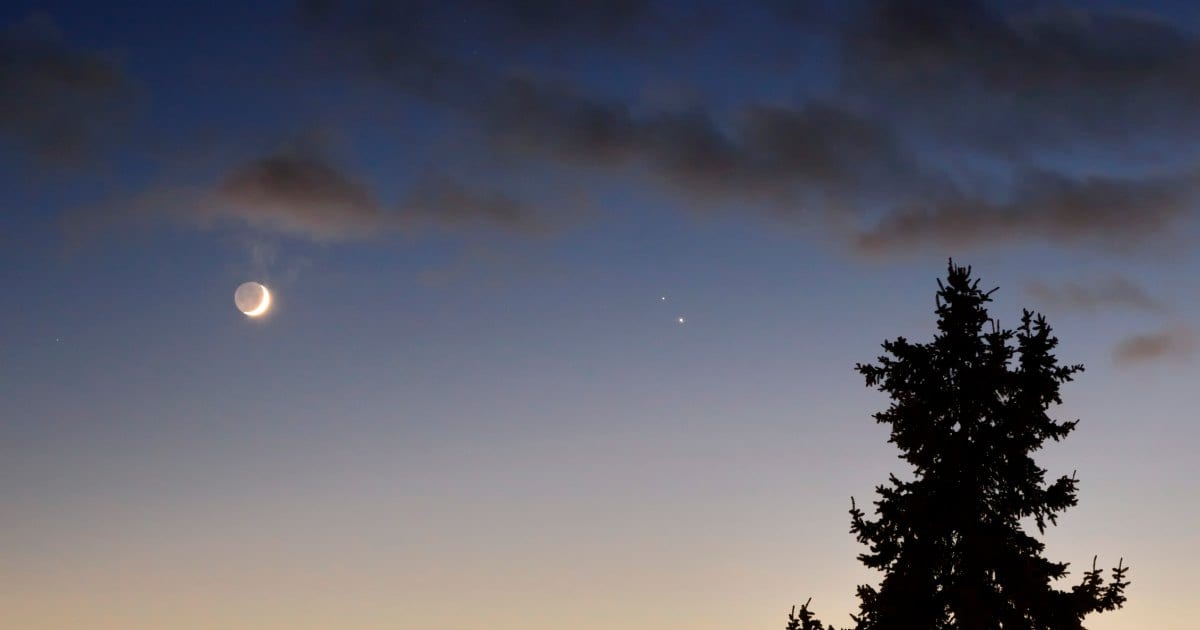
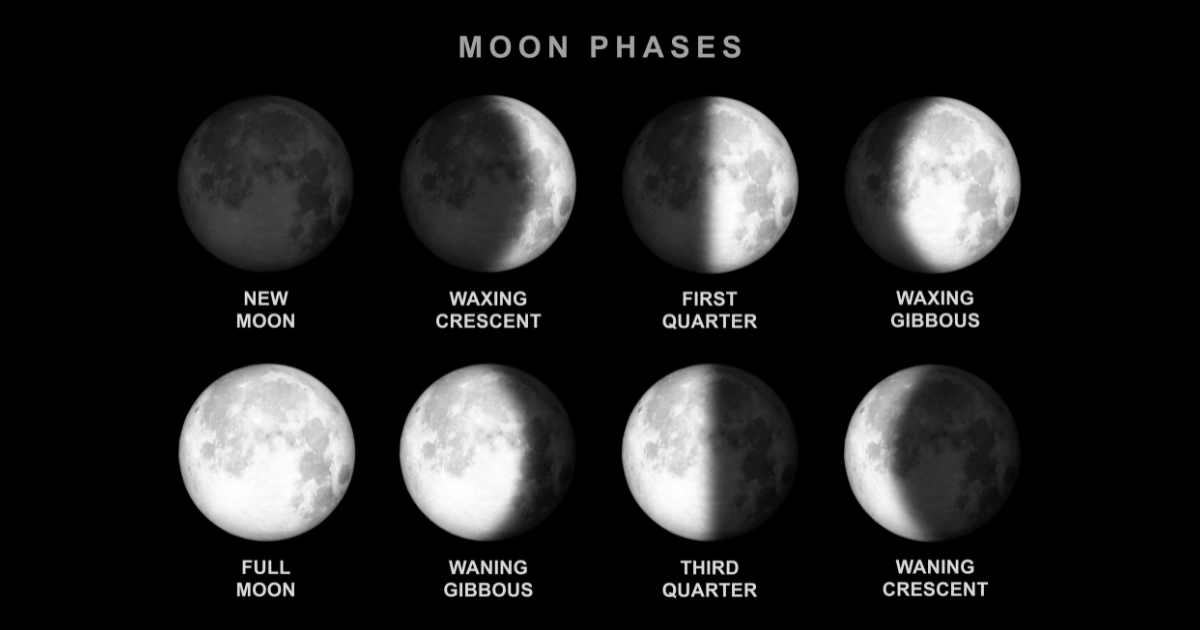
Stargazers are in for a treat as the newly visible crescent moon makes its appearance in the western sky tonight, August 25, positioned near the Red Planet. Less than a day after its reappearance, the slender lunar crescent will be about 8% illuminated, creating a compelling visual just below and to the right of Mars. Despite Mars's recent dimming, the celestial pairing promises a stunning view for those with a clear horizon, as per Forbes.

To witness this spectacle, find a spot with an unobstructed view of the western horizon, such as a beach, open field, or high vantage point. The moon will become visible approximately 30 minutes after sunset. Given the moon's low position and quick descent, observers will have a brief window, less than an hour, to enjoy the sight before both objects disappear into the twilight. The delicate crescent will float within the constellation Virgo. A faint "Earthshine" may be visible, illuminating the moon's dark surface with sunlight reflected from our planet's clouds and oceans. Mars, though less bright than it was during its close approach in January, will be a subtle glow to the left and above the moon.
Since its close approach on January 16, Mars has been getting progressively dimmer. This is because Earth, on its faster orbit around the sun, is moving farther away from the Red Planet. Mars will eventually be lost in the sun's glare by late November. If you miss this current spectacle, the next time Mars will shine so brightly won't be until February 19, 2027, when it reaches its next opposition. This event marks the beginning of several captivating astronomical shows. On Tuesday, the crescent moon will shift between Mars and Spica, the brightest star in Virgo. By Wednesday, the moon, now 21% lit, will be seen alongside Spica and Mars, with the bright orange star Arcturus positioned directly overhead.
The view changes depending on your location. Observers in more southerly latitudes, such as Miami, will see the moon and Mars higher in the sky, as per Space.com. For instance, at 8:09 p.m. EDT, when civil twilight ends, Mars will be about 19 degrees above the horizon with the moon at a similar altitude to its left. From the Southern Hemisphere, the early winter sunset provides an even better vantage point. In Santiago, Chile, Mars will be a striking 31 degrees above the western horizon when civil twilight ends at 6:46 p.m., with the crescent moon appearing above and to its left.
In the Eastern Hemisphere, the conjunction becomes visible on Tuesday, August 26. In Cairo, the celestial pair will be visible at 7:41 p.m. local time, though the sky will still be relatively bright. Viewers in more southern locations, such as Nairobi, will have a clearer view as the sky darkens earlier. By the time of the conjunction at 7:41 p.m., both objects will be clearly visible against the darker sky. Even further south in Cape Town, the conjunction will occur at 6:41 p.m. local time. The crescent moon, with its horns pointing upward, will be about 34 degrees high, with Mars positioned just to its right.
For the best viewing experience, be prepared to look toward the western horizon about 20 to 30 minutes after sunset, according to Forbes. Binoculars are highly recommended; they can help you locate the faint glow of Mars in the twilight and are particularly useful for observing the moon's entire disk, which may be softly illuminated by "Earthshine."