Astrophotographer livestreaming 3I/ATLAS at closest approach says he doesn't 'believe it is a comet'

3I/ATLAS, a rare interstellar visitor, is now at its closest approach to Earth and it has sent the astronomical community into a frenzy. An amateur astrophotographer, who conducted a livestream of the comet on December 19, has now hit the headlines by issuing a statement about the nature of the object. Texas-based astrophotographer Raman Madhira was interacting with other space enthusiasts during the live imaging of 3I/ATLAS organized on his official YouTube page, Ray's Astrophotography, when he shared his doubts by claiming that the mysterious object does not fit the profile of a comet.
During the much-awaited livestream, Madhira showed his viewers an image of 3I/ATLAS, which currently passes about 170 million miles from our planet. But despite the high priority it has for global space researchers, the comet is still invisible to the naked eye, and its tracking requires very powerful telescopes. It is only the third interstellar object ever detected in our solar system, after the famous 'Oumuamua and Comet Borisov.

While mainstream science has labeled the object a 'comet,' Madhira is unconvinced. He said 3I/ATLAS's physical characteristics and behavior deny the standard definitions of a comet taught in textbooks. "I don't believe it is a comet," Madhira told his audience when asked about his opinion on the object. "For some weird reason, it tries to fit in that definition, but even working closely to observe it, I can't figure out why. It's not behaving like a comet at all. When you look at a real comet, you can tell instantly."
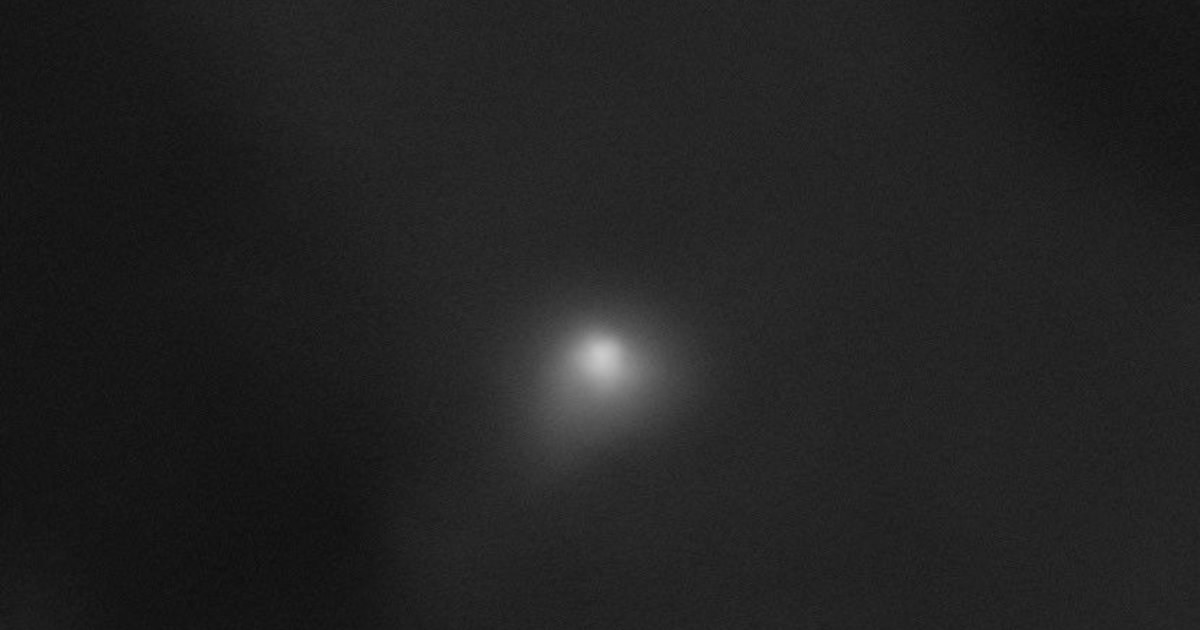
Madhira pointed to a few anomalies that reinforce his skepticism. For one thing, he said a comet's color does not usually change, and even if it does, the object remains an icy body. However, Madhira speculates that instead of an ice-and-dust ball, the object could be a fragment of some far-off planet or some other kind of cosmic debris altogether. Like Madhira, Harvard astronomer Avi Loeb has maintained that 3I/ATLAS is not necessarily a comet and may be alien technology.

The most remarkable moments of the broadcast proved to be those when Madhira emphasized the object's trajectory. He pointed out that this was a "fantastic" straight line that had been carved through the star field. Having calibrated his equipment earlier in the evening on nearby stars, Madhira described the object's formation as "amazing" and visually distinct from anything he had seen recently. He warned against naming the object too quickly. "The moment we give names to things, your brain turns off," Madhira said, suggesting that the scientific community is perhaps wrong to force this object into a "comet" category.
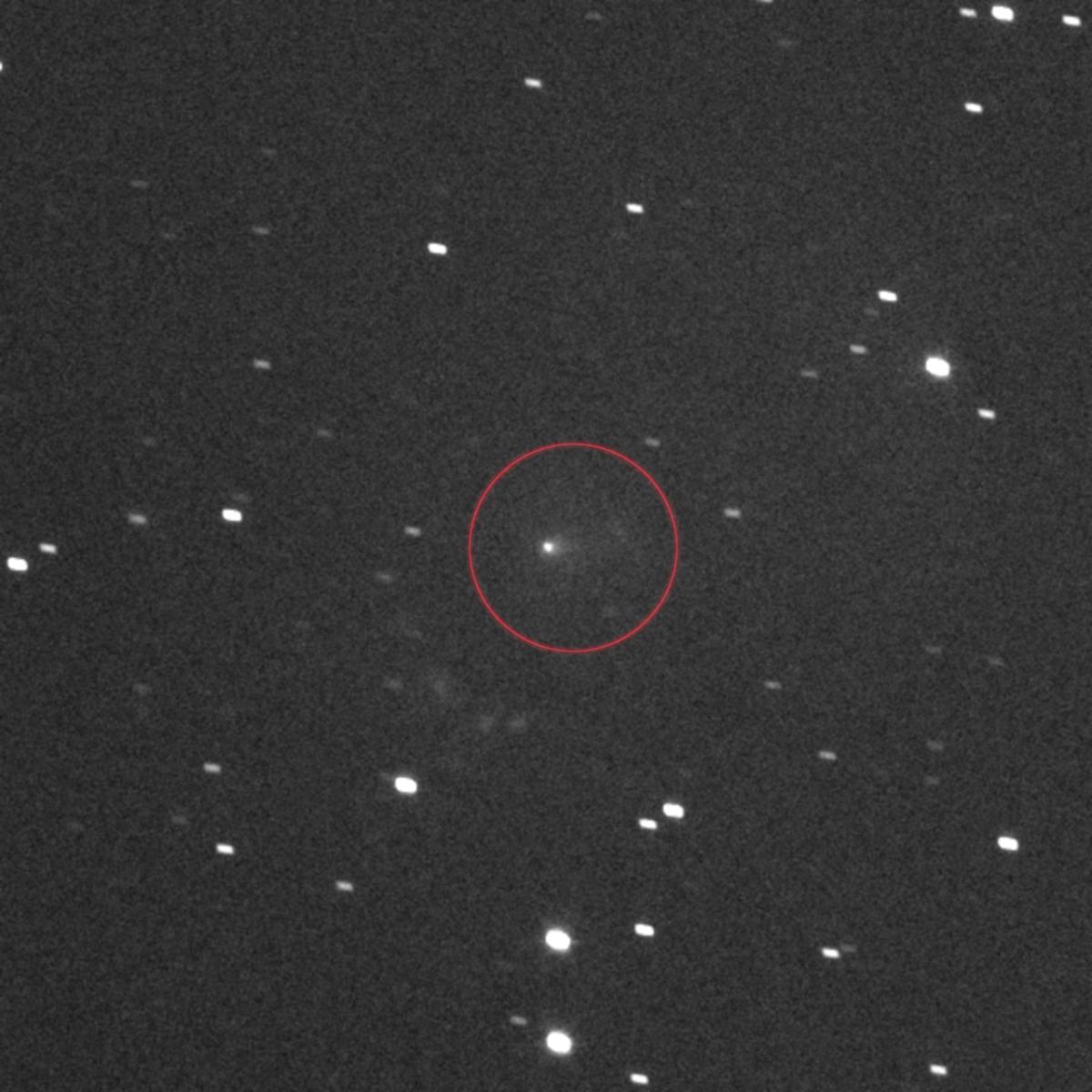
Naturally, the object's enigmatic nature has sparked public conjecture about its artificial origins, including extraterrestrial spacecraft. Madhira, however, approached these theories from a grounded perspective. He clarified that an object would need a level of technical sophistication beyond our current comprehension, such as wormhole travel, in order to be a functional spacecraft. He said, "For it to be a spacecraft is more painful than for it not to be," pointing out the enormous amount of time and energy needed for interstellar travel. Although he believes the object most likely came from a nearby star system, he stresses that most of the current theories are just "guesswork."

The investigation is far from over. Madhira announced plans to return to his livestream on December 20 using an even more powerful telescope to gather clearer images. In any case, as 3I/ATLAS continues its journey through our neighborhood, scientists and astronomers will be watching closely to see if this "amazing formation" finally shows its true identity.
More on Starlust
Here are some quick facts about 3I/ATLAS ahead of its closest approach to Earth
A closer look at the latest 3I/ATLAS image in X-ray light: What ESA's XMM-Newton observed