Astronomers have figured out how space 'snowmen' are formed
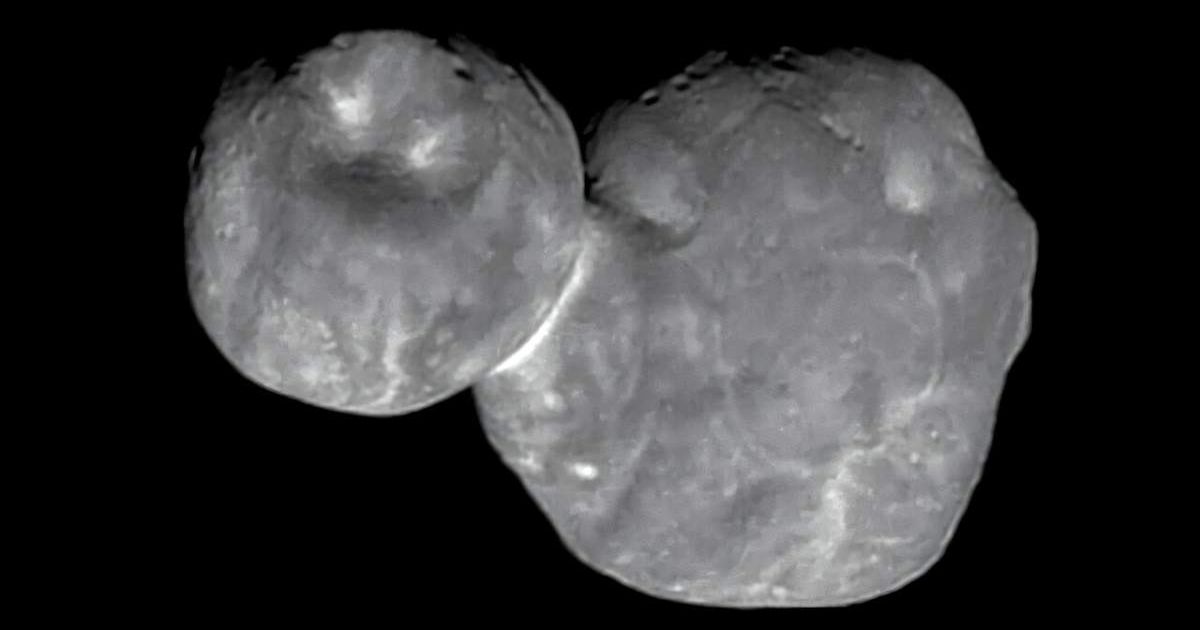
Far beyond the topsy-turvy asteroid belt between Mars and Jupiter, just past Neptune, lies a cold, calmer world known as the Kuiper Belt. This space contains planetesimals, or building blocks of planets that date back to the early days of the Solar System. A lot of these are shaped like connected spheres, not too different from the snowmen that kids love making on a snowy afternoon here on Earth. And now, astronomers at Michigan State University (MSU) have figured out why icy objects in the Kuiper Belt morph into such shapes. With the help of a simulation, Jackson Barnes, an MSU graduate student, has recreated the process that mimics the pathways that lead to the formation of the two-lobed objects (that look like 'snowmen') naturally under gravitational collapse. Barnes and his colleagues have reported their findings in the Monthly Notices of the Royal Astronomical Society.
![An artist's impression of Kuiper Belt Object, located on the outer rim of our solar system (Representative Image Source: NASA | ESA | G. Bacon [STScI])](https://de40cj7fpezr7.cloudfront.net/c49cfc33-04ea-4be9-8ce1-cd11aa9d7880.png)
Earlier computer models that tried to simulate such objects failed to reproduce those unique shapes. But the high-performance computing cluster at MSU’s Institute for Cyber-Enabled Research (ICER) allowed Barnes’ team to mimic more clearly the space environment in which such unique objects form and rest on each other. "If we think 10% of planetesimal objects are contact binaries, the process that forms them can't be rare," said Earth and Environmental Science Professor Seth Jacobson, senior author on the paper, in a statement released by MSU. "Gravitational collapse fits nicely with what we've observed."

In January 2019, NASA’s New Horizons spacecraft first captured close-up images of such contact binaries. This spurred scientists to focus on the Kuiper Belt. It bears the remnants from the early days of the Milky Way when it was just a disk of gas and dust. Besides planetesimals, dwarf planets like Pluto and comets also reside in this belt. Planetesimals are the first large planetary objects that were formed from the disk of dust and pebbles. Like snowflakes that coalesce to form a snowball, clouds of tiny materials merged under gravity, giving rise to pebble-sized objects, which gradually fused to form these planetesimals.
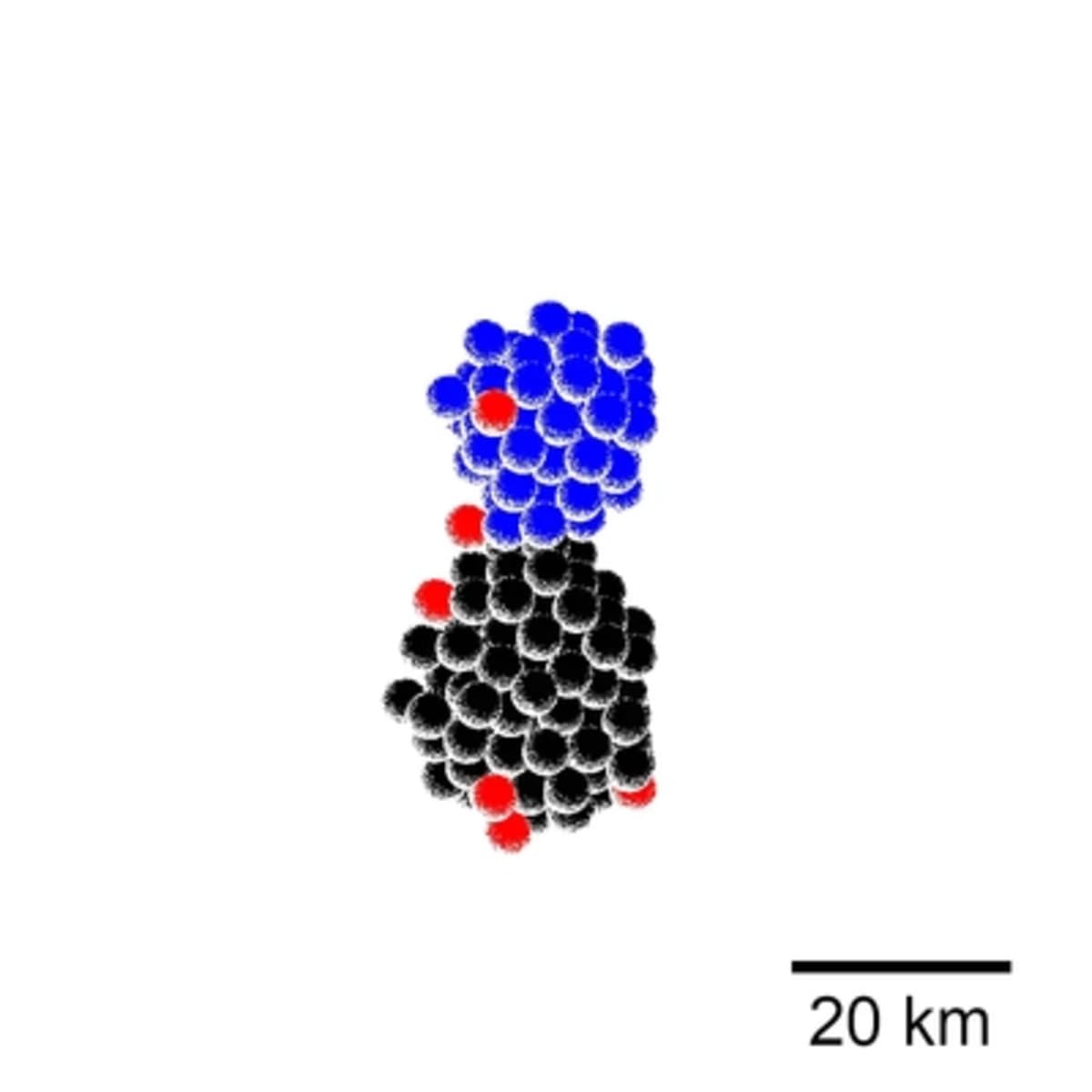
The cloud of materials often rotates and falls inward on itself. The object is then ripped apart, forming two separate planetesimals that revolve around one another. Barnes’ simulation shows that the orbits of these objects make them spiral inward until they come into contact and then fuse, retaining their round shapes. But how do these two objects remain fused throughout the history of the solar system? Once merged, the two objects don’t crash into another object. Absence of a collision makes it really hard to rip them apart, and they are not even pockmarked with craters, the MSU team explains.
Previous studies suspected that gravity-induced collapse might have created such objects, but none of them proved this beyond doubt. The physics needed to describe the birth of contact binaries properly came from Barnes’ simulation. "We're able to test this hypothesis for the first time in a legitimate way," Barnes said in the MSU statement. "That's what's so exciting about this paper." The findings of this research may have far-reaching implications, as it could shed light on binary systems of three or more objects. Now, Barnes’ team is working to develop a new simulation to better understand the collapse process and probe the more distant cousins of what they already have studied.
More on Starlust
Astronomers build largest molecular cloud catalog of the Andromeda galaxy