NASA report detects first signs of non-gravitational acceleration in interstellar comet 3I/ATLAS near perihelion
JPL navigation engineer Dr. Davide Farnocchia compiled the data that captured the phenomenon as the comet reached perihelion.
PUBLISHED OCT 31, 2025
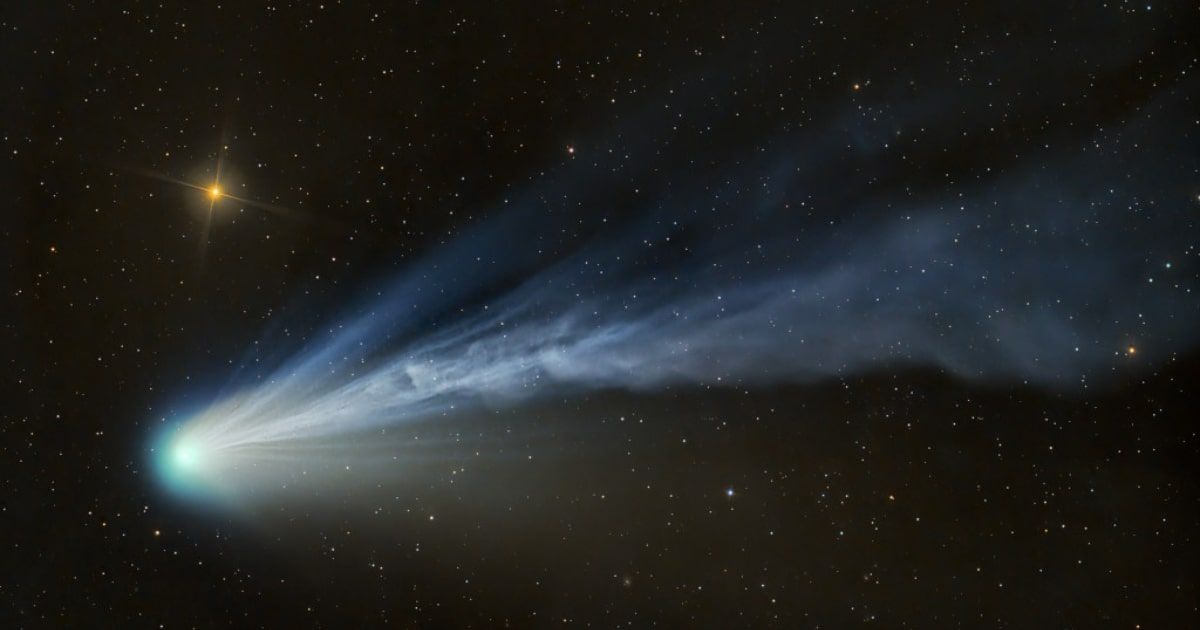
In dark evening skies over June Lake, northern hemisphere, planet Earth, Comet 12P/Pons-Brooks stood just above the western horizon on March 30 (Representative Cover Image Source: NASA APOD | Dan Bartlett)

An unexpected shift in the flight path of interstellar comet 3I/ATLAS has been confirmed by a new NASA report, signaling the first-ever detection of non-gravitational acceleration in the object. The data, compiled by Jet Propulsion Laboratory navigation engineer Dr. Davide Farnoccia, revealed the phenomenon as the comet reached its closest point to the Sun, or perihelion, as reported by Avi Loeb on his Medium blog

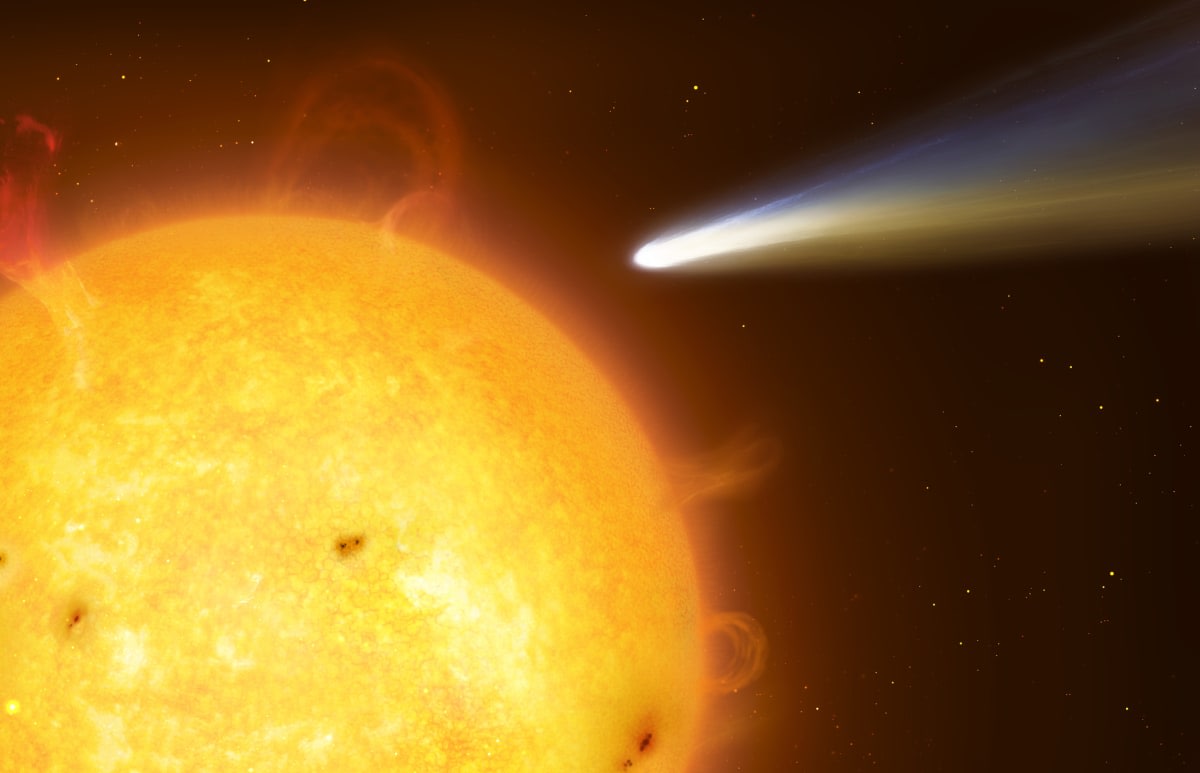
Illustration of a sungrazing comet. These are comets that pass very close to the Sun at perihelion (Representative Image Source: Getty | MARK GARLICK/SCIENCE PHOTO LIBRARY)

The acceleration was measured at 203 million kilometers from the Sun (1.36 astronomical units). Analysis shows the comet is being pushed in two distinct directions: a significant outward shove away from the Sun, measured at 135 kilometers per day squared (equivalent to 9x10^{-7} au per day squared), and a lesser, sideways force perpendicular to the Sun's direction, clocked at 60 kilometers per day squared (4x10^{-7} au per day squared). 
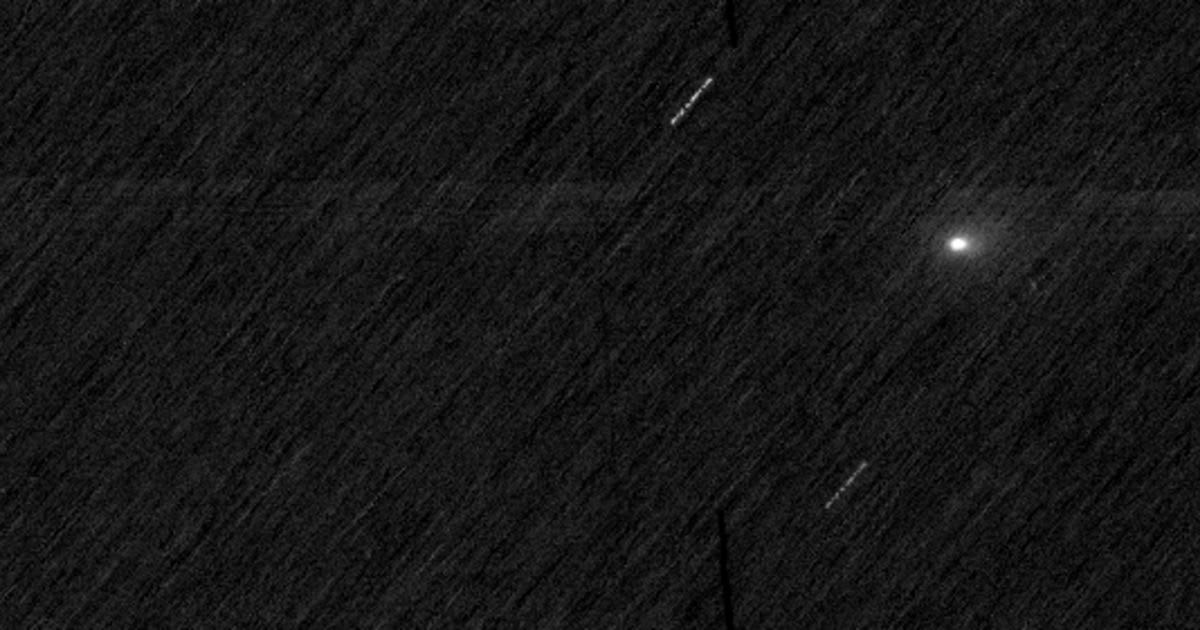
A black space background with white streaks and a single fuzzy white dot. The streaks are stars and the dot is comet 3I/ATLAS (Cover Image Source: ESA/TGO/CaSSIS)
A black space background with white streaks and a single fuzzy white dot. The streaks are stars and the dot is comet 3I/ATLAS (Image Source: ESA/TGO/CaSSIS)

The sudden change in motion has prompted two competing hypotheses. The most conventional explanation is a powerful "rocket effect" driven by the rapid sublimation of volatile ices. If this mass ejection is propelling the comet, conservation of momentum suggests 3I/ATLAS could be shedding mass at an astonishing rate, losing half its total mass in just six months. This would mean that the comet may lose approximately one-tenth of its mass during its month-long passage through the inner solar system.

Such a massive loss of material should be visible as a colossal gas plume surrounding the comet. The European Space Agency's JUICE spacecraft is poised to be the first to observe this expected debris cloud in early November, with a subsequent opportunity for a multitude of ground and space-based telescopes, including Hubble and Webb, when the comet makes its closest approach to Earth on December 19, 2025.
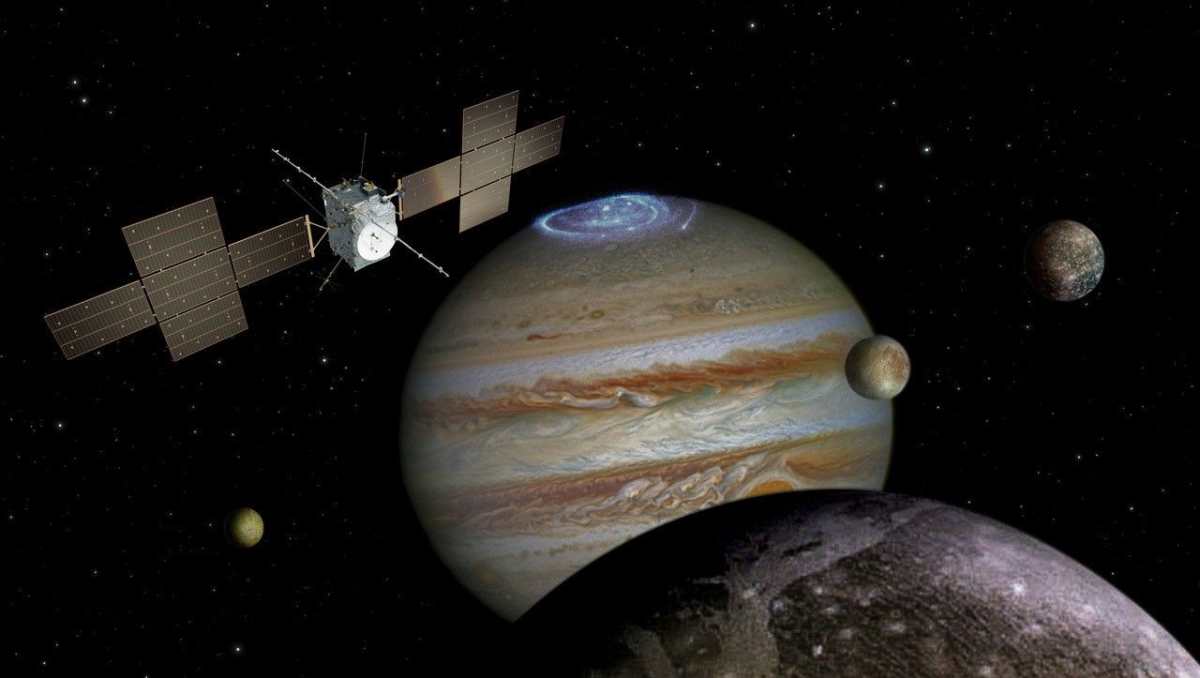
Jupiter Icy Moons Explorer (JUICE) (Image Source: NASA)

The mass-loss theory could also explain the comet's recent, dramatic surge in brightness documented by the STEREO, SOHO, and GOES-19 instruments in September and October 2025. Data indicates the comet's brightness is scaling sharply, inversely proportional to the Sun's distance to the power of -7.5 (±1). However, the non-gravitational acceleration is now being considered alongside other perplexing observations, including the comet's bizarre "bluer-than-the-Sun" appearance at perihelion. 

The comet’s recent visual data has introduced yet another deep puzzle: its appearance is demonstrably bluer than the Sun. This finding is highly unexpected for a natural comet. According to Loeb's Medium blog, the object’s surface, which is roughly an order of magnitude colder than the 5,800 Kelvin of the solar photosphere, should cause it to exhibit a redder color. Furthermore, any scattered sunlight from ejected dust particles would also naturally skew toward the red end of the spectrum. This blue coloration at perihelion has now been officially added as the ninth anomaly in the growing list of this interstellar object's unexpected properties.
More on Starlust

Harvard astronomer says 8 key anomalies suggest comet 3I/ATLAS may have a 30% chance of being an alien technology

Comet 3I/ATLAS will re-emerge from solar glare in November, faint but visible to limited space telescopes

MORE STORIES

The three interstellar objects are unique, billion-year-old fragments and kinetic artifacts collected from countless extrasolar systems across the galaxy.
3 hours ago
English physicist and science communicator Professor Brian Cox draws parallels between the journey of 3I/ATLAS and that undertaken by humanity.
7 hours ago
Conspiracy theories can be put to rest as new evidence from the MeerKAT radio telescope has emerged.
1 day ago
Consecutive X-class solar flares have set the stage for severe space weather to strike on November 11 and 12.
1 day ago
The observation, made on November 9, unveiled a shockingly complex jet system that overshadows prior data, immediately casting doubt on the comet's origin.
2 days ago
The object, discovered by Gennady Borisov on November 2, 2025, quickly became the focus of speculation amid the curiosity surrounding 3I/ATLAS.
2 days ago
To assess Martian viability, scientists subjected yeast cells to Mach 5.6 shock waves and the corrosive perchlorate salts common on the Red Planet.
6 days ago
These impacts pack surprising power; a mere 11-pound meteoroid can blast a 30-foot (9-meter) crater, ejecting 75 metric tons of lunar soil.
6 days ago
Sunspot AR3474 detonated with an X1.8 solar flare on November 4, sending an ultraviolet wave silencing South America's shortwave radio communications.
7 days ago
Observations were maintained using imagery from solar imagers on the STEREO-A, SOHO, and GOES-19 missions near the Sun.
Nov 3, 2025