Artemis II: NASA completes second correction burn to fine-tune the crew's return trajectory
Mission controllers at NASA have overseen a successful adjustment of the Orion spacecraft’s return trajectory to Earth. According to the American space agency, the second return trajectory correction burn of Artemis II began at 10:53 pm EDT, lasting for 9 seconds. This ignition of Orion’s thrusters produced an acceleration of 5.3 feet per second toward Earth. With just a matter of hours remaining in the mission until splashdown later today (April 10), the spacecraft is less than 100,000 miles away from home. It is scheduled to perform a third correction burn at around 1:53 p.m. EDT today before entering Earth's atmosphere.
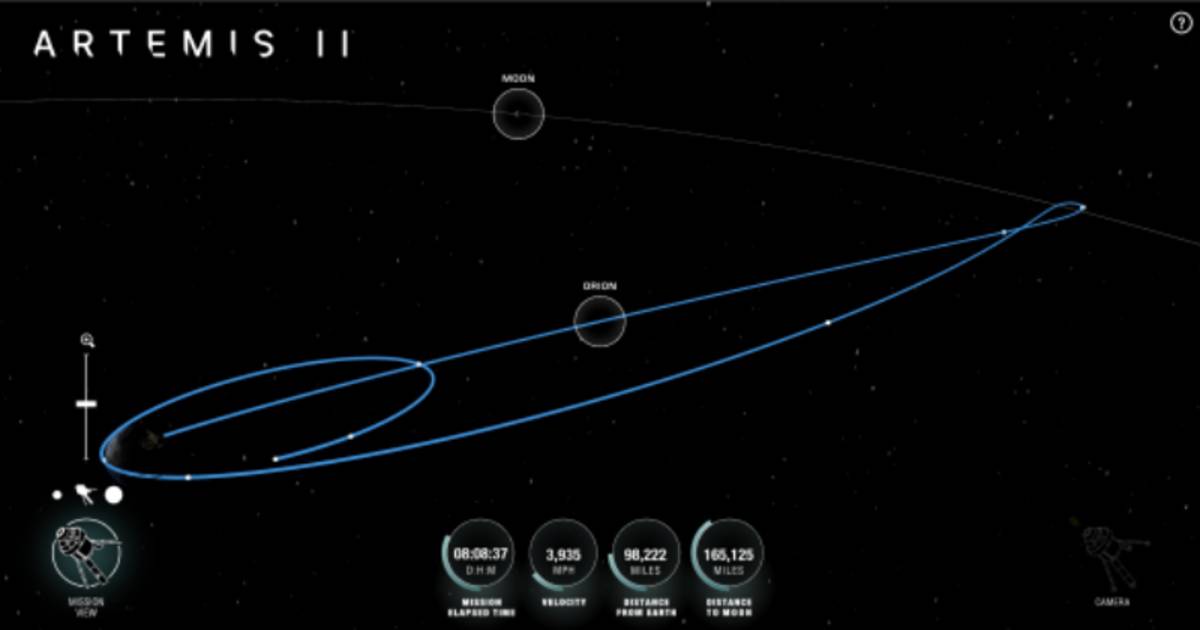
Roughly two hours before the second burn took place, a return link loss of signal was also reported to have occurred. Contrary to the planned loss of signal during passage beyond the lunar far side and during re-entry, this LOS was unexpected. NASA said that this happened during a data rate change exchange, and it affected the transmission of communications and telemetry from the spacecraft to the ground. Two-way communication, however, was successfully restored, after which flight controllers and the crew continued preparing for the burn.
While the Artemis II crew are experiencing their own personal solar eclipse, Mission Control will temporarily lose communications with the capsule. This is planned and expected. We anticipate regaining communications in about 30 minutes. pic.twitter.com/QjeORjlfZB
— NASA (@NASA) April 6, 2026
Conversations between the only Canadian in deep space, Jeremy Hansen, and NASA Capcom Amy Dill also shed light on the stowing away activity that the flight crew was engaged in just before they entered the one-way loss of signal. All equipment aboard the spacecraft will have been stowed away safely, and the crew's seats will have been returned to their original flight configuration ahead of re-entry later today.
The Orion spacecraft’s thrusters ignited for the second return trajectory correction burn to fine‑tune the spacecraft’s path toward Earth.
— NASA Artemis (@NASAArtemis) April 10, 2026
Splashdown of Artemis II is expected around 8:07pm ET on Friday, April 10 (0007 UTC on Saturday, April 11), off the coast of San Diego. pic.twitter.com/VuRw7IVqpP
On April 9, the crew also participated in a conversation with members of the U.S. Congress. The crew answered questions about their time in deep space and their perspectives while venturing beyond the far side of the Moon. On a lighter note, they were also asked about which actors they would like to play their roles should a movie on the mission be made in the future. And while Commander Reid Wiseman joked that it was a little above the crew's pay grade to decide that, he noted that the rest of the crew was sure that Hansen would be played by Buzz Lightyear.

Well, if this historic mission is indeed ever made into a movie, the makers would certainly want it to end on a high, and that is only possible if the re-entry later today is successful. Of course, NASA is confident that everything is right on track, with teams working hard to make sure there is no room for error. As things stand, splashdown is scheduled for 8:07 p.m. EDT today.
More on Starlust
First set of Artemis II lunar flyby photos shows solar eclipse, Earthset, Earthrise and more
As Artemis II heads back home, here's a look at the highlights of the historic lunar flyby