As Artemis II heads back home, here's a look at the highlights of the historic lunar flyby
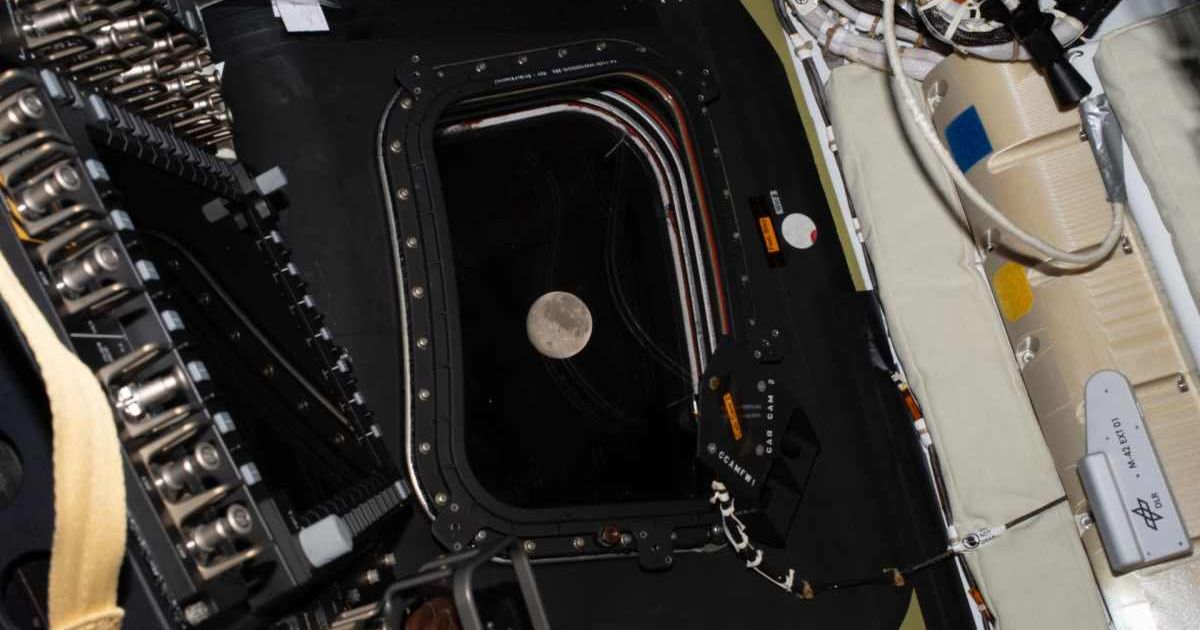
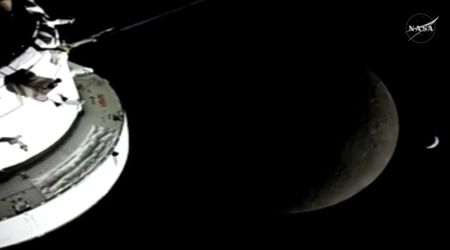
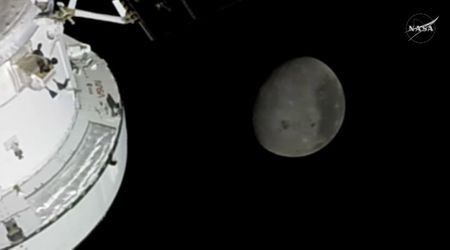
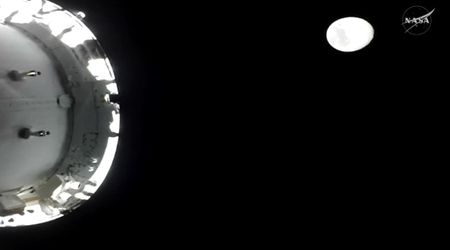
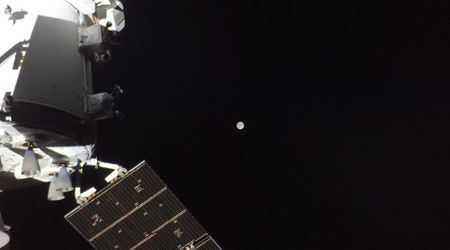
The crew of Artemis II completed the lunar flyby on April 6, 2026, marking the first time in over 50 years that humans laid eyes on the lunar far side. The crew woke up to the tunes "Good Morning," by Mandisa and TobyMac, on the day when they were just 18,830 miles from the Moon. They inched closer as the day went by, and finally at 2:45 p.m. EDT, it was time for the big event. The following are some of the highlights from their historic seven-hour-long lunar flyby.
Approaching the near side of the Moon.
— NASA Artemis (@NASAArtemis) April 6, 2026
The Artemis II astronauts have surpassed the record for the distance from Earth at 1:56 ET (1756 UTC). This record was previously set during the Apollo 13 mission when the astronauts traveled 248,655 miles from Earth. The Moon continues to… pic.twitter.com/OapAGgGMex
A record and a tribute
Prior to the beginning of the observations, Integrity was positioned in a way so as to allow its windows to face the Moon. Later, the crew also made history by setting the record for the farthest distance traveled by humans from Earth. At 1:56 pm EDT, the crew broke the record of 248,655 miles set by the crew of Apollo 13 in 1970. Soon after, a couple of unnamed craters were provisionally named by the crew. ‘Integrity’ was the name given to a crater just northwest of the Orientale basin, after the crew’s spacecraft. Another crater on the boundary of the near and far sides (northeast of the Integrity crater) was named ‘Carrol’ in tribute to Commander Reid Wiseman’s late wife, who battled cancer in her final days. Both craters could be seen by the crew without aid.
To commemorate the Artemis II mission, the astronauts announced their suggestion to rename certain features on the Moon to honor the Orion spacecraft, named Integrity, as well as commander Reid Wiseman's late wife, Carroll. pic.twitter.com/ejfhnItDo8
— NASA (@NASA) April 6, 2026
Lunar observations kick off
As the crew approached the Moon from its near side, they observed Reiner Gamma, a bright swirl whose origins are still a mystery. It is also set to be the landing site of a future NASA CLPS mission. The crew also laid eyes on the Glushko crater, which is 27 miles wide and is famous for the white streaks that come out of it for up to 500 miles. During the observation period, the crew could refer to the Lunar Targeting Plan—a guide that consisted of a list of 30 lunar surface targets that they had been projected to observe during the flyby.
LIVE: Watch with us as the Artemis II astronauts make their closest approach to the Moon, traveling farther from Earth than ever before. https://t.co/Zpy7GdTqA8
— NASA (@NASA) April 6, 2026
Colors of the Moon
The team in the Science Evaluation Room at NASA was more than satisfied with the observations reported by the crew, not the least of which were the color nuances that are expected to deepen our understanding of the Moon. For instance, shades of brown and blues that can be perceived with human eyes can provide insights into the mineral compositions of a feature and its age.
LIVE: Watch with us as the Artemis II astronauts make their closest approach to the Moon, traveling farther from Earth than ever before. https://t.co/Zpy7GdTqA8
— NASA (@NASA) April 6, 2026
Communication blackout
Integrity and its crew, having been obscured by the Moon, couldn’t be communicated with for about 40 minutes. Roughly three minutes prior to the blackout, the crew saw an ‘Earthset’ at 6:41 p.m. EDT as our planet disappeared behind the Moon from the spacecraft's perspective. They re-established contact with the Earth-based Deep Space Networks at 7:24 pm EDT. It was during this part of the mission that the crew attained the maximum distance from Earth at 252,756 miles and made their closest approach to the lunar surface at about 4,067 miles. Many interesting features of the Moon were subject to the crew’s prospecting even during this phase.
"Integrity, we have you loud and clear."
— NASA JPL (@NASAJPL) April 7, 2026
🚀🌖📡🌏 pic.twitter.com/EjlRMtbb3y
A total solar eclipse and meteoroid strikes
At 8:35 pm EDT, the spacecraft aligned with the Sun and the Moon in such a way that the Moon completely eclipsed the Sun, creating a total solar eclipse for the astronauts. With the Moon mostly darkened during the hour-long eclipse, the crew got a chance to see the Sun's corona—its outermost atmosphere—which is usually imperceptible. The eclipse also gave the Artemis II crew the opportunity to report as many as six flashes created by meteoroid impacts on the lunar surface, thus providing deeper insights into potential hazards on the Moon. This information could come in handy as NASA attempts to establish a base on the lunar surface.
🌞🌕🧑🚀
— NASA (@NASA) April 7, 2026
Right now, the Orion capsule is passing behind the Moon, so the Sun is entirely eclipsed from their perspective. During this time, they will view a mostly darkened Moon and will use the opportunity to analyze the solar corona. pic.twitter.com/PWDPfZKxGh
The crew wrapped up the observation period at 9:35 p.m. EDT, thus marking the beginning of their journey home. On the way, they will leave the Moon’s sphere of influence at 1:25 p.m. EDT on April 7. This will be the point at which Earth's gravitational pull on the spacecraft will be greater than that of the Moon.
More on Starlust
Artemis II crew witnesses first-ever total solar eclipse from space during lunar flyby
Earthset to Earthrise: Artemis II aces key lunar flyby phase, sets new spaceflight distance record