Artemis II lunar flyby on April 6—When and where to watch live streaming
The Artemis II crew is expected to begin their observations of the lunar far side at 2:45 p.m. EDT today.
UPDATED APR 6, 2026
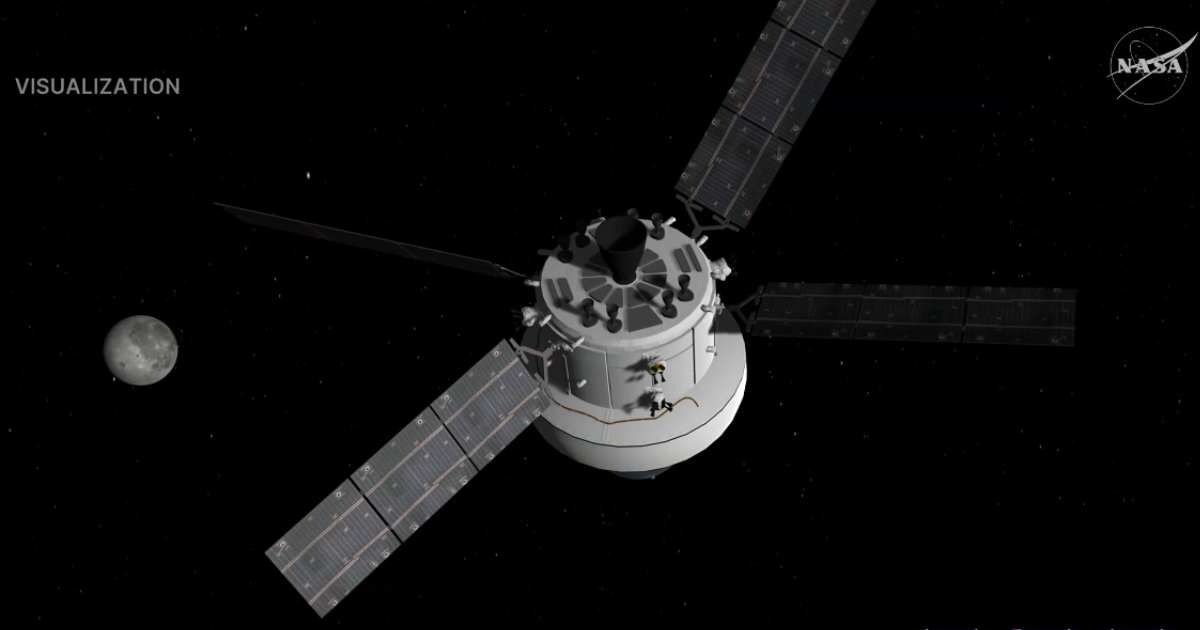
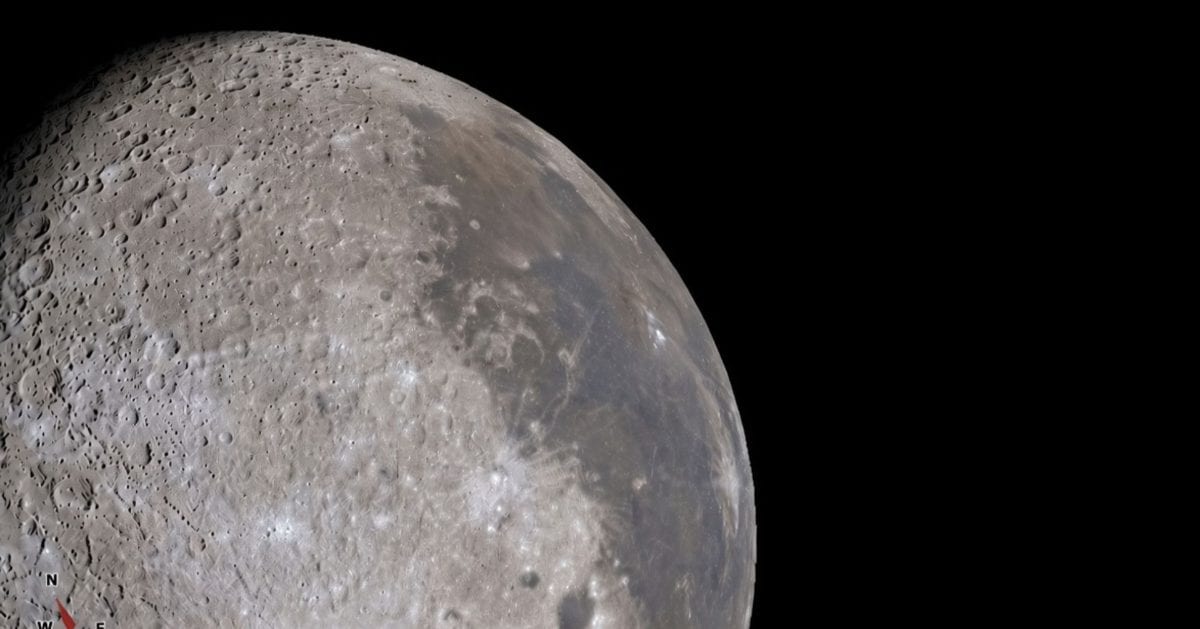
A visualization of the Orion spacecraft with the Moon in the distance before the lunar flyby. (Cover Image Source: NASA live streaming/YouTube)

The day of the Artemis II lunar flyby is finally upon us. The crew—Reid Wiseman, Victor Glover, Christina Koch, and Jeremy Hansen—received their list of lunar targets from mission control early Sunday and are set to begin their observations of the same at 2:45 p.m. EDT today, per NASA. As has been the case for the mission so far, NASA has taken care to ensure the world gets to see what essentially is the main event of the flight live as it takes place.
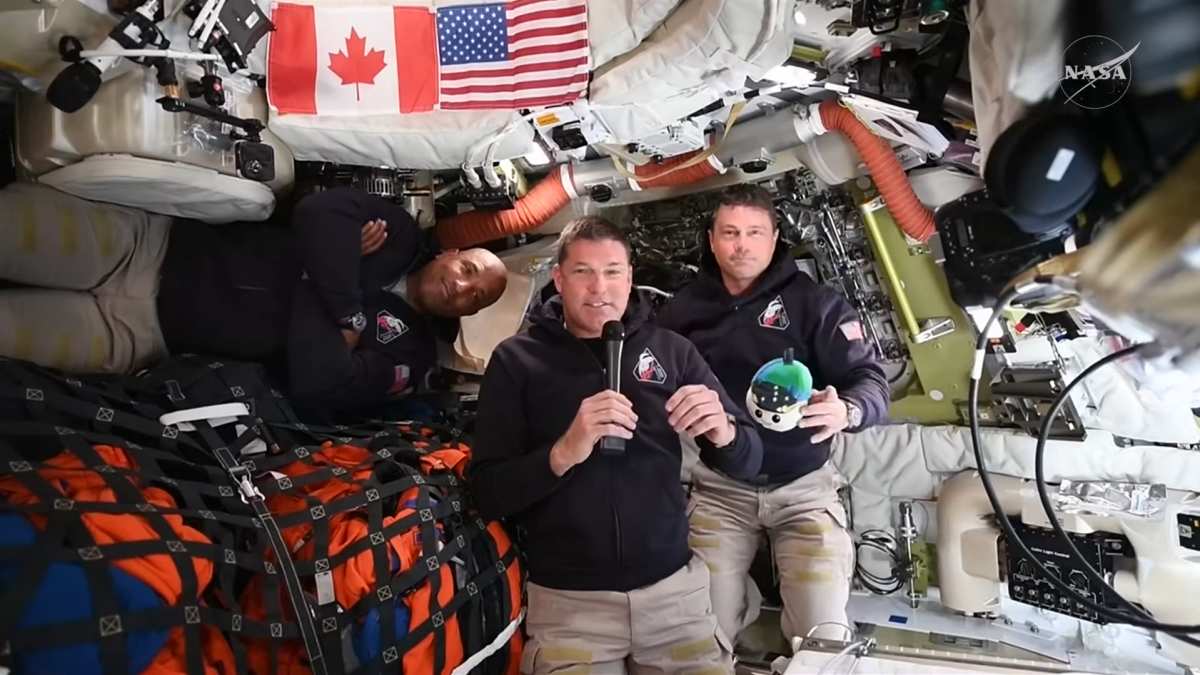
Jeremy Hansen (M), Victor Glover (L), and Reid Wiseman (R) interacting with the press in the second Artemis II downlink event. (Cover Image Source: NASA Artemis II Live Coverage)
Jeremy Hansen (M), Victor Glover (L), and Reid Wiseman (R) interacting with the press in the second Artemis II downlink event. (Image Source: NASA Artemis II Live Coverage)

The live coverage of the lunar flyby will begin at 1:00 p.m. EDT on NASA+, Amazon Prime, Apple TV, Hulu, Netflix, HBO Max, and Roku. You can also access it on NASA's YouTube channel, which has been giving 24/7 coverage of the mission since April 1, the launch day. And while there is a gap of an hour and 45 minutes between the beginning of the stream and that of the observation period, make sure to tune in as early as possible and stay around for a while, as visuals of lunar far side features are just one of the things the flyby will have to offer.
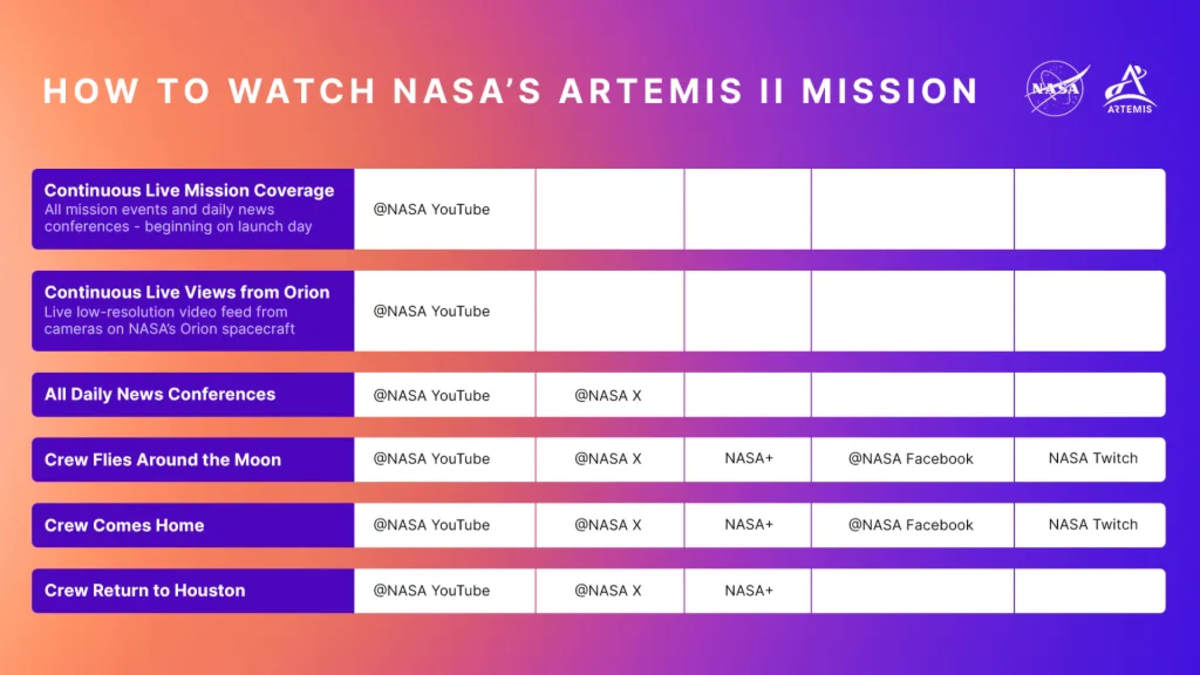
The Artemis II mission will be broadcast on a number of NASA platforms. (Image Source: NASA)

At 1:56 p.m. EDT, 26 minutes after the science officer at mission control has briefed the crew on their science goals for the flyby, the Orion spacecraft is expected to break the record for taking humans farther from Earth than ever before. It is set to surpass the record set by Apollo 13 (248,655 miles) during its emergency return, reaching a maximum distance of 252,760 miles at 7:07 p.m. EDT. Then, between 8:35 and 9:32 p.m. EDT, the Moon will be between the Sun and the crew, thereby causing a solar eclipse, which will allow them to see the otherwise imperceptible solar corona.
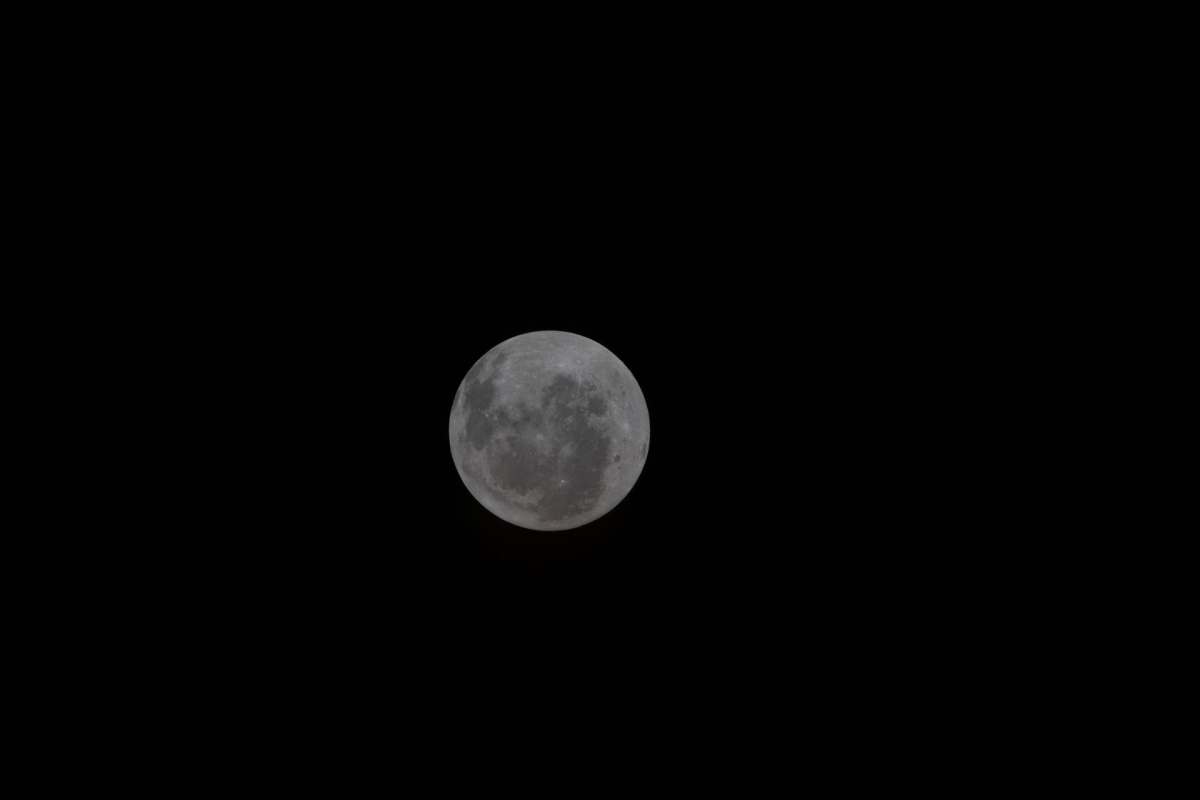
The Artemis II crew took this photo on day 4 of their journey to the Moon. The Orientale basin is on the right edge of the lunar disk in this image. (Image Source: NASA)

As for the features that the crew is expected to observe on the partly lit surface of the Moon, the list has as many as 30 targets. Arguably, the most hyped among them is the Orientale basin. This 3.8-billion-year-old, about 600-mile-wide crater spans both the near and the far side of the Moon and holds clear evidence of the impact that created it. The crew will compare and contrast the topography of the Orientale basin with that of the Hertzsprung basin, as the features of the latter, a nearly 400-mile crater, have been damaged by impacts that followed the one that created it.
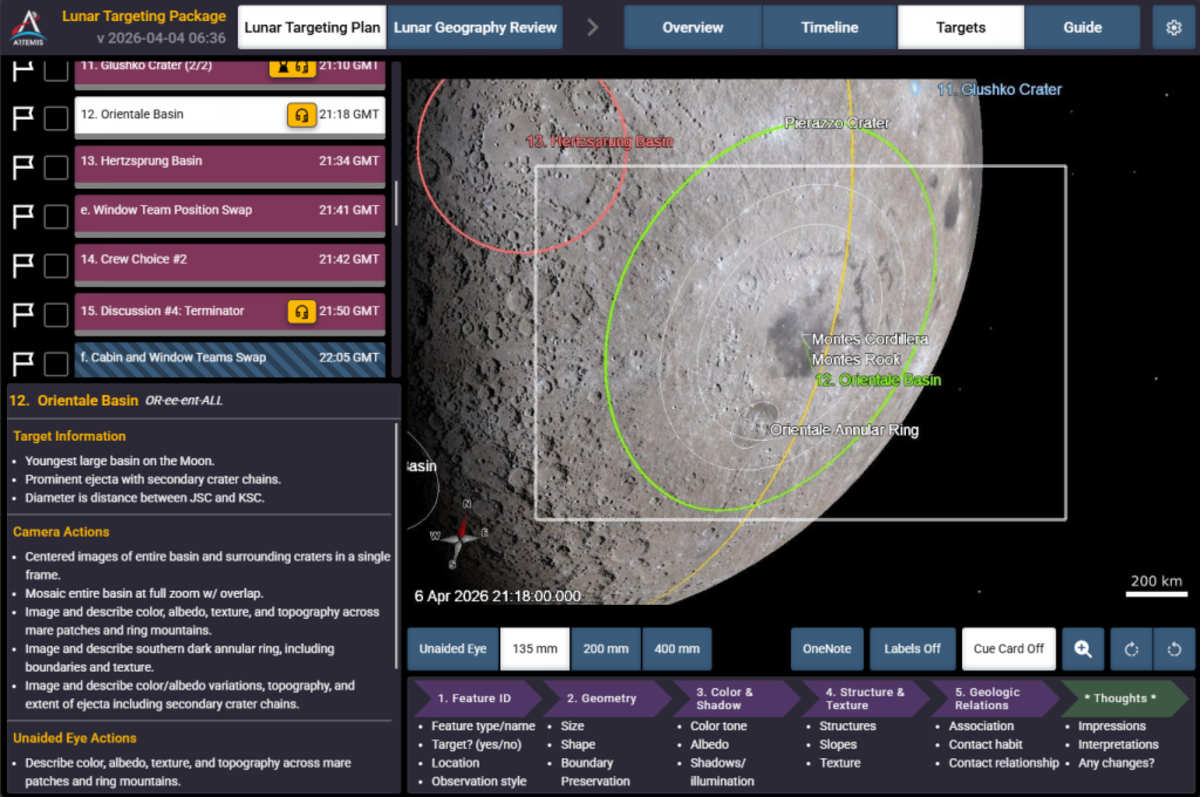
A screenshot of the application the Artemis II crew sees on their PCDs that guides them in the execution of the lunar science observation plan. (Image Source: NASA)

The lunar observations are set to conclude at 9:20 p.m. EDT. That being said, all of the timings can change depending on the demands of the flight as it proceeds. Moreover, mission control expects to lose communication with the crew as Earth disappears behind the Moon from Orion's point of view. The blackout is currently expected to last between 6:44 and 7:25 p.m. EDT—a window during which the crew will also make its closest approach to the Moon at 4,070 miles above its surface. 

More on Starlust

Artemis II astronauts Christina Koch and Jeremy Hansen complete manual piloting demo

'Not the Moon you see from Earth': NASA’s Christina Koch describes the view from Artemis II’s Orion
MORE STORIES

The third New Glenn mission, dubbed NG-3, is expected to launch massive broadband satellites into low Earth orbit.
3 minutes ago
Northrop Grumman’s Cygnus XL was captured by the Canadarm2, after which mission control in Houston installed it on the Unity module of the ISS.
1 hour ago
Four fifths of the SLS core stage will travel on the Peagus barge from NASA's Michoud Assembly Facility in New Orleans to the Kennedy Space Center in Florida.
1 day ago
The use of ultralight graphene aerogels for propulsion with a push using light could be the way forward.
1 day ago
NASA Administrator Jared Isaacman reiterated that this was not a once-in-a-lifetime moment, but rather the beginning of more exciting missions.
1 day ago
China is the United States' biggest competitor in the modern-era space race.
1 day ago
Artemis II, which launched on April 10 after weeks of delay, has successfully orbited the Moon and returned to Earth with a wealth of data to fuel future lunar missions.
2 days ago
NASA astronauts Jack Hathaway and Chris Williams will capture the cargo using the Canadarm2 robotic arm at approximately 12:50 p.m. EDT.
2 days ago
The crew could be seen being quite emotional on being received with such warmth by the audience.
3 days ago
NASA Chief Jared Isaacman hails crew, reaffirms permanent Moon base plans and future missions.
3 days ago