3I/ATLAS was spewing 70 Olympic swimming pools' worth of water daily when ESA's Juice observed it
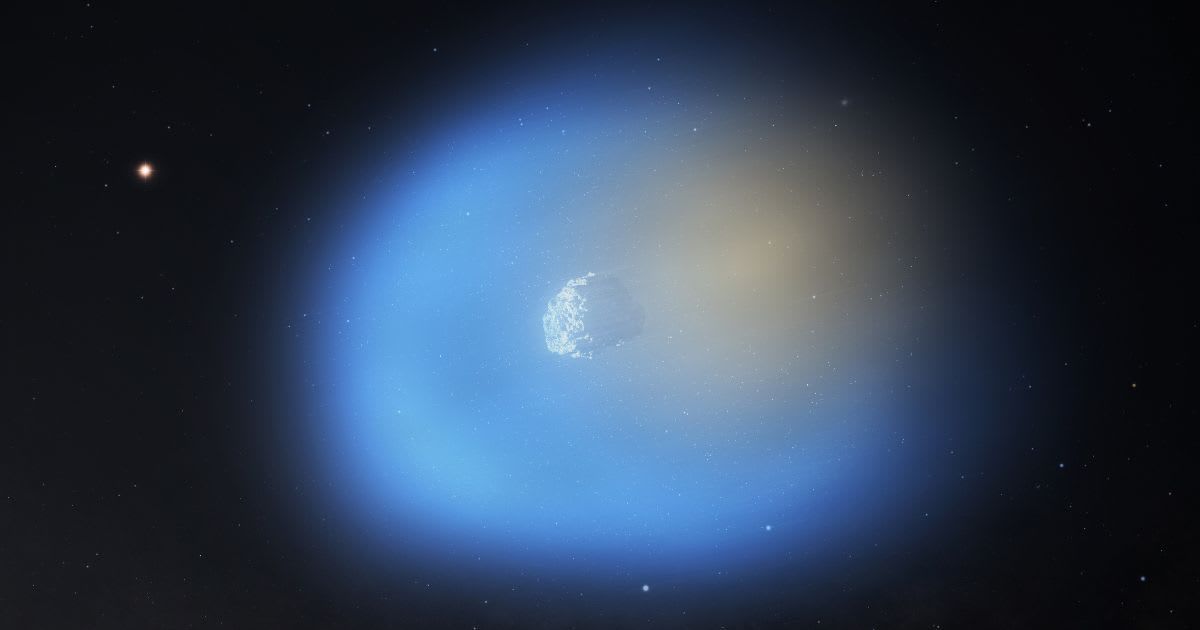
On November 2, 2025, the ESA's Jupiter Icy Moons Explorer (Juice) had turned its gaze towards 3I/ATLAS just four days after its perihelion, or closest approach to the Sun. Among the five science instruments that Juice had turned on to carry out the observation was the Moons And Jupiter Imaging Spectrometer (MAJIS), which found that the interstellar comet had been releasing no less than 2,000 kilograms of water vapor every second. That's the same as 70 Olympic swimming pools per day. While such massive water loss is nothing unprecedented, it surely is on the higher end for a comet close to the Sun, as seen before in examples like 67P (300 kg per second) and Halley (20,000 kg per second).
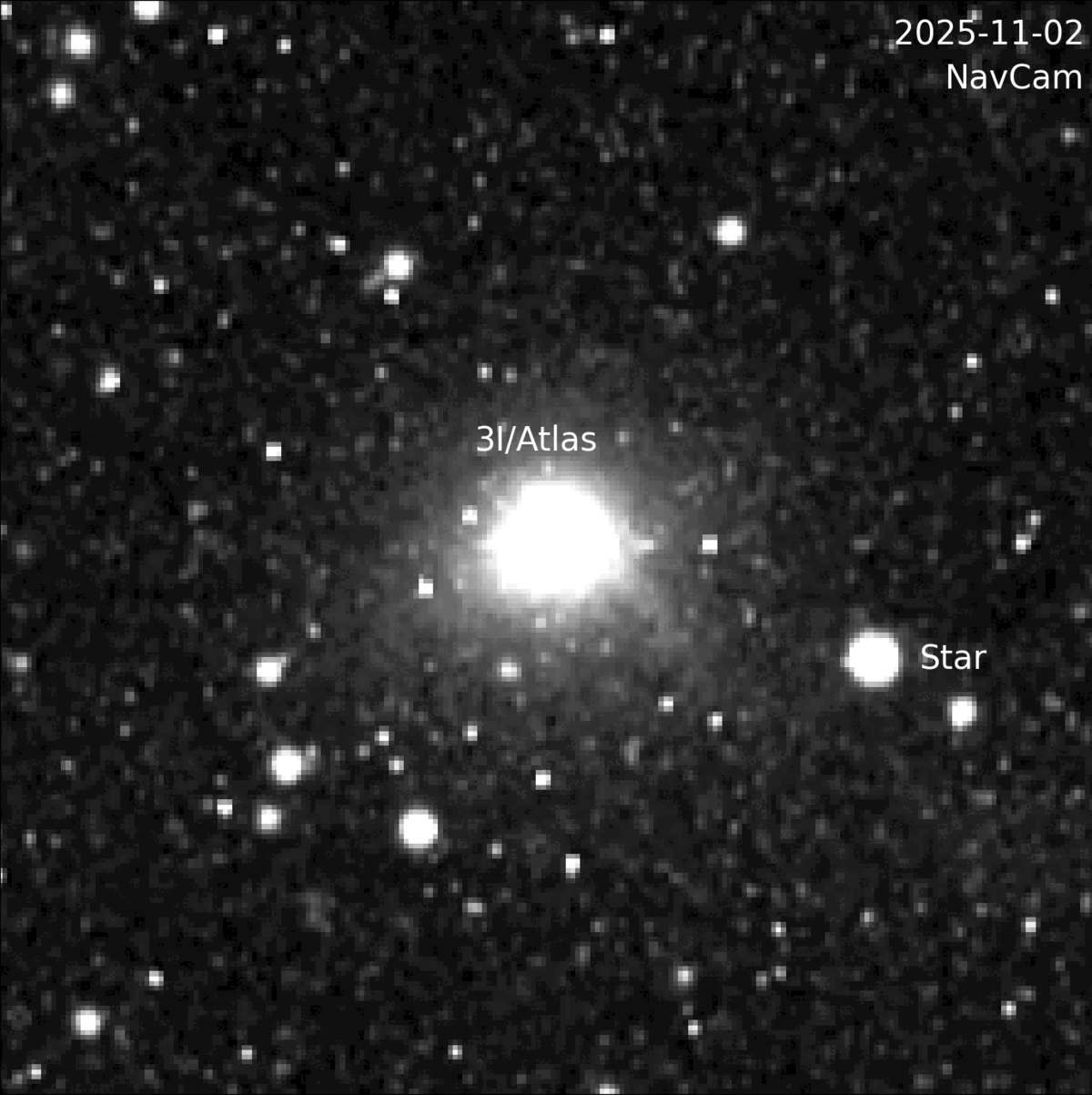
The vapor escaping from a comet depends on the comet’s size and its distance from the Sun. Juice’s MAJIS also observed 3I/ATLAS later as it moved farther away from the Sun. By 12 November, even as the comet moved away, the amount of water vapor ejected remained significant, according to the ESA. The instrument observed the comet on 19 November as well, but the MAJIS team is yet to complete its analysis of the data.
🆕☄️ The wait is over.
— ESA Science (@esascience) April 2, 2026
Back in November 2025, our Juice mission observed Comet 3I/ATLAS with five science instruments. The data have arrived back on Earth, and scientists are delving in.
Here are five things they've already discovered 👉 https://t.co/nB6jCR5hD0
1/6 pic.twitter.com/en0jfxkLJH
Juice’s Submillimeter Wave Instrument (SWI) observed that most water vapor came from the Sun-facing side of 3I/ATLAS. The source for a lot of this water vapor wasn’t the solid nucleus of the comet but icy dust grains in the surrounding coma—a halo of dust and gas. The SWI team is also studying the ratio between normal H₂O and semiheavy HDO found in the comet to understand its origin. The HDO was measured by the ALMA and the James Webb telescopes, and they found the ratio to be unexpectedly high in 3I/ATLAS, suggesting that it may have formed in a cold and ancient environment, where it was exposed to a lot of ultraviolet radiation from young stars far outside our Solar System. The SWI team wants to see if the Juice data supports these findings.
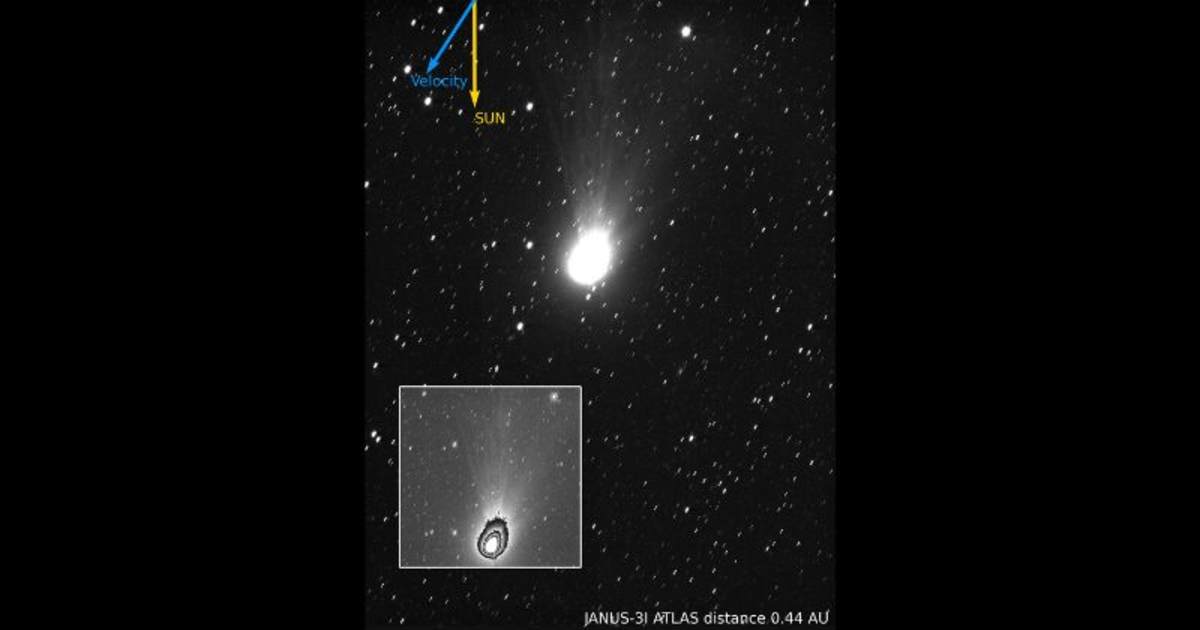
Beyond the vast amounts of water, ESA’s Juice also detected gas and dust extending at least 5 million km from the nucleus. The Jupiter-headed spacecraft’s Ultraviolet Imaging Spectrograph (UVS) was able to observe this by capturing light coming from oxygen, hydrogen, and carbon atoms in the coma. The high-resolution science camera JANUS revealed a bright coma hiding the nucleus with two distinct tails—one pointing away from the Sun and one tracing the comet’s trajectory. Other faint structures were also seen, suggesting the comet’s interactions with solar radiation and the Sun’s magnetic field, much like typical comets from our Solar System.
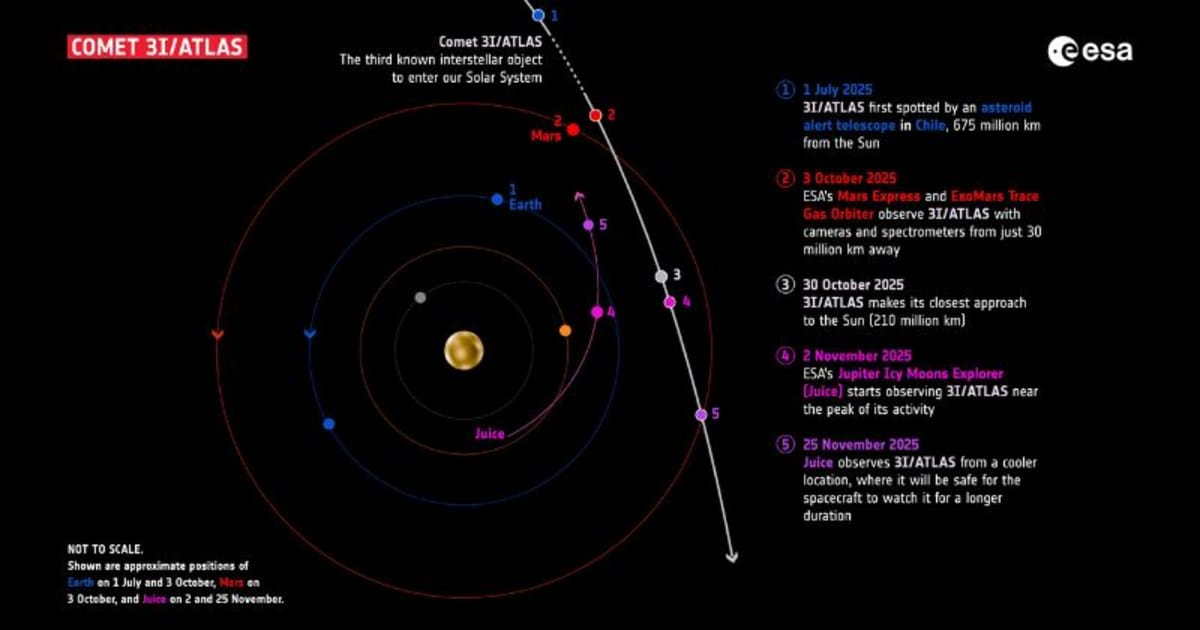
“When we realised that Juice would be close to the comet around its closest approach to the Sun, we realised what a unique opportunity this was to collect a once-in-a-lifetime dataset,” said Olivier Witasse, ESA Juice Project Scientist. Despite its original mission being meant for Jupiter’s moons, Juice’s design for studying icy worlds seemed to work with 3I/ATLAS too. At its closest, the spacecraft was about 60 million km away from the interstellar comet, and yet its science instruments sent home detailed observations.
More on Starlust
Could we possibly catch up with 3I/ATLAS? A daring new plan says 'yes'
3I/ATLAS isn't just older than our solar system—it may be almost as old as the universe itself